

Payments & AR
Allergy & Immunology Payment Posting Software
Post every test unit, antigen dose, shot code and biologic line from the 835, then check each one against what the contract should pay.
Allergy & Immunology Payment Posting Software applies each 835 remittance and patient payment to the right line of an allergy claim. Test units, antigen doses billed as 95165, injection codes and biologic J-code lines each post on their own. Reason codes show why a dose count was cut, and each payment ties back to a bank deposit.



 6,500+ specialty providers

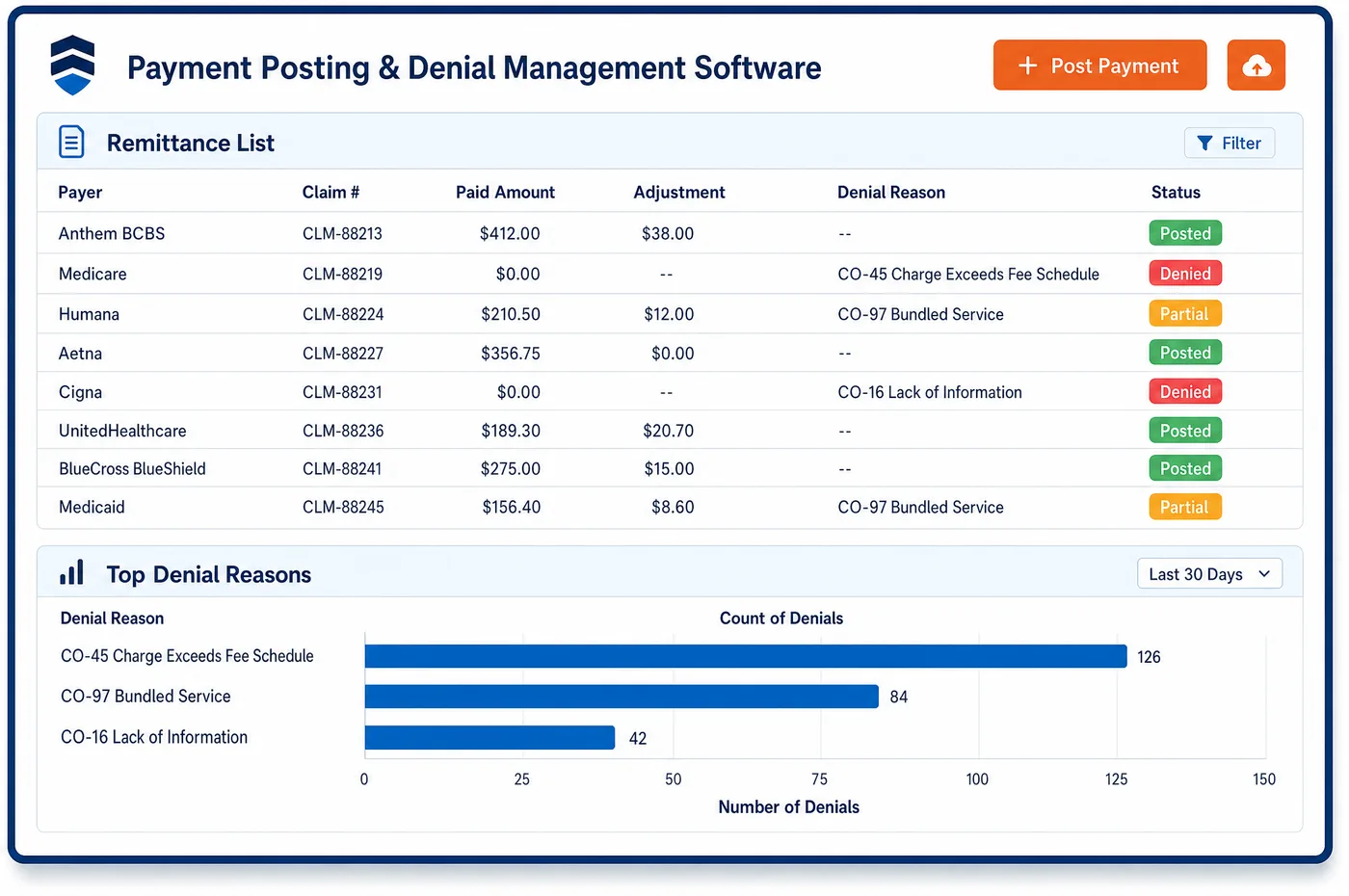
Payment Posting in a Allergy & Immunology Practice
An allergy claim can carry many lines that each pay a small amount. A testing visit may bill 95004 with dozens of units, one per test. An immunotherapy claim pairs an injection code, 95115 or 95117, with antigen preparation billed as 95165 doses. A biologic visit adds a J-code line, such as J2357 for omalizumab, plus 96372 for the injection. Unlimited Systems imports each electronic remittance and matches it to the claim by claim number and line. Paid amounts, contractual adjustments and patient shares post to each code. When a payer pays fewer 95165 units than billed, the cut shows on that line with its reason code instead of hiding in a visit total. Biologic lines are compared with the expected rate for the drug and payer. Copays from shot visits post to the same account, and the day's posted totals are tied to bank deposits so the ledger and the bank agree.
Why Is Payment Posting Different in Allergy & Immunology?
Allergy remittances are long, and most lines are small. One testing claim can return dozens of 95004 or 95024 units. An immunotherapy patient may create a claim at every shot visit. Keying those by hand invites mistakes. A unit typed wrong on a test line is easy to miss, and across a busy allergy clinic the small misses add up.
Dose limits make partial payments common. Medicare counts 95165 doses by the 1 cc aliquots a vial can hold, so a full 10 cc vial supports no more than ten billed doses. Commercial payers set their own yearly caps on doses and tests. When a payer cuts units, the 835 says so with a reason code such as CARC 151 or CARC 119. Payment posting has to keep that code on the line, so staff can tell a valid limit from a payer error.
Biologics bring the opposite problem: few lines, each worth a lot. A short payment on one mepolizumab or benralizumab line can outweigh a full day of testing claims. Under Medicare Part B these drugs come from single-dose containers, so each drug line also carries a JW or JZ modifier. Posting for an allergy practice checks the paid rate against the expected amount and flags any drug line that came back short.
What Allergy & Immunology Payment Posting Software Handles
- Antigen doses under 95165
- Medicare pays 95165 per dose, with no more than one billed dose per 1 cc the vial holds. Posting compares paid units with billed units on each 95165 line, and any cut shows with its reason code. (Medicare Claims Processing Manual, Chapter 12, Section 200: Allergy Testing and Immunotherapy)
- Injection codes 95115 and 95117
- Medicare pays the injection code plus the antigen code, because 95120 through 95134 are not valid for Medicare. Each line posts on its own, so a paid shot with a denied 95165 line stays in plain view. (Medicare Claims Processing Manual, Chapter 12, Section 200: Allergy Testing and Immunotherapy)
- Test units for 95004 and 95024
- Medicare fee amounts for allergy tests are set per test, so the units field drives the payment. Paid units post per line, and lines where fewer tests were allowed than billed go to review. (Medicare Claims Processing Manual, Chapter 12, Section 200: Allergy Testing and Immunotherapy)
- CARC 151 and CARC 119
- CARC 151 means the payer thinks the record does not support that many services. CARC 119 means a benefit maximum was reached. Both post at the line level and go to follow-up with the code attached. (X12 Claim Adjustment Reason Codes)
- Biologic lines J2357, J2182, J0517 and J2356
- Omalizumab bills in 5 mg units, while mepolizumab, benralizumab and tezepelumab bill per 1 mg. Each paid drug line is held up against the contracted rate for that payer, which for Medicare follows the quarterly ASP file. (CMS ASP Pricing Files (Medicare Part B drugs))
- JW and JZ on Medicare drug lines
- For Medicare Part B, single-dose container drugs carry JW for a discarded amount or JZ when nothing was discarded. The modifier on each paid line is kept with the payment for later review. (CMS Discarded Drugs and Biologicals (JW and JZ modifier policy))
How Does Allergy & Immunology Payment Posting Software Work?
1. Import the remittance
Each 835 is imported as it arrives from the payer or clearinghouse. It is matched to the original claim by claim number, then line by line.
2. Post every code line
Test units, shot codes, antigen doses and J-code lines post with their own paid amount, adjustment and patient share. A testing claim with many units posts without anyone keying lines.
3. Compare with the contract
Each paid line is checked against the expected amount for that code and payer. Short payments on 95165 doses or biologic units go to an underpayment queue.
4. Send denials and recoupments to owners
Zero-pay lines and takebacks are routed by reason code. Dose-cap and missing-approval denials are handed to whoever works allergy AR follow-up.
5. Apply copays and card payments
Shot-visit copays, testing coinsurance and card charges land on that same patient account. Whatever is left goes on to allergy patient statements.
6. Balance to the bank
Deposits and lockbox files are matched against posted payments. Allergy cash, contractual adjustments and recoveries then land in the general ledger as double-entry lines.
Allergy & Immunology Payment Posting Software vs. Generic Software
| Area | Generic approach | Unlimited Systems |
|---|---|---|
| Testing claims | Dozens of test units keyed from paper EOBs. | Units post per line straight from the 835. |
| Antigen dose cuts | Unit reductions buried in a visit total. | Each 95165 cut shown on its own line with the reason code. |
| Biologic payments | Drug lines accepted at whatever the payer sent. | Paid amounts checked against the expected rate for each drug. |
| Shot-visit copays | Collected at the desk and posted in a separate tool. | Copays post to the same ledger as insurance payments. |
| Deposits | Matched by hand in a spreadsheet at month end. | Posted payments matched to deposits and lockbox files. |
Who Uses It in a Allergy & Immunology Practice
- Payment poster: Remittances that post on their own, with only short-paid or denied lines left to review. Cuts to 95165 units show on the line where they happened.
- Billing manager: A clear view of which payers cut doses or test units, so the team can tell a payer limit from a payer error and fix rules in charge validation.
- Practice owner: Biologic payments checked against expected rates and deposits that match the books, so cash from the drug side of the practice stays visible.
Allergy & Immunology Payment Posting Software FAQs
Payment posting reads the 835 line by line, so each test code posts with its own paid units, allowed amount and adjustment. A claim for 95004 with many units posts the same way as a one-line claim. Lines where the payer allowed fewer tests than billed are flagged, and the reason code stays attached so staff can see why.
The paid units post on the 95165 line, and the reduction stays visible with its reason code, such as CARC 151 for frequency or CARC 119 for a benefit maximum. The line then goes to follow-up. For Medicare, staff can check the dose count against the vial size, since a 10 cc vial supports no more than ten billed doses.
Each J-code line, such as J2357 for omalizumab or J0517 for benralizumab, is checked against what that payer's contract says the drug should pay. For Medicare, the expected amount follows the quarterly ASP pricing file. A short payment goes to an underpayment queue with the drug, units and payer shown, so staff can appeal or correct it.
For Medicare Part B, a biologic drawn from a single-dose container carries JW on the line for any discarded amount or JZ when none was discarded. Posting keeps the modifier with each paid line, so a waste line paid differently from the dose line is easy to spot. CMS can return claims that leave the modifier off before they are ever paid.
Copays and coinsurance from injection visits post to the same patient account as insurance payments. That matters in allergy care, where an immunotherapy patient comes in for shots often and may owe something at many of those visits. Whatever balance remains after insurance and copays moves on to the patient statement.
Payments from 835 files, lockbox deposits and patient card payments are matched to bank deposits. The deposit's cash, adjustments and recoveries are written to the general ledger as balanced journal entries. Any deposit that does not match is left for staff to resolve, so the books and the bank agree at close.
Related Allergy & Immunology Software
Payments & AR
In the revenue cycle
Payment Posting for related specialties
Sources
- Medicare Claims Processing Manual, Chapter 12, Section 200: Allergy Testing and Immunotherapy
- X12 Claim Adjustment Reason Codes
- CMS ASP Pricing Files (Medicare Part B drugs)
- CMS Discarded Drugs and Biologicals (JW and JZ modifier policy)
- X12 transaction sets, including the 835 Health Care Claim Payment/Advice
GET STARTED
See Unlimited Systems in Action
Whether you're actively evaluating new technology or simply preparing for your next vendor renewal, Unlimited Systems can help you understand where your current workflows may be creating avoidable revenue risk.