

Analytics & value-based care
Allergy & Immunology Value-Based Care Software
Capture asthma control scores and exacerbation counts at the visit, track MIPS Quality ID 398, and watch asthma contracts during the year.
Allergy & Immunology Value-Based Care Software captures the asthma data that quality programs and payer contracts measure, while the patient is still in the practice. It records control scores, asthma emergency visits and hospital stays, tracks MIPS Quality ID 398, flags open care gaps and keeps shared-savings terms in the ledger.



 6,500+ specialty providers

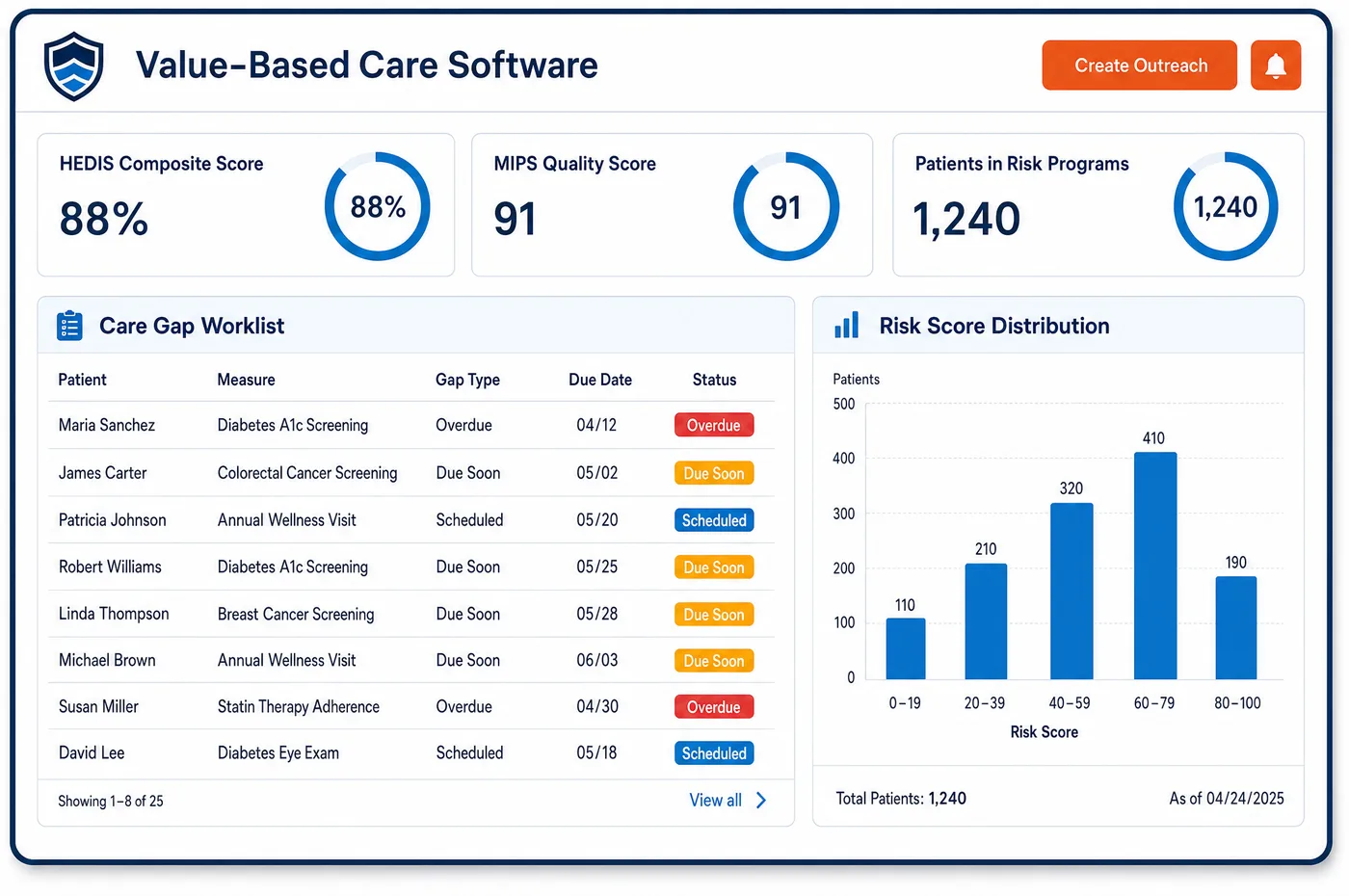
Value-Based Care in a Allergy & Immunology Practice
For most allergy practices, value-based care starts with MIPS. Quality ID 398, Optimal Asthma Control, is an outcome measure for patients aged 5 to 50 with asthma. A patient meets it only when two things are true. The latest control score is in range, and asthma emergency visits plus inpatient stays add up to fewer than two over the prior year. Unlimited Systems puts the fields for both parts into the visit. A patient booked for an asthma follow-up with no recent score is flagged at scheduling, so the score is collected at check-in. Event counts are asked and saved in the same place each time. Exclusions such as COPD or hospice are recorded when they apply. Practices in commercial asthma contracts or ACOs can also track shared-savings and downside terms in the general ledger. That way contract results are watched during the year, not found out after it ends.
Why Is Value-Based Care Different in Allergy & Immunology?
Asthma quality is measured by outcomes, not just by whether a test was done. Measure 398 asks whether the patient's asthma is controlled and whether they avoided repeat emergency visits and hospital stays. Both answers come from the patient. If staff do not ask at each visit, the practice cannot show the good care it actually gave.
The scoring tools differ by age. Measure 398 accepts the ACT for ages 12 and up, the C-ACT for ages 11 and under, the ACQ for ages 17 and up, and the ATAQ for children and adults. Each has its own cut point, such as an ACT of 20 or more. Value-based care in an allergy practice has to record the right tool and score for each patient, or the measure counts as not met.
Programs also change. ACAAI reports that CMS has not yet set up an allergy-specific MIPS Value Pathway, so allergists choose measures under traditional MIPS. CMS also removed three measures from the allergy and immunology specialty set for 2026. A practice needs to see which measures it is reporting and how each one is trending before the performance year closes.
What Allergy & Immunology Value-Based Care Software Handles
- MIPS Quality ID 398 numerator
- A patient meets the measure only when the latest control score is in range and asthma ED visits plus inpatient stays total fewer than two over the prior year. Both values are captured at the visit. (CMS QPP 2026 MIPS CQM Specification, Quality ID 398: Optimal Asthma Control)
- Asthma control tools and cut points
- ACT and C-ACT count as well controlled at 20 or more, ACQ at 0.75 or less, and ATAQ at 0. The visit records which tool was used, so the score is read against the right cut point. (CMS QPP 2026 MIPS CQM Specification, Quality ID 398: Optimal Asthma Control)
- Measure 398 denominator and exclusions
- The denominator uses asthma codes J45.20 through J45.998 with an established office or telehealth visit. COPD, emphysema, cystic fibrosis, acute respiratory failure, hospice and palliative care exclude a patient and are recorded when they apply. (CMS QPP 2026 MIPS CQM Specification, Quality ID 398: Optimal Asthma Control)
- Allergy and immunology specialty measure set
- For 2026, CMS removed screening for social drivers of health, connection to a community service provider and adult COVID-19 vaccination status from the set. The measures a practice picks are tracked side by side through the year. (ACAAI: 2026 MIPS Final Policies (allergy and immunology specialty set, MVP status, performance threshold))
- MIPS performance threshold
- CMS kept the performance threshold at 75 points through the 2028 performance period. Measure trends during the year show where the practice stands against it. (ACAAI: 2026 MIPS Final Policies (allergy and immunology specialty set, MVP status, performance threshold))
- Shared Savings Program ACOs
- When an allergy group takes part in a Medicare Shared Savings Program ACO, results depend on cost and quality across the ACO. Shared-savings and downside terms are tracked in the general ledger with the rest of the books. (CMS Medicare Shared Savings Program (ACOs))
How Does Allergy & Immunology Value-Based Care Software Work?
1. Flag gaps at scheduling
When an asthma patient is booked, the visit shows whether a current control score and event count are on file. Missing items are flagged before the patient arrives.
2. Collect the score at check-in
The patient completes the right tool for their age, such as the ACT or C-ACT. The score is saved to a structured field, not buried in a note, and forms can go out ahead through pre-visit intake.
3. Ask about events
Staff record asthma emergency visits and hospital stays since the last count. Patients with two or more show as at risk on the schedule.
4. Audit before checkout
Before the visit closes, the required quality fields get a final check. A missing score or exclusion can be fixed before the patient leaves.
5. Track measures and contracts
Measure 398 and other chosen measures are trended through the year. Contract terms for shared savings sit in the ledger, and trends feed allergy reporting.
Allergy & Immunology Value-Based Care Software vs. Generic Software
| Area | Generic approach | Unlimited Systems |
|---|---|---|
| Control scores | Asked sometimes and written in the note. | Captured at each asthma visit in a structured field. |
| Exacerbation counts | Pieced together from records at year end. | Asked and saved at the visit. |
| Care gaps | Found after the performance year. | Flagged at scheduling while the visit can still close them. |
| Exclusions | Missed, so patients count against the measure. | Recorded at the visit when they apply. |
| Contracts | Results learned when the payer settles. | Shared-savings terms tracked in the ledger during the year. |
Who Uses It in a Allergy & Immunology Practice
- Front desk: A flag on asthma visits that need a control score, so the right form is handed over at check-in.
- Allergist: Control scores and event counts in one view at every visit, showing which patients may need a change in care.
- Practice owner: Measure trends and shared savings terms in one place, with drill-down through allergy analytics.
Allergy & Immunology Value-Based Care Software FAQs
Value-based care software puts both parts of Quality ID 398 into the visit: the latest asthma control score and the count of asthma emergency visits and hospital stays over the prior year. Patients missing either item are flagged when they are booked. The data is collected while the patient is present, instead of being rebuilt from notes at year end.
Measure 398 accepts the ACT for patients 12 and older, the C-ACT for children 11 and younger, the ACQ for patients 17 and older, and the ATAQ for children and adults. Well controlled means an ACT or C-ACT of 20 or more, an ACQ of 0.75 or less, or an ATAQ of 0.
Patients with COPD, emphysema, cystic fibrosis or acute respiratory failure are excluded, along with patients who died or were in hospice or palliative care during the period. Patients seen only at urgent care visits are also excluded. Recording these exclusions at the visit keeps patients from counting against the measure by mistake.
ACAAI reports that CMS has not yet set up an allergy-specific MIPS Value Pathway, and the allergy societies planned to propose one. Until one exists, an allergy practice picks its quality measures from the specialty set and other eligible measures under traditional MIPS, and tracks each one through the year.
Shared-savings and downside terms from commercial contracts or ACO participation are tracked in the general ledger with the rest of the books. Patients at risk of avoidable emergency visits are flagged on the schedule. Leaders see how contract results are trending during the year, rather than waiting for the payer's settlement.
For the 2026 performance period, CMS removed three measures from the allergy and immunology specialty set: screening for social drivers of health, connection to a community service provider, and adult COVID-19 vaccination status. Optimal Asthma Control remains in the set. The performance threshold stays at 75 points through the 2028 performance period.
Related Allergy & Immunology Software
Analytics & value-based care
In the revenue cycle
Value-Based Care for related specialties
Sources
GET STARTED
See Unlimited Systems in Action
Whether you're actively evaluating new technology or simply preparing for your next vendor renewal, Unlimited Systems can help you understand where your current workflows may be creating avoidable revenue risk.