

Front office
Allergy & Immunology Patient Intake Software
Collect allergy history, medicines, prior results, asthma scores and consents before testing day, plus a quick pre-shot check at every injection visit.
Allergy & Immunology Patient Intake Software collects the allergy history, medicines, prior test results, asthma control scores and consents a practice needs before testing or treatment. Patients get the allergist's medication hold instructions before skin testing, and shot patients answer a short pre-injection check at each visit.



 6,500+ specialty providers

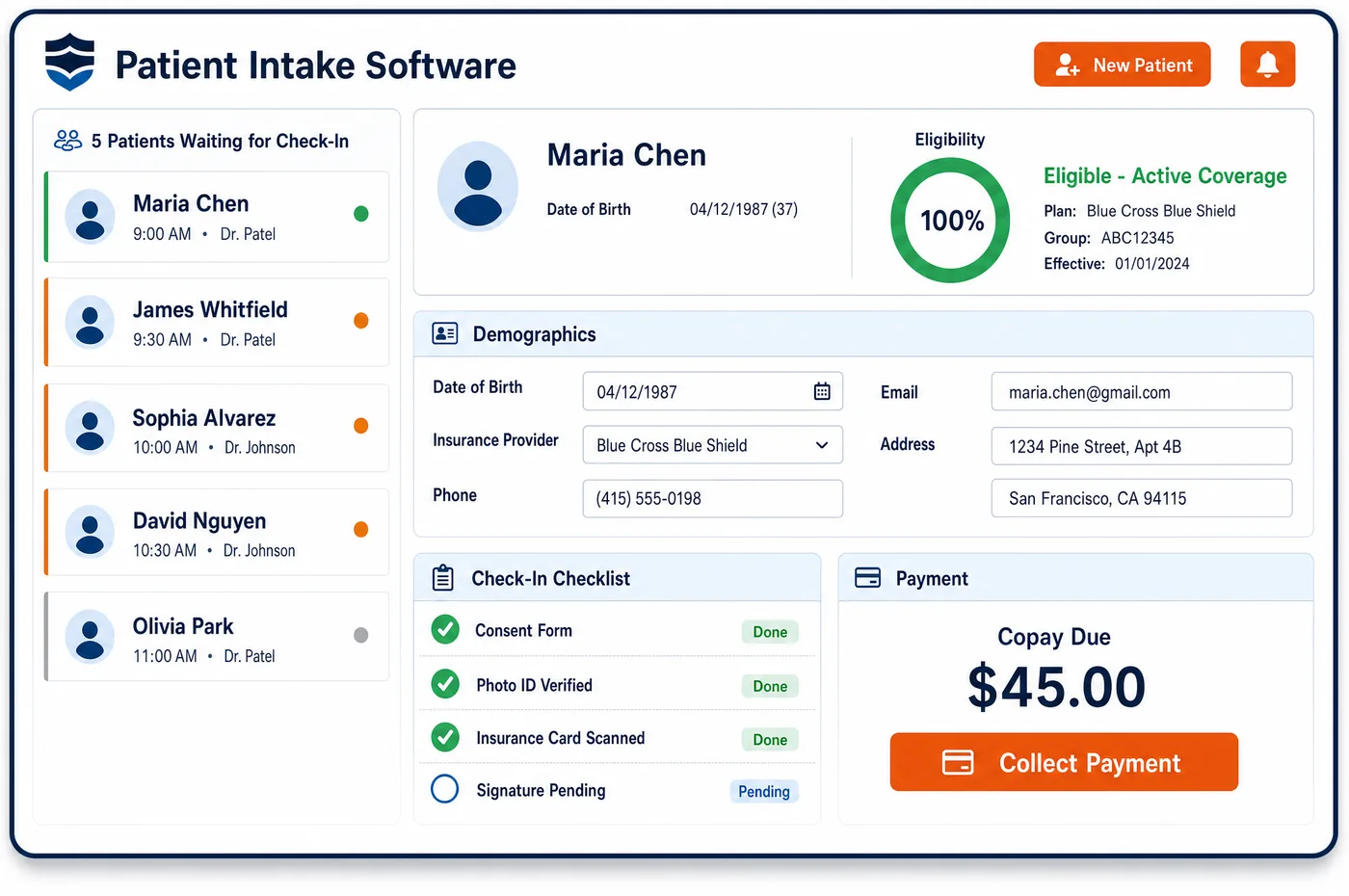
Patient Intake in a Allergy & Immunology Practice
Intake starts once a visit is booked. A new patient gets a link to forms that cover symptoms, triggers, seasons, pets, home exposures and any past reactions to foods, stings or drugs. The form asks for every current medicine, so staff can spot antihistamines and other drugs the allergist wants held before skin testing. Hold instructions go out with the reminder, in plain words. Prior test results and notes from the referring office are uploaded and attached. Asthma patients complete a control questionnaire, which gives the physician a dated score. Consent forms for testing, food challenges or immunotherapy are signed digitally. Allergy & immunology patient intake software then puts the answers into structured fields on the record, not a scanned page. On shot days, a short check-in form asks about recent symptoms and new medicines, so the nurse can review it before the injection is given.
Why Is Patient Intake Different in Allergy & Immunology?
Allergy testing depends on what happens before the patient arrives. Antihistamines and some other medicines can blunt skin test reactions, so the allergist's hold instructions have to reach the patient in time. A patient who took an antihistamine that morning may need to be rescheduled, and the testing slot is lost.
The history itself also drives coding and coverage. Symptoms, seasons, pets, home exposures and past reactions help decide which allergens to test and how many. Prior results from a referring office can prevent repeat testing that payers won't cover. For asthma patients, control scores and current medicines often decide whether a biologic request will be approved.
Shot visits need their own short intake. Before each injection, many practices ask about recent asthma symptoms, illness and new medicines, following the physician's protocol. Patient intake in allergy has to handle a long first-visit history and a quick pre-shot check, and both feed the patient's ongoing record.
What Allergy & Immunology Patient Intake Software Handles
- Prior results and repeat in vitro testing
- Palmetto's 2026 allergy testing LCD says a routine blood test on top of a skin test for the same antigen is not reasonable and necessary. Latex, venom and peanut are among the exceptions. Intake collects prior results, so the allergist sees what was already tested. (CMS Medicare Coverage Database, LCD L40328: Allergy Diagnostic Testing (Palmetto GBA, effective 2026-09-27))
- Total IgE before omalizumab
- The same LCD lists evaluation for omalizumab therapy among the covered reasons for total serum IgE testing. Intake gathers any recent IgE and eosinophil results from the referring office for a possible biologic request. (CMS Medicare Coverage Database, LCD L40328: Allergy Diagnostic Testing (Palmetto GBA, effective 2026-09-27))
- Asthma control scores (ACT and ACQ)
- UnitedHealthcare's IL-5 policy treats an Asthma Control Test score consistently below 20, or an ACQ score consistently above 1.5, as poor control. A short ACT on the intake form puts a dated score on the record before a biologic is considered. (UnitedHealthcare Commercial Medical Benefit Drug Policy 2026D0055AA: Respiratory Interleukin-5 Inhibitor)
- Informed consent for immunotherapy
- NCCI says obtaining informed consent is part of the immunotherapy service and is not reported with an E/M code. Consent is signed digitally at intake and stored on the record, and nothing extra is billed for it. (CMS NCCI Policy Manual for Medicare Services, Chapter XI, Section K: Allergy Testing and Immunotherapy (2026))
- Food challenge preparation (95076)
- ACAAI coding guidance counts pre-test work, such as reviewing reaction history and obtaining consent, in the time for an ingestion challenge billed with 95076. Intake forms collect that history and the signed consent before the challenge day. (ACAAI: Everything you need to know about coding for oral food challenges)
- Controller medicine history
- For Nucala and similar drugs, UnitedHealthcare requires use with a maximally dosed inhaled steroid and a second controller. Intake records current asthma medicines and doses, which supports step therapy documentation and approval requests. (UnitedHealthcare Commercial Medical Benefit Drug Policy 2026D0055AA: Respiratory Interleukin-5 Inhibitor)
How Does Allergy & Immunology Patient Intake Software Work?
1. Send forms after booking
Once the visit is booked, the patient gets a link to intake forms. Demographics and cards come from allergy patient registration, so the forms focus on history and medicines.
2. Collect history and medicines
The form covers symptoms, triggers, exposures and past reactions, plus a full medicine list. Antihistamines and other drugs the allergist wants held are flagged for staff.
3. Send hold instructions
The allergist's medication hold instructions go out with the visit reminder. Patients who report a recent antihistamine can be called and rebooked before the testing slot is wasted.
4. Attach prior results and scores
Prior skin or blood test results are uploaded and attached. Asthma patients complete a control questionnaire, and the score is saved with the date.
5. Sign consents and check in
Consents for testing, food challenges or shots are signed digitally. On shot days, a short pre-injection form is reviewed by the nurse before the dose is given.
Allergy & Immunology Patient Intake Software vs. Generic Software
| Area | Generic approach | Unlimited Systems |
|---|---|---|
| History forms | Paper questionnaires re-keyed by staff. | Digital forms saved as structured fields. |
| Medication holds | Patients told verbally at booking, if at all. | Hold instructions sent with the reminder. |
| Prior results | Faxed pages filed in the chart. | Uploaded results attached to the record. |
| Asthma control | Not captured until the visit. | Control score saved before the visit. |
| Shot-day check | Asked from memory at the window. | Short pre-injection form reviewed by the nurse. |
Who Uses It in a Allergy & Immunology Practice
- Front desk: Patients who arrive with forms done and medicines listed, so testing days start on time.
- Allergist: A full history, prior results and a current asthma control score before entering the room. That helps plan which allergens to test and supports biologic prior authorization requests.
- Allergy nurse: A pre-injection check completed before each shot, and a medicine list that flags drugs the allergist wants to know about.
Allergy & Immunology Patient Intake Software FAQs
Patient intake for allergy testing should cover symptoms, triggers, seasons, exposures and past reactions, plus a full list of current medicines. That list lets staff spot antihistamines and other drugs the allergist wants held before skin testing. Prior test results should be uploaded too, so the allergist can plan which allergens to test and avoid repeats.
The allergist sets which medicines should be held, and for how long, before skin testing. Those instructions go out with the visit reminder in plain language. If a patient's intake form shows a recent antihistamine, staff can call and rebook before the testing slot is lost, rather than finding out when the patient arrives.
Asthma patients can complete a control questionnaire, such as the Asthma Control Test, as part of intake. The score is saved to the record with the date. Some payers use scores like these when they review biologic requests, so a dated score on file helps the physician document control over time.
Consent for allergy shots is not billed on its own. NCCI treats obtaining informed consent as part of the immunotherapy service, and it should not be reported with an E/M code. Intake collects the signed consent digitally and stores it on the record, so it is ready if a payer asks for it.
On shot days, the patient completes a short pre-injection form at check-in or on a phone. It asks about recent symptoms, illness and new medicines, following the physician's protocol. The nurse reviews the answers before the dose is given, and the form is saved with that day's injection.
Prior results show the allergist what has already been tested. Some Medicare contractors, such as Palmetto, won't pay for a routine blood test on top of a skin test for the same allergen, with a few exceptions. Having the earlier results on file helps the allergist plan testing that is useful and covered.
Related Allergy & Immunology Software
Front office
In the revenue cycle
Patient Intake for related specialties
Sources
- CMS Medicare Coverage Database, LCD L40328: Allergy Diagnostic Testing (Palmetto GBA, effective 2026-09-27)
- UnitedHealthcare Commercial Medical Benefit Drug Policy 2026D0055AA: Respiratory Interleukin-5 Inhibitor
- CMS NCCI Policy Manual for Medicare Services, Chapter XI, Section K: Allergy Testing and Immunotherapy (2026)
- ACAAI: Everything you need to know about coding for oral food challenges
GET STARTED
See Unlimited Systems in Action
Whether you're actively evaluating new technology or simply preparing for your next vendor renewal, Unlimited Systems can help you understand where your current workflows may be creating avoidable revenue risk.