

Front office
Allergy & Immunology Patient Scheduling Software
Book shot clinics, skin testing, patch test readings, food challenges and biologic visits with the time, staff and observation space each one needs.
Allergy & Immunology Patient Scheduling Software books each allergy visit with the time, staff and space it needs. Skin testing, patch test readings, food challenges, shot clinics and biologic injections each get their own visit type. Observation time after shots and biologics is held in the schedule, so the waiting area and nurses are not overloaded.



 6,500+ specialty providers
Patient Scheduling in a Allergy & Immunology Practice
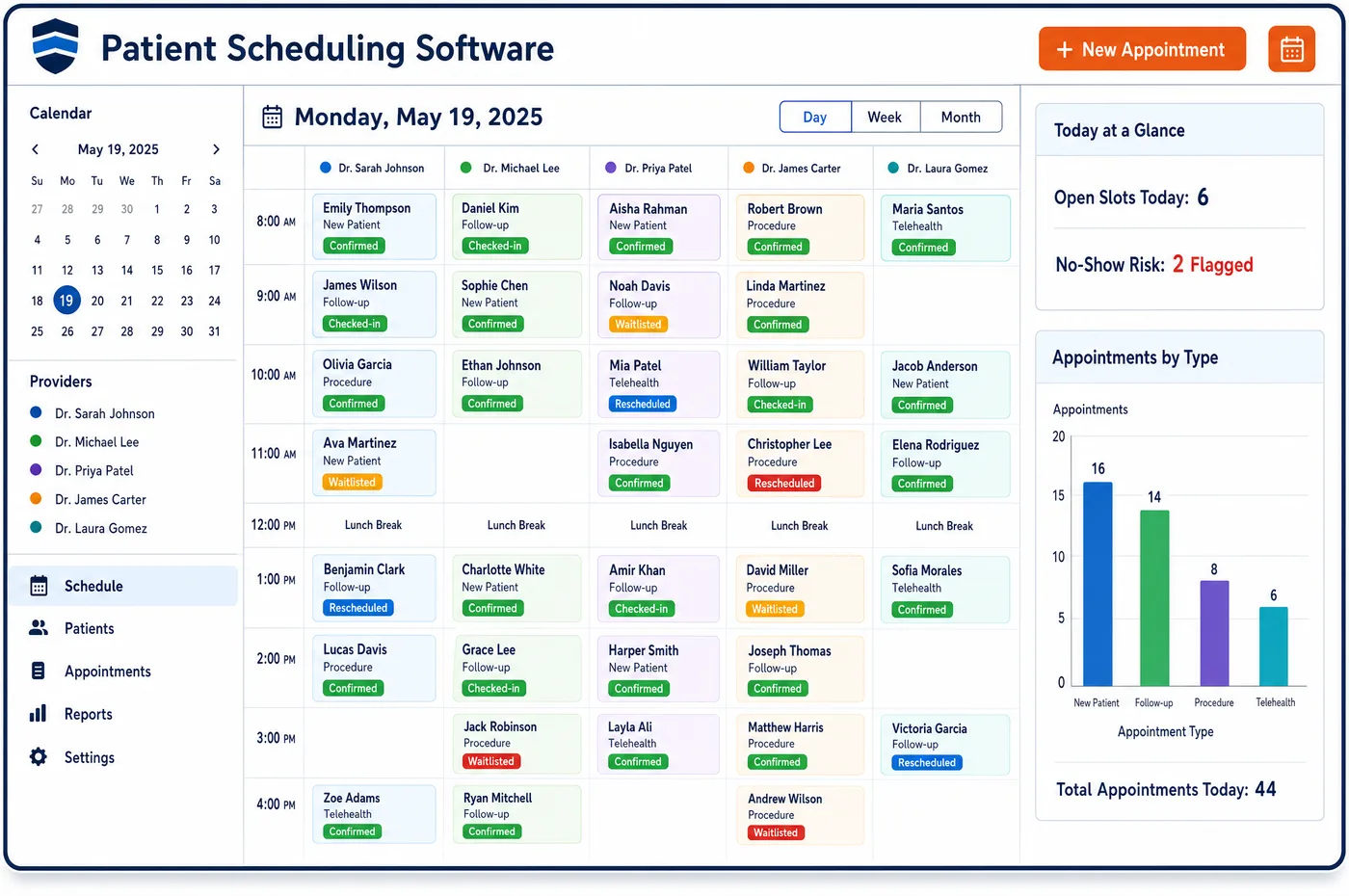
An allergy day mixes short and long visits. Shot patients may come during set clinic hours or by booking. Each shot visit includes a nurse's time and a seat in the observation area after the dose. Skin test visits are booked for the planned panels, and the reminder carries the allergist's medication hold note. Patch tests need a placement visit and return visits for readings, so the series is booked together. An oral food challenge holds a monitored room, a nurse and a physician for the full protocol. Biologic injections are booked only once the approval is on file, with observation time after each dose. Allergy & immunology patient scheduling software sets each of these up as a visit type with its length, staff, room and any approval check. Build-up shot series are booked from the treatment plan. When a patient misses a shot, the gap is flagged so the nurse can review the next dose.
Why Is Patient Scheduling Different in Allergy & Immunology?
An allergy schedule runs on very different clocks. A shot visit takes a few minutes of nurse time and then a wait in the observation area. A skin test visit takes longer and depends on the patient following the medication hold instructions. An oral food challenge can fill most of a morning, with a nurse watching for reactions and a physician close by. One slot length can't fit all of these.
Space and staff matter as much as the physician's calendar. The waiting area fills with patients sitting out their observation time after shots. Biologic patients need a chair and a nurse for their own observation. Patch test patients come back for readings. A scheduler that only books physician time will crowd the observation area and leave nurses double-booked.
Shot patients also follow a plan that the schedule has to respect. In build-up, doses rise on a set pattern, and long gaps can mean a dose has to be lowered. Maintenance shots are spaced further apart. Patient scheduling that books the series from the plan, and catches missed visits, keeps patients moving toward maintenance.
What Allergy & Immunology Patient Scheduling Software Handles
- Oral food challenges (95076, 95079)
- Code 95076 covers the first 120 minutes of an ingestion challenge, and 95079 adds each further 60 minutes. Challenge slots are booked long enough for the full protocol, with a nurse and a monitored room held for the patient. (ACAAI: Everything you need to know about coding for oral food challenges)
- Shot clinics and supervision
- The CGS shot policy says SCIT should be given only in facilities equipped to treat anaphylaxis, under a trained physician's supervision. Shot clinic hours are set when a supervising physician is on site, and the schedule shows who that is. (CMS Medicare Coverage Database, LCD L40056: Allergen Immunotherapy (AIT) with Subcutaneous Immunotherapy (SCIT) (CGS))
- Incident-to shots (Medicare)
- When nurse-given shots are billed incident to a physician under Medicare, the direct supervision rules apply. The schedule names the supervising physician for each shot clinic session, which supports the claim. (Medicare Benefit Policy Manual, Chapter 15, Section 60: Services and Supplies Incident to a Physician's Professional Service)
- Biologic observation
- The omalizumab billing article says the drug should be given only in a healthcare setting by staff prepared to manage anaphylaxis, with observation afterward. Biologic visits hold a chair and staff for that observation, not just the injection itself. (CMS Medicare Coverage Database, Billing and Coding Article A52448: Omalizumab)
- Testing and shots on one day
- NCCI notes that allergy testing is generally not done on the same day as immunotherapy, except when new allergens are tested. Schedulers can see both visits on the patient's day and move one when there is no reason for both. (CMS NCCI Policy Manual for Medicare Services, Chapter XI, Section K: Allergy Testing and Immunotherapy (2026))
- Rapid desensitization (95180)
- Drug desensitization billed with 95180 includes any allergy testing done as part of it, per NCCI. It is booked as its own long visit type with physician and nurse time held, apart from routine testing. (CMS NCCI Policy Manual for Medicare Services, Chapter XI, Section K: Allergy Testing and Immunotherapy (2026))
How Does Allergy & Immunology Patient Scheduling Software Work?
1. Build visit types
Each service gets a visit type with a set length, staff and room. Shot visits include observation time, and food challenges hold a monitored room for the full protocol.
2. Book from the treatment plan
Build-up and maintenance shots are booked as a series from the plan. Patients can also come during set shot clinic hours when the practice runs them.
3. Check approval before booking
Biologics and other approved services are booked only when the approval is on file. A visit past the approved dose count is held for allergy financial clearance to review.
4. Send reminders and prep notes
Text and email reminders are sent through allergy patient engagement. Skin test reminders carry the allergist's medication hold note.
5. Catch missed shots
When a shot visit is missed, the gap shows on the schedule and the record. The nurse reviews the next dose, and the patient is offered a new time.
Allergy & Immunology Patient Scheduling Software vs. Generic Software
| Area | Generic approach | Unlimited Systems |
|---|---|---|
| Visit lengths | Every visit booked at the same length. | Lengths set for shots, testing, challenges and biologics. |
| Observation time | Not booked, so the waiting room crowds. | Observation held after shots and biologics. |
| Shot series | Each shot booked one at a time. | Series booked from the treatment plan. |
| Patch tests | Reading visits booked separately and missed. | Placement and reading visits booked together. |
| Supervision | Not tracked on the schedule. | Supervising physician shown for each shot clinic. |
Who Uses It in a Allergy & Immunology Practice
- Scheduler: Visit types that set the time, staff and room for each allergy service, so a food challenge or biologic visit is booked right the first time.
- Allergy nurse: A shot clinic with observation time built in, and a clear list of missed shots to review before the next dose.
- Practice manager: Shot clinics, testing days and challenge rooms planned around real staff, with a supervising physician named so shot charges are built correctly.
Allergy & Immunology Patient Scheduling Software FAQs
Patient scheduling for allergy shots books each visit with nurse time and a seat in the observation area after the dose. Patients can be booked as a series from the treatment plan or come during set shot clinic hours. The supervising physician is shown for each session, and missed shots are flagged for nurse review.
A food challenge slot is booked for the full protocol the allergist uses, with a monitored room and a nurse held for the patient. Billing follows time, since 95076 covers the first 120 minutes and 95079 adds each further 60 minutes. The visit type keeps the room from being booked for anything else during the challenge.
Patch testing needs a placement visit and later reading visits. The scheduler books them together as one series, so the patient leaves the first visit with every return time set. If a patient misses a reading, staff see it at once and can rebook before the result is lost.
Biologic visits are booked only once the payer's approval is on file. Each visit holds a chair, a nurse and observation time after the dose, since the drug's billing article calls for a setting ready to manage anaphylaxis. Visits past the approved dose count are held until the approval is updated.
A missed shot shows up on the schedule and the patient record. The nurse reviews the plan, since a long gap in build-up may mean the next dose should be lowered. The patient gets a text offering a new time, and repeat misses are listed so staff can call.
NCCI notes that allergy testing is usually not done on the same day as immunotherapy, unless the physician tests for new allergens. When both appear on one patient's day, schedulers can see it and confirm with the allergist. That avoids a claim the payer is likely to question.
Related Allergy & Immunology Software
Front office
In the revenue cycle
Patient Scheduling for related specialties
Sources
- ACAAI: Everything you need to know about coding for oral food challenges
- CMS Medicare Coverage Database, LCD L40056: Allergen Immunotherapy (AIT) with Subcutaneous Immunotherapy (SCIT) (CGS)
- Medicare Benefit Policy Manual, Chapter 15, Section 60: Services and Supplies Incident to a Physician's Professional Service
- CMS Medicare Coverage Database, Billing and Coding Article A52448: Omalizumab
- CMS NCCI Policy Manual for Medicare Services, Chapter XI, Section K: Allergy Testing and Immunotherapy (2026)
GET STARTED
See Unlimited Systems in Action
Whether you're actively evaluating new technology or simply preparing for your next vendor renewal, Unlimited Systems can help you understand where your current workflows may be creating avoidable revenue risk.