

Front office
Allergy & Immunology Patient Registration Software
Register children, families and adults with the guardians, medical cards and pharmacy cards that allergy testing, shots and biologics depend on.
Allergy & Immunology Patient Registration Software captures the demographics, insurance and identity details an allergy practice needs before testing, shots or biologics begin. It records guardians for children, keeps siblings on separate charts, and stores both medical and pharmacy cards, so the right plan is billed for each service.



 6,500+ specialty providers

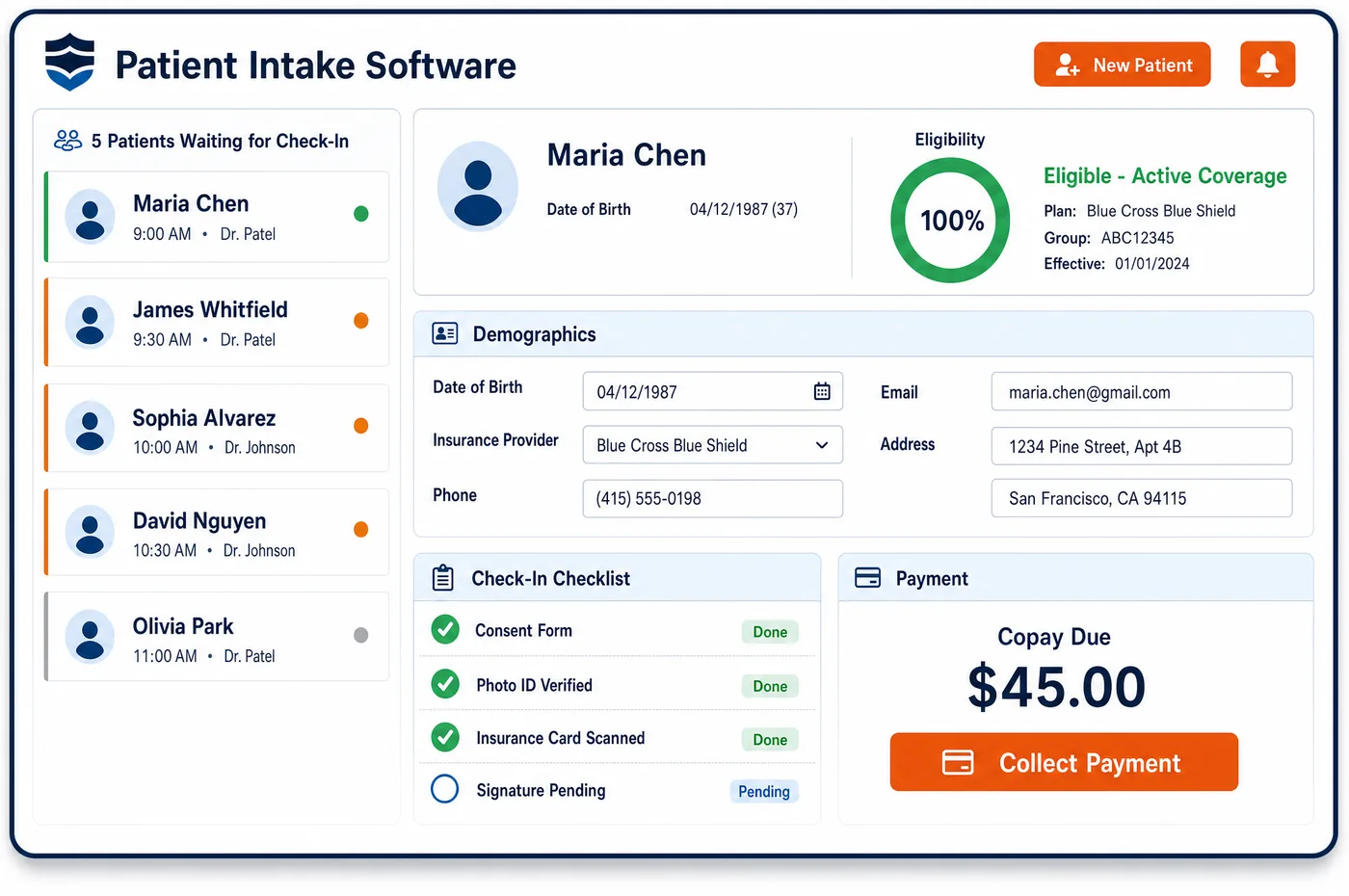
Patient Registration in a Allergy & Immunology Practice
Registration in an allergy practice often happens on a phone, before the first visit. The patient or parent enters demographics, uploads the front and back of each insurance card and names the guarantor. For a child, the parent or guardian who consents and pays is linked to the record. Allergy & immunology patient registration software then checks the new patient against existing records by name, date of birth and guardian, so a sibling gets a chart of their own rather than a duplicate or a merge. Both the medical card and any pharmacy benefit card are saved, since a self-injected biologic may run through the pharmacy plan while testing and shots bill to the medical plan. Coverage is checked against each card when the visit is booked. Plan type is recorded too, such as Medicaid managed care, Medicare Advantage or a commercial plan, because each one treats extract doses and drug claims a little differently.
Why Is Patient Registration Different in Allergy & Immunology?
Many allergy patients are children, and many come as families. Two or three siblings may be tested close together and start shots at the same time. They share a last name, an address and often a guarantor. Without careful matching, a second record gets created or a test result lands on the wrong child's chart.
Insurance is also split more often than in most specialties. A patient may need the medical card for testing and shots and a separate pharmacy card for a self-injected biologic. Children are often covered by Medicaid or CHIP, or by both parents' plans, where the birthday rule usually decides which plan pays first.
Registration errors in allergy also repeat. A wrong subscriber ID on a patient getting weekly shots can deny every injection claim until someone notices. Patient registration that checks the card, the subscriber and the plan type at the start protects the whole course of care, and it hands a clean record to allergy patient management.
What Allergy & Immunology Patient Registration Software Handles
- Medicaid NDC reporting (42 CFR 447.520)
- State Medicaid programs must require NDCs on claims for many drugs given in the office, so they can collect rebates. Registering the right Medicaid or Medicaid managed care plan up front means biologic claims are built with the NDC that plan expects. (eCFR: 42 CFR 447.520, FFP conditions relating to physician-administered drugs (NDC reporting))
- Pharmacy benefit for self-injected biologics
- UnitedHealthcare's commercial policy sends self-administered Fasenra and Nucala to the pharmacy benefit, while office-given doses fall under the medical benefit. Registration stores both the medical card and the pharmacy card, so staff can check the right benefit for each drug. (UnitedHealthcare Commercial Medical Benefit Drug Policy 2026D0055AA: Respiratory Interleukin-5 Inhibitor)
- Wrong-payer denials (CARC 109)
- A claim sent to a plan or contractor that doesn't cover the service comes back with reason code 109. Card images and a coverage check at registration catch an old card or a switched plan before the visit. (X12 Claim Adjustment Reason Codes)
- Patient identifiers on extract prescriptions
- The CGS billing article for immunotherapy advises that each extract prescription carry patient identifiers. The name and date of birth confirmed at registration are the ones used on the prescription, which matters when siblings share a last name and an address. (CMS Medicare Coverage Database, Billing and Coding Article A59981: Allergen Immunotherapy (AIT) with Subcutaneous Immunotherapy (SCIT) (CGS))
- Original Medicare, Medicare Advantage and biologics
- Medicare Part B can cover omalizumab given in the office. It does not cover doses the patient gives at home. Registration records whether the patient has Original Medicare, a Medicare Advantage plan or a Part D plan, which shapes how each biologic is billed. (CMS Medicare Coverage Database, Billing and Coding Article A52448: Omalizumab)
How Does Allergy & Immunology Patient Registration Software Work?
1. Pre-register on a phone
The patient or parent enters demographics and contact details, and uploads card images from home. Consents that belong at registration are signed at the same time, and clinical forms follow at allergy patient intake.
2. Link guardians and siblings
For a child, the responsible adult is linked as guarantor and contact. Siblings are checked by name, date of birth and guardian, so each child keeps a separate chart.
3. Capture medical and pharmacy cards
Both cards are stored with the payer, subscriber and plan type. Staff can see at a glance which plan covers office services and which covers self-injected drugs.
4. Check coverage at booking
Eligibility is checked electronically against the medical card when the visit is booked. A mismatch in subscriber ID or plan is flagged before the patient arrives.
5. Confirm at check-in
At the desk, staff confirm the card has not changed and the guarantor is still correct. For patients on weekly shots, a quick card check keeps a plan change from denying a run of claims.
Allergy & Immunology Patient Registration Software vs. Generic Software
| Area | Generic approach | Unlimited Systems |
|---|---|---|
| Siblings | New records created for each visit, or children merged by mistake. | Checks on name, date of birth and guardian keep one chart per child. |
| Insurance cards | Only the medical card is copied. | Medical and pharmacy cards stored with plan type. |
| Guardians | Parent named in a free-text note. | Guardian linked as guarantor and contact. |
| Plan changes | Found after shot claims deny. | Flagged by a card check at check-in. |
| Data entry | Clipboards re-keyed by staff. | Phone pre-registration with card images. |
Who Uses It in a Allergy & Immunology Practice
- Front desk: Pre-registered patients with card images and guardians in place, so check-in for a shot visit is quick.
- Billing manager: Fewer wrong-payer and subscriber denials, since plan type and subscriber are checked at the start. Clean records also feed Medicaid drug claims with the right plan.
- Practice administrator: Clean family records without duplicate charts, and a payer mix that shows Medicaid, Medicare and commercial plans accurately.
Allergy & Immunology Patient Registration Software FAQs
Patient registration in allergy has to handle families, children and split coverage. Siblings often share a last name, address and guarantor, so matching must avoid duplicates and merges. Many patients have a medical card for testing and shots and a pharmacy card for a self-injected biologic. Registration captures both, plus the guardian who consents and pays.
New patients are checked against existing records using name, date of birth and the linked guardian. A sibling with the same last name and address gets a new chart instead of being merged into a brother's or sister's. Staff review any close match before saving, so test results and shot logs stay with the right child.
Some biologics, such as self-injected Fasenra or Nucala under UnitedHealthcare commercial plans, are covered under the pharmacy benefit, while office-given doses fall under the medical benefit. Having both cards on file lets staff check the right benefit for each drug and send the request to the right place the first time.
Medicaid programs must require NDC numbers on claims for many physician-administered drugs. When a child on Medicaid or a Medicaid managed care plan gets a biologic in the office, the claim needs the NDC and the right plan. Recording the correct Medicaid plan at registration sets up those claims to be built correctly.
Parents can pre-register a child on a phone before the visit. They enter the child's details, upload both sides of each insurance card and confirm who is responsible for the bill. The details land in the record, so the front desk only confirms them at check-in instead of typing them in.
Patients on allergy shots visit often, so a quick card check at check-in is worth doing. Eligibility is also rechecked electronically before visits. If the plan or subscriber has changed, the record is updated before the shot is billed, which keeps one change from denying a whole run of injection claims.
Related Allergy & Immunology Software
Front office
In the revenue cycle
Patient Registration for related specialties
Sources
- eCFR: 42 CFR 447.520, FFP conditions relating to physician-administered drugs (NDC reporting)
- UnitedHealthcare Commercial Medical Benefit Drug Policy 2026D0055AA: Respiratory Interleukin-5 Inhibitor
- X12 Claim Adjustment Reason Codes
- CMS Medicare Coverage Database, Billing and Coding Article A59981: Allergen Immunotherapy (AIT) with Subcutaneous Immunotherapy (SCIT) (CGS)
- CMS Medicare Coverage Database, Billing and Coding Article A52448: Omalizumab
GET STARTED
See Unlimited Systems in Action
Whether you're actively evaluating new technology or simply preparing for your next vendor renewal, Unlimited Systems can help you understand where your current workflows may be creating avoidable revenue risk.