

Payments & AR
Cardiology Patient Billing Software
Clear cardiology statements for test deductibles, hospital-read fees, device check coinsurance and rehab session balances.
Cardiology Patient Billing Software turns what patients owe after cardiology care into clear statements. It explains a professional fee for a test done at the hospital, compares estimates for stress tests and procedures with the final balance, groups small device check and rehab balances, and offers text-to-pay and payment plans.



 6,500+ specialty providers

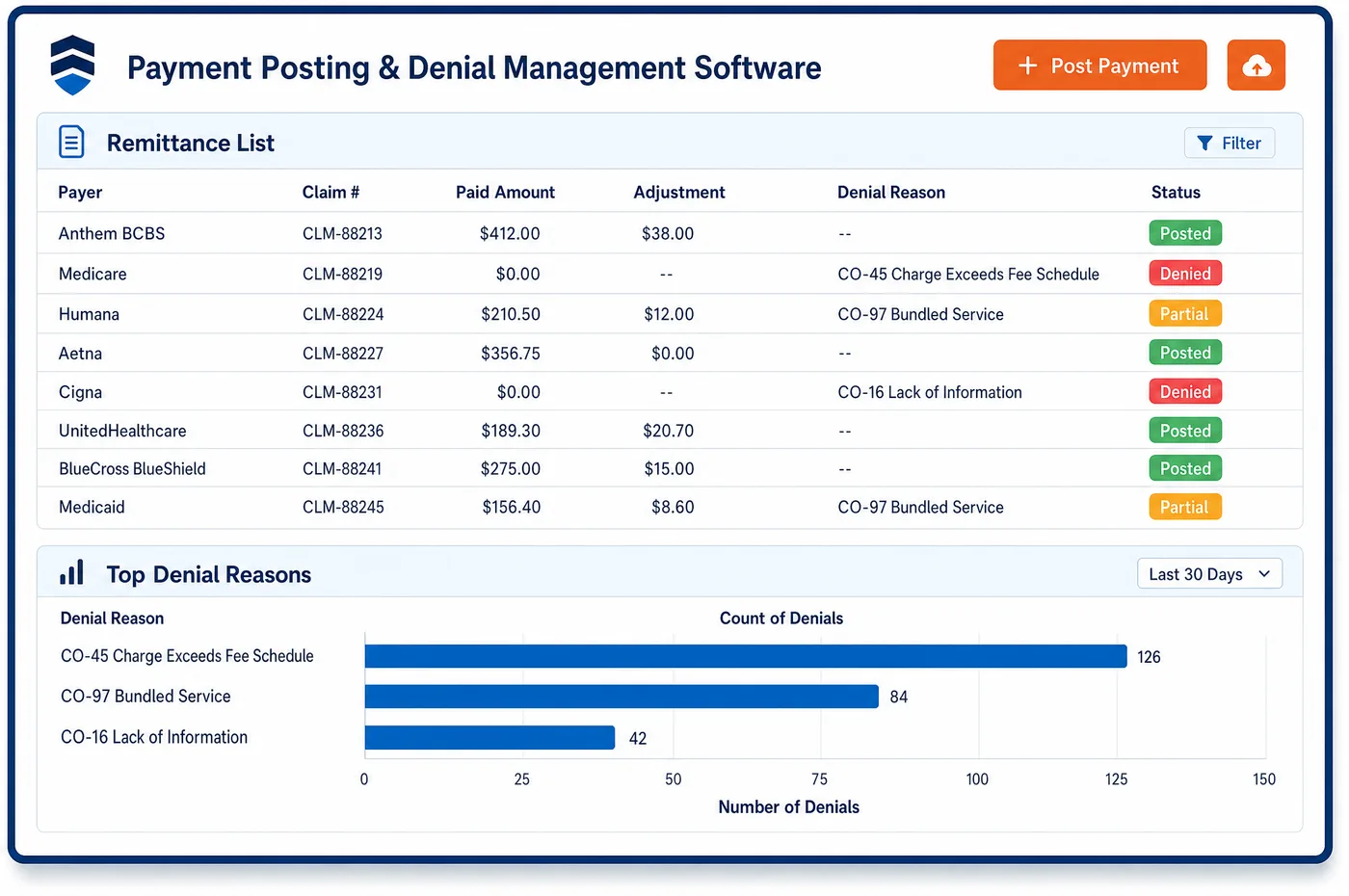
Patient Billing in a Cardiology Practice
Patient balances in cardiology arrive in uneven shapes. A nuclear stress test or cath early in the year may fall under the deductible and leave a large balance. A remote device check can leave a small coinsurance amount each period. A patient in a cardiac rehab program may owe a little after every session. When a test is done in a hospital department, the patient gets a hospital bill and a separate professional bill from the cardiology group. Patient billing starts once the payer has paid and the amount owed is final. The statement shows what was done, where, what the plan paid and what is left. Small balances from the same month can be grouped on one statement. Patients get a secure text or email link to view and pay, and larger balances can move to a payment plan. Each payment posts to the same ledger staff use, so the front desk sees the current balance.
Why Is Patient Billing Different in Cardiology?
Split billing confuses cardiology patients more than almost anything else. When an echo, stress test or cath happens in a hospital department, the hospital bills for the room, staff and equipment, and the cardiologist bills for the reading. The patient sees two bills for one test and often thinks one is a mistake. A statement that names the test, the hospital and the fact that this is the physician's reading fee heads off many of those calls.
Estimates matter because many tests are planned. A stress test, a cardiac CT or an elective ablation is often booked ahead, so the practice can give an estimate and collect part of it up front. When the claim pays, the final amount may differ. Patient billing in cardiology should show the estimate next to the actual balance and apply any deposit. For uninsured and self-pay patients, the No Surprises Act requires a good faith estimate when the service is scheduled or the patient asks.
Small recurring balances are the third pattern. Device clinic patients and rehab patients can owe a small amount many times over. Sending a paper statement for each one costs more than it brings in, and it annoys patients. Grouping balances, offering card-on-file payment through integrated patient payments, and stopping statements while a secondary claim is pending all help.
What Cardiology Patient Billing Software Handles
- Good faith estimates for uninsured and self-pay patients
- When an uninsured or self-pay patient schedules a test or procedure, or asks for one, staff give a good faith estimate. The estimate is stored with the account, so the final bill can be compared with it. (CMS: Good faith estimates for uninsured or self-pay patients (No Surprises Act))
- Professional-only fees (modifier 26)
- Statements for hospital-read studies say the charge is the cardiologist's interpretation. They also note that the hospital bills separately for the test itself. (Medicare Claims Processing Manual, Chapter 12: Physicians/Nonphysician Practitioners (PC/TC indicators))
- Cardiac rehab sessions (93798)
- Medicare covers cardiac rehab sessions under 42 CFR 410.49, and Part B cost sharing can apply to each one. Session balances are grouped on one statement instead of a bill per visit. (42 CFR 410.49: Cardiac rehabilitation program and intensive cardiac rehabilitation program)
- Remote device check coinsurance (93294 to 93296)
- These checks are billed once per monitoring period. Any coinsurance left after Medicare and a supplement pay is added to the next grouped statement rather than mailed alone. (CMS Medicare Coverage Database, Billing and Coding Article A56602: Cardiac Rhythm Device Evaluation (Novitas))
- Patient responsibility on the 835 (PR group code)
- Deductible, coinsurance and copay amounts come from the PR adjustments on the payer's remit. The statement shows those amounts, so the patient sees why the balance exists. (X12 transaction sets, including the 835 Health Care Claim Payment/Advice)
How Does Cardiology Patient Billing Software Work?
1. Wait for the final amount
Statements go out after the payer has paid and any secondary plan has acted. A balance still pending with a supplement is held, not billed.
2. Explain the charge
Each line names the test or visit, the place it was done and what the plan paid. Hospital-read studies say this is the physician's reading fee.
3. Compare with the estimate
If an estimate or deposit exists, the statement shows it next to the actual balance. Credits are applied before the patient is asked for more.
4. Group small balances
Device check and rehab session balances from the same period go on one patient statement. Patients get fewer bills, and each one means more.
5. Offer ways to pay
Statements carry a secure link to pay by card or bank account. Larger balances can move to a payment plan that drafts on a set schedule.
Cardiology Patient Billing Software vs. Generic Software
| Area | Generic approach | Unlimited Systems |
|---|---|---|
| Hospital-read fees | Listed as a CPT code with no context. | Named as the physician's reading fee for a hospital test. |
| Estimates | Given at scheduling and never compared again. | Shown next to the final balance on the statement. |
| Small balances | One paper statement per visit or period. | Grouped by period on one statement. |
| Delivery | Printed and mailed. | Secure text and email links, with paper when the patient wants it. |
| Large balances | Sent to collections after a few statements. | Offered a payment plan that drafts on its own. |
Who Uses It in a Cardiology Practice
- Patient financial counselor: Estimates and deposits for planned tests and procedures, linked to the final balance, so conversations start from real numbers.
- Front desk: The current balance at check-in for device clinic and rehab patients, with the option to put a card on file.
- Revenue cycle director: Fewer statement calls about hospital-read fees, and patient balances that are paid sooner because paying is easy.
Cardiology Patient Billing Software FAQs
When a test is done in a hospital department, the hospital bills for the facility, staff and equipment. The cardiologist who read the study bills separately for the interpretation, using modifier 26. Cardiology patient billing statements name the test and the hospital and explain that the charge is the reading fee. That cuts down on calls from patients who think they were billed twice.
Estimates given for planned tests and procedures are saved on the account. When the claim pays, the statement shows the estimate, any deposit paid and the final amount owed. If the deposit was more than the final balance, the credit is refunded or applied as the practice's policy says. Patients see one clear story from booking to final bill.
Small balances from remote device checks and cardiac rehab sessions can be grouped by period on one statement. That costs less to send and is easier for patients to follow than a bill per visit. Patients can pay the whole grouped amount from one secure link or keep a card on file for future balances.
Uninsured and self-pay patients get a good faith estimate when they schedule a test or procedure, or when they ask for one, as the No Surprises Act requires. The estimate is stored on the account. After the visit, the statement shows the actual charges next to the estimate, and a payment plan can be set up for larger amounts.
A statement is sent after the primary payer has paid and any secondary plan has acted. Balances still pending with a Medicare supplement or secondary plan are held. That keeps patients from paying an amount that another plan was about to cover. Statements then go out by secure text or email, with paper for patients who prefer it.
Each statement links to a secure page where patients can pay by card or bank account. Patients can store a card for future balances or set up a payment plan for a large bill. Every payment posts straight to the patient's account, so staff and the patient see the same balance the moment it clears.
Related Cardiology Software
Payments & AR
In the revenue cycle
Patient Billing for related specialties
Sources
- CMS: Good faith estimates for uninsured or self-pay patients (No Surprises Act)
- Medicare Claims Processing Manual, Chapter 12: Physicians/Nonphysician Practitioners (PC/TC indicators)
- 42 CFR 410.49: Cardiac rehabilitation program and intensive cardiac rehabilitation program
- CMS Medicare Coverage Database, Billing and Coding Article A56602: Cardiac Rhythm Device Evaluation (Novitas)
- X12 transaction sets, including the 835 Health Care Claim Payment/Advice
GET STARTED
See Unlimited Systems in Action
Whether you're actively evaluating new technology or simply preparing for your next vendor renewal, Unlimited Systems can help you understand where your current workflows may be creating avoidable revenue risk.