

Analytics & value-based care
Clinical Research Value-Based Care Software
Keep trial patients in view inside quality programs and risk contracts, with CED, Medicare Advantage and Medicaid trial rules tracked by study.
Clinical Research Value-Based Care Software keeps trial participants in view inside the practice's quality programs and risk contracts. It tags enrolled patients on each panel they belong to and tracks CED studies by number. It also marks trial care that is paid outside a Medicare Advantage or Medicaid plan, so each contract's results can be read the right way.



 6,500+ specialty providers

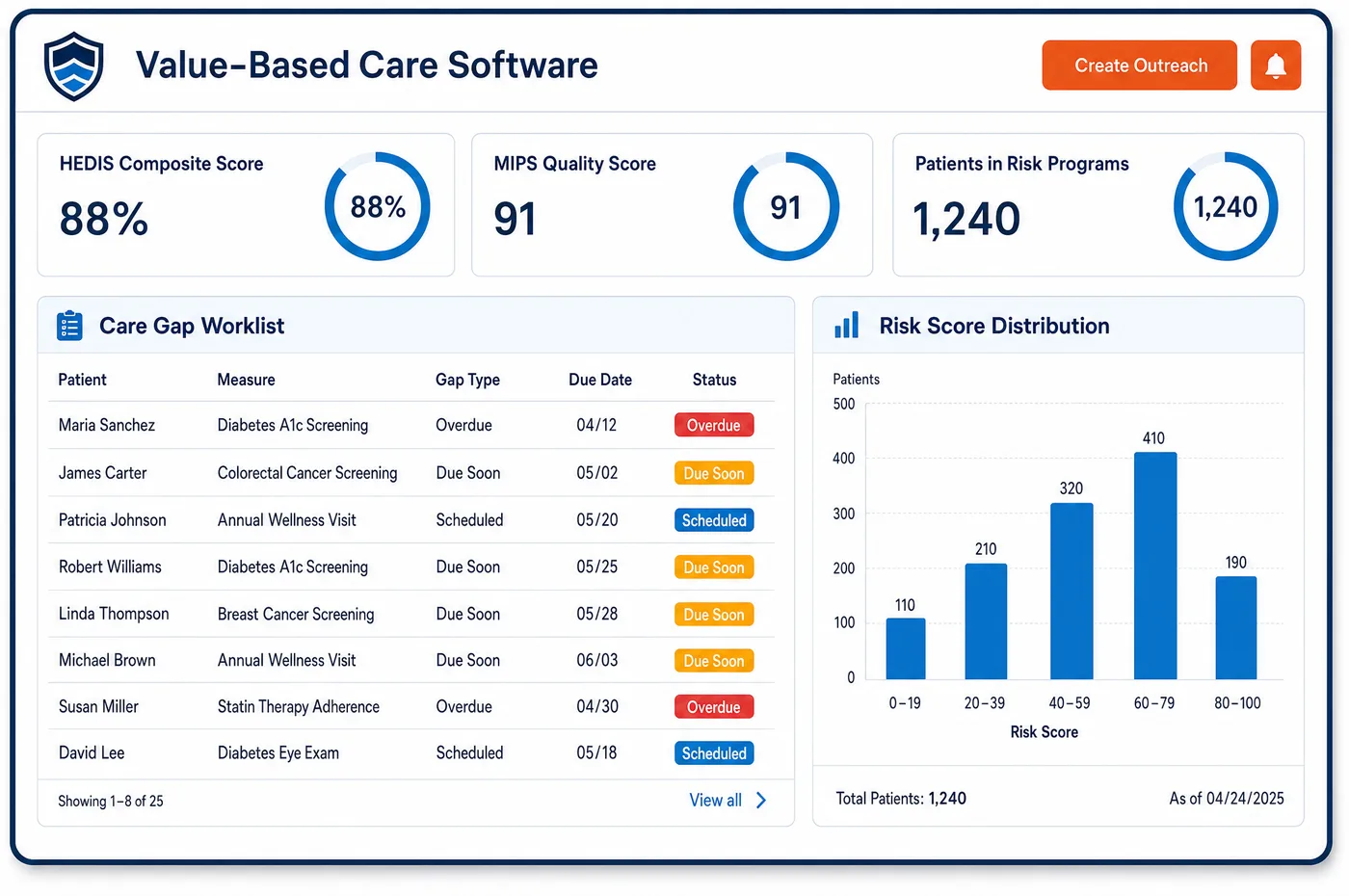
Value-Based Care in a Clinical Research Practice
A practice that runs trials alongside patient care often has the same patients in a study and in a value-based contract. Their quality measures still count. Their costs may look odd, since trial care can add visits, scans and labs. Some of that care is paid outside the plan that holds the contract. For qualifying trials, Original Medicare pays routine costs for Medicare Advantage enrollees, so the plan's own claims may not show them. In Medicaid, a state may pay trial costs outside its managed care contracts. Unlimited Systems flags enrolled participants on the panel and links them to their study, so a cost or utilization spike can be explained before a payer asks. Quality measures and care gaps are tracked during the visit, the same as for any patient. CED studies are tracked by study number, since coverage depends on being in an approved study. Shared savings sit in the same ledger as study revenue.
Why Is Value-Based Care Different in Clinical Research?
Value-based care and research overlap more than most sites expect. A participant in an oncology or cardiology trial is often also on a MIPS quality measure, an ACO panel or a payer's risk contract. The trial adds care that the contract never planned for. Without a flag on the participant, a contract manager sees a costly patient and has no way to tell that the extra spend came from a study.
Where the money flows is unusual, too. Routine trial costs for a Medicare Advantage enrollee in a qualifying trial are paid by Original Medicare, not the plan, while IDE studies stay with the plan. Medicaid programs may pay trial costs outside their managed care contracts. So the payer that holds the contract may never see part of a participant's care. Reading contract results means knowing which care sat inside the contract and which sat outside it.
Some coverage is itself a form of evidence program. Under Coverage with Evidence Development, CMS pays for certain items only for patients in an approved study or registry, and the claim must carry the study number. A site taking part is producing the evidence Medicare will use to decide future coverage. Tracking those patients and claims by study is part of value-based work, not apart from it.
What Clinical Research Value-Based Care Software Handles
- Medicare Advantage routine trial costs
- Original Medicare covers routine costs in qualifying trials for every enrollee, including those in Medicare Advantage plans. Participants are flagged on MA risk panels, since that care may not appear in the plan's own claims data. (CMS Medicare Managed Care Manual, Chapter 4, Section 10.7: Clinical Trials)
- MA out-of-pocket maximum
- The plan owes the enrollee the gap between Original Medicare and in-network cost sharing, and the in-network share must count toward the plan's out-of-pocket maximum. Staff can point participants to that rule when they ask about cost. (CMS Medicare Managed Care Manual, Chapter 4, Section 10.7: Clinical Trials)
- Coverage with Evidence Development
- Under CED, CMS covers some items and services only in the context of an approved clinical study. Patients in a CED study are tracked by study and coverage determination, so registry duties stay visible. (CMS: Coverage with Evidence Development)
- Trial number on CED claims
- Since 2014, Medicare has required a clinical trial number on claims for services in clinical trials, studies, registries and CED. Claims for CED patients are checked for that number before they leave. (CMS Medicare Claims Processing Manual, Chapter 32, Section 69: Qualifying Clinical Trials)
- Medicaid managed care
- States using managed care must either cover routine trial costs outside their plan contracts or write the duty into those contracts and adjust capitation. Participants in Medicaid plans are tagged with which path their state uses. (CMS State Medicaid Director Letter 21-005: Mandatory Medicaid Coverage of Routine Patient Costs in Qualifying Clinical Trials)
- Commercial in-network rules
- A plan may require a participant to join a trial through an in-network provider when one takes part in it. That limit does not apply to a trial run outside the participant's home state. (42 U.S.C. 300gg-8: Coverage for individuals participating in approved clinical trials)
How Does Clinical Research Value-Based Care Software Work?
1. Flag participants on attributed panels
Patients enrolled in a study are tagged on every value-based panel they belong to. Contract managers see the study, the sponsor and the dates of participation.
2. Keep quality work going
Quality measures and care gaps are tracked during each visit, trial or not. A study visit can close a gap when the care it includes meets the measure.
3. Mark care paid outside the contract
Trial care billed to Original Medicare for MA enrollees, or paid outside a Medicaid plan contract, is marked as outside the contract. Cost reviews can then set it apart.
4. Track CED and registry studies
Patients in CED studies are listed by study number and coverage decision. Missing study numbers are caught before a claim goes out, and registry tasks stay on the study's list.
5. Read results with study context
When an alternative payment model or risk contract reports results, study-level analytics show how much of the cost and use came from trial participants.
Clinical Research Value-Based Care Software vs. Generic Software
| Area | Generic approach | Unlimited Systems |
|---|---|---|
| Participants on risk panels | Not flagged, so trial costs look like waste. | Tagged with study and dates on every panel. |
| Care paid outside the contract | Assumed to be in the plan's data. | Marked when Original Medicare or a state pays outside the plan. |
| CED studies | Tracked in a separate registry file. | Listed by study number and coverage decision, with claims checked. |
| Quality measures | Paused or missed for trial patients. | Tracked at each visit, the same as for any patient. |
| Contract finances | Shared savings in one place, study revenue in another. | Both in the same general ledger. |
Who Uses It in a Clinical Research Practice
- Value-based care manager: Trial participants flagged on every panel, with a clear mark on care paid outside the contract.
- Research director: A list of CED and registry patients by study, with claim numbers checked and study tasks in view.
- Physician owner: Contract results that account for research, so a strong trial program doesn't look like poor cost control.
Clinical Research Value-Based Care Software FAQs
Value-based care software keeps trial participants on their panels and in their quality measures, but tags them with their study and dates. Care paid outside the contract, such as trial costs Original Medicare pays for Medicare Advantage enrollees, is marked as such. Contract managers can then read cost and use with the study in mind instead of treating it as waste.
For qualifying clinical trials, Original Medicare pays the routine costs for Medicare Advantage enrollees. The plan pays the enrollee the difference between Original Medicare cost sharing and its own in-network cost sharing. IDE device studies work differently, with the plan paying. A risk contract with an MA plan may therefore not show some trial care in the plan's data.
Coverage with Evidence Development is a CMS approach in which certain items and services are covered only in the context of an approved clinical study. CED studies are tied to specific national coverage determinations. Medicare requires the clinical trial number on claims for these services, so a site taking part tracks each patient and claim by study.
Quality measures still apply to trial patients in the practice's programs. A participant who is in a MIPS measure denominator or on a payer's panel stays there while enrolled. Many study visits include care that also meets a measure, so tracking gaps at each visit, trial or not, keeps scores on course and avoids missing care that was in fact given.
A commercial plan may require a participant to join a trial through an in-network provider when one is taking part in the trial and will accept the patient. That rule does not apply when the trial is run outside the state where the participant lives. Plans also aren't required to cover out-of-network routine care beyond the benefits they already offer.
States that use Medicaid managed care must either pay routine trial costs outside their plan contracts or require the plans to cover them and adjust capitation rates. Which path a state chose affects who pays the claim and whose data shows the care. Tagging Medicaid participants with that path keeps billing and contract reviews accurate.
Related Clinical Research Software
Analytics & value-based care
In the revenue cycle
Value-Based Care for related specialties
Sources
- CMS Medicare Managed Care Manual, Chapter 4, Section 10.7: Clinical Trials
- CMS: Coverage with Evidence Development
- CMS Medicare Claims Processing Manual, Chapter 32, Section 69: Qualifying Clinical Trials
- CMS State Medicaid Director Letter 21-005: Mandatory Medicaid Coverage of Routine Patient Costs in Qualifying Clinical Trials
- 42 U.S.C. 300gg-8: Coverage for individuals participating in approved clinical trials
GET STARTED
See Unlimited Systems in Action
Whether you're actively evaluating new technology or simply preparing for your next vendor renewal, Unlimited Systems can help you understand where your current workflows may be creating avoidable revenue risk.