

Billing & claims
Clinical Research Denial Management Software
Trial claim returns and denials sorted by cause, fixed or appealed under the right rule, and traced back to the coverage analysis or enrollment.
Clinical Research Denial Management Software sorts and works the trial claims that come back unpaid. It tells unprocessable returns, such as a missing NCT number, apart from true denials, such as a routine service denied as experimental. Each gets the right fix or appeal, and repeat causes are traced back to where they started.



 6,500+ specialty providers

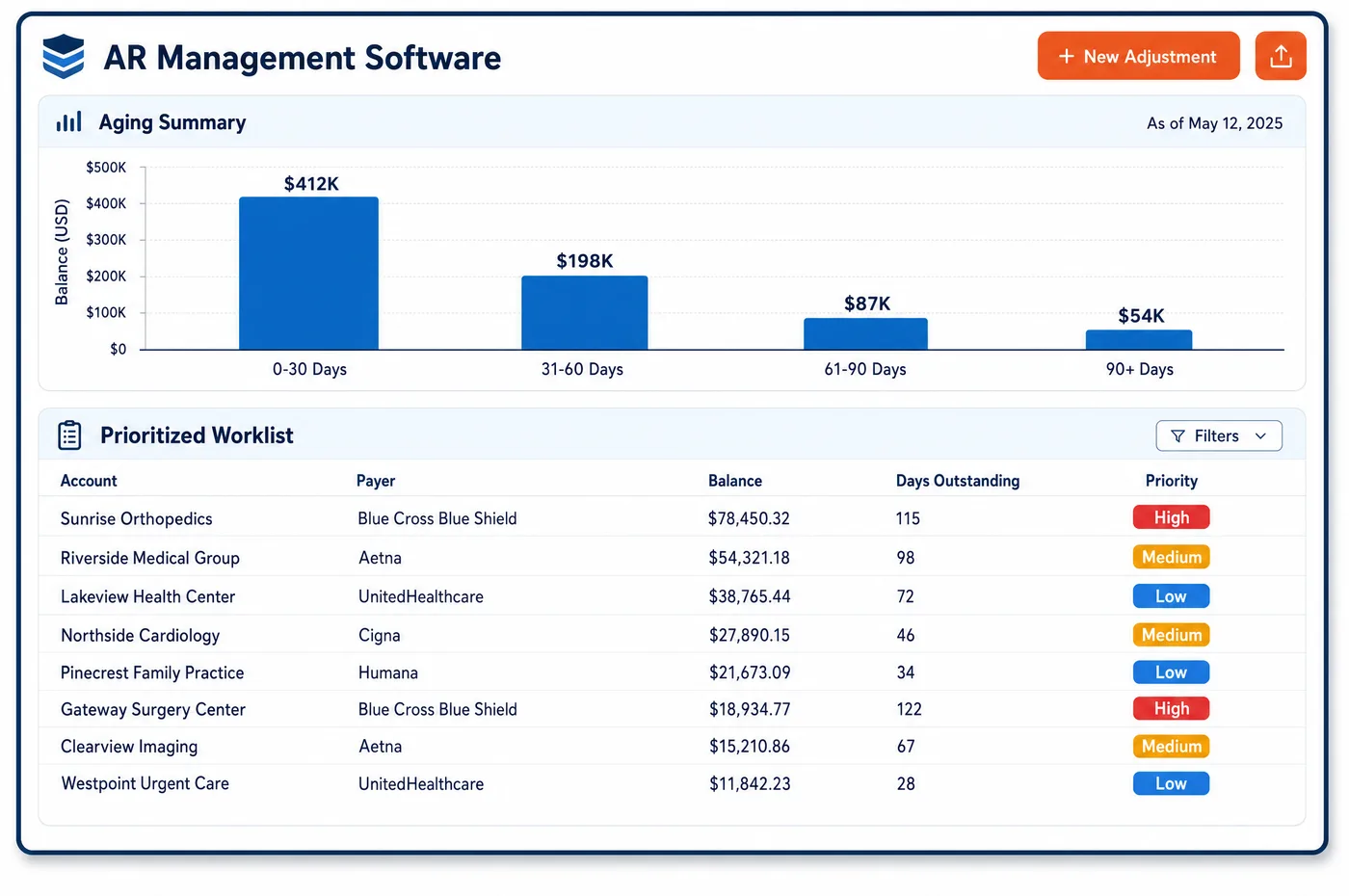
Denial Management in a Clinical Research Practice
Trial claims come back in two ways, and they need different handling. Some are returned as unprocessable. Medicare uses CARC 16 with remark M76 when Q1 is billed without Z00.6, and with MA50 and MA130 when the clinical trial number is missing. These cannot be appealed. The claim is fixed and sent again. Others are true denials. A routine service may be denied for medical necessity, or a commercial plan may call it experimental. For Medicare, trial services that meet the national policy are treated as reasonable and necessary, so a correctly coded claim denied in error can be adjusted. For commercial plans, federal law bars denying routine costs in approved trials for cancer and other life-threatening conditions. Clinical research denial management sorts each one by cause, sends it to the right person, and tracks how often each cause recurs by study.
Why Is Denial Management Different in Clinical Research?
Many trial claim problems are not denials at all. A missing NCT number or a Q1 line without Z00.6 gets a claim returned before anyone looks at the service. Appealing these wastes time, because there are no appeal rights on an unprocessable claim. The fix is a corrected claim, and the lasting fix is upstream, where the number or code went missing.
True denials in research often come from a payer that does not see the trial. A Medicare contractor may deny a routine scan for medical necessity, not noticing the trial coding. A commercial plan may deny a routine visit as experimental because the person is in a study. A Medicare Advantage plan may deny trial services that should have gone to Original Medicare in the first place. Each needs a different answer.
The pattern matters more than any one claim. If every participant on one study has the same denial, the cause is usually in the coverage analysis or the enrollment setup, not in the claims. Denial management for a research site has to group denials by study and by cause, so one fix at the source clears the problem for everyone on that protocol.
What Clinical Research Denial Management Software Handles
- CARC 16 with remark M76
- Medicare returns a claim with Q1 and no Z00.6 as unprocessable, using CARC 16 and remark M76. The fix is to add the diagnosis and send a new claim, not to appeal. (CMS Medicare Claims Processing Manual, Chapter 32, Sections 69.4, 69.6 and 69.8 (local policy, billing requirements, erroneous denials))
- CARC 16 with remarks MA50 and MA130
- A practitioner claim without a clinical trial number comes back with CARC 16, MA50 and remark MA130, which says no appeal rights apply. Staff add the number from the enrollment and resubmit. (CMS Medicare Claims Processing Manual, Chapter 32, Sections 69.4, 69.6 and 69.8 (local policy, billing requirements, erroneous denials))
- Trial claims denied in error
- When a claim had the right trial coding but was denied, for example for medical necessity, the contractor adjusts it once told. When the services were not coded as trial services, the provider sends a new claim with the trial coding. (CMS Medicare Claims Processing Manual, Chapter 32, Sections 69.4, 69.6 and 69.8 (local policy, billing requirements, erroneous denials))
- Trial services as reasonable and necessary
- Medicare's manual says contractors do not write new local policies for trial services, and services that meet the national policy are reasonable and necessary. That point anchors a reply to a medical necessity denial on a qualifying trial claim. (CMS Medicare Claims Processing Manual, Chapter 32, Sections 69.4, 69.6 and 69.8 (local policy, billing requirements, erroneous denials))
- Commercial denials as experimental
- Group and individual plans may not deny or limit routine patient costs for a qualified person in an approved trial for cancer or another life-threatening condition. Appeals of these denials cite the federal rule. (42 U.S.C. 300gg-8 (Public Health Service Act section 2709): Coverage for individuals participating in approved clinical trials)
- Wrong payer for Advantage members
- Original Medicare pays routine costs in qualifying trials for Advantage members, while the plan pays in approved device studies. A denial from the wrong payer is rebilled to the right one rather than appealed. (CMS Medicare Managed Care Manual, Chapter 4, Section 10.7 (Clinical Trials))
How Does Clinical Research Denial Management Software Work?
1. Catch it before it goes
Claims likely to come back, such as a Q1 line without Z00.6, are flagged before submission. Most are fixed in trial charge validation and never reach the payer.
2. Sort by type and cause
Returned claims are split from true denials. Each is tagged by cause, such as a missing NCT number, a medical necessity denial or the wrong payer, and by study.
3. Route to the right person
Coding problems go to coders. Coverage and payer problems go to research finance staff who know the coverage analysis and the trial contract.
4. Fix, rebill or appeal
Unprocessable claims are corrected and sent again. True denials get a reopening request or an appeal that cites the trial rule that applies. The queue puts the largest amounts and nearest filing deadlines first.
5. Trace repeat causes
Causes are counted by study. A wrong plan type points to patient registration for participants, and a recurring coverage error points to the study's coverage analysis.
Clinical Research Denial Management Software vs. Generic Software
| Area | Generic approach | Unlimited Systems |
|---|---|---|
| Returned claims | Appealed like denials, then rejected again. | Corrected and resubmitted, since no appeal rights apply. |
| Medical necessity denials | Written off as a payer decision. | Answered with the trial coverage rule that applies. |
| Experimental denials | Passed to the participant as a balance. | Appealed under the federal rule for approved trials. |
| Wrong payer | Worked with the payer that denied it. | Rebilled to the payer that should pay. |
| Root cause | Each claim fixed on its own. | Causes grouped by study and fixed at the source. |
Who Uses It in a Clinical Research Practice
- Denial specialist: A queue that separates returns from denials, with the cause and the trial rule to cite already attached.
- Research finance director: Denials grouped by study, so a coverage analysis or setup problem is found once, not claim by claim.
- Compliance officer: A record of each correction and appeal, showing that trial claims were fixed under the right rule.
Clinical Research Denial Management Software FAQs
Denial management treats unprocessable returns as fixes, not appeals. Medicare returns trial claims missing the NCT number, or with Q1 and no Z00.6, under CARC 16 with remarks such as M76, MA50 or MA130. No appeal rights apply. Staff add the missing detail from the enrollment and send a new claim, then fix the setup that caused it.
If the claim carried the right trial coding, the contractor can adjust a denial made in error once the site points it out. Medicare's manual says services that meet the trial coverage policy are reasonable and necessary. If the claim was not coded as a trial claim, the site sends a new claim with the trial coding.
For approved trials in cancer and other life-threatening conditions, federal law bars group and individual plans from denying or limiting routine patient costs because a person takes part. The plan need not pay for the study item or data-only services. Appeals of routine care denials can cite this rule, along with the plan's own policy.
Wrong-payer denials usually come from the plan type. For qualifying trials, routine costs for Advantage members bill to Original Medicare, so a claim sent to the plan may be denied. In approved device studies, the plan pays instead. Staff rebill to the correct payer and fix the plan type on the record if it was wrong.
When several participants on one study get the same denial, the cause is usually upstream. It may be a service sorted wrong in the coverage analysis, a missing NCT number on the protocol, or a plan type recorded wrong. Fixing the source once clears the problem for every later claim on that study.
It depends on why it came back. Unprocessable returns are rebilled with the missing detail, since they carry no appeal rights. Claims sent to the wrong payer are rebilled to the right one. True denials of covered services, such as a medical necessity or experimental denial, are worked as reopenings or appeals under the rule that applies.
Related Clinical Research Software
Billing & claims
In the revenue cycle
Denial Management for related specialties
Sources
- CMS Medicare Claims Processing Manual, Chapter 32, Sections 69.4, 69.6 and 69.8 (local policy, billing requirements, erroneous denials)
- 42 U.S.C. 300gg-8 (Public Health Service Act section 2709): Coverage for individuals participating in approved clinical trials
- CMS Medicare Managed Care Manual, Chapter 4, Section 10.7 (Clinical Trials)
- CMS National Coverage Determination 310.1: Routine Costs in Clinical Trials
GET STARTED
See Unlimited Systems in Action
Whether you're actively evaluating new technology or simply preparing for your next vendor renewal, Unlimited Systems can help you understand where your current workflows may be creating avoidable revenue risk.