

Payments & AR
Diabetes Care Patient Billing Software
Statements that explain what a diabetes patient owes for training, CGM reads and visits, and why nutrition therapy or an A1c often shows no balance.
Diabetes Care Patient Billing Software turns the patient's share of diabetes care into a clear statement. It shows what each payer paid for visits, CGM interpretation, training and nutrition therapy, what the patient owes and why. Statements go out by text or email from the live ledger, with estimates compared against what was billed.



 6,500+ specialty providers

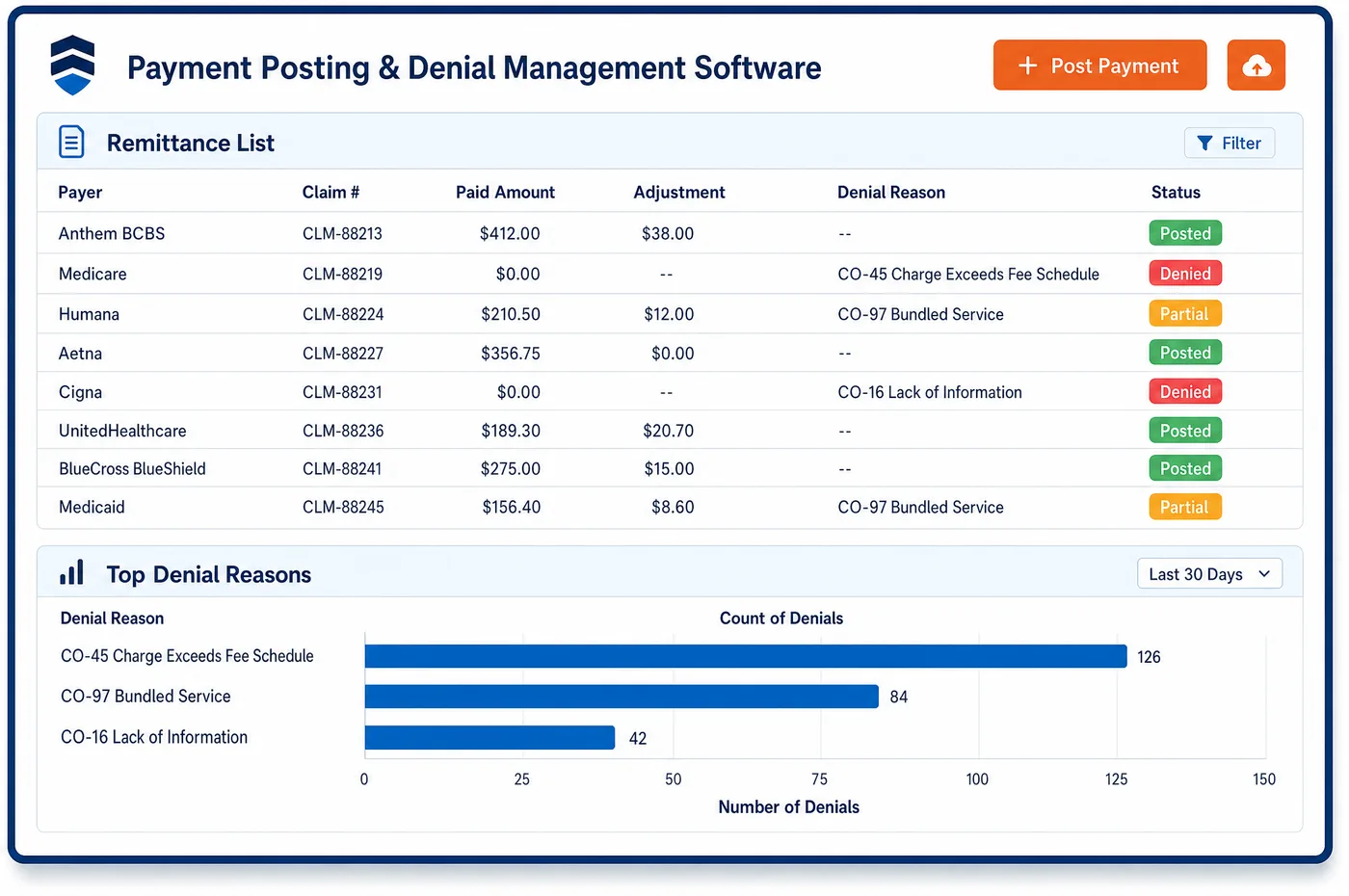
Patient Billing in a Diabetes Care Practice
Patient balances in diabetes care come from many small services spread across the year. A patient in a training program may owe Part B coinsurance on each class date. A patient on CGM may see a charge for a month in which the clinician read the device data but no visit took place. The same patient may owe nothing for nutrition therapy or an in-office A1c, which confuses people who expect every line to cost something. Unlimited Systems builds each statement from the posted remittance, so the balance on the statement is the balance on the ledger. Lines are grouped by service and date, with the payer's payment and the patient's share side by side. Balances waiting on a supplemental plan are held back until that payer responds. Statements go out by secure text or email with a link to pay, and payment plans can be offered for larger balances.
Why Is Patient Billing Different in Diabetes Care?
Diabetes care spreads cost sharing over many visits and services, often under different rules. Under Medicare Part B, self-management training carries the deductible and coinsurance, while covered nutrition therapy and most diagnostic lab tests do not. A patient who goes to class and sees the dietitian in the same month may get a statement with a balance on one service and nothing on the other. Without a clear line-by-line view, that patient calls the office to ask why.
Device care adds charges that patients do not connect to a visit. When a clinician reviews a month of CGM data and writes a report, the practice bills that work as 95251. The patient sees a charge from a month when they never came in. Patients also mix up the practice's bill with the bill from the company that supplies their sensors. Medicare covers CGM supplies as durable medical equipment, billed by the supplier. Patient billing in diabetes care has to label device work plainly and make clear what the practice did and did not bill.
Many diabetes patients carry a second payer, and many others carry high deductibles on commercial plans. A statement sent before the supplemental plan pays shows a balance that will soon shrink. A statement sent to an uninsured patient needs to line up with any good faith estimate given before care. Timing and accuracy matter as much as the design of the page, and the ways to pay a diabetes balance need to be right on the statement.
What Diabetes Care Patient Billing Software Handles
- Coinsurance on diabetes training
- Medicare covers up to ten hours of initial training, and the patient pays Part B coinsurance after the deductible. Each class date appears as its own line, so the patient can match the balance to the sessions attended. (Medicare.gov: Diabetes self-management training)
- No patient share for nutrition therapy
- A patient who qualifies for Medicare nutrition therapy pays nothing for it. Those lines show as paid in full, which answers the most common question before the patient calls. (Medicare.gov: Medical nutrition therapy services)
- Diagnostic lab tests such as A1c
- Patients usually pay nothing for Medicare-covered diagnostic lab tests. An A1c line shows the payer's payment and a zero patient share, so it does not look like an error. (Medicare.gov: Diagnostic laboratory tests)
- CGM supplies billed by a supplier
- Medicare covers CGM devices and sensors as durable medical equipment, supplied by an enrolled supplier. The practice's statement lists only its own services, such as the 95251 report, so patients know where a supply bill came from. (Medicare.gov: Continuous glucose monitors)
- Patient share codes on the 835 (CARC 1, CARC 2)
- Deductible posts as CARC 1 and coinsurance as CARC 2 under the patient responsibility group. The statement shows each one by name on the line it applies to, using the coinsurance wording patients see on their EOB. (X12 Claim Adjustment Reason Codes)
- Good faith estimates for self-pay patients
- Uninsured and self-pay patients have a right to a good faith estimate before scheduled care. When a training program or CGM start is self-pay, the statement can be compared with the good faith estimate that was given. (CMS: Good Faith Estimate (No Surprises Act))
How Does Diabetes Care Patient Billing Software Work?
1. Build the balance from the remittance
Each statement is drawn from posted payments and adjustments. The patient's share on every line comes from the payer's own codes.
2. Hold balances for the next payer
When a supplemental plan is still due to pay, the balance is held. The statement goes out once the last payer has responded, so the patient sees a final amount.
3. Label device and program services
CGM reads, training classes and nutrition visits get plain names and dates. The patient can tell a class from a device report at a glance.
4. Send statements by text and email
Statements go out by secure text or email, with a link to view and pay. Patients who prefer paper can still get it.
5. Offer a plan for larger balances
Patients with a large deductible balance can be offered a payment plan. Plan payments post back to the same ledger the statement reads from.
Diabetes Care Patient Billing Software vs. Generic Software
| Area | Generic approach | Unlimited Systems |
|---|---|---|
| Statement detail | One total with gross charges and no explanation. | Lines by service and date, with payer paid and patient share. |
| Zero-balance services | Nutrition and lab lines left off, so patients wonder. | Shown as paid in full, with a zero patient share. |
| Supplemental payers | Statement sent before the second payer pays. | Balance held until the last payer responds. |
| Device charges | CGM reports listed by code only. | Plain labels that explain the device data review. |
| Delivery | Paper statements mailed on a fixed cycle. | Secure text and email with a link to pay. |
Who Uses It in a Diabetes Care Practice
- Billing staff: Fewer calls about small balances, since each statement explains which services carry a patient share and which do not. Balances come straight from posted diabetes remittances.
- Patient: A statement that matches the classes attended and the device reports done, with a simple way to pay or set up a plan.
- Practice owner: Patient balances that are collected sooner, with fewer disputes and fewer statements sent before the last payer has paid.
Diabetes Care Patient Billing Software FAQs
Patient billing lists the CGM interpretation as its own service. When a clinician reviews a month of device data and writes a report, the practice bills it as 95251, even though the patient did not come in. The statement names it as a review of glucose monitor data and shows what the payer paid and what the patient owes.
Medicare covers diabetes self-management training, and the patient pays Part B coinsurance after the deductible is met. Each class date appears as its own line, so the patient can check the balance against the sessions they attended. Medicare Advantage and commercial plans set their own cost sharing, which the statement reflects as the payer reported it.
A patient who qualifies for Medicare medical nutrition therapy pays nothing for covered services. The statement still lists the visit, with the full amount paid by Medicare and a zero patient share. Showing it this way answers the question before the patient calls. Other payers may apply cost sharing, which appears on the line if they do.
CGM devices and sensors are covered by Medicare as durable medical equipment and billed by an enrolled supplier, not by the practice. The practice's statement lists only its own services, such as the device data review or CGM startup. A short note can tell patients that supply bills come from their supplier.
A statement is held while a supplemental plan or Medicaid is still due to pay. Once the last payer responds, the final patient share goes out on the statement. This avoids sending a balance that will change, which is a common cause of calls and of payments that later turn into refunds.
Uninsured and self-pay patients have a right to a good faith estimate before scheduled care. When a self-pay patient starts a training program or a professional CGM study, the estimate is kept on the account. The final statement can be compared with it, and staff can explain any difference before the patient asks.
Related Diabetes Care Software
Payments & AR
In the revenue cycle
Patient Billing for related specialties
Sources
GET STARTED
See Unlimited Systems in Action
Whether you're actively evaluating new technology or simply preparing for your next vendor renewal, Unlimited Systems can help you understand where your current workflows may be creating avoidable revenue risk.