

Payments & AR
Addiction Medicine Accounting Software
Fund accounting for addiction programs: insurance, grants and patient fees kept apart, drug cost matched to bundles, and each program closed on its own.
Addiction Medicine Accounting Software carries every charge, payment and adjustment from billing into the general ledger by program, site and funding source. It keeps grant money, insurance revenue and patient fees in separate lines, matches drug cost to OTP bundles and long-acting injections, and gives each program its own books at month end.



 6,500+ specialty providers

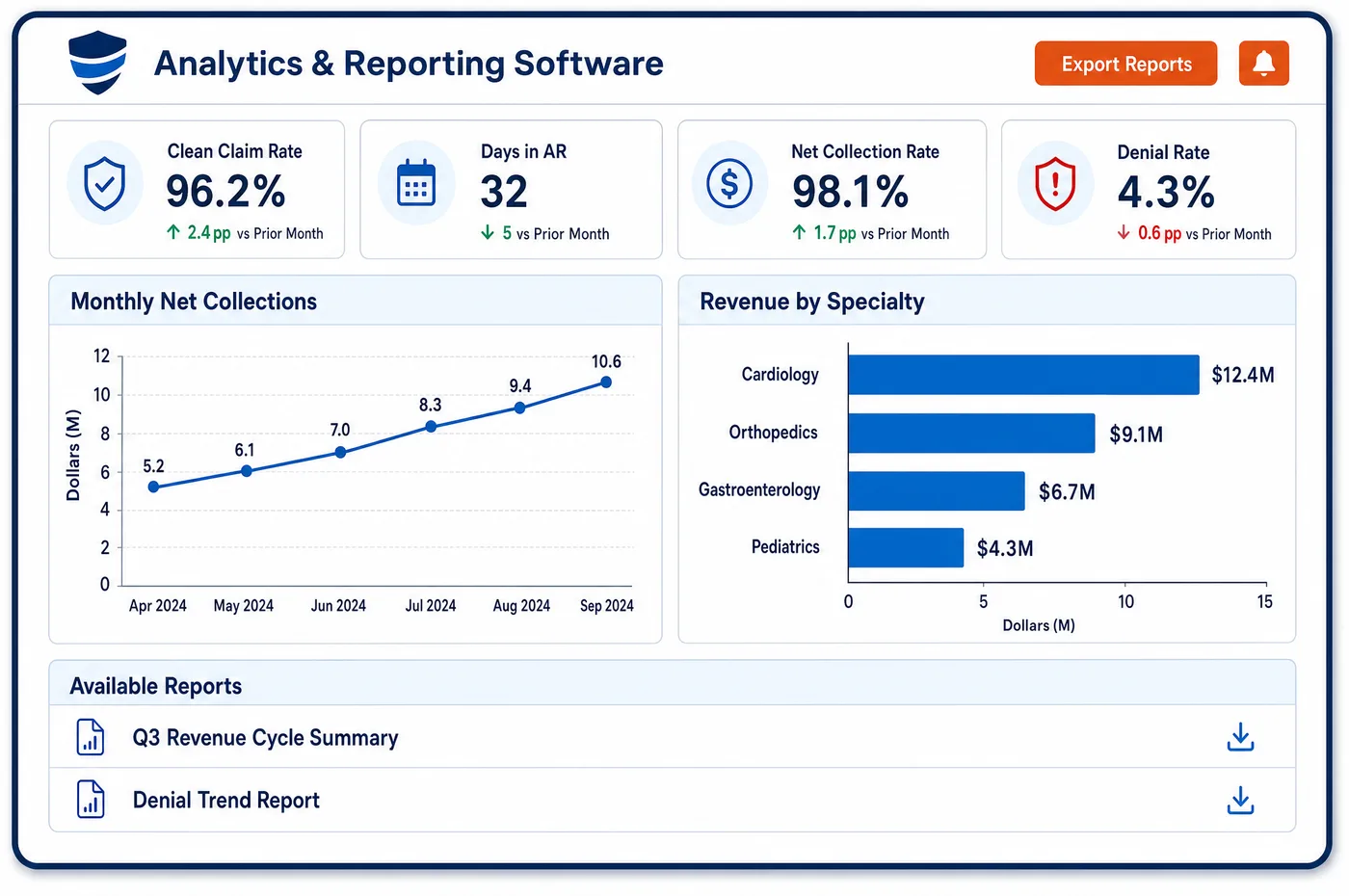
Accounting in a Addiction Medicine Practice
Money in an addiction practice comes from sources that each have their own rules. Insurance pays claims. Grants pay for allowed costs and set rules on how fees earned under them are used. State contracts may pay per service or per slot. Patients pay sliding fee amounts. Unlimited Systems posts each of these to the general ledger with the program and funding source it belongs to, so the OTP, the intensive outpatient program and the office-based clinic can each be read on their own. Drug cost is tracked against what was billed. For an OTP, the methadone or buprenorphine cost sits inside a weekly bundle payment. For an office practice, a long-acting injection is bought, stored and billed as a drug line. Accounting for each one shows whether the payment covers the drug and the care. Sliding fee discounts, charity care and bad debt post as different adjustments, so reports show which is which.
Why Is Accounting Different in Addiction Medicine?
Fund accounting is the norm for many addiction programs, not an extra. A program may hold a block grant, a state opioid response award, county contracts and payer revenue at once. Each funder wants to see what its money paid for, and some limit how program income can be used. General ledger entries that only show total cash cannot answer those questions.
Drug cost works differently across settings. In an OTP, the weekly bundle includes the drug, so the cost of methadone or buprenorphine is part of each bundle's margin. In an office practice that gives long-acting buprenorphine, the drug is bought and billed under its own HCPCS code. The same patient's medicine can be a cost inside a bundle in one site and a separate revenue line in another. Accounting has to keep both views straight.
Many groups also run more than one entity or site, such as a certified OTP, an outpatient clinic and an intensive outpatient program. Each may have its own enrollment, payer contracts and grant awards. Closing the month means closing each one, then rolling them up. When billing and the ledger share one data source, that close starts from posted detail rather than from spreadsheets.
What Addiction Medicine Accounting Software Handles
- Program income under federal awards (2 CFR 200.307)
- Federal grant rules set how income earned under an award must be used, such as adding it to the program or deducting it from costs. Patient fees and insurance payments for grant-supported services post with the award they relate to, so the program can apply its award's terms. (eCFR: 2 CFR 200.307, Program income (Uniform Guidance))
- Block grant as payment of last resort
- Block grant charges post only after insurance and other payers are applied. The ledger shows the insurance result next to each grant charge, which supports the payer-of-last-resort rule. (eCFR: 45 CFR 96.137, Payment schedule (block grant as payment of last resort))
- Drug cost inside OTP bundles (G2067, G2068)
- The methadone and oral buprenorphine weekly bundles include dispensing and the drug, while G2074 covers a week without the drug. Drug cost is matched to the bundle billed, so margin can be read by bundle code. (Federal Register: CY 2020 Physician Fee Schedule final rule, OTP bundle codes G2067 to G2080 (84 FR 62568))
- Take-home supply add-ons (G2078, G2079)
- Take-home methadone and oral buprenorphine are billed as add-ons to the weekly bundle. Drug cost for take-home supply is tracked against those add-on payments. (CMS: Opioid Treatment Program (OTP) Billing and Payment)
- Long-acting buprenorphine codes (Q9991, Q9992, J0577, J0578)
- Sublocade and Brixadi are billed under their own HCPCS codes as medical benefit drugs. Acquisition cost is compared with what each payer paid for the code, so a product that loses money is visible. (UnitedHealthcare Commercial Medical Benefit Drug Policy: Buprenorphine (Brixadi and Sublocade), effective October 1, 2026)
- Sliding fee discounts in HRSA health centers
- Health centers in HRSA's program set discounts by income and family size. Those discounts post as their own adjustment type, apart from bad debt and contractual write-offs. (HRSA Health Center Program Compliance Manual, Chapter 9: Sliding Fee Discount Program)
How Does Addiction Medicine Accounting Software Work?
1. Map billing to the ledger
Each charge, payment and adjustment carries its program, site and funding source. Those tags map to cost centers and accounts in the general ledger.
2. Tag funding sources
Insurance, grant, state contract and patient money each post to their own lines. Grant charges are made only after the insurance result has posted.
3. Match drug cost
Drug purchases are recorded with their cost and matched to the OTP bundles, take-home add-ons and injections billed. Margin is shown by drug code and payer.
4. Separate the adjustments
Contractual adjustments, sliding fee discounts, charity care and bad debt post as different types. Each one can be reported on its own.
5. Close each program, then roll up
Each entity or program closes on its own detail. A rolled-up view then shows the whole group, and journal entries export to the accounting system.
Addiction Medicine Accounting Software vs. Generic Software
| Area | Generic approach | Unlimited Systems |
|---|---|---|
| Funding sources | All cash posted to one revenue account. | Insurance, grant, contract and patient money posted to separate lines. |
| Drug cost | Drug purchases expensed with no link to billing. | Drug cost matched to the bundle or injection code billed. |
| Grant charges | Grant billed first to speed up cash. | Grant charged after insurance is applied. |
| Discounts and write-offs | Sliding fee, charity care and bad debt mixed together. | Each adjustment type posted and reported on its own. |
| Month-end close | Rebuilt from spreadsheets for each program. | Each program closed from posted billing detail. |
Who Uses It in a Addiction Medicine Practice
- Controller: A ledger that already splits revenue by program and funding source, with journal entries that tie back to billing detail.
- Grants manager: Grant charges, program income and the insurance result for each service in one place. That makes funder reports and grant reporting faster to build.
- Chief executive: Margin by program, site and drug code, so decisions about an OTP, an IOP or an injection program rest on real numbers.
Addiction Medicine Accounting Software FAQs
Accounting tags each payment and charge with its funding source when it posts. Grant charges, insurance revenue, state contract payments and patient fees post to their own lines in the general ledger. Each award can then be read on its own, with the services it paid for and the program income tied to it.
In an OTP, the weekly bundle payment includes the drug, so drug cost is part of the bundle's margin. Methadone and buprenorphine purchases are recorded and matched to the bundles and take-home add-ons billed. The result shows whether each bundle code covers its drug cost plus the counseling, testing and other care it includes.
Long-acting buprenorphine products such as Sublocade and Brixadi are billed under their own HCPCS codes. The practice buys the drug, stores it and bills it after it is given. Accounting compares the acquisition cost with what each payer paid for the code, so a product or payer that does not cover cost is easy to see.
Sliding fee discounts are not bad debt. They post as their own adjustment type when the balance is set, based on the patient's tier. Bad debt is only what remains unpaid after collection efforts under practice policy. Keeping them apart shows funders the real discount given and keeps bad debt numbers honest.
Each program, site or entity can close on its own posted detail. The OTP, the intensive outpatient program and the office-based clinic each have their own revenue, cost and adjustment lines. A rolled-up view then shows the whole group, and journal entries export to the organization's accounting system.
Block grant funds are meant to pay only after other payers. The ledger shows each grant charge next to the insurance result for the same service. An auditor can see that the claim was billed and paid or denied before the grant was charged, which is the record the rule calls for.
Related Addiction Medicine Software
Payments & AR
Accounting for related specialties
Sources
- eCFR: 2 CFR 200.307, Program income (Uniform Guidance)
- eCFR: 45 CFR 96.137, Payment schedule (block grant as payment of last resort)
- Federal Register: CY 2020 Physician Fee Schedule final rule, OTP bundle codes G2067 to G2080 (84 FR 62568)
- CMS: Opioid Treatment Program (OTP) Billing and Payment
- UnitedHealthcare Commercial Medical Benefit Drug Policy: Buprenorphine (Brixadi and Sublocade), effective October 1, 2026
- HRSA Health Center Program Compliance Manual, Chapter 9: Sliding Fee Discount Program
GET STARTED
See Unlimited Systems in Action
Whether you're actively evaluating new technology or simply preparing for your next vendor renewal, Unlimited Systems can help you understand where your current workflows may be creating avoidable revenue risk.