

Payments & AR
Addiction Medicine Integrated Patient Payments Software
Card, text-to-pay, card-on-file and payment plans for addiction treatment, posted straight to the ledger and sent only where the patient approved.
Addiction Medicine Integrated Patient Payments Software lets patients pay for addiction treatment by card, mobile wallet, text link, card on file or payment plan, and posts each payment to the right visit or week of care. Payment links go only to the number or email the patient approved, and discounts are applied before any card is charged.



 6,500+ specialty providers

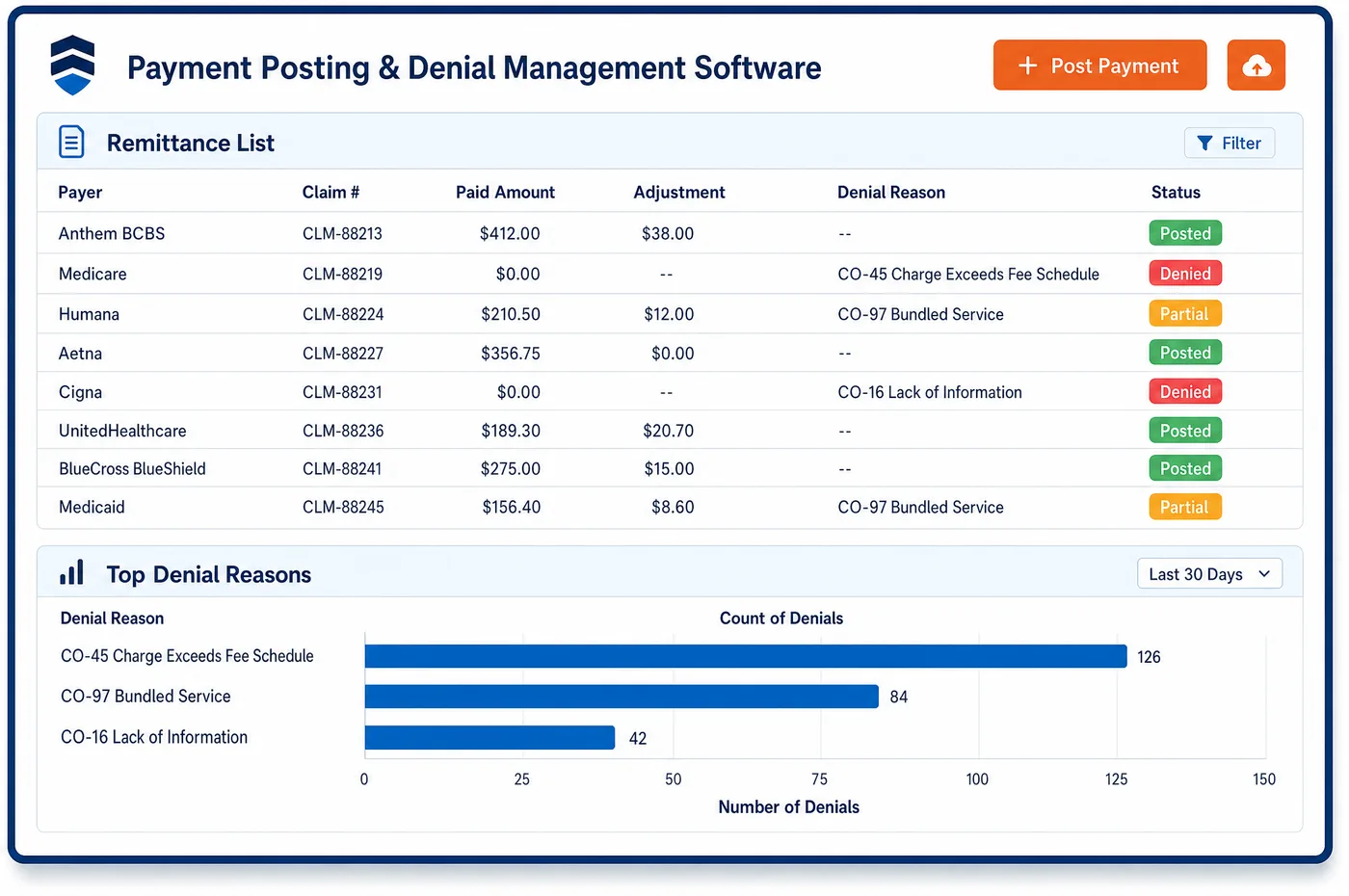
Integrated Patient Payments in a Addiction Medicine Practice
Patient payments in an addiction program are often small, frequent and tied to a schedule. A self-pay OTP patient may owe a set fee each week. An office-based patient may owe a copay at each visit and a deductible early in the year. A patient on a grant-funded week may owe a sliding fee amount or nothing at all. Integrated patient payments handle each of these at the point of care or from a text. Staff take a card at the desk, send a secure pay link by text or email, or charge a card on file under the patient's written consent. Payment plans let a patient spread a larger balance into set amounts. Each payment posts to the patient ledger as it clears, so the desk, the billing office and the patient all see one balance. Card data stays with a PCI-compliant gateway, not in the practice's own records.
Why Is Integrated Patient Payments Different in Addiction Medicine?
Steady payments matter more here than in most outpatient care, because a patient who falls behind may stop coming. Many addiction patients have limited income and unstable phone or mail access. A payment option that works from a text, takes a small amount, or runs on a schedule the patient agreed to keeps money from becoming a reason to leave treatment.
The amount has to be right before anyone pays. Sliding fee tiers, grant coverage and the Medicare OTP deductible all change what a patient owes. If the card is charged first and the discount applied later, the practice owes a refund and the patient loses trust. The patient share should come from the same balance the statement shows, not from a separate payment tool.
Privacy rules reach payments as well. A text that says what the payment is for can reveal treatment to anyone who sees the phone. Patients can ask for messages at a different number or address, and practices must agree to reasonable requests. Some patients choose to pay in full so a service is not reported to their health plan. Practices should also check how their name appears on card and bank statements, since that line can be seen by others.
What Addiction Medicine Integrated Patient Payments Software Handles
- Card data under PCI DSS
- Card payments run through a PCI-compliant gateway, and each stored card on file is kept as a token rather than a card number. The practice never keeps raw card data in its own system. (PCI Security Standards Council: PCI Data Security Standard)
- Confidential contact choices (45 CFR 164.522(b))
- Pay links and receipts go to the phone number or email the patient approved. Messages give the amount and a link without naming the program or the service. (eCFR: 45 CFR 164.522, Rights to request privacy protection for protected health information)
- Self-pay at the time of service under Part 2
- The 2024 Part 2 rule lets patients ask that records of services paid in full not go to their health plan. When a patient chooses this, the visit is paid at the desk and marked so no claim is filed. (Federal Register: Confidentiality of Substance Use Disorder Patient Records, final rule (February 16, 2024))
- Sliding fee before the charge
- For HRSA-funded health centers, discounts follow income and family size. The tier on the account sets the amount before a card on file or a payment plan is charged. (HRSA Health Center Program Compliance Manual, Chapter 9: Sliding Fee Discount Program)
- Medicare OTP deductible collection
- Medicare OTP services carry no copay, but the Part B deductible applies. When a weekly bundle leaves a deductible balance, the patient can pay it by text link or add it to a plan. (CMS: Opioid Treatment Program (OTP) Billing and Payment)
- Grant-funded weeks
- Block grant rules call for patient payments in line with ability to pay. On grant-covered weeks, the payment amount follows the program's fee policy for that patient. (eCFR: 45 CFR 96.137, Payment schedule (block grant as payment of last resort))
How Does Addiction Medicine Integrated Patient Payments Software Work?
1. Set the patient amount
Insurance, grant coverage and the sliding fee tier are applied first. What remains is the amount offered for payment at the desk or by link.
2. Choose how the patient pays
Patients pay by card or mobile wallet at the desk, by text-to-pay link, or online. Patients with set weekly fees can authorize a card on file instead.
3. Charge cards on file by consent
Stored cards are charged only under the patient's signed consent and the practice's policy. Each charge is tied to the week or visit it pays for, with a receipt sent to the approved contact.
4. Offer payment plans
Larger balances can move to a plan with set amounts and dates the patient agrees to. Plan payments draft from the card on file and post on their own.
5. Post and reconcile
Every payment posts to the patient ledger as it clears. Daily card batches are matched to bank deposits, in the same flow as insurance payment posting.
Addiction Medicine Integrated Patient Payments Software vs. Generic Software
| Area | Generic approach | Unlimited Systems |
|---|---|---|
| Pay options | Cash or check at the window only. | Card, mobile wallet, text link, online and card on file. |
| Discounts | Card charged in full, refund issued later. | Sliding fee and grant credits applied before the charge. |
| Message content | Pay texts name the clinic and the service. | Pay texts carry the amount and a link, sent to the approved contact. |
| Card storage | Card numbers written on paper or kept in files. | Cards held as gateway tokens under PCI rules. |
| Posting | Payments keyed into the ledger at day end. | Payments post to the ledger as they clear. |
Who Uses It in a Addiction Medicine Practice
- Front desk: One screen to take a card, send a pay link or charge a stored card, with the correct amount already set.
- Patient: Small, predictable payments by text or card on file, sent only to the contact they chose.
- Finance lead: Card batches that match the bank and a ledger that is current every day. Collections show up in practice analytics by program and payment type.
Addiction Medicine Integrated Patient Payments Software FAQs
Integrated patient payments include card and mobile wallet payments at the desk, secure text and email pay links, online payment, cards on file and payment plans. Each payment posts to the patient ledger as it clears. Discounts and grant credits are applied first, so the patient is only asked for the amount they actually owe.
A self-pay OTP patient can authorize the practice to charge a card on file for a set weekly fee. The charge runs under the signed consent and the practice's policy, and each payment is tied to the week of care it covers. A receipt goes to the contact the patient approved, without naming the service.
Pay-by-text messages can be written to show only the amount due and a secure link. They do not need to name the program, the clinician or the service. Messages go to the number the patient approved, and patients can ask for a different number or channel under HIPAA's confidential communication rule.
A larger balance can be moved to a payment plan with amounts and dates the patient agrees to. Payments draft from a card on file and post to the ledger as they clear. If a sliding fee tier or a grant credit changes the balance, the plan amount can be updated before the next draft.
A patient can choose to pay in full for a service and ask that it not be reported to their health plan. The 2024 Part 2 rule added this right for SUD records. Staff take the payment at the time of service and mark the visit, so no claim is filed with the plan for it.
Card data stays with a PCI-compliant payment gateway. When a patient saves a card, the practice keeps a token that points to it, not the card number itself. Staff can charge the stored card under the patient's consent, but they cannot see or export the full card number.
Related Addiction Medicine Software
Payments & AR
In the revenue cycle
Integrated Patient Payments for related specialties
Sources
- PCI Security Standards Council: PCI Data Security Standard
- eCFR: 45 CFR 164.522, Rights to request privacy protection for protected health information
- Federal Register: Confidentiality of Substance Use Disorder Patient Records, final rule (February 16, 2024)
- HRSA Health Center Program Compliance Manual, Chapter 9: Sliding Fee Discount Program
- CMS: Opioid Treatment Program (OTP) Billing and Payment
- eCFR: 45 CFR 96.137, Payment schedule (block grant as payment of last resort)
GET STARTED
See Unlimited Systems in Action
Whether you're actively evaluating new technology or simply preparing for your next vendor renewal, Unlimited Systems can help you understand where your current workflows may be creating avoidable revenue risk.