

Payments & AR
Psychiatry Integrated Patient Payments Software
Collect copays, session fees and plan payments by card, text or portal, posted straight to the psychiatric ledger.
Psychiatry Integrated Patient Payments Software lets patients pay for evaluations, therapy sessions and treatment courses by stored card, text link, online portal or payment plan. Every payment posts to the same account and visit the billing team works from, whether the patient was in the office or on a video visit from home.



 6,500+ specialty providers

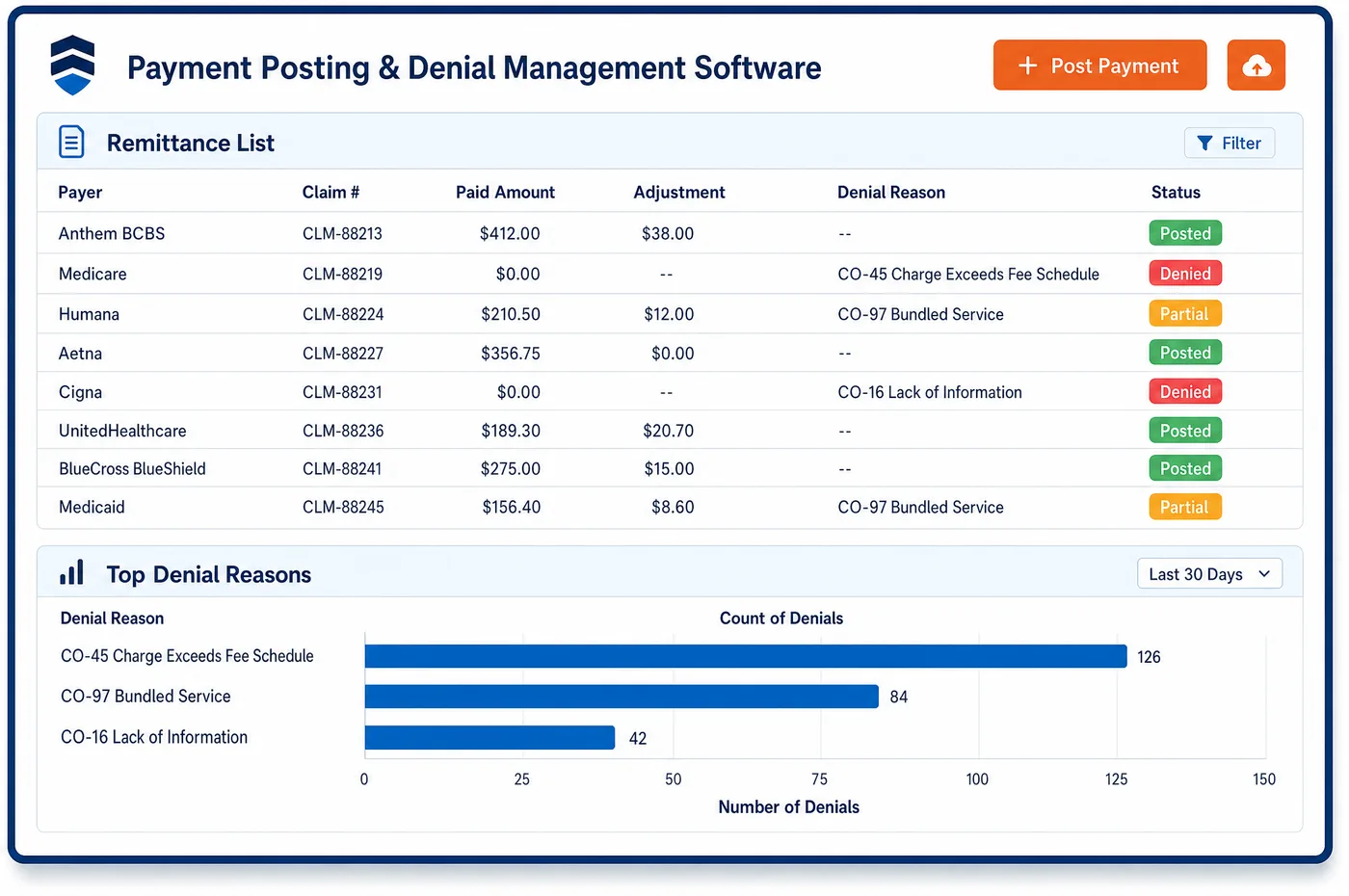
Integrated Patient Payments in a Psychiatry Practice
Many psychiatric visits happen with no front desk in the room. A patient on a POS 10 video visit from home cannot hand over a card at checkout. Unlimited Systems handles that with a card on file, kept with the patient's written consent and charged for copays and session fees under practice policy. Patients who prefer to pay each time get a text or email link to the portal, where they can see past statements and pay in a few taps. Larger balances, such as a deductible spent during a TMS course, go on an automated plan that charges the stored card on schedule. Late cancellation fees follow the same path and apply the same way to every patient. Each payment posts to the visit it belongs to, so no one keys it in later. How each charge is explained on the statement is covered on the patient billing page.
Why Is Integrated Patient Payments Different in Psychiatry?
Telepsychiatry changed how patients pay. When a large share of visits run by video or phone, the old habit of collecting at the window stops working. Balances then wait for a mailed statement, and small session copays pile up. Integrated patient payments in psychiatry have to work from wherever the patient is, and land on the ledger without staff typing them in again.
Frequency matters too. A patient in weekly therapy or a TMS series may owe something at every visit. Asking for a card each time is slow, and chasing each copay by phone is slower. A card on file, stored with consent and charged under a clear policy, keeps those small amounts from aging. A payment plan does the same for a larger deductible.
Psychiatric practices also lean on fee policies more than most. A missed session leaves a block of clinician time empty, so many practices charge a late cancellation or no-show fee. CMS allows those fees for Medicare patients when the practice charges all patients the same way. Fees, copays and plan drafts must all post to the right account, so integrated patient payments and the statement tell the same story.
What Psychiatry Integrated Patient Payments Software Handles
- POS 10 video visits from home
- Patients seen at home cannot pay at a front window. A stored card or a text link to the portal collects the copay without a phone call. (CMS Place of Service Code Set (POS 02 and POS 10))
- Missed appointment fees
- CMS lets practices charge Medicare patients for missed visits if non-Medicare patients are charged the same way. Fees follow one written policy for every patient and post like any other charge. (CMS Medicare Claims Processing Manual, Chapter 1, 30.3.13: Charges for Missed Appointments)
- TMS courses: 90867, 90868 and 90869
- A TMS course runs as a planning session followed by many treatment sessions. Patients with a deductible or coinsurance across the course can pay through an automated plan. (CMS Billing and Coding Article A57647: Transcranial Magnetic Stimulation)
- Spravato observation visits
- Spravato patients stay on site for at least two hours of monitoring after each dose. The cost share can be settled during that time, by stored card or through the portal. (FDA prescribing information: Spravato (esketamine) nasal spray, REMS and monitoring)
- Collaborative care monthly balances
- When the practice is the billing practitioner, codes 99492, 99493 and 99494 bill by calendar month. With consent, the monthly cost share can be charged to the stored card after the claim pays. (CMS MLN909432: Behavioral Health Integration Services)
- Card security under PCI DSS
- Stored cards are kept as encrypted tokens and run through PCI DSS Level 1 gateways. The account holds a token, not the card number itself. (PCI Security Standards Council: PCI DSS)
How Does Psychiatry Integrated Patient Payments Software Work?
1. Capture consent and the card
At intake or the first visit, the patient agrees to the card-on-file policy. The card is stored as an encrypted token on the account.
2. Charge after the payer decides
Once the claim's remittance posts, the patient's share is known. The stored card is charged for that amount under the practice policy.
3. Send a link when there is no card
Patients without a stored card get a text-to-pay or email link. The link opens the portal, where past statements and the balance are shown.
4. Set up a plan for larger balances
Deductibles from a TMS course or an evaluation can go on an automated plan. Each installment is drafted from the stored card on schedule.
5. Apply policy fees
Late cancellation and no-show fees are charged under one written policy. They post as their own line, so they never blur with a visit balance.
6. Post and reconcile
Every card, portal and plan payment posts to the visit it pays. The day's card batch is matched to the bank deposit.
Psychiatry Integrated Patient Payments Software vs. Generic Software
| Area | Generic approach | Unlimited Systems |
|---|---|---|
| Video visit copays | Collected later by phone or mailed statement. | Charged to a stored card or paid by text link. |
| Payment plans | Tracked on a spreadsheet and chased by staff. | Drafted from the stored card on schedule. |
| Late cancellation fees | Charged unevenly or forgotten. | Charged under one policy and posted as their own line. |
| Posting | Payments from a separate terminal keyed in later. | Payments post to the account and visit when taken. |
| Patient self-service | Patients call the office to pay. | Patients pay from the portal with past statements in view. |
Who Uses It in a Psychiatry Practice
- Front desk: No card collection on video visits and fewer payment calls, because stored cards and text links do the work.
- Billing manager: Patient payments that post themselves, leaving the posting team to work payer exceptions instead of keying card slips.
- Patients: A choice of stored card, text link, portal or plan, and a receipt tied to the session they paid for.
Psychiatry Integrated Patient Payments Software FAQs
Integrated patient payments let a patient on a video or phone visit pay without a front desk. A card stored with consent can be charged for the copay once the payer's share is known, or the patient can pay through a text link to the portal. Either way, the payment posts to that visit.
A practice can charge late cancellation and no-show fees to a stored card when the patient has agreed to the policy in writing. CMS allows missed appointment charges for Medicare patients if the practice charges all patients the same way. The fee posts as its own line, apart from any visit balance.
Patients facing a deductible or coinsurance across a TMS course can use an automated payment plan. The plan drafts a set amount from the stored card on a fixed schedule, and each draft posts to the account. Staff no longer track installments by hand or call when a payment comes due.
Stored cards are kept as encrypted tokens, and payments run through PCI DSS Level 1 gateways. The practice keeps a token on the account rather than the card number. That lets staff charge a copay or a plan installment under the patient's consent without handling card details.
Patient billing decides what the patient owes and explains it on the statement. Integrated patient payments are the ways the patient pays: stored card, text link, portal and payment plan. Both work on the same account, so a payment taken any of those ways shows up at once in the balance staff see.
For a practice that bills collaborative care, the codes are billed per calendar month, and the patient's cost share is known once the payer's remittance posts. With the patient's consent, that amount can be charged to the stored card. The charge posts against the monthly claim, so the patient sees which month and service it paid for.
Related Psychiatry Software
Payments & AR
In the revenue cycle
Integrated Patient Payments for related specialties
Sources
- CMS Place of Service Code Set (POS 02 and POS 10)
- CMS Medicare Claims Processing Manual, Chapter 1, 30.3.13: Charges for Missed Appointments
- CMS Billing and Coding Article A57647: Transcranial Magnetic Stimulation
- FDA prescribing information: Spravato (esketamine) nasal spray, REMS and monitoring
- CMS MLN909432: Behavioral Health Integration Services
- PCI Security Standards Council: PCI DSS
GET STARTED
See Unlimited Systems in Action
Whether you're actively evaluating new technology or simply preparing for your next vendor renewal, Unlimited Systems can help you understand where your current workflows may be creating avoidable revenue risk.