

Payments & AR
Psychiatry Patient Billing Software
Clear statements for copays, carve-out cost shares, self-pay sessions and monthly collaborative care.
Psychiatry Patient Billing Software turns what each patient owes into a clear statement. It covers copays and deductibles from medical and behavioral health plans, full fees for self-pay and out-of-network therapy, and monthly collaborative care charges when the practice bills them. It also compares each balance with the estimate the patient was given before care began.



 6,500+ specialty providers

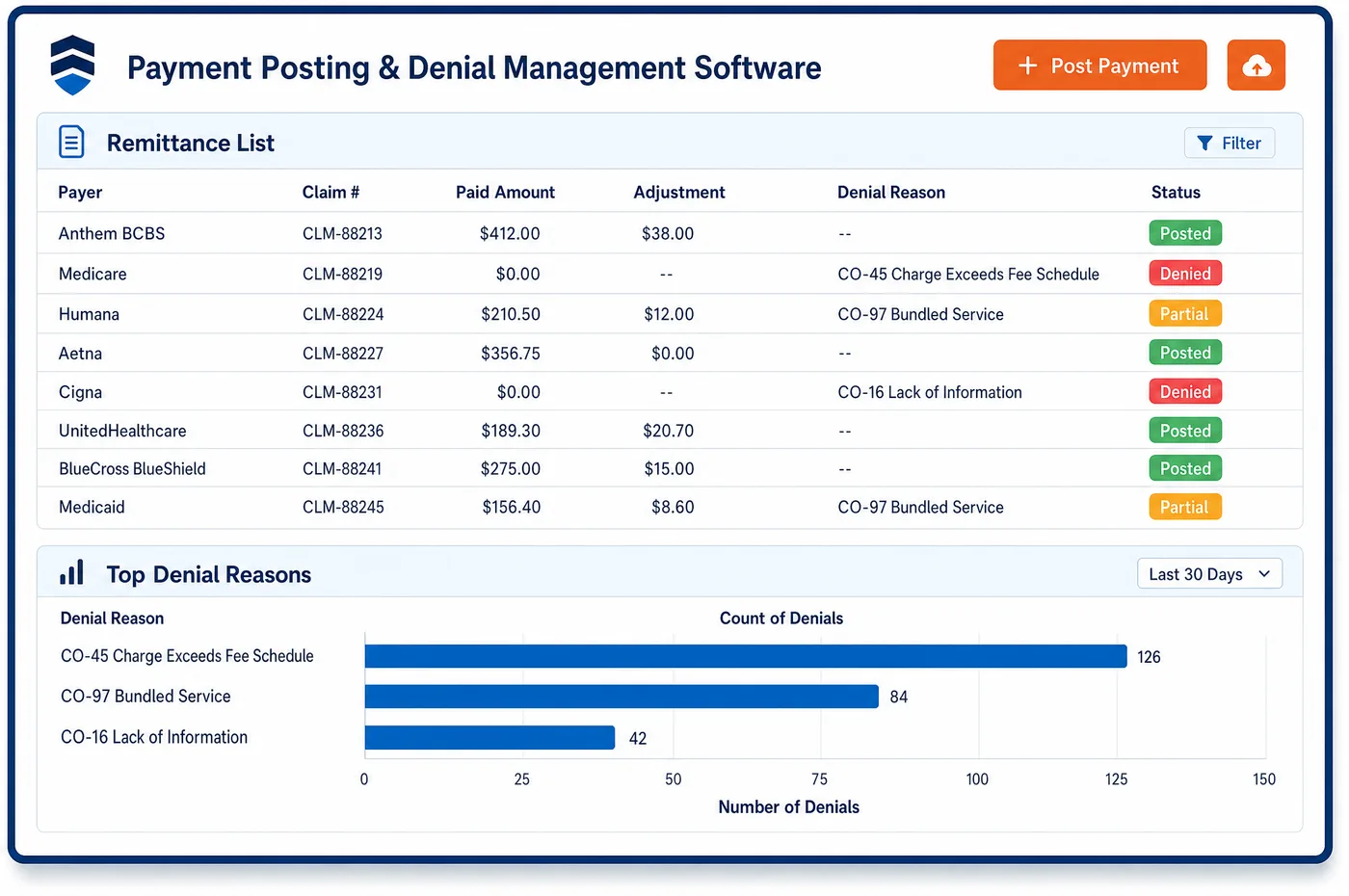
Patient Billing in a Psychiatry Practice
Patient balances in psychiatry come in a steady stream. A patient in weekly therapy may owe a copay every session, a deductible early in the year, and a separate cost share under a behavioral health carve-out. Self-pay patients owe the full fee, and uninsured patients who scheduled ahead were owed a good faith estimate. Unlimited Systems builds each statement from posted remittances, so deductible, coinsurance and copay amounts show as their own lines. Self-pay balances are checked against the estimate on file. Statements go out by text and email as soon as a balance is final, with a link to pay. Patients who pay with a stored card or a plan see those charges on the same statement. The billing team takes fewer calls, because the statement explains each charge. Cards, plans and the portal itself are covered on the integrated payments page.
Why Is Patient Billing Different in Psychiatry?
Psychiatric care is frequent, so patient balances are small and many. A deductible can absorb the first sessions of the year, and then a copay or coinsurance follows every visit. Paper statements sent once a month lump those sessions together, and the patient cannot tell which visit the money is for. Patient billing in psychiatry works best when each session's cost reaches the patient soon after the payer decides.
Benefits also split. A patient may have one deductible for medical care and another, or a different copay, under a behavioral health carve-out. Some patients choose out-of-network psychiatrists and pay in full, then seek payment from their plan with a superbill. Others are uninsured or choose self-pay, which brings in the No Surprises Act and its good faith estimate.
Then there is care with no visit attached. Under Medicare, the treating practitioner, often in primary care, bills collaborative care each calendar month for care manager time and psychiatric consultation, and the psychiatric consultant is paid by contract. When a psychiatric practice is the billing practitioner, a patient can get a statement for a month in which they never sat in an office. If the statement does not say what the charge is, the patient calls, or simply does not pay. Clear patient billing protects trust as much as revenue.
What Psychiatry Patient Billing Software Handles
- Good faith estimates for self-pay patients
- Uninsured and self-pay patients who book ahead, or who ask, are owed a good faith estimate under the No Surprises Act. The estimate is kept on the account so the final bill can be compared with it. (CMS No Surprises Act: Medical bill rights and good faith estimates)
- Bills well above the estimate
- A patient may be able to dispute a bill that is far higher than the good faith estimate. Gaps between estimate and actual are flagged before the statement goes out, not after the patient complains. (CMS No Surprises Act: Medical bill rights and good faith estimates)
- CARC 1, 2 and 3 patient responsibility
- Deductible, coinsurance and copay amounts from each 835 become separate statement lines. The patient sees why they owe, not just a total. (X12 Claim Adjustment Reason Codes)
- Collaborative care codes 99492, 99493 and 99494
- When the practice is the billing practitioner, collaborative care is billed per calendar month, often with no office visit that month. The statement names the service and the month so the patient knows the charge. (CMS MLN909432: Behavioral Health Integration Services)
- E/M with add-ons 90833, 90836 and 90838
- When an E/M visit and a psychotherapy add-on are billed together, the patient may owe cost sharing on both lines. Each line shows on its own with the payer's adjustment. (CMS Billing and Coding Article A57520: Psychiatric Diagnostic Evaluation and Psychotherapy Services)
- Telehealth sessions on POS 02 or 10
- Video and audio-only sessions are billed with POS 02 or 10 and a 95 or 93 modifier. Statement lines carry the date and service, so a patient can match a video session to its charge. (CMS Medicare Claims Processing Manual, Chapter 26)
How Does Psychiatry Patient Billing Software Work?
1. Start from posted remittances
Patient responsibility comes from each posted 835, line by line. Deductible, coinsurance and copay amounts stay separate.
2. Compare with the estimate
Self-pay balances and balances on cleared accounts are compared with the estimate given before care. Large gaps are flagged for review before a statement is sent.
3. Send the statement
Statements go out by text and email once the balance is final. Each one links straight to payment.
4. Explain monthly care charges
Collaborative care and other monthly services appear with a plain description. Patients can see the month and the service, not just a code.
5. Offer a way to pay over time
Patients with larger balances, such as a deductible spent on a TMS course, can be set up on an installment plan. The plan's payments show on each later statement.
6. Follow up and close
Unpaid balances get reminders through the patient's preferred channel. Paid balances close on the same ledger the billing team works from.
Psychiatry Patient Billing Software vs. Generic Software
| Area | Generic approach | Unlimited Systems |
|---|---|---|
| Statement timing | Paper statements on a monthly print run. | Text and email statements once each balance is final. |
| Statement detail | One total for several sessions. | Each session and each cost-share type on its own line. |
| Self-pay estimates | Estimate kept in a paper file, if at all. | Estimate stored on the account and checked against the bill. |
| Monthly care charges | A code the patient does not recognize. | A plain description of the service and the month. |
| Out-of-network patients | Staff write superbills by hand. | Superbills built from the visit's coded charges. |
Who Uses It in a Psychiatry Practice
- Front desk: Fewer billing calls, and a statement view that matches the one the patient has in hand.
- Billing manager: Patient balances by payer type, self-pay and carve-out, with estimates and actuals side by side. Gaps point back to benefit checks before the visit.
- Patients: Statements that show which session each charge is for, and a link to pay from the phone.
Psychiatry Patient Billing Software FAQs
Patient billing for weekly therapy sends a statement as each session's balance becomes final, rather than one large monthly bill. Copays, deductible amounts and coinsurance show on separate lines for each date of service. Patients can match every charge to a session, which cuts confusion and calls to the office.
Uninsured and self-pay patients who schedule care in advance, or who ask for one, must receive a good faith estimate under the No Surprises Act. The estimate is kept on the account. When the bill is ready, it is compared with the estimate, and large differences are reviewed before the statement goes out.
When a practice is the billing practitioner, collaborative care is billed per calendar month for care manager work and psychiatric consultation, so a patient may owe cost sharing for a month with no office visit. The statement describes the service and the month. Patients agree to collaborative care before it begins, which is the right moment to explain the monthly charge.
Practices that do not contract with a patient's plan can provide a superbill or a courtesy claim. It lists the coded services, diagnoses, dates and provider details the patient needs to seek out-of-network payment. The patient pays the practice in full, and the plan pays the patient back under its own rules.
Cost shares from a behavioral health carve-out come from that payer's remittance, not the medical plan's. The statement shows the deductible, coinsurance or copay the carve-out assigned to each session. When a patient has balances under both plans, each one is labeled, so the patient knows which benefit applied.
Patients with larger balances, such as a deductible met during a TMS course, can pay through an installment plan. Each payment charges a stored card on schedule and posts to the account. The plan appears on later statements, so the patient always sees what has been paid and what remains.
Related Psychiatry Software
Payments & AR
In the revenue cycle
Patient Billing for related specialties
Sources
- CMS No Surprises Act: Medical bill rights and good faith estimates
- X12 Claim Adjustment Reason Codes
- CMS MLN909432: Behavioral Health Integration Services
- CMS Billing and Coding Article A57520: Psychiatric Diagnostic Evaluation and Psychotherapy Services
- CMS Medicare Claims Processing Manual, Chapter 26
GET STARTED
See Unlimited Systems in Action
Whether you're actively evaluating new technology or simply preparing for your next vendor renewal, Unlimited Systems can help you understand where your current workflows may be creating avoidable revenue risk.