

Payments & AR
Psychiatry AR Management Software
Work open psychiatric claims by value and deadline, across medical plans and behavioral health carve-outs.
Psychiatry AR Management Software works every unpaid insurance claim a psychiatric practice has filed. It ranks open balances by value, aging bucket and filing deadline. It checks status with medical plans and carve-out payers, and moves wrong-payer, authorization and telehealth denials to the right person before the filing window closes.



 6,500+ specialty providers

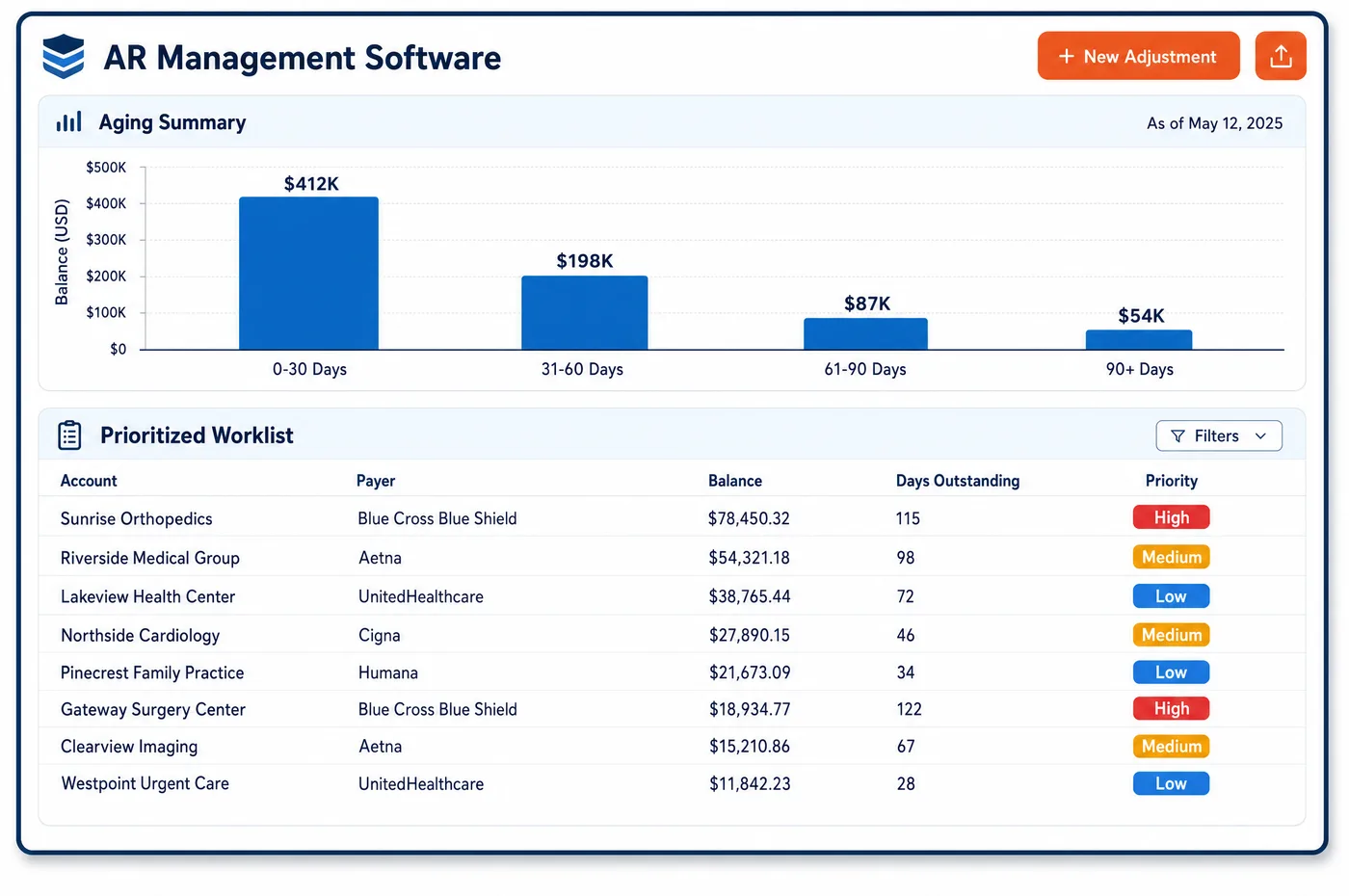
AR Management in a Psychiatry Practice
In a psychiatry practice, open AR is a long list of small claims. A weekly therapy patient produces many claims, each worth less than a procedure in other specialties. That makes it easy to ignore any single one, and costly to ignore them all. Unlimited Systems builds a daily worklist that ranks each claim by balance, age and the payer's filing limit. Bulk 276 status requests go to payers first, so collectors call only when the 277 response leaves a question. Claims sent to the medical plan when a carve-out holds the benefit are flagged and rerouted. Authorization denials for TMS or esketamine sessions are grouped with the authorization record. When the primary pays, the secondary claim is filed without anyone touching it. Collectors spend their time on claims that need a phone call or an appeal, not on claims that will pay on their own.
Why Is AR Management Different in Psychiatry?
Psychiatric AR is wide rather than deep. A practice may carry hundreds of open claims for 90834, 90837 and E/M visits, each one modest. Older systems sort that list by date or by payer name. A high-balance TMS course then sits beside one-off therapy claims, and nobody sees which ones are close to the filing limit. AR management in psychiatry has to rank the whole list by what is at risk.
Carve-outs make the clock run in the background. When a claim goes to the medical plan but a behavioral health organization holds the benefit, the denial can take a while to come back. The filing window with the right payer keeps running all the while. Medicare allows one calendar year from the date of service, and many commercial and carve-out contracts allow much less. Wrong-payer claims need to be found and refiled fast.
Denials in psychiatry also repeat. Missing authorizations, time that does not support the code billed, and telehealth claims with the wrong place of service or modifier show up again and again. Working them one claim at a time keeps AR high. Grouping them by cause lets the billing team fix the setup, the template or the payer rule, and hand the root cause to denial management.
What Psychiatry AR Management Software Handles
- CARC 109: not covered by this payer
- Wrong-payer denials are flagged, matched to the carve-out on the patient's coverage and refiled to the behavioral health organization. The intake record is fixed so the next claim goes to the right place. (X12 Claim Adjustment Reason Codes)
- CARC 29: filing limit expired
- Each claim shows the time left under its payer's filing limit. Claims near the limit rise to the top of the list before a CARC 29 denial can close them out. (X12 Claim Adjustment Reason Codes)
- Medicare timely filing
- Medicare allows one calendar year from the date of service to file a claim. That limit, and each commercial and carve-out contract limit, sets the order of the worklist. (42 CFR 424.44: Time limits for filing Medicare claims)
- 276/277 claim status
- Bulk status requests go to medical plans and carve-out payers before anyone calls. The 277 response tells the collector whether a claim is pending, denied or waiting on records. (X12 transaction sets: 276/277 claim status and 835 remittance)
- CARC 197 on TMS and esketamine courses
- Authorization denials link to the authorization record and the session count. Staff see whether the payer allows a retro request before they work the claim. (X12 Claim Adjustment Reason Codes)
- Time-based code denials
- Denials on 90832, 90834 and 90837 are grouped when start and stop times or total time were missing. CMS requires that time be documented for these codes. (CMS Billing and Coding Article A57520: Psychiatric Diagnostic Evaluation and Psychotherapy Services)
How Does Psychiatry AR Management Software Work?
1. Build the daily worklist
Every open claim is ordered by balance, aging bucket and time left to file. Collectors start the day on the claims with the most at stake.
2. Check status in bulk
276 requests go out to each payer for claims past their expected pay date. Claims the response shows as in process drop off the call list.
3. Reroute wrong-payer claims
Claims denied because a carve-out holds the benefit are refiled to the behavioral health payer. The coverage record is fixed so new claims route correctly.
4. Work denials by cause
Authorization, time documentation and telehealth denials are grouped. Each group goes to the person who can fix it, with the payer's filing deadline in view.
5. File the secondary
When the primary ERA posts, the remaining balance is billed to the secondary payer. Patients with both Medicare and Medicaid are billed to each without manual steps.
6. Escalate and close
Claims that stall after status checks and calls are escalated to the billing manager. Balances, write-offs and recoveries post to the general ledger.
Psychiatry AR Management Software vs. Generic Software
| Area | Generic approach | Unlimited Systems |
|---|---|---|
| Worklist order | Sorted by date of service or payer name. | Ordered by balance, age and time left to file. |
| Status checks | Collectors call or log in to each payer portal. | Bulk 276 requests run before anyone picks up the phone. |
| Wrong-payer claims | Denials sit until someone spots the carve-out. | Flagged and refiled to the behavioral health payer. |
| Repeat denials | Fixed one claim at a time. | Grouped by cause and fixed where they start. |
| Secondary claims | Filed by hand after someone notices the balance. | Filed when the primary remittance posts. |
Who Uses It in a Psychiatry Practice
- AR collector: An ordered list each morning, with payer status already checked and the reason for each open claim in plain words.
- Billing manager: Open AR by payer, carve-out and aging bucket, plus the claims nearing a filing limit, so staff time goes where the money is.
- Practice administrator: Fewer write-offs from missed deadlines, and a clear line between posted remittances and the AR that is left.
Psychiatry AR Management Software FAQs
AR management in psychiatry means working a long list of modest claims. Each open claim for therapy, E/M or interventional treatment is sorted by balance, age and the time left to file. Status is checked in bulk, wrong-payer claims are rerouted to carve-outs, and collectors focus on the claims that truly need a person.
Claims denied because a behavioral health carve-out holds the benefit are flagged as wrong-payer denials. They are refiled to the carve-out with the original date of service, and the patient's coverage record is corrected. Speed matters here, because the filing window with the correct payer keeps running while the first payer reviews the claim.
Every open claim shows the time left under its payer's filing limit. Medicare allows one calendar year from the date of service, and many commercial and carve-out contracts allow less. Claims close to the limit move to the top of the worklist, so they are worked or refiled before the payer can deny them as late.
Authorization denials for TMS and esketamine courses are linked to the authorization record. Staff see the approved session count, the dates and the sessions billed. If the payer allows a retro request, the claim moves to that path. If not, the gap goes back to the front office so future sessions are cleared first.
Claim status is checked in bulk with 276 requests to medical plans and carve-out payers. The 277 response shows whether a claim is pending, paid, denied or waiting on records. Only claims that still need a person reach the collector's call list, which saves phone time for real problems.
After the primary and any secondary payer have paid, the remaining patient balance leaves the insurance AR list. It moves to patient billing for a statement, a card-on-file charge or a payment plan. The insurance team can then close the claim and move on to the next open balance.
Related Psychiatry Software
Payments & AR
In the revenue cycle
AR Management for related specialties
Sources
GET STARTED
See Unlimited Systems in Action
Whether you're actively evaluating new technology or simply preparing for your next vendor renewal, Unlimited Systems can help you understand where your current workflows may be creating avoidable revenue risk.