

Billing & claims
Psychiatry Denial Management Software
Prevent, sort, work and appeal psychiatric denials, from carve-out wrong-payer claims to TMS authorizations and psychotherapy time.
Psychiatry Denial Management Software prevents, sorts and works the denials that psychiatric claims draw. It flags likely denials before submission, maps each reason code to a work queue, and attaches the cause and the documents needed to fix it. It also groups wrong-payer, authorization, visit limit and time denials, so their root causes are fixed upstream.



 6,500+ specialty providers

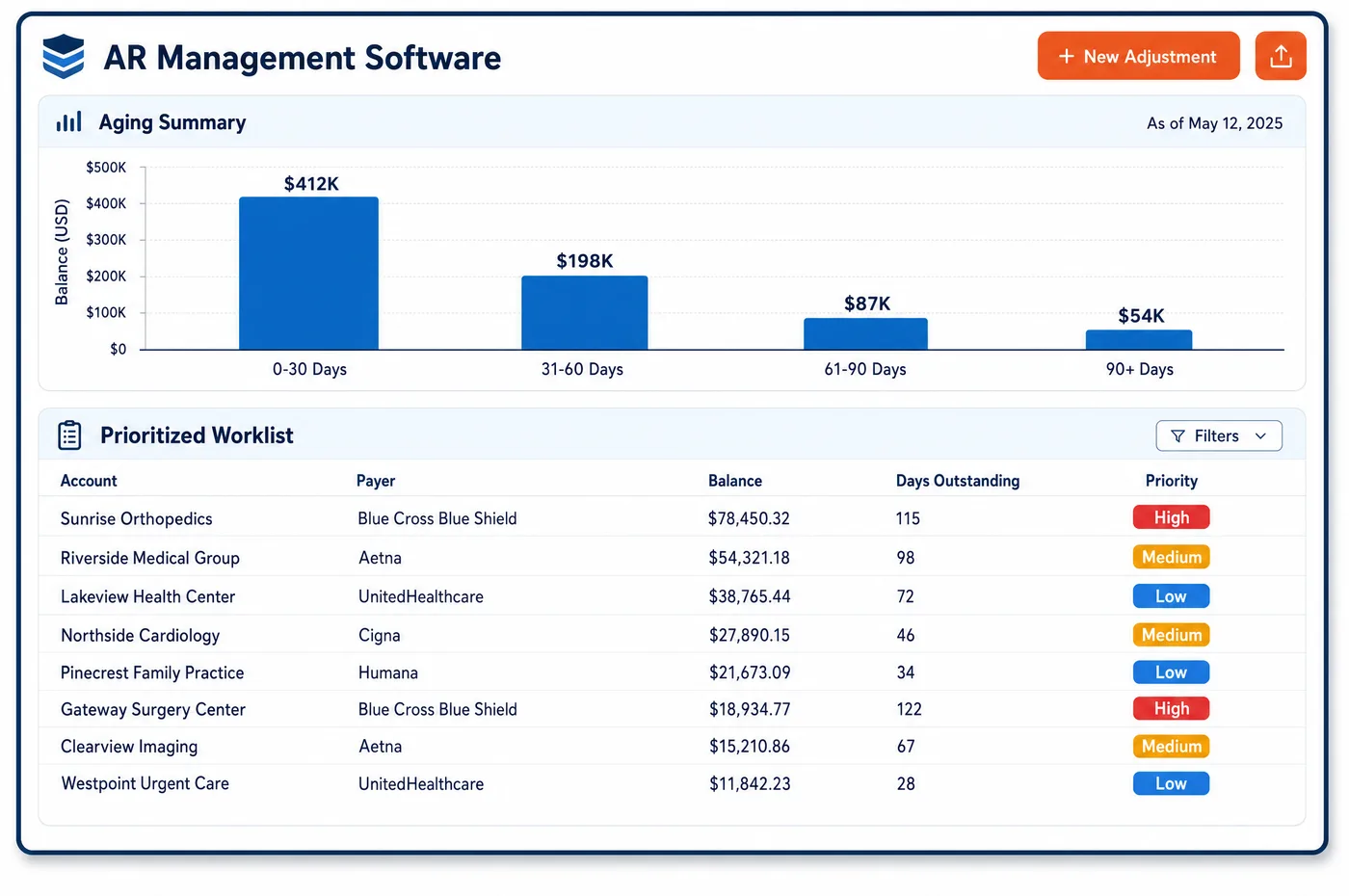
Denial Management in a Psychiatry Practice
Denial management in psychiatry starts before the claim leaves. Each claim is checked against payer policy, coding edits and the practice's own remittance history. Claims that match past denial patterns are held for a fix. When a denial still comes back, its reason code sends it to the right queue. A code 109 means the claim went to the wrong payer, often a medical plan when a carve-out manages the benefit, so it is sent on to the right payer. A code 197 means no authorization was on file, so staff check whether a retro request is allowed. Denials for time or medical necessity go to coding review with the note attached. Open denials are sorted by value and filing deadline. Psychiatry denial management software also groups denials by payer, clinician and cause, so each pattern is fixed once at the step that caused it.
Why Is Denial Management Different in Psychiatry?
Psychiatric denials repeat. It is the same carve-out payer, the same missing TMS approval, the same note template that leaves out therapy time. Working each denial one at a time keeps the queue full forever. Denial management in psychiatry pays off when every denial is traced to its cause, and the cause is fixed at psychiatric patient registration, clearance or documentation.
Many psychiatric claims are small, and that changes the math. A single psychotherapy claim may not seem worth a long appeal, but the same error across hundreds of visits is. Sorting denials by value and deadline, and grouping them by cause, lets a small billing team work the ones that matter and fix the rest at the source.
Some denials need clinical evidence. A denied TMS course may need the record of failed medication trials and rating scale scores, and sometimes a peer-to-peer review. A denied psychological testing request may need the clinical question spelled out. Parity law also gives practices a basis to question mental health rules that are stricter than a plan's medical rules.
What Psychiatry Denial Management Software Handles
- Wrong payer (CARC 109)
- Claims denied because they went to the wrong payer are sent on to the behavioral health payer that covers the benefit. The registration that caused the error is flagged, so the payer setup is corrected. (X12 Claim Adjustment Reason Codes)
- No authorization on file (CARC 197)
- Authorization denials for TMS, Spravato or intensive outpatient care go to the authorization queue. Staff check whether the payer allows a retro authorization before the claim is appealed or written off. (X12 Claim Adjustment Reason Codes)
- Visit limit reached (CARC 119)
- Denials for a benefit maximum are matched to the visit count on file. If the payer approved more visits, the approval goes with the appeal, and if it did not, the patient balance rules apply. (X12 Claim Adjustment Reason Codes)
- TMS medical necessity (90867, 90868)
- When a TMS claim is denied for medical necessity, the appeal draws on the diagnosis, failed medication trials and rating scale history in the record. One Medicare contractor lists F32.2 and F33.2 as the supporting diagnoses. (CMS Medicare Coverage Database, Billing and Coding Article A57072: Transcranial Magnetic Stimulation)
- Psychotherapy time denials (90832 to 90838)
- Denials or downcodes tied to therapy time are grouped by clinician. Medicare contractor policy expects start and stop times or a total time, so the note template is fixed where the time went missing. (CMS Medicare Coverage Database, Billing and Coding Article A57520: Psychiatric Diagnostic Evaluation and Psychotherapy Services)
- Bundled same-day services (CARC 97)
- A code 97 denial on an E/M billed with 90791 or 90792 points to an NCCI pair that should have been caught. Those patterns feed the pre-submission check, so the pair is held next time. (CMS NCCI Policy Manual for Medicare Services, Chapter XI (Medicine, including Psychiatric Services))
- Parity concerns (MHPAEA)
- When a payer's mental health rules look stricter than its medical ones, denial and authorization reports by payer give the practice facts to raise with the plan or a regulator. (CMS: The Mental Health Parity and Addiction Equity Act (MHPAEA))
How Does Psychiatry Denial Management Software Work?
1. Predict and hold before submission
Each claim is scored against payer policy, coding edits and past remittances. Claims that look like earlier denials are held with the reason, such as missing add-on time or a carve-out payer mismatch.
2. Sort denials as they arrive
Reason codes and remark codes on each remittance map the denial to a queue: wrong payer, authorization, visit limit, coding or medical necessity.
3. Work by value and deadline
Open denials are ordered by dollars at risk and filing deadline. Each one arrives with its likely cause and the documents needed to resolve it.
4. Appeal with the clinical record
Appeals draw on the note, medication trials, rating scale scores and the authorization history. Appeal letters follow each payer's template, and uncertain cases go to a person.
5. Fix the root cause upstream
Denials are grouped by payer, clinician and cause. Each pattern goes back to the step that caused it, from registration to charge validation rules, so it stops coming back.
Psychiatry Denial Management Software vs. Generic Software
| Area | Generic approach | Unlimited Systems |
|---|---|---|
| When denials are found | After the payer says no. | Predicted and held before submission. |
| Wrong-payer denials | Refiled by hand, often late. | Sent on to the behavioral health payer and fixed at registration. |
| Work order | Oldest first, regardless of value. | Sorted by value and filing deadline. |
| TMS appeals | Built from scratch for each denial. | Built from the trial history and scores on the record. |
| Root cause | Each denial appealed again and again. | Patterns grouped by payer and cause and fixed once. |
Who Uses It in a Psychiatry Practice
- Denial specialist: A queue that shows the reason, the likely cause and the documents needed for each psychiatric denial, in the order that matters most.
- Billing director: Reports that group denials by payer, clinician and cause, showing which fixes will stop the most repeat denials.
- Medical director: Clear feedback on the documentation gaps behind time and medical necessity denials, so templates and habits change once.
Psychiatry Denial Management Software FAQs
Psychiatry denial management software predicts likely denials before claims go out, sorts the denials that still arrive by reason code, and orders the work by value and filing deadline. Each denial comes with its likely cause and the documents needed. It also groups denials by payer, clinician and cause, so the source of each pattern gets fixed.
Common psychiatric denials include claims sent to the wrong payer when a carve-out manages the benefit, missing authorization for TMS, Spravato or intensive outpatient care, visit limits reached, and psychotherapy time that the note does not support. Same-day code pairs, such as an E/M with 90792, and telehealth place of service errors also appear often.
A wrong-payer denial, usually reason code 109, means the claim went to a plan that doesn't cover the service. The claim is sent on to the behavioral health payer that manages the benefit, within that payer's filing limit. The registration is flagged and corrected, so later claims for that patient go to the right payer from the start.
A TMS denial for medical necessity can often be appealed with evidence of treatment-resistant depression. The appeal draws on the diagnosis, failed medication trials, rating scale scores and the authorization history on the record. The payer may also offer a peer-to-peer review with its own reviewer. Each appeal is tracked against the payer's appeal deadline.
Denials and downcodes tied to psychotherapy time are grouped by clinician and code. Reviewers compare the note with the time band for the code billed. When the pattern points to a template that hides start and stop times or total time, the template is fixed, so the same denial doesn't repeat across many visits.
Denial management reports show authorization and denial patterns by payer. When a payer's rules for psychiatric care look stricter than its rules for medical care, those reports give the practice facts to raise with the plan. Federal parity law limits how much stricter mental health limits can be than medical and surgical limits.
Related Psychiatry Software
Billing & claims
In the revenue cycle
Denial Management for related specialties
Sources
- X12 Claim Adjustment Reason Codes
- X12 Remittance Advice Remark Codes
- CMS Medicare Coverage Database, Billing and Coding Article A57072: Transcranial Magnetic Stimulation
- CMS Medicare Coverage Database, Billing and Coding Article A57520: Psychiatric Diagnostic Evaluation and Psychotherapy Services
- CMS NCCI Policy Manual for Medicare Services, Chapter XI (Medicine, including Psychiatric Services)
- CMS: The Mental Health Parity and Addiction Equity Act (MHPAEA)
GET STARTED
See Unlimited Systems in Action
Whether you're actively evaluating new technology or simply preparing for your next vendor renewal, Unlimited Systems can help you understand where your current workflows may be creating avoidable revenue risk.