

Billing & claims
Addiction Medicine Denial Management Software
Catch wrong-payer, missing-approval, testing-frequency and bundle-timing denials early, work the rest by value and deadline, and fix the cause upstream.
Addiction Medicine Denial Management Software prevents, sorts and works the denials an addiction program sees most. It flags likely denials before submission, groups denials by payer, code and reason code, sends each denial to the right person with its deadline, and prepares the appeal with the records the payer needs.



 6,500+ specialty providers

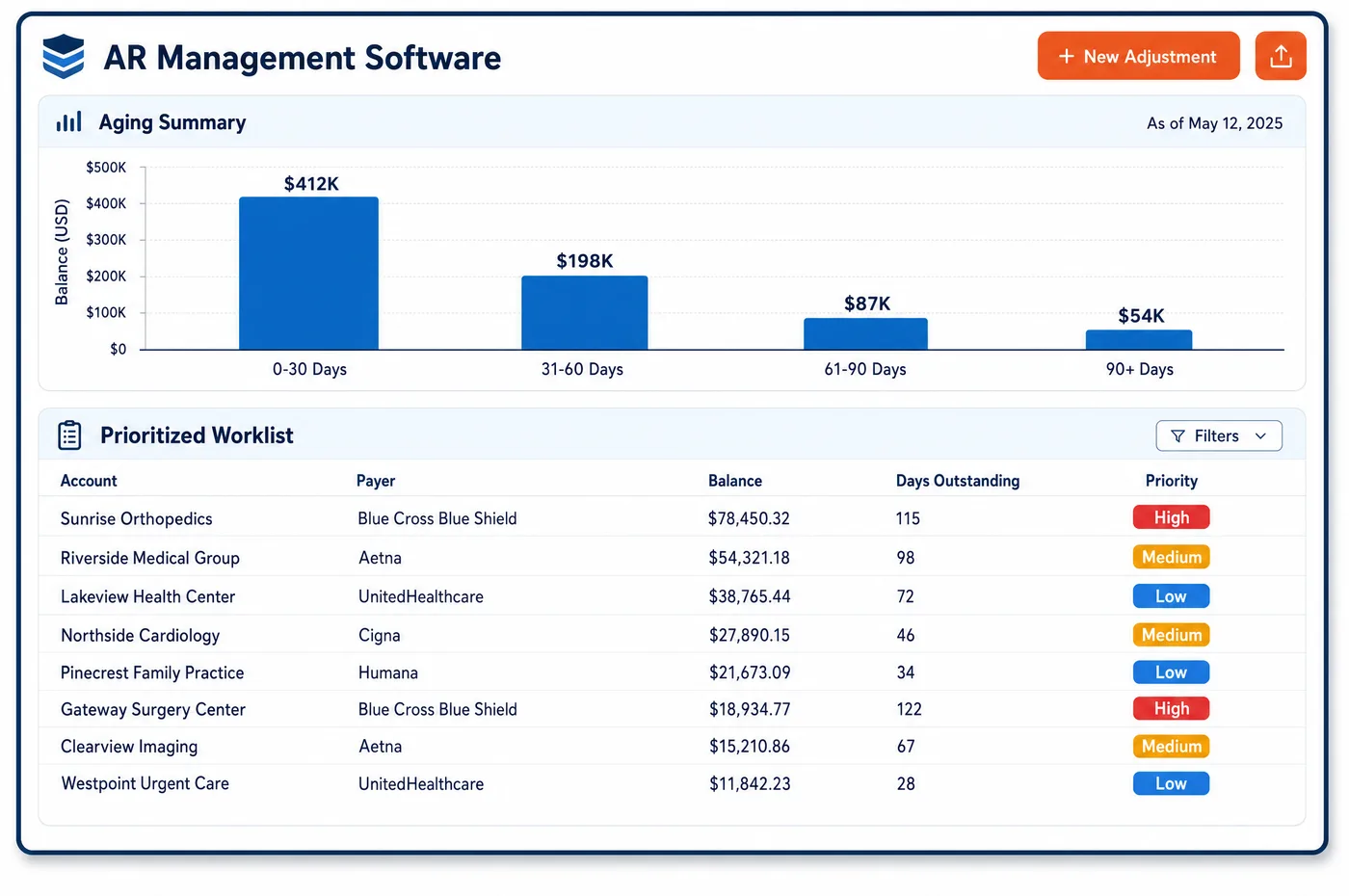
Denial Management in a Addiction Medicine Practice
Addiction denials tend to cluster. Claims sent to the medical plan when a behavioral health vendor manages the benefit come back as the wrong payer. A long-acting injection or an intensive outpatient week billed without approval comes back as missing authorization. Drug tests billed more often than policy allows come back for frequency or medical necessity. An OTP bundle billed twice in one week without modifier 59 and a reason is denied as a duplicate. Each pattern has a fix upstream, in clearance, scheduling or charge validation. Addiction medicine denial management software reads the reason codes on each remittance and groups denials by cause. It routes each one to a queue sorted by value and filing deadline. For appeals, it gathers the order, the note, the approval and the consent, so staff send a complete packet. The pattern reports show leaders which step to fix, so the same denial stops coming back.
Why Is Denial Management Different in Addiction Medicine?
Many denials here are about who pays, not what was done. A patient's plan may send SUD care to a carve-out vendor, a state program may cover what the plan doesn't, and Medicare pays an OTP under different codes than an office-based visit with the same drug. A claim sent to the wrong one is denied even when the care was right. Fixing those means better coverage data, not better coding.
Drug testing creates a steady flow of medical necessity and frequency denials. Payers look for patient-specific orders, a reason for each definitive test and counts within policy. Appeals succeed when the record shows why each test was ordered for that patient, and they fail when it shows a standing panel. Denial management has to connect each test denial to the order behind it.
Time limits are unforgiving. Patients may disappear for a while and return, coverage can change mid-episode, and a denial worked late can pass the payer's filing or appeal limit. Denial management in this specialty needs every open denial in front of the right person with its deadline in view, and the patterns reported back so upstream steps improve.
What Addiction Medicine Denial Management Software Handles
- Wrong payer (CARC 109)
- CARC 109 means the claim is not covered by this payer and must go to the correct one, a common result when a carve-out manages SUD benefits. These denials route to clearance staff to fix coverage and refile. (X12: Claim Adjustment Reason Codes)
- Missing approval (CARC 197)
- CARC 197 means a precertification or authorization was absent. For injections and intensive outpatient weeks, the queue links each denial to the approval history, so staff see whether to appeal or request a retro approval. (X12: Claim Adjustment Reason Codes)
- Testing frequency (CARC 151)
- CARC 151 means the payer deems the information does not support this many services or this frequency. Drug testing denials with this code are matched to the order and the count in the period. (X12: Claim Adjustment Reason Codes)
- Testing medical necessity (Novitas LCD L35006)
- For Medicare under Novitas, the clinician's reason for a definitive test must be in the record. Appeals for definitive test denials attach that reason and the result that prompted it. (CMS Medicare Coverage Database, LCD L35006: Controlled Substance Monitoring and Drugs of Abuse Testing (Novitas))
- Bundle billed twice in one week
- CMS won't pay a weekly OTP bundle twice for one patient in one week unless modifier 59 is used with a documented reason, such as syncing a new patient or a holiday closure. Denials of this kind route back to the billing team with the week's record. (Medicare Claims Processing Manual, Chapter 39: Opioid Treatment Programs (Rev. 13572, 2026))
- Continuation of long-acting buprenorphine
- UnitedHealthcare's commercial policy requires documented positive clinical response for continued Brixadi or Sublocade. Continuation denials are matched to the progress notes, so the appeal shows that response. (UnitedHealthcare Commercial Medical Benefit Drug Policy: Buprenorphine (Brixadi and Sublocade), effective October 1, 2026)
- Timely filing (CARC 29)
- CARC 29 means the filing time limit has expired. For Medicare OTP claims, CMS sets that limit at one calendar year after the date of service, so unbilled weeks are flagged well before it. (CMS: Opioid Treatment Program (OTP) Billing & Payment)
How Does Addiction Medicine Denial Management Software Work?
1. Predict before submission
Claims are checked against payer policy and past results before they leave. Likely denials, such as a test past the frequency limit, are held for a fix in charge validation.
2. Read and group each denial
Remittance reason codes are read as payments post. Denials are grouped by payer, code, clinician and reason code so patterns stand out.
3. Route by owner and deadline
Wrong-payer and approval denials go to financial clearance staff, coding issues to billing and missing notes to the clinician. Queues are sorted by value and filing deadline.
4. Build the appeal
Each appeal packet pulls the order, note, approval and consent from the record. Staff review it and send it before the payer's limit.
5. Fix the upstream cause
Pattern reports show which step caused each group of denials. Leaders change the clearance check, schedule rule or charge edit so the same denial stops.
Addiction Medicine Denial Management Software vs. Generic Software
| Area | Generic approach | Unlimited Systems |
|---|---|---|
| Wrong payer | Refiled by hand after each denial. | Coverage fixed at clearance and claims refiled from the queue. |
| Drug testing | Appeals sent with no order attached. | Each denial linked to its order, reason and count. |
| Approvals | Denials worked without the approval history. | Approval history shown beside each denial. |
| Prioritizing | Oldest denial first, whatever its value. | Worked in order of value and time left to file. |
| Root cause | Same denials repeat every month. | Patterns reported back to the step that caused them. |
Who Uses It in a Addiction Medicine Practice
- Denial specialist: A queue sorted by value and deadline, with the cause and the needed records already attached to each denial.
- Clearance lead: Wrong-payer and approval denials sent straight to the team that can fix the coverage, with patterns by plan.
- Executive director: Clear reports of which payers and steps cause the most denials, so fixes go where they matter, and a view of results in addiction medicine RCM.
Addiction Medicine Denial Management Software FAQs
Denial management in addiction medicine often sees wrong-payer denials when a carve-out manages SUD benefits, missing-approval denials for injections and intensive outpatient care, and frequency or medical necessity denials for drug testing. OTP bundles billed twice in one week without modifier 59 are another source. Each has a fix upstream, in clearance, scheduling or charge validation.
A drug testing appeal works best when the record shows a patient-specific order and the reason for each test. For definitive tests, the appeal includes the clinician's reason and the presumptive result or history that prompted it. Denial management links each test denial to its order, so staff can see quickly whether an appeal is supported.
CARC 109 means the claim is not covered by this payer and must be sent to the correct one. In addiction care it often means a behavioral health vendor, not the medical plan, manages the benefit. The fix is to update coverage on the patient's record and refile to the right payer, then check other claims for the same patient.
It depends on the payer. Some allow a retro approval when the service was urgent or the approval was delayed, and some don't. The queue shows the approval history beside the denial, so staff can see whether a request was sent, approved late or never made, and choose to appeal, request a retro approval or write off.
Denials are grouped by payer, code, clinician and reason, and the groups are reported back to the step that caused them. If testing frequency denials rise, the charge edit is tightened. If wrong-payer denials rise for one plan, the clearance check for that plan changes. The aim is fewer denials, not just faster appeals.
Each open denial shows the payer's filing or appeal deadline, and queues are sorted so the most urgent claims come first. For Medicare OTP claims, CMS asks for filing no later than one calendar year after the date of service. Other payers, including Medicaid plans, set their own limits, and those are loaded by payer.
Related Addiction Medicine Software
Billing & claims
In the revenue cycle
Denial Management for related specialties
Sources
- X12: Claim Adjustment Reason Codes
- CMS Medicare Coverage Database, LCD L35006: Controlled Substance Monitoring and Drugs of Abuse Testing (Novitas)
- Medicare Claims Processing Manual, Chapter 39: Opioid Treatment Programs (Rev. 13572, 2026)
- UnitedHealthcare Commercial Medical Benefit Drug Policy: Buprenorphine (Brixadi and Sublocade), effective October 1, 2026
- CMS: Opioid Treatment Program (OTP) Billing & Payment
GET STARTED
See Unlimited Systems in Action
Whether you're actively evaluating new technology or simply preparing for your next vendor renewal, Unlimited Systems can help you understand where your current workflows may be creating avoidable revenue risk.