

Billing & claims
Addiction Medicine Invoicing Software
Bill plans by claim and bill self-pay patients, grant funders and contract partners by invoice, with Part 2 rules applied to every bill that names a patient.
Addiction Medicine Invoicing Software creates and tracks every bill an addiction program sends, not only insurance claims. It formats claims for each plan and builds invoices for self-pay weekly fees, grant and state funders, and contract partners. Each invoice that names a patient follows Part 2 consent rules, and each one is tracked to payment.



 6,500+ specialty providers

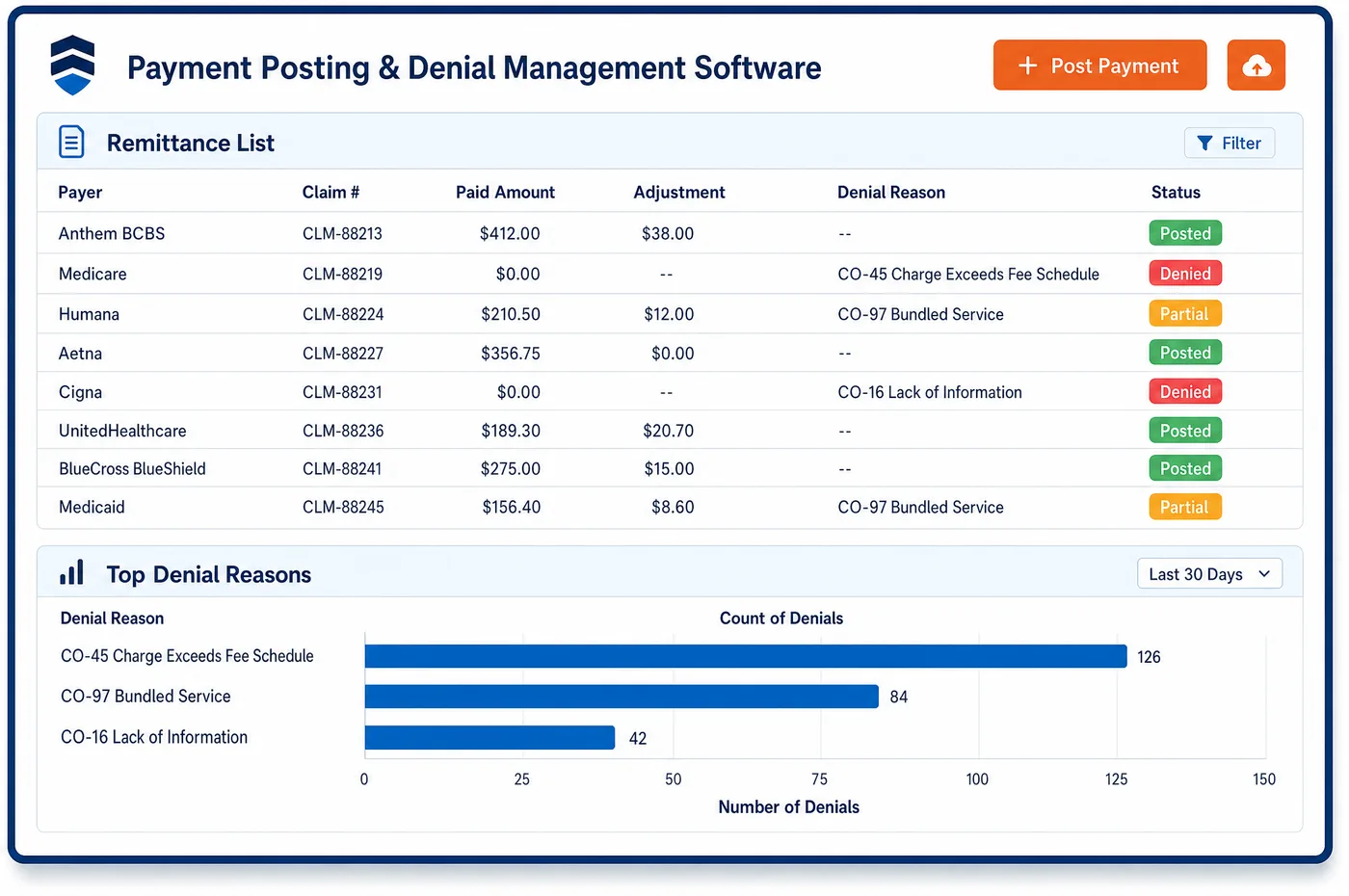
Invoicing in a Addiction Medicine Practice
Many addiction programs collect from more payers than a typical practice. Claims go to Medicare, Medicaid plans, behavioral health vendors and job-based plans. But a large share of the work never becomes a claim. A self-pay patient at an OTP may owe a weekly fee. A state or county program may pay for services under a grant or contract and want a periodic invoice with service counts. A partner such as a jail health program or a residential provider may buy dosing or counseling under an agreement. Each of these bills carries patient details, so for a Part 2 program each one is a disclosure that needs consent and the Part 2 notice. Addiction medicine invoicing software builds claims and invoices from the same charge data. It sends patient invoices by email or text with a link to pay, sends funder and partner invoices to the contact on file, and ages all open items together.
Why Is Invoicing Different in Addiction Medicine?
Self-pay is common in this specialty. Some patients have no coverage, some choose not to use it for privacy, and some owe a weekly fee that the program sets. Uninsured and self-pay patients are owed a good faith estimate, and they may be able to dispute a final bill that runs well above it. Invoicing for these patients has to be clear, regular and tied to what was estimated.
Public funders pay for much of the care that plans don't. Block grant rules make the grant the payment of last resort for the services they govern, so invoicing to a state or county has to show that other payers were billed first. Funders often want service counts by program and period, not a claim per visit. Invoicing that runs from the same charge data keeps those counts consistent with what was billed elsewhere.
Privacy rules reach every bill. An invoice to a partner, a funder or a family guarantor that names a patient tells the reader that person is in SUD treatment. In a Part 2 program, that disclosure needs written consent, and each disclosure made with consent must carry the Part 2 notice. Invoicing has to check consent before the bill goes out, not after.
What Addiction Medicine Invoicing Software Handles
- Notice on each consented disclosure (42 CFR 2.32)
- Each disclosure made with patient consent must carry the Part 2 notice and a copy or clear explanation of the consent. Partner and funder invoices that name patients include the notice, and staff confirm consent is on file first. (eCFR 42 CFR 2.32: Notice and copy of consent to accompany disclosure)
- Block grant as payment of last resort (45 CFR 96.137)
- For the services it governs, the block grant pays only after reasonable efforts to bill Medicare, Medicaid, private insurance and other programs. Grant invoices list services after other payers were tried. (eCFR 45 CFR 96.137: Payment schedule (block grant as payment of last resort))
- Good faith estimates and bill disputes
- Uninsured and self-pay patients get a good faith estimate, and they may be able to dispute a bill that comes in well above it. Self-pay invoicing keeps the estimate on the account beside each bill. (CMS No Surprises Act: Understanding Costs in Advance (Good Faith Estimates))
- Courtesy dosing for Medicaid clients (Washington)
- Washington Apple Health treats courtesy dosing as a covered service billable to the state, and warns that charging the client for a covered service may break the provider agreement. Invoicing blocks a patient invoice for that service in Washington. (Washington Apple Health (Medicaid) Substance Use Disorder Billing Guide, October 2025)
- Guest dosing between OTPs
- When a Medicare patient doses at a second OTP, such as during travel, CMS lets each OTP bill the codes for the services it gave, with documentation in each record. Invoicing keeps each OTP's bill for its own services only. (Medicare Claims Processing Manual, Chapter 39: Opioid Treatment Programs (Rev. 13572, 2026))
- Claims in the X12 837 format
- Plan claims are built as 837 transactions from the same charges that feed invoices. The two are tracked side by side, so a service is never billed both ways. (X12 Transaction Sets: 837 Claims and 835 Remittance)
How Does Addiction Medicine Invoicing Software Work?
1. Choose claim or invoice
Each service is routed by its payer: claims for plans, invoices for self-pay patients, funders and partners. The choice comes from the coverage on the patient's episode.
2. Check consent before sending
Any invoice that names a patient to someone other than the patient is checked against the Part 2 consent on file. The Part 2 notice is added to each one sent with consent.
3. Build funder and partner invoices
Grant, state and contract invoices are built from service counts by program and period. Each shows that other payers were billed first, where the funder requires it.
4. Send patient invoices
Self-pay patients get invoices by email or text with a link to pay. A card on file can be charged by agreement, and payments post to the ledger for addiction medicine patient billing.
5. Track to payment
Claims and invoices age together in one view. Unpaid items move to AR follow-up, and payments flow to practice accounting by funding source.
Addiction Medicine Invoicing Software vs. Generic Software
| Area | Generic approach | Unlimited Systems |
|---|---|---|
| Self-pay fees | Weekly fees tracked on paper cards. | Digital invoices with a link to pay. |
| Grant billing | Service counts built in a spreadsheet. | Funder invoices built from the same charge data. |
| Part 2 consent | Invoices sent without checking consent. | Consent checked and notice added before sending. |
| Medicaid patients | Billed for services the state covers. | State rules block patient invoices for covered services. |
| Tracking | Invoices kept outside AR. | Claims and invoices tracked and aged together. |
Who Uses It in a Addiction Medicine Practice
- Business office manager: One place for claims, self-pay invoices and funder bills, with every open item visible and aging.
- Grants manager: Funder invoices with service counts by program and period that match what was billed to plans.
- Self-pay patient: A clear weekly invoice by text or email, a link to pay and a bill that matches the estimate they were given, with any open items shown in the patient record.
Addiction Medicine Invoicing Software FAQs
Invoicing in an addiction treatment program covers more than insurance claims. It builds claims for plans and invoices for self-pay weekly fees, grant and state funders, and contract partners. Every bill is tracked to payment in one view. Because invoices can name patients, each one is checked against Part 2 consent before it is sent.
In a Part 2 program, an invoice that names a patient to a partner or funder discloses that the person is in SUD treatment. That disclosure needs the patient's written consent unless an exception applies. Each disclosure made with consent must also carry the Part 2 notice, so invoicing adds it and confirms consent first.
Grant and state funders usually want invoices with service counts by program and period. Invoicing builds them from the same charges used for plan claims, so the numbers agree. Block grant rules make the grant the payment of last resort for the services they govern, so invoices show that other payers were billed first.
Self-pay patients receive invoices by email or text with a secure link to pay. Those who agree can keep a card on file for regular fees. Payments post to the patient ledger at once. The good faith estimate stays on the account, so staff can compare it with the bill before it goes out.
State rules decide this. Washington Apple Health, for example, treats courtesy dosing as a covered service billable to the state and warns that charging the client may break the provider agreement. Invoicing applies each state's rule and blocks patient invoices for covered services where the state forbids them.
Each service is routed by payer, so it becomes either a claim or an invoice, not both. Claims go out in the 837 format and invoices by email, text or to the funder's contact. Both are tracked side by side, which keeps a service from being billed twice.
Related Addiction Medicine Software
Billing & claims
Invoicing for related specialties
Sources
- eCFR 42 CFR 2.32: Notice and copy of consent to accompany disclosure
- eCFR 45 CFR 96.137: Payment schedule (block grant as payment of last resort)
- CMS No Surprises Act: Understanding Costs in Advance (Good Faith Estimates)
- Washington Apple Health (Medicaid) Substance Use Disorder Billing Guide, October 2025
- Medicare Claims Processing Manual, Chapter 39: Opioid Treatment Programs (Rev. 13572, 2026)
- X12 Transaction Sets: 837 Claims and 835 Remittance
GET STARTED
See Unlimited Systems in Action
Whether you're actively evaluating new technology or simply preparing for your next vendor renewal, Unlimited Systems can help you understand where your current workflows may be creating avoidable revenue risk.