

Front office
Addiction Medicine Patient Management Software
One record for each patient's recovery: consents, coverage, medication, testing and visits across every level of care.
Addiction Medicine Patient Management Software keeps one shared record of each patient's path through treatment. It holds Part 2 consents, coverage and approvals, the medication plan, drug testing history and every visit, from the first call through maintenance. Front desk, clinical and billing staff work from that record, so each disclosure and each claim matches what the patient agreed to.



 6,500+ specialty providers

Patient Management in a Addiction Medicine Practice
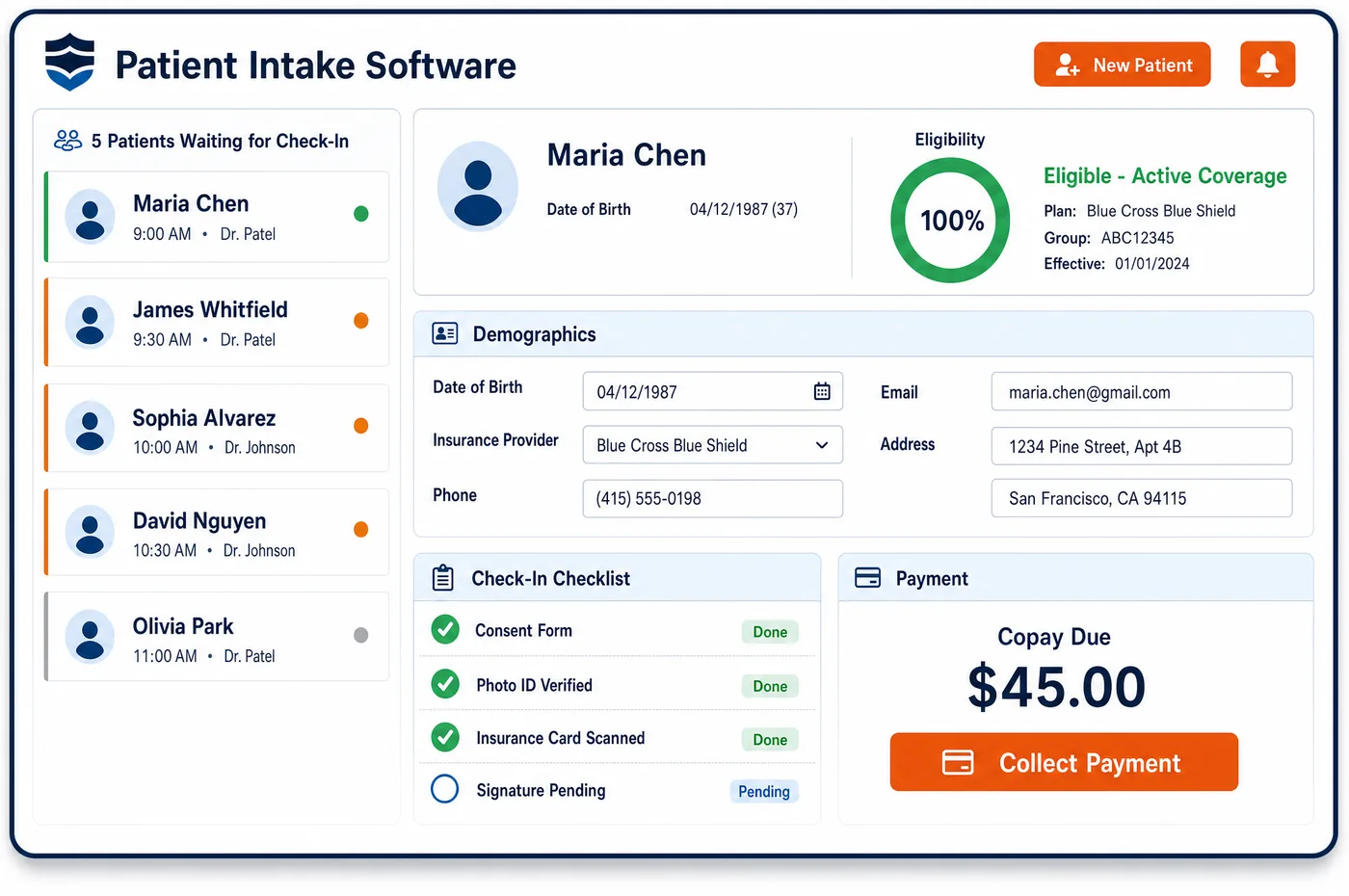
A patient in addiction care rarely follows a straight line. Someone may start at an opioid treatment program on daily methadone, step down to fewer visits, switch to a monthly buprenorphine injection, then return after a lapse. Along the way the payer can change from Medicaid to a job-based plan, and the level of care can move from intensive outpatient to routine counseling. Addiction medicine patient management software keeps that whole history on one record. Each episode shows its level of care, its approval and its billing path. The consent panel lists who may receive records and for what purpose. The medication tab shows the current drug and how it is supplied. Test results and attendance sit beside it. Staff open one record, not five, and it follows the patient through registration, pre-visit intake, scheduling and billing.
Why Is Patient Management Different in Addiction Medicine?
Recovery is long and uneven, and the record has to show it. A patient may move between an OTP, office-based care, intensive outpatient and routine counseling within one course of treatment. Each move changes who bills, which codes apply and which approval covers the visit. A record that only stores contact details and the next appointment can't show any of that.
Privacy rules are stricter too. When a practice is a federally assisted Part 2 program, its records fall under 42 CFR Part 2 on top of HIPAA. One patient consent can now cover all future uses for treatment, payment and health care operations. SUD counseling notes still need a consent of their own. The record has to show which consent is on file before anyone sends anything out.
Coverage is layered as well. Medicare pays OTPs a weekly bundle, Medicaid programs set their own codes state by state, and many job-based plans route treatment to a behavioral health carve-out. Some services are paid from state or grant funds instead. Managing patients in this specialty means knowing which payer covers which part of care, for each patient, at each point in time.
What Addiction Medicine Patient Management Software Handles
- Single consent for treatment, payment and operations (42 CFR 2.33)
- A patient can sign one consent for all future uses for treatment, payment and health care operations, which lasts until they revoke it in writing. The record stores the consent, its date and any revocation, so staff can see at a glance what may be shared. (eCFR 42 CFR 2.33: Uses and disclosures permitted with written consent)
- SUD counseling notes consent (42 CFR 2.31)
- Counseling notes need their own consent, which can only be combined with another consent for counseling notes. The record keeps that consent apart from the general one, and treatment is never made to depend on it. (eCFR 42 CFR 2.31: Consent requirements (including SUD counseling notes))
- Notice with each consented disclosure (42 CFR 2.32)
- Each disclosure made with consent must carry the Part 2 notice plus a copy or clear explanation of the consent. Staff pull both from the record when they release information. (eCFR 42 CFR 2.32: Notice and copy of consent to accompany disclosure)
- Minor patients (42 CFR 2.14)
- Where state law lets a minor consent to SUD treatment alone, only the minor can sign a consent to disclose, even to a parent for payment. The record notes whose signature is needed before staff contact a parent's plan. (eCFR 42 CFR 2.14: Minor patients)
- OTP weekly bundles by medication (G2067, G2068, G0533)
- For Medicare, an enrolled OTP bills a weekly bundle that names the drug, such as G2067 for methadone, G2068 for oral buprenorphine or G0533 for weekly injectable buprenorphine. The record shows which drug the patient is on now, so billing sees a switch as soon as it happens. (Medicare Claims Processing Manual, Chapter 39: Opioid Treatment Programs (Rev. 13572, 2026))
- Level of care under The ASAM Criteria
- Many payers and states use The ASAM Criteria to match patients to a level of care. The record logs each level the patient moves through, with dates, so every episode lines up with its own approval. (American Society of Addiction Medicine: About The ASAM Criteria)
How Does Addiction Medicine Patient Management Software Work?
1. Open the record at first contact
The referral source, contact details and reason for the call start the record. A duplicate check runs before a new chart is made, which matters when a patient returns after time away.
2. Capture consents before records move
Part 2 consents, any counseling note consent and contact permissions are saved as structured fields. Staff see what is allowed before they send records or call a family member.
3. Attach coverage to each episode
The medical plan, any carve-out and any state or grant program are linked to the services each one pays for. An electronic eligibility check runs before the first visit, so gaps show up early.
4. Keep medication and testing in view
The current medication, how it is supplied and the drug testing record sit on the chart. Billing sees the same facts the clinician does, without asking for a copy of the note.
5. Follow moves between levels of care
When a patient steps down from intensive outpatient or switches to a monthly injection, the old episode closes and a new one opens. Each carries its own approval and billing path into addiction medicine charge validation.
Addiction Medicine Patient Management Software vs. Generic Software
| Area | Generic approach | Unlimited Systems |
|---|---|---|
| Consents | Paper Part 2 forms filed in a folder. | Structured consents on the record, with dates and revocations. |
| Counseling notes | Shared under the same consent as the rest of the chart. | Held under their own consent, as Part 2 requires. |
| Levels of care | One open-ended chart with no episode history. | Each level of care is its own episode with dates and an approval. |
| Payer mix | One insurance field per patient. | Medical plan, carve-out and grant funding linked to the services each pays for. |
| Shared view | Front desk, clinic and billing keep separate notes. | One record that every team reads and updates. |
Who Uses It in a Addiction Medicine Practice
- Front desk: A clear view of consent, coverage and the next visit before the patient reaches the window.
- Counselor or clinician: Medication, testing and attendance history in one place, with episode dates that match the treatment plan.
- Billing manager: Episodes that show which payer and which code set apply, so OTP bundles, office visits and Medicaid services each go to the right place. Open balances move on to addiction medicine patient billing.
Addiction Medicine Patient Management Software FAQs
Patient management in addiction medicine should cover the whole course of treatment, not just the next visit. That means Part 2 consents, coverage for each level of care, the current medication and how it is supplied, drug testing history and attendance. Every team reads the same record, so disclosures and claims both follow what the patient agreed to and what the payer covers.
Part 2 consents are saved as structured fields on the patient record. Each one shows who may receive information, for what purpose, the date signed and any expiration or revocation. A separate consent for SUD counseling notes is kept apart from the general one. Staff can check what is allowed before they release records, call a family member or bill a parent's plan.
One record can follow a patient across settings in the same organization. When a patient moves from methadone at an opioid treatment program to buprenorphine in an office setting, the OTP episode closes and an office-based episode opens. Each keeps its own coverage, approval and codes. That matters because CMS says clinicians can't use OTP codes to bill for office-based treatment.
Minors are handled according to state law and Part 2. Where a state lets a minor consent to SUD treatment alone, only the minor can sign a consent to disclose, including disclosure to a parent for payment. Where state law requires a parent's consent, both must sign. The record notes which rule applies, so staff know whose signature is needed first.
Each level of care, from intensive outpatient to routine counseling, usually has its own approval and its own billing codes. Tracking the level on the record, with start and end dates, lets staff match each visit to the approval that covers it. It also shows the patient's path through treatment when a payer asks for a clinical review.
Returning patients are common in addiction care, and a lapse should not mean a new chart. A duplicate check finds the existing record, so past consents, coverage and medication history are there at once. Staff confirm whether old consents still apply, run a fresh eligibility check and open a new episode. Clinicians see the full history instead of starting over.
Related Addiction Medicine Software
Front office
Patient Management for related specialties
Sources
- eCFR 42 CFR 2.33: Uses and disclosures permitted with written consent
- eCFR 42 CFR 2.31: Consent requirements (including SUD counseling notes)
- eCFR 42 CFR 2.32: Notice and copy of consent to accompany disclosure
- eCFR 42 CFR 2.14: Minor patients
- Medicare Claims Processing Manual, Chapter 39: Opioid Treatment Programs (Rev. 13572, 2026)
- American Society of Addiction Medicine: About The ASAM Criteria
GET STARTED
See Unlimited Systems in Action
Whether you're actively evaluating new technology or simply preparing for your next vendor renewal, Unlimited Systems can help you understand where your current workflows may be creating avoidable revenue risk.