

Front office
Behavioral Health Patient Management Software
One record per client, shared by every clinician, across therapy, groups, prescriber visits and programs.
Behavioral Health Patient Management Software keeps one record for each client across every discipline and level of care. Therapists, counselors, social workers, psychologists and prescribers all work from it. It holds payers, consents, screening scores, sessions, program stays and balances, so a client who moves from weekly therapy into an intensive program keeps one history.



 6,500+ specialty providers

Patient Management in a Behavioral Health Practice
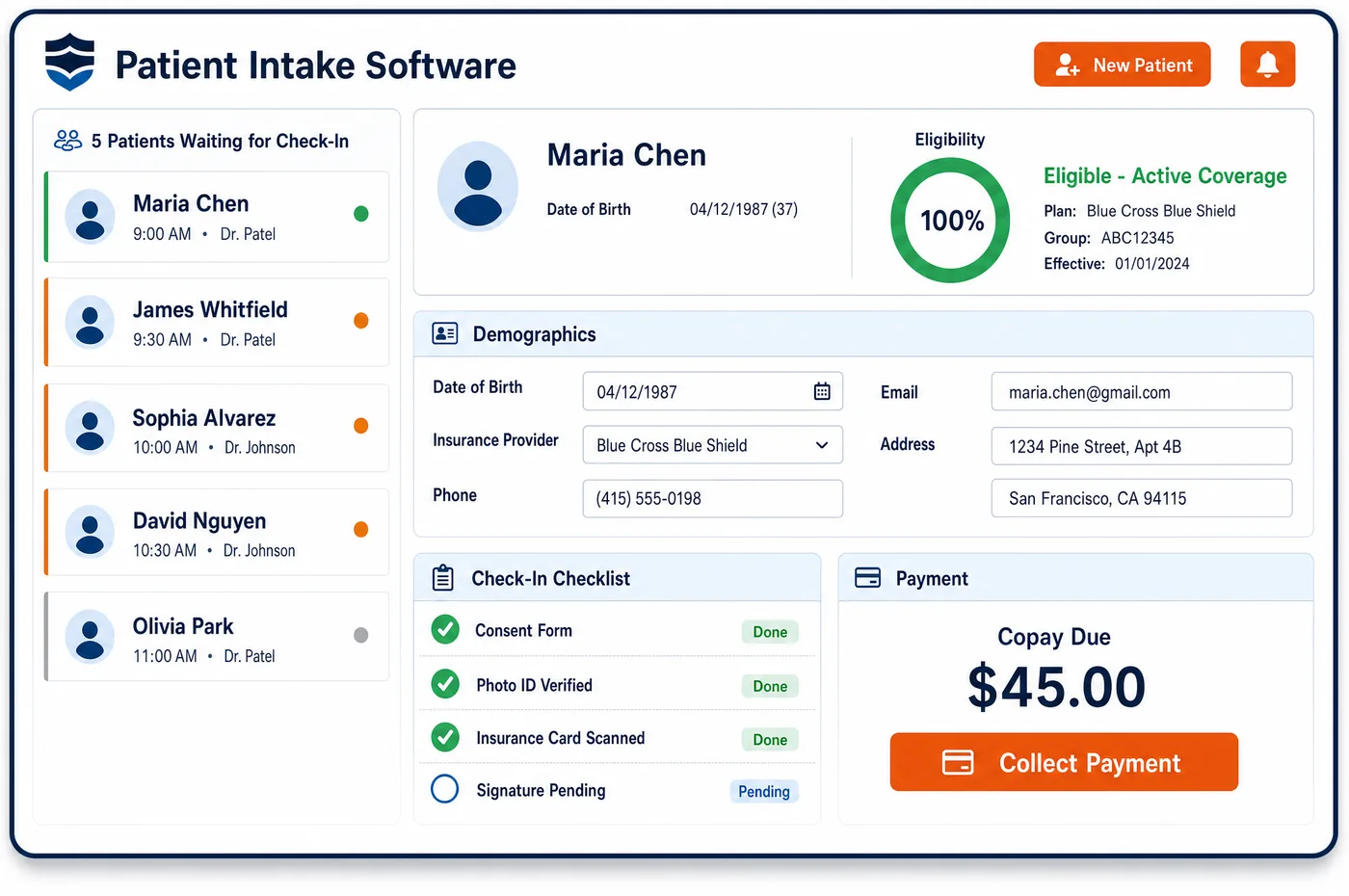
A behavioral health client rarely sees just one person. A licensed clinical social worker may lead weekly therapy while a nurse practitioner manages medication and a case manager handles school or housing contacts. If symptoms get worse, the client may step up to an intensive outpatient program, then step back down. Behavioral health patient management software ties all of that to one client record. Each session shows the clinician, their license type and the payer that covers it. Coverage often splits, with the medical plan on one card and a behavioral health carve-out on another, so both are stored. Consents and releases sit on the record with their dates. Screening scores such as the PHQ-9 trend across visits. Staff fill the record from patient registration and pre-visit intake, and billing reads from the same place.
Why Is Patient Management Different in Behavioral Health?
Most behavioral health organizations are multi-discipline by design. One group might employ psychologists, licensed professional counselors, marriage and family therapists, clinical social workers and peer specialists. Payers enroll each person on their own and pay some license types but not others. The record has to show who gave each service. The license behind a session decides if its claim can be paid.
Care also moves between levels. Weekly therapy, intensive programs, day programs and crisis care each have their own rules, approvals and often their own claim forms. When those live in separate charts, staff lose track of where a client is in care and which payer approved what. A patient management record that follows the client across levels keeps one story intact.
Privacy rules stack up as well. HIPAA privacy rules treat a therapist's separate psychotherapy notes differently from the rest of the chart. Substance use disorder records from a federally assisted program fall under 42 CFR Part 2. Minors, guardians and court-involved clients add more limits on who may see what. Role-based access and an audit trail are part of the job here, not an extra.
What Behavioral Health Patient Management Software Handles
- Psychotherapy notes (45 CFR 164.501)
- HIPAA defines psychotherapy notes as a clinician's session notes kept apart from the rest of the record. Session start and stop times, diagnosis and the treatment plan are excluded from that definition, so they stay on the shared record where billing can use them. (eCFR: 45 CFR 164.501, HIPAA definitions (psychotherapy notes))
- Notice with Part 2 disclosures (42 CFR 2.32)
- Each disclosure made with a client's Part 2 consent must carry the required notice and a copy or clear explanation of the consent. The consent and its scope are stored on the record, so staff can attach them when records go out. (eCFR: 42 CFR 2.32, Notice and copy of consent to accompany disclosure)
- Medicaid behavioral health carve-outs and PIHPs
- Behavioral health is the service most often carved out of Medicaid managed care contracts. Some states run it through a prepaid inpatient health plan, so the record keeps that plan apart from the client's medical plan. (MACPAC: Types of managed care arrangements (behavioral health carve-outs and PIHPs))
- Partial hospitalization and intensive outpatient stays
- For Medicare, a physician certifies the need for partial hospitalization and recertifies it on a set schedule, and an intensive outpatient program runs under a physician-established plan of care. The record shows each program stay with its start date, certification and plan. (CMS MLN Booklet: Medicare & Mental Health Coverage (MLN1986542, March 2026))
- Monthly care integration by therapists (G0323)
- Medicare lets clinical psychologists, clinical social workers, marriage and family therapists and mental health counselors bill G0323 for monthly behavioral health integration they personally perform. That monthly work is logged beside the client's sessions. (CMS MLN Booklet: Medicare & Mental Health Coverage (MLN1986542, March 2026))
- CCBHC open access
- SAMHSA's CCBHC criteria call for accepting all patients regardless of ability to pay or place of residence. A clinic's record has to hold uninsured and grant-funded clients next to insured ones, with the same history and consents. (SAMHSA: CCBHC Certification Criteria)
How Does Behavioral Health Patient Management Software Work?
1. Open the record at first contact
The record starts when a client, family member or referral source first calls. Registration adds identity, guardians and every payer, including a carve-out plan when the card shows one.
2. Attach each clinician and service
Every session, group and program day posts with the rendering clinician and their license type. Staff can see at a glance which services came from a counselor, a psychologist or a prescriber.
3. Track the level of care
Moves into or out of intensive outpatient or partial hospitalization are logged as level-of-care changes. Each level keeps its own approval and plan of care on the record.
4. Keep consents and releases current
Releases of information, Part 2 consents and telehealth consent are stored with dates and scope. Staff refresh them when a client returns after a gap, reaches adulthood or changes guardians.
5. Give billing a clean picture
Payers, rendering clinicians and approvals flow from the record to behavioral health financial clearance and on to billing. Billing staff no longer rebuild a client's coverage from free-text notes.
Behavioral Health Patient Management Software vs. Generic Software
| Area | Generic approach | Unlimited Systems |
|---|---|---|
| Clinician types | Sessions show a name but not the license behind it. | Each session carries the rendering clinician's license type. |
| Levels of care | Program stays kept in a separate chart or binder. | Outpatient care and program stays share one client record. |
| Payers | Only the medical plan is on file. | Medical plan, carve-out and Medicaid plan each stored with its own ID. |
| Sensitive records | Anyone with a login can open everything. | Role-based permissions and an audit trail on every change. |
| Uninsured clients | Tracked in a spreadsheet outside the system. | Grant-funded and self-pay clients on the same record as insured ones. |
Who Uses It in a Behavioral Health Practice
- Clinical director: One view of each client across therapists, prescribers and programs, so step-up and step-down decisions start from the full history.
- Intake coordinator: Current payers, consents and guardians on one screen, so a returning client's first call is answered without digging.
- Compliance officer: Role-based access and an audit trail on every change, which support HIPAA reviews, Part 2 consent checks and questions about minors.
Behavioral Health Patient Management Software FAQs
For a multi-discipline behavioral health group, patient management means one record per client that every clinician shares. Therapy sessions, prescriber visits, groups and program days post to it with the rendering clinician's license type. Payers, consents, releases and screening scores sit on the same record, so staff never rebuild a client's story from separate charts.
When a client moves from weekly therapy into an intensive outpatient program, the record logs a change in level of care. The program stay keeps its own start date, approval and plan of care. Past sessions stay in view. When the client steps back down, the weekly therapist picks up with the full picture.
Under HIPAA, psychotherapy notes are a clinician's notes kept apart from the rest of the record, and most uses need the client's written authorization. Session start and stop times, diagnosis, treatment plan and progress summaries are not psychotherapy notes. Those items stay on the shared record, where scheduling and billing staff can use them.
Medicare pays physicians, clinical psychologists, clinical social workers, nurse practitioners, physician assistants and clinical nurse specialists for covered mental health services. Since January 1, 2024, marriage and family therapists and mental health counselors can also enroll and bill Medicare on their own. The record shows each clinician's type, so Medicare sessions go to someone who can bill them.
Records from a federally assisted substance use disorder program fall under 42 CFR Part 2. Each client's Part 2 consent, with its scope and date, is stored on the record. Access follows role-based permissions, and an audit trail logs who opened what. When records are shared under that consent, the required notice goes with them.
One client record can hold several payers at once. Many clients have a medical plan plus a second company that runs their mental health benefit. Medicaid clients may also have a state plan just for this care. Each payer is stored with its own member ID and claims address. Every service is then tied to the payer that covers it.
Related Behavioral Health Software
Front office
Patient Management for related specialties
Sources
- eCFR: 45 CFR 164.501, HIPAA definitions (psychotherapy notes)
- eCFR: 42 CFR 2.32, Notice and copy of consent to accompany disclosure
- MACPAC: Types of managed care arrangements (behavioral health carve-outs and PIHPs)
- CMS MLN Booklet: Medicare & Mental Health Coverage (MLN1986542, March 2026)
- SAMHSA: CCBHC Certification Criteria
GET STARTED
See Unlimited Systems in Action
Whether you're actively evaluating new technology or simply preparing for your next vendor renewal, Unlimited Systems can help you understand where your current workflows may be creating avoidable revenue risk.