

Front office
Behavioral Health Patient Registration Software
Capture identity, guardians, every payer and the consents behavioral health billing depends on, before the first session.
Behavioral Health Patient Registration Software captures who the client is and who pays before the first session. It records identity, guardians for minors, the medical plan, any separate behavioral health plan, Medicaid or Medicare coverage and self-pay status. It also logs the consents that later decide what billing may share with payers.



 6,500+ specialty providers

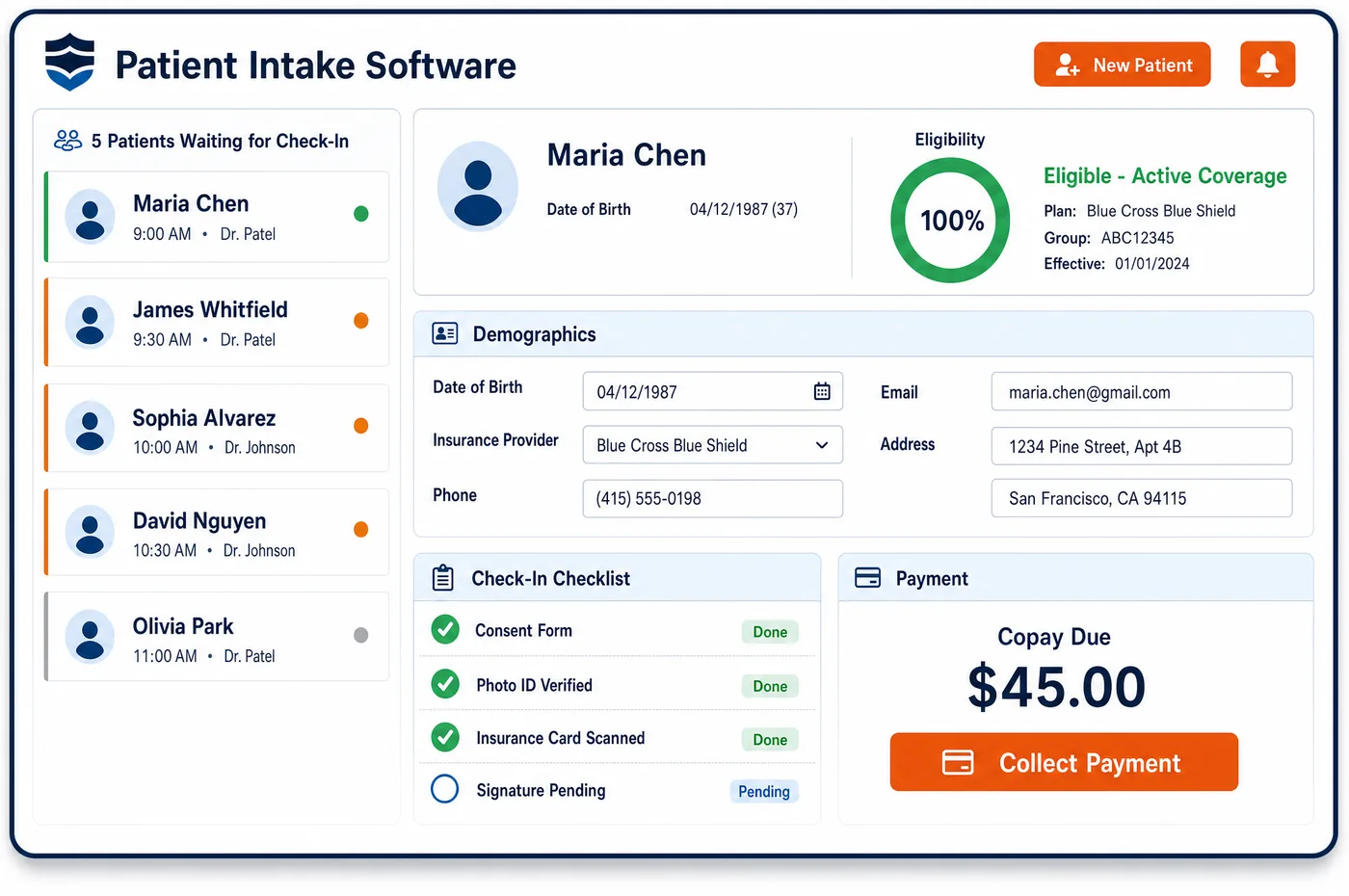
Patient Registration in a Behavioral Health Practice
Registration in behavioral health starts with a phone call more often than a referral order. A parent calls about a teenager, a school counselor calls about a student, or an adult books online. Behavioral health patient registration software captures identity, address and contact rules first. For a minor it records the guardian, the policyholder and who may consent to care. Then it captures every card. Many members have a medical plan and a separate company that runs their mental health benefit, each with its own ID and phone number. Medicaid members may have a state behavioral health plan as well as a managed care plan. Clients without coverage are marked self-pay, which starts the good faith estimate. The client's home state is stored too, since telehealth clinicians generally need a license where the client is. Each detail lands on the shared client record and feeds behavioral health intake.
Why Is Patient Registration Different in Behavioral Health?
Coverage for this care is often split. An employer plan may hand its mental health benefit to a separate company with its own claims address. The card may list a separate behavioral health phone number, and that number is the clue. If registration stores only the medical plan, the first claim goes to the wrong payer and comes back unpaid.
Minors and families add steps most specialties never see. One parent may hold the policy while the other has custody. When both parents carry coverage, coordination of benefits rules decide which plan pays first. State law sets the age at which a teen can consent to some mental health care, and that age varies. Registration has to record who the client is, who pays and who may sign.
Payment sources also run wider than insurance. Community clinics serve uninsured clients under grants and sliding fees, and CCBHCs take everyone regardless of ability to pay. Group practices see private-pay clients who never use their plan. Each path needs different facts at sign-up, from income for a sliding fee to the self-pay flag behind a good faith estimate.
What Behavioral Health Patient Registration Software Handles
- Single consent for treatment, payment and operations (42 CFR 2.33)
- Part 2 now allows one consent for all future uses for treatment, payment and health care operations, until the client revokes it in writing. Registration records whether that consent is signed and when, so staff know payer disclosures are covered. (eCFR: 42 CFR 2.33, Uses and disclosures permitted with written consent)
- Good faith estimate for self-pay clients (45 CFR 149.610)
- Uninsured clients, and insured clients who choose not to use their coverage, are owed a good faith estimate of expected charges. Marking the client self-pay at registration starts that step. (eCFR: 45 CFR 149.610, Good faith estimates for uninsured (or self-pay) individuals)
- Medicare clients and newly enrolled clinicians
- Since January 1, 2024, marriage and family therapists and mental health counselors can enroll in Medicare and bill on their own. Registration records Medicare coverage up front, so the client can be matched with an enrolled clinician. (CMS MLN Booklet: Medicare & Mental Health Coverage (MLN1986542, March 2026))
- Medicaid plans that carve out behavioral health
- Behavioral health is the benefit Medicaid programs carve out most often. Registration stores the managed care plan and any separate behavioral health plan as two payers, each with its own member ID. (MACPAC: Types of managed care arrangements (behavioral health carve-outs and PIHPs))
- School and clinic sites (POS 03, POS 53)
- Clients registered at a school-based program or a community mental health center carry that site with them. POS 03 is School and POS 53 is Community Mental Health Center, and the site drives the place of service on later claims. (CMS: Place of Service Code Set)
- CCBHC access regardless of ability to pay
- CCBHCs accept clients regardless of ability to pay or place of residence. Registration still records the address and income details the clinic's fee policy needs, without turning anyone away. (SAMHSA: CCBHC Certification Criteria)
How Does Behavioral Health Patient Registration Software Work?
1. Find or create the client
Staff search by name, birth date and phone before adding anyone. That keeps one person from ending up with two records after a crisis visit and a later intake call. Clean patient demographics start here.
2. Record guardians and the guarantor
For minors, the guardian, policyholder and consent rights are captured as separate entries. Custody papers can be attached, so staff know who may sign and who gets statements.
3. Capture every card
Clients or guardians upload card images from their phones before the visit. Staff check for a separate behavioral health ID or phone number and add that plan as its own payer.
4. Set the payment path
Commercial, Medicaid, Medicare, sliding fee or self-pay is set on the record. Self-pay status starts the good faith estimate, and Medicare coverage points scheduling to enrolled clinicians.
5. Store consents and contact rules
Treatment consent, Part 2 consent when substance use services are offered, and consent to texts or email are signed digitally. Choices about voicemail and texts are saved with them.
Behavioral Health Patient Registration Software vs. Generic Software
| Area | Generic approach | Unlimited Systems |
|---|---|---|
| Behavioral health payer | Only the medical card is entered. | Medical plan and behavioral health plan each stored as payers. |
| Minors | A parent's name typed into a notes field. | Guardian, policyholder and consent rights captured separately. |
| Self-pay clients | No flag until a statement goes out. | Self-pay status starts the good faith estimate step. |
| Card capture | Cards photocopied at the front desk. | Card images uploaded from the client's phone before the visit. |
| Contact rules | Reminders sent to any number on file. | Text, email and voicemail choices stored with consent. |
Who Uses It in a Behavioral Health Practice
- Front desk: A short checklist for each new client, including the question about a separate behavioral health ID, so fewer claims bounce to the wrong payer.
- Billing lead: Payers, guarantors and self-pay status set right from the start, then handed to financial clearance for behavioral health.
- CCBHC clinic director: Uninsured and grant-funded clients registered on the same path as insured ones, with the income details the fee policy needs.
Behavioral Health Patient Registration Software FAQs
Behavioral health patient registration captures identity, contact rules, guardians for minors and every payer. That includes the medical plan, any separate behavioral health plan, Medicaid or Medicare, and self-pay status. It also records consents that affect billing, such as a Part 2 consent when substance use services are part of care.
Staff look for clues on the card, such as a separate behavioral health phone number, ID or claims address. When one appears, that company is added as its own payer. Eligibility checks then confirm which payer covers therapy. Catching it at sign-up keeps the first claim from going to the medical plan by mistake.
A minor's record lists the client, the guardian and the policyholder separately, since they are often different people. Custody papers can be attached. State law sets when a teen may consent to some mental health care, so staff record who may sign for each kind of service and who should get statements.
Under the No Surprises Act rules, uninsured and self-pay clients are owed a good faith estimate of expected charges. Marking a client self-pay at registration starts that step. For a planned course of weekly sessions, one estimate can cover the series, as long as its scope runs no longer than a year.
Medicare clients can now see marriage and family therapists and mental health counselors who have enrolled in Medicare. Those clinicians have been able to bill Medicare on their own since January 1, 2024. Registration records Medicare coverage up front, so scheduling can match the client with an enrolled clinician instead of one Medicare can't pay.
When a program offers substance use disorder care covered by 42 CFR Part 2, consent is often collected at sign-up. Part 2 now permits a single consent for all future treatment, payment and health care operations uses, until the client revokes it in writing. Registration stores that consent with its date.
Related Behavioral Health Software
Front office
In the revenue cycle
Patient Registration for related specialties
Sources
- eCFR: 42 CFR 2.33, Uses and disclosures permitted with written consent
- eCFR: 45 CFR 149.610, Good faith estimates for uninsured (or self-pay) individuals
- CMS MLN Booklet: Medicare & Mental Health Coverage (MLN1986542, March 2026)
- MACPAC: Types of managed care arrangements (behavioral health carve-outs and PIHPs)
- CMS: Place of Service Code Set
- SAMHSA: CCBHC Certification Criteria
GET STARTED
See Unlimited Systems in Action
Whether you're actively evaluating new technology or simply preparing for your next vendor renewal, Unlimited Systems can help you understand where your current workflows may be creating avoidable revenue risk.