

Billing & claims
Behavioral Health Denial Management Software
Prevent, sort and work denials for therapy and program claims, and fix the approval, credentialing and payer-routing causes behind them.
Behavioral Health Denial Management Software prevents denials where it can and works the rest by cause. It flags claims likely to deny before submission, sorts incoming denials by reason, payer and clinician, and puts the most valuable and urgent ones first. Repeat causes such as missing approvals or credentialing gaps are traced back and fixed upstream.



 6,500+ specialty providers

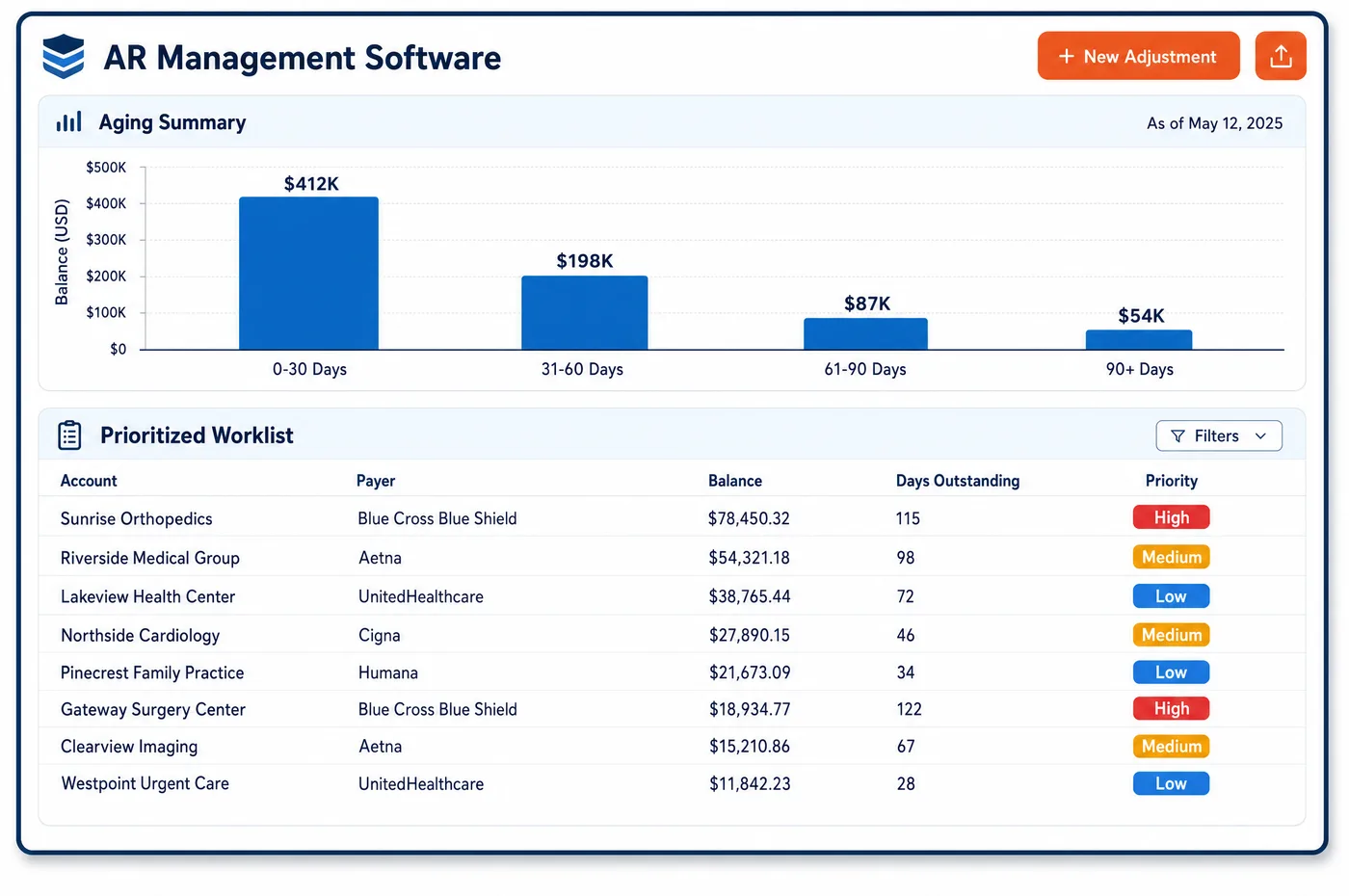
Denial Management in a Behavioral Health Practice
Most behavioral health denials repeat. A plan denies sessions past the approved count. A separate behavioral health company is skipped, and the medical plan says the claim belongs elsewhere. A new counselor sees clients before their enrollment is active. Each of these shows up as a cluster of small denials rather than one large one. Behavioral health denial management software reads each denial reason code from the remittance and routes the claim to the right work queue: approvals, credentialing, coding or payer routing. Work is ordered by value and filing deadline, with short behavioral health filing limits first. Before submission, claims that match past denial patterns are held for a fix. When a denial is wrong, staff file an appeal with the note, approval and enrollment record attached. Patterns are reported by payer and clinician, so the upstream step gets fixed once.
Why Is Denial Management Different in Behavioral Health?
Approval denials lead the list. Plans approve therapy and programs in small blocks, and one session past the count is denied in full. Those denials are hard to overturn unless an approval was really in place, so the real work is prevention. Denial data has to flow back to the people who track approvals.
Credentialing causes a kind of denial other specialties see less often. Every clinician in a group is enrolled with each payer one at a time. A counselor who joins may be in network with some plans and pending with others. Sessions billed under a pending enrollment deny for provider eligibility, and the fix is administrative, not clinical.
Small claims make each denial easy to ignore. One therapy session is worth little alone, so denials sit until they pass the payer's timely filing limits. Grouping denials by cause turns many small items into one fix worth doing. That is how a group protects revenue that would otherwise leak away quietly.
What Behavioral Health Denial Management Software Handles
- Missing approvals (CARC 197)
- CARC 197 means precertification, authorization, notification or pre-treatment was absent. Here it often follows a session past the approved count or a program day without approval, so the fix points back to clearance. (X12 Claim Adjustment Reason Codes)
- Credentialing gaps (CARC B7)
- CARC B7 means the provider was not certified or eligible to be paid for the service on that date. New counselors who see clients before their payer enrollment is active trigger it, so these denials are grouped by clinician. (X12 Claim Adjustment Reason Codes)
- Visit limits (CARC 119)
- CARC 119 means the benefit maximum for the period or occurrence was reached. Those denials are matched against the plan's visit limit, and staff check whether an approval for more sessions was possible. (X12 Claim Adjustment Reason Codes)
- Timely filing (CARC 29)
- CARC 29 means the time limit for filing has expired. Open claims to each payer are sorted by that payer's filing deadline, so short limits are worked first. (X12 Claim Adjustment Reason Codes)
- Specific reasons on prior authorization denials (CMS-0057-F)
- Under CMS-0057-F, impacted payers must give a specific reason for a denied prior authorization from 2026 on. The reason is stored with the denial, so an appeal or new request can answer it directly. (CMS Fact Sheet: CMS Interoperability and Prior Authorization Final Rule (CMS-0057-F))
- Same-day evaluation edits (90791, 90792)
- NCCI treats 90791 and 90792 as not separately reportable with psychotherapy on the same date. Denials from that pair are traced to scheduling and coding, so intake visits stop carrying a therapy charge. (CMS NCCI Policy Manual for Medicare Services, Chapter XI (Medicine, including Psychiatric Services), revised 1/1/2026)
How Does Behavioral Health Denial Management Software Work?
1. Predict before submission
Each claim is checked against payer policy, coding edits and past remittance outcomes. Claims that match an earlier denial pattern are held for a fix before they go out.
2. Read and route each denial
Reason codes from the remittance map to work queues for approvals, credentialing, coding, routing or eligibility. Each denial arrives with the likely cause and the next step.
3. Work the biggest risks first
The denial queue puts larger balances and closer deadlines at the top. Claims to payers with short filing limits move up sooner.
4. Fix or appeal
Coding fixes go back through charge validation rules and are resent. Wrong denials are appealed with the note, the approval and proof of enrollment.
5. Fix the cause upstream
Patterns by payer, code and clinician show where denials start. Approval gaps go to the approval tracking step, and enrollment gaps go to credentialing.
Behavioral Health Denial Management Software vs. Generic Software
| Area | Generic approach | Unlimited Systems |
|---|---|---|
| Prevention | Denials found after the remittance. | Likely denials held before submission. |
| Sorting | Worked oldest first. | Ordered by value and filing deadline. |
| Credentialing denials | Mixed in with coding errors. | Grouped by clinician and payer. |
| Approval denials | Appealed one by one. | Traced back to the approval step and fixed there. |
| Reporting | Total denials only. | Denials by reason, payer and clinician type. |
Who Uses It in a Behavioral Health Practice
- Denial specialist: A queue sorted by value and deadline, with each denial's likely cause and next step attached.
- Credentialing coordinator: A list of denials tied to enrollment, by clinician and payer, so pending enrollments are chased before more sessions are billed.
- Practice owner: Clear patterns showing which payers, codes and clinicians drive denials, with open items flowing on to AR follow-up.
Behavioral Health Denial Management Software FAQs
Behavioral health denial management mostly handles missing approvals, visit limits, claims sent to the wrong payer, provider type or enrollment problems, and timely filing. Coding pairs such as an evaluation billed with therapy on the same day also appear. Each is routed to its own work queue, where staff fix the claim and the upstream cause.
Denials such as CARC B7, which means the provider was not eligible to be paid on that date, are grouped by clinician and payer. The credentialing team sees which enrollments are pending or missing. Once enrollment is active, claims are corrected and resent where the payer allows it, and new sessions are held until then.
CARC 197 means the precertification, authorization, notification or pre-treatment was absent. On a therapy claim it often means the session went past the approved count or the approval lapsed. Staff check whether a valid approval existed. If it did, they resubmit with it. If not, the cause goes back to approval tracking.
Many can. Each claim is checked against payer policy, coding edits, clinician credentials and the practice's own past remittance outcomes before it is sent. Claims that match a pattern that denied before are held with the reason, so a biller can fix them first. Anything the system can't resolve with confidence routes to a person.
A vague denial is hard to fix. Since 2026, the CMS prior authorization rule has required Medicare Advantage, Medicaid and CHIP payers and federal exchange plans to state a specific reason for each denied request. That reason is saved with the denial, so the clinician's updated plan or appeal can respond to exactly what the payer said.
Open claims to each payer are sorted by that payer's filing deadline, and claims near the limit rise to the top of the queue. Behavioral health payers and Medicaid plans can have short limits. CARC 29 means the time limit for filing has expired, so these denials are tracked as a sign that work queues need attention.
Related Behavioral Health Software
Billing & claims
In the revenue cycle
Denial Management for related specialties
Sources
GET STARTED
See Unlimited Systems in Action
Whether you're actively evaluating new technology or simply preparing for your next vendor renewal, Unlimited Systems can help you understand where your current workflows may be creating avoidable revenue risk.