

Payments & AR
Behavioral Health AR Management Software
Work open Medicaid plan, carve-out and Medicare balances by filing limit, payer and program before small session claims age out.
Behavioral Health AR Management Software works the open insurance balances of an organization that bills many small session and unit claims. It sorts worklists by filing limit, value and payer, checks claim status in bulk, files secondary claims, and groups denials by cause. One fix can then clear every claim that shares the same problem.



 6,500+ specialty providers

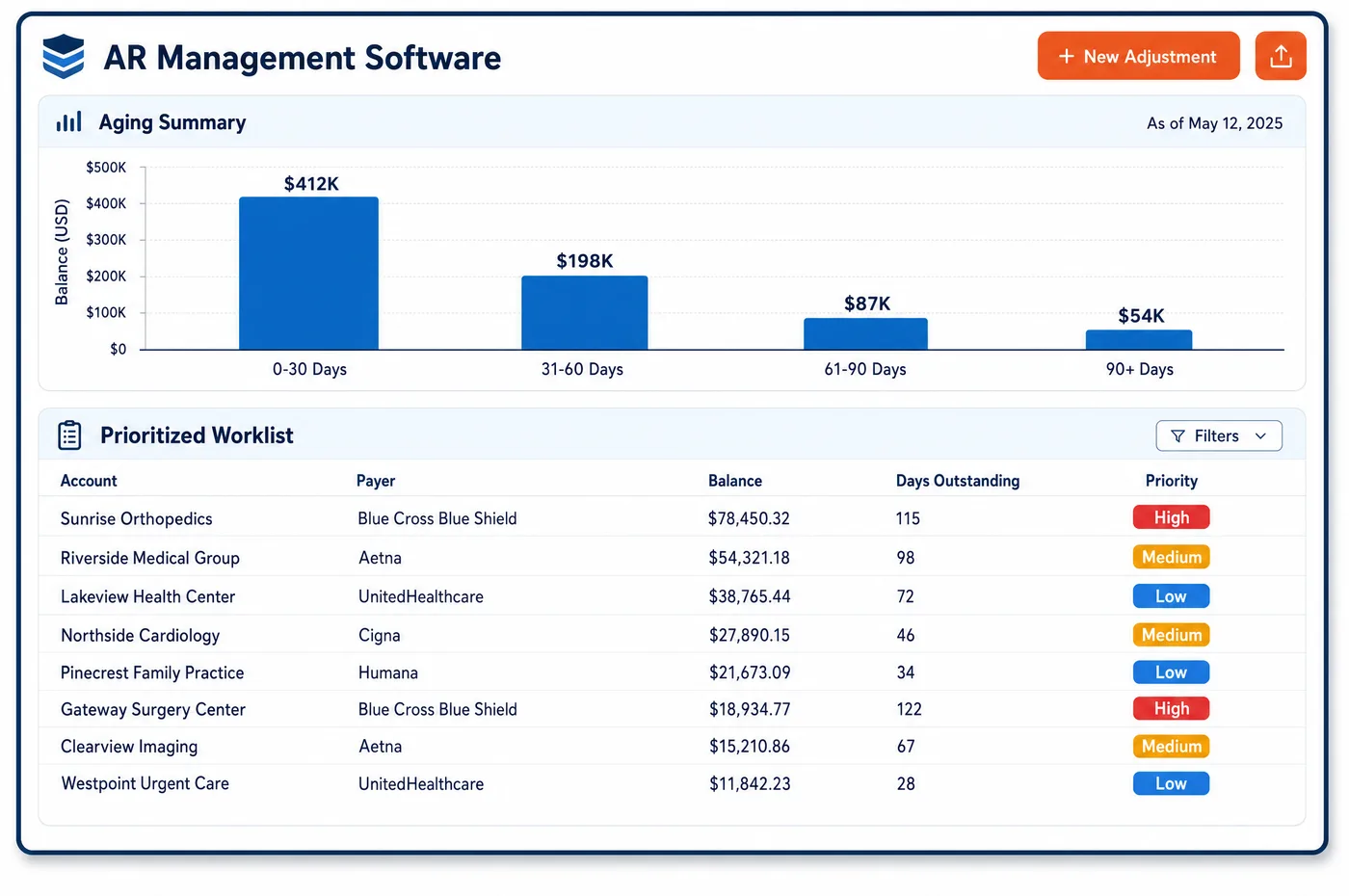
AR Management in a Behavioral Health Practice
Behavioral health AR is wide and shallow. A counseling center or CCBHC may hold thousands of open claims, and most are worth little on their own. Each health plan sets its own filing limit in its provider contract, and Medicaid fee-for-service has a federal limit of its own. Unlimited Systems builds daily worklists that put claims nearest their limit first, then sorts the rest by value and payer. Claim status requests go out in bulk over 276/277, so collectors only see claims that are stuck. When a whole group denies for one reason, such as a missing authorization number for one plan, the group is fixed and sent again together. Dual-eligible clients get special care. Since Medicare began paying marriage and family therapists and mental health counselors, Medicaid may expect a Medicare decision first. AR management keeps those secondary claims moving once Medicare pays.
Why Is AR Management Different in Behavioral Health?
Most specialty AR is a few large claims. Behavioral health AR is the opposite: many claims for therapy sessions, short units of case management and group visits, each with a modest balance. Working that volume one claim at a time costs more than many claims are worth. The only way to keep up is to group claims that share a cause and to let the system check status before a person calls.
The payer list is also long and mixed. One organization may bill several Medicaid health plans, a prepaid behavioral health plan or county authority, a carve-out vendor, Medicare, commercial plans and employee assistance programs. Each has its own claims address, portal and filing limit, and some change those rules at contract renewal. A claim that sits in the wrong queue for a few weeks can pass a short limit without anyone noticing.
Staffing adds a third problem. Behavioral health teams mix psychiatrists, nurse practitioners, psychologists, social workers, counselors, family therapists and peer specialists. Each clinician must finish credentialing and enrollment with each plan, and a plan can deny every claim from a clinician whose enrollment is not finished. Those denials pile up fast for a new hire with a full caseload. AR management has to spot that pattern early and send it to the people who handle enrollment.
What Behavioral Health AR Management Software Handles
- CARC 29: filing limit expired
- Claims are sorted by the days left before each payer's filing limit. A claim that still denies with CARC 29 is tracked by cause, so the delay that caused it can be fixed upstream. (X12 Claim Adjustment Reason Codes)
- Medicaid fee-for-service filing limit (42 CFR 447.45)
- The federal rule sets how long providers have to file Medicaid fee-for-service claims, counted from the date of service. Managed care plans set their own limits by contract, so each plan's limit is stored and used on its own. (42 CFR 447.45: Timely claims payment (Medicaid))
- CARC 22 for dual-eligible clients
- Medicaid pays only after other liable payers meet their obligation. A Medicaid denial for coordination of benefits goes to a queue that files with Medicare first, then sends the Medicaid claim with the Medicare result. (Medicaid.gov: Coordination of Benefits and Third Party Liability)
- Medicare MFT and MHC enrollment
- Marriage and family therapists and mental health counselors have been able to enroll in Medicare and bill on their own since January 1, 2024. Their services to dual-eligible clients now often start with a Medicare claim. (CMS MLN Booklet: Medicare & Mental Health Coverage (MLN1986542, March 2026))
- 276/277 claim status in bulk
- Status requests go out for claims past their expected pay date. The 277 replies update each claim, and only pended, denied or missing claims reach a collector. (X12 transaction sets: 276/277 claim status and 835 remittance)
- CARC 197 and CARC 185 groups
- Missing-authorization and ineligible-rendering-provider denials are grouped by plan and by clinician. A batch from one new clinician points to enrollment, not to coding. (X12 Claim Adjustment Reason Codes)
How Does Behavioral Health AR Management Software Work?
1. Build worklists every day
Open claims are sorted by filing limit first, then by value, payer and aging bucket. Each collector starts with the claims most at risk.
2. Check status in bulk
276 requests go out for unpaid claims, and 277 replies update each one. Collectors call or use a plan portal only when the reply leaves a question.
3. Group denials by cause
Claims with the same reason, plan and clinician are grouped. One correction is applied to the whole group, and the source of the problem is sent to denial management.
4. File secondary claims
When the primary payment posts, the secondary claim is built and sent. Medicaid claims for dual-eligible clients go out with the Medicare result attached.
5. Escalate to the plan
Claims a plan keeps pending past its own terms are listed by plan, so the revenue cycle team can raise them with provider relations in one call.
6. Adjust and close
Balances that cannot be collected are written off with a reason and an approval. Each adjustment flows from the posting record to the general ledger.
Behavioral Health AR Management Software vs. Generic Software
| Area | Generic approach | Unlimited Systems |
|---|---|---|
| Work order | Oldest claims worked first, whatever their limit. | Claims nearest each payer's filing limit worked first. |
| Claim status | Collectors log in to each plan portal. | Bulk 276 requests, with only problem claims shown to staff. |
| Repeat denials | The same denial worked claim by claim. | Grouped by cause, plan and clinician, then fixed together. |
| Dual-eligible clients | Medicaid claims sent before Medicare and denied. | Medicare filed first, then Medicaid with the Medicare result. |
| New clinicians | Enrollment gaps found after weeks of denials. | Ineligible-provider denials grouped by clinician and sent to enrollment staff. |
Who Uses It in a Behavioral Health Practice
- AR collector: A short, sorted list of claims that need a person, with status replies and denial reasons already attached.
- Billing manager: AR by payer, program and aging bucket, with repeat denial groups showing where a setup or enrollment fix would clear the most claims.
- Executive director: Fewer write-offs for missed filing limits, and a clear view of which plans hold the most money for the longest time.
Behavioral Health AR Management Software FAQs
AR management in behavioral health deals with volume more than size. An organization may hold thousands of open claims for sessions, units and groups, each with a small balance, across many plans with different filing limits. Worklists sorted by filing limit, bulk status checks and grouped denials let a small team keep up without working each claim by hand.
Each payer's filing limit is stored on its own, from Medicaid fee-for-service to each managed care plan and carve-out vendor. Claims are sorted by the time left before their limit, so the claims most at risk are worked first. Claims that still deny for timely filing are tracked by cause, so the delay can be fixed.
Medicaid pays only after other liable payers have paid or denied. Since January 1, 2024, Medicare has covered services from marriage and family therapists and mental health counselors. For a client with both Medicare and Medicaid, the plan may deny for coordination of benefits until it sees the Medicare result. The claim is filed with Medicare first and then sent on.
Claim status requests go out in bulk as 276 transactions for claims past their expected pay date. The 277 replies update each claim. Paid and in-process claims drop off the worklist, and only pended, denied or missing claims reach a collector. Calls and portal checks are kept for the claims where the reply leaves a question.
Denials that say the rendering provider is not eligible are grouped by clinician and plan. When a group appears for a new hire, it goes to the staff who handle enrollment and credentialing. Once the plan finishes enrollment, the held claims are corrected and sent again together, inside each plan's filing limit.
Leaders see open AR by payer, program, site and aging bucket. Repeat denial groups show which fix would clear the most money. Write-offs are reported by reason, including missed filing limits, so the cost of each upstream problem is clear. The same figures feed the organization's revenue cycle reports.
Related Behavioral Health Software
Payments & AR
In the revenue cycle
AR Management for related specialties
Sources
GET STARTED
See Unlimited Systems in Action
Whether you're actively evaluating new technology or simply preparing for your next vendor renewal, Unlimited Systems can help you understand where your current workflows may be creating avoidable revenue risk.