

Payments & AR
Behavioral Health Patient Billing Software
Clear statements for sliding-fee, self-pay, copay and guardian balances, with discounts shown and private details kept off the page.
Behavioral Health Patient Billing Software produces the statements clients and guardians receive after insurance and discounts are applied. It shows each session, the sliding-fee discount and any grant credit as separate lines. It respects confidential mailing requests, holds statements for clients who owe nothing under Medicaid, and compares each balance with the good faith estimate.



 6,500+ specialty providers

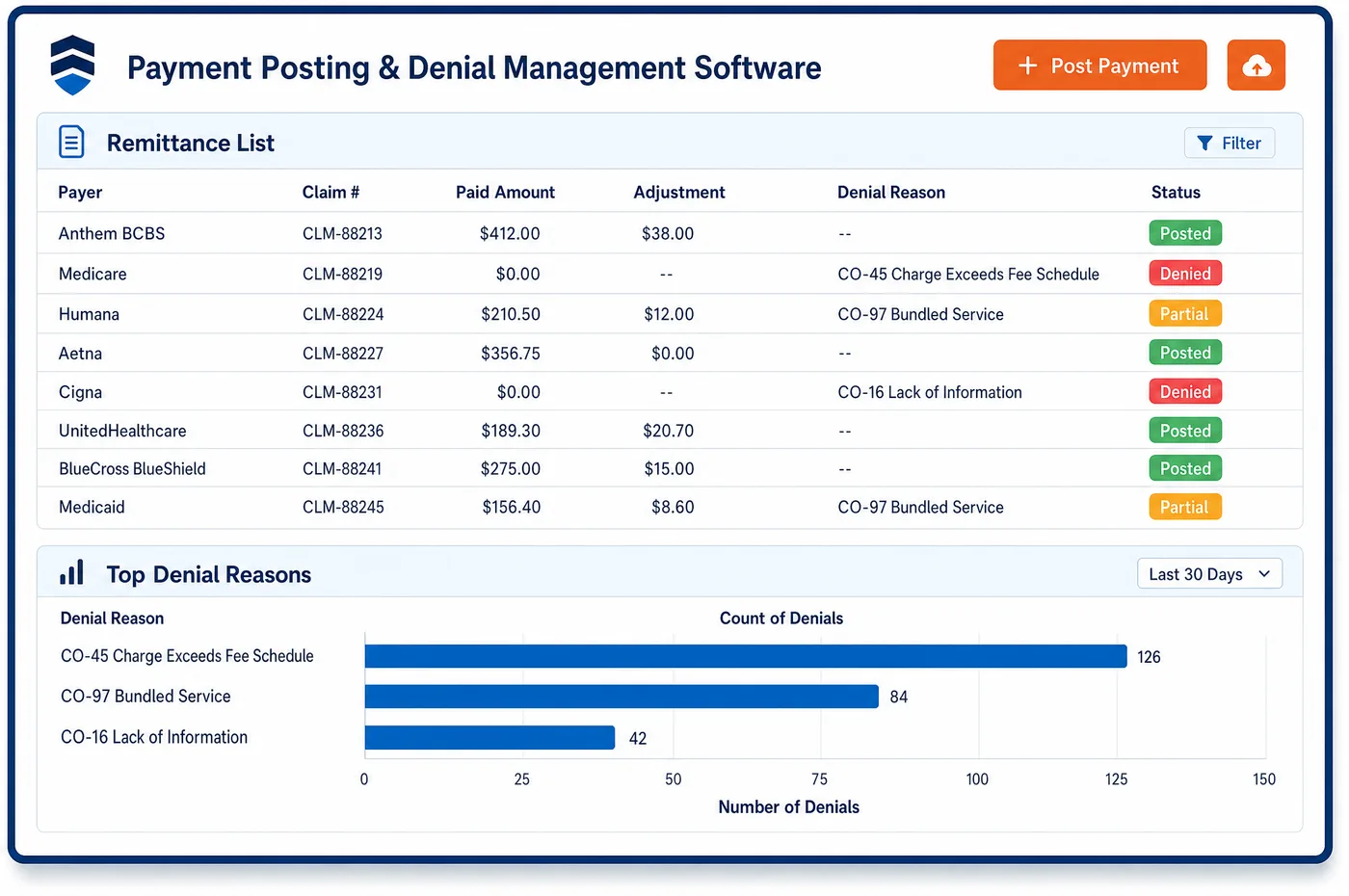
Patient Billing in a Behavioral Health Practice
Patient billing in behavioral health starts from a mixed caseload. Some clients have Medicaid managed care and owe little or nothing. Some have commercial plans with a copay on every weekly session. Others pay on a sliding scale, and uninsured or self-pay clients receive a good faith estimate before care. Unlimited Systems builds each statement from the live ledger, so a statement goes out only after insurance and discounts have posted. The statement shows the full charge, the sliding-fee discount and any grant credit as their own lines, then the net amount due. Clients get statements by secure text or email, with a link to pay. A client can ask for mail at a different address, and that request is kept on the account. Statements for minors go to the guarantor on file. Medicaid-only accounts are held from statements unless a permitted copay applies.
Why Is Patient Billing Different in Behavioral Health?
Behavioral health care is often weekly and can run for a long time. A copay that looks small for one session adds up across a course of therapy, and a client who falls behind may stop coming. Clear, regular statements with a net balance the client recognizes keep the balance small. They also keep billing questions out of the therapy room, where they do not belong.
Many clients pay on a sliding scale. CCBHCs must publish a sliding fee discount schedule for all their services and reduce or waive fees so no one is turned away for inability to pay. Community mental health centers and grant-funded programs often do the same. A statement has to show how the discount was applied, or clients will call the front desk to ask why the amount changed.
Privacy shapes every statement. A bill that names a substance use program or a diagnosis can reveal care the client has not shared at home. HIPAA lets patients ask for communications by other means or at other places, and providers must meet reasonable requests. Parents may receive statements for minors, but some services to teens are confidential under state law. Patient billing for behavioral health has to know who should see each bill.
What Behavioral Health Patient Billing Software Handles
- Sliding fee discount schedule (CCBHC criteria 2.d.2 to 2.d.4)
- The schedule must cover all services, be posted where clients can see it, and follow written eligibility policies. Each discount appears as its own line on the statement, so the client sees how the schedule was applied. (SAMHSA: CCBHC Certification Criteria (criteria 2.d, ability to pay and sliding fee discount schedule))
- Good faith estimates for self-pay clients (45 CFR 149.610)
- Uninsured and self-pay clients must receive a good faith estimate of expected charges. Billed amounts are compared with the estimate, so staff see a gap before the statement goes out. (45 CFR 149.610: Good faith estimates for uninsured (or self-pay) individuals)
- Medicaid payment in full (42 CFR 447.15)
- Providers must accept the Medicaid payment as payment in full, apart from any permitted cost sharing. Medicaid-only accounts are held from statements, and only an allowed copay is billed to the client. (42 CFR 447.15: Acceptance of State payment as payment in full)
- Confidential communications (45 CFR 164.522)
- Clients can ask to receive statements at another address or by another channel. The request is stored on the account, and every statement follows it. (45 CFR 164.522: Rights to request privacy protection, including confidential communications)
- Medicare assignment for counselors and therapists
- Mental health counselors and marriage and family therapists who bill Medicare must accept assignment. The client's statement shows only the coinsurance and deductible Medicare leaves to the client. (CMS MLN Booklet: Medicare & Mental Health Coverage (MLN1986542, March 2026))
How Does Behavioral Health Patient Billing Software Work?
1. Wait for insurance and discounts
A statement is built only after the payer's payment and the sliding-fee discount have posted. Balances still waiting on a payer are held.
2. Itemize the net balance
Each session shows the charge, insurance payment, discount and grant credit on separate lines. The client sees a net amount that matches the statement cycle they know.
3. Check the estimate
For self-pay clients, billed amounts are compared with the good faith estimate given before care. Large gaps are reviewed before anything goes out.
4. Send to the right person
Statements go to the client or the guarantor on file, by text, email or mail. Confidential mailing requests are followed on every statement.
5. Offer ways to pay
Each statement links to integrated payment options such as card, text-to-pay and payment plans. Payments post back to the account the moment they clear.
Behavioral Health Patient Billing Software vs. Generic Software
| Area | Generic approach | Unlimited Systems |
|---|---|---|
| Discounts | One adjusted total with no explanation. | Charge, discount and grant credit shown as separate lines. |
| Medicaid clients | Statements sent to clients who owe nothing. | Medicaid-only accounts held unless a permitted copay applies. |
| Privacy | Every statement mailed to the home address. | Confidential address and channel requests followed on every statement. |
| Self-pay estimates | Final bills never compared with the estimate. | Billed amounts checked against the good faith estimate. |
| Delivery | Paper statements mailed weeks after the session. | Secure text and email statements with a payment link. |
Who Uses It in a Behavioral Health Practice
- Front desk: Fewer calls about confusing balances, because each statement shows the discount and the net amount owed.
- Billing manager: Statements that wait for posting, follow privacy requests and hold Medicaid-only accounts, with a sliding fee scale applied the same way every time.
- Clinical director: Billing questions handled outside the session, so a balance does not become a reason a client stops coming.
Behavioral Health Patient Billing Software FAQs
Patient billing lists the full charge, any insurance payment, the sliding-fee discount and any grant credit as separate lines. The client then sees the net amount due and how it was reached. Because discounts follow the organization's written schedule and policies, two clients at the same income level see the same discount for the same service.
Medicaid clients are generally not billed beyond permitted cost sharing, since providers must accept the Medicaid payment as payment in full. Accounts with only Medicaid coverage are held from statements. If the state allows a copay for a service, only that amount is billed. Balances that should never reach a Medicaid client are flagged for review.
Uninsured and self-pay clients must receive a good faith estimate before scheduled care. For ongoing therapy, the estimate can cover the expected sessions. When statements are built, billed amounts are compared with the estimate. A large gap is reviewed first, since a self-pay client can dispute a bill that runs well above the estimate.
A client can ask for statements by another channel or at another address, and HIPAA requires providers to meet reasonable requests. The request is saved on the account, and every statement and reminder follows it. That matters when a client has not told family members about therapy or substance use care.
Statements for minors go to the guarantor listed on the account, usually a parent or guardian. Some states let teens consent to certain behavioral health services on their own, and those services may need to stay off a parent's statement. Staff set those rules by state and service, and the statement follows the setting on the account.
Statements go out by secure text or email as soon as insurance and discounts post, with a link to pay. Clients who prefer paper still get mail. Because payments post back to the account the moment they clear, the next statement and the front desk both show the current balance.
Related Behavioral Health Software
Payments & AR
In the revenue cycle
Patient Billing for related specialties
Sources
- SAMHSA: CCBHC Certification Criteria (criteria 2.d, ability to pay and sliding fee discount schedule)
- 45 CFR 149.610: Good faith estimates for uninsured (or self-pay) individuals
- 42 CFR 447.15: Acceptance of State payment as payment in full
- 45 CFR 164.522: Rights to request privacy protection, including confidential communications
- CMS MLN Booklet: Medicare & Mental Health Coverage (MLN1986542, March 2026)
GET STARTED
See Unlimited Systems in Action
Whether you're actively evaluating new technology or simply preparing for your next vendor renewal, Unlimited Systems can help you understand where your current workflows may be creating avoidable revenue risk.