

Platform & AI
Allergy & Immunology Platform System Design
The cloud platform under allergy billing: one database for every site and Tax ID, a full history of each dose and charge, and security built in.
Allergy & Immunology Platform System Design describes the cloud architecture under Unlimited Systems for allergy practices. One database holds every site and Tax ID. Every change to a vial, dose, charge or payment is recorded. The platform scales as shot and testing volume grows, and data is encrypted with access set by role.



 6,500+ specialty providers

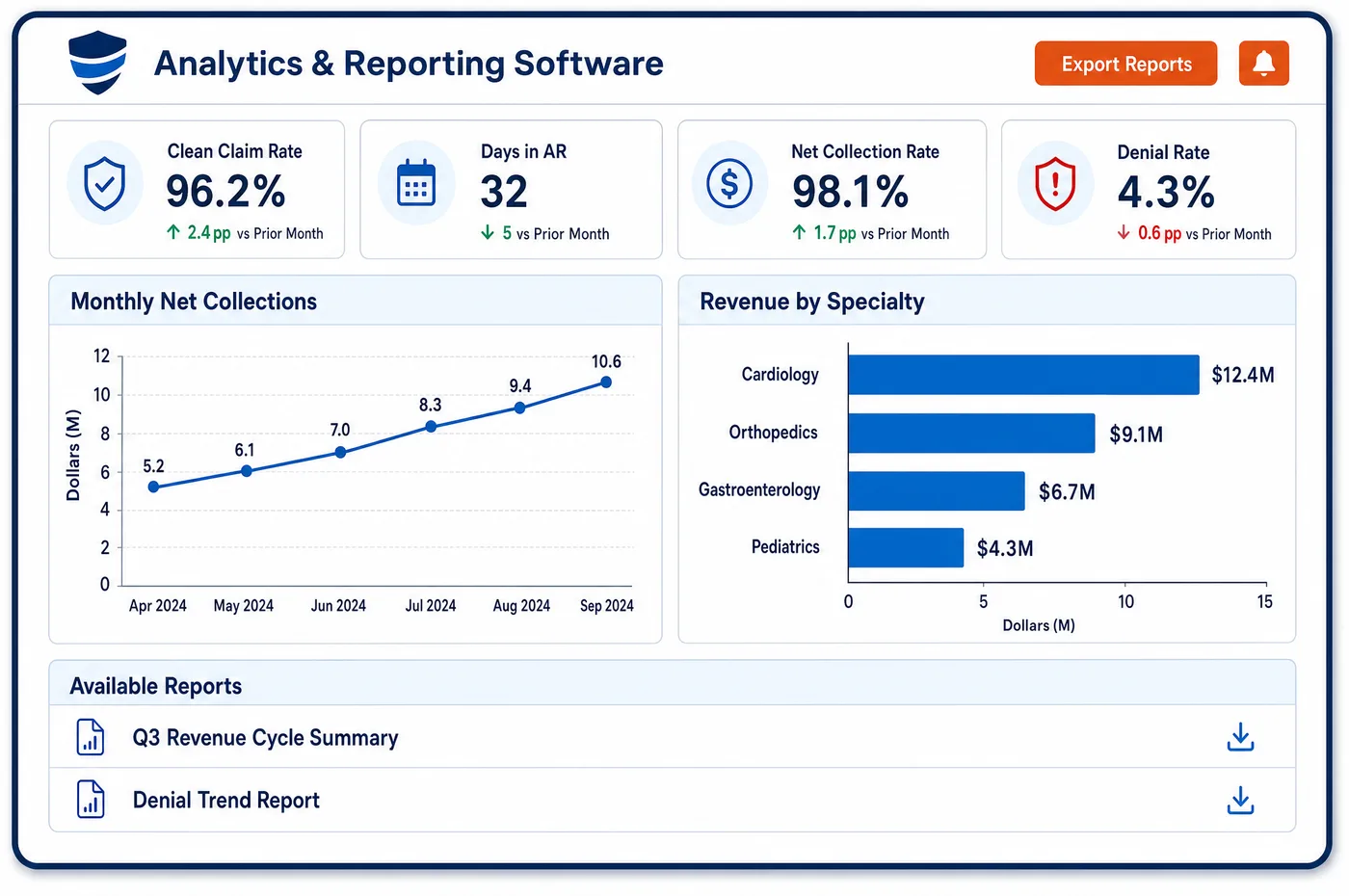
Platform System Design in a Allergy & Immunology Practice
An allergy practice creates many small records that must stay linked. An immunotherapy plan leads to vials, each vial to a planned dose count, and each shot to a visit and a claim. A biologic purchase leads to doses, waste lines and payments. Unlimited Systems keeps these in one data model on one cloud platform, so a payment can be traced back to the vial or drug it paid for. The core keeps every change rather than writing over old values. That matters in allergy billing, where Medicare bills the planned dose count even if doses are later adjusted. Groups with satellite shot clinics or several Tax IDs keep them in one database, with a hierarchy for reporting, workflow and security. The platform scales on its own as transaction volume rises. Encryption covers data both in transit and at rest, backups are kept offsite, and staff reach it from a web browser at any site.
Why Is Platform System Design Different in Allergy & Immunology?
Allergy data is small, frequent and linked. A single maintenance patient can create many shot records, each tied to a vial and a planned dose count. If those links break, billing cannot tell which doses were charged or which vial a shot came from. Platform system design for an allergy practice starts with a data model that keeps those links whole.
History matters as much as the current state. Medicare bills the doses planned when a vial is prepared and makes no change when doses are later adjusted. An auditor may ask what was planned, what was given and what was billed. A system that overwrites old values cannot answer. One that records every change can show the full path of a vial, a dose or a charge.
Growth adds sites, entities and volume. An allergy group may add satellite shot clinics, and some groups bill under more than one Tax ID. Each site needs its own reports and access rules, yet leaders want one view. A single database with a divisional hierarchy, plus a platform that scales on its own, lets a group grow without standing up another system.
What Allergy & Immunology Platform System Design Handles
- HIPAA Security Rule audit controls
- 45 CFR 164.312(b) requires audit controls that record activity in systems holding electronic health data. The platform records every data change, so who changed a dose count or a charge, and when, stays on file for HIPAA review. (45 CFR Part 164 Subpart C: HIPAA Security Standards (including 164.312 technical safeguards))
- Planned dose counts kept as recorded
- Medicare bills the doses planned at vial preparation and makes no billing change when doses are later adjusted. The planned count stays as recorded, with later changes logged beside it instead of over it. (Medicare Claims Processing Manual, Chapter 12, Section 200: Allergy Testing and Immunotherapy)
- Purchase and inventory records for Medicare drugs
- CMS expects accurate purchasing and inventory records for drugs billed to Medicare. Purchases, doses and waste live in one data model, so those records agree without a separate system. (CMS JW and JZ Modifier Policy FAQs)
- Encryption and access control
- Access control and transmission security are both safeguards named in the HIPAA Security Rule. Records are encrypted at rest and in transit, and each login sees only its role and sites. (HHS: The HIPAA Security Rule)
- Card data under PCI DSS
- Stored cards for shot-visit copays are kept as tokens through PCI DSS payment gateways, so card numbers are not held in the practice database. (PCI Security Standards Council: PCI DSS)
How Does Allergy & Immunology Platform System Design Work?
1. Model the allergy record
Plans, vials, dose counts, shots, test panels, biologic purchases and payments are linked in one data model. A payment can be traced to the service it paid for.
2. Record every change
The core keeps each change as a new event instead of overwriting the last value. The full history of an account stays available for audit.
3. Set up entities and sites
Tax IDs, divisions and sites sit in one hierarchy. Reporting, allergy workflow and security follow that structure.
4. Secure the data
Encryption protects data both moving and stored, and access follows each user's role and site. Threat monitors and offsite backups run in the background.
5. Scale with volume
The platform responds as transaction volume and storage needs grow. A busy shot day and the month-end close run without slowing the system.
Allergy & Immunology Platform System Design vs. Generic Software
| Area | Generic approach | Unlimited Systems |
|---|---|---|
| Data model | Shots, vials and charges kept in separate tools. | One linked model from plan to payment. |
| History | Old values overwritten on edit. | Every change kept for audit. |
| Entities | Each Tax ID running on its own software. | Several Tax IDs and sites in one database. |
| Scale | Slows down when volume spikes. | Scales on its own with transaction volume. |
| Security | Local servers and manual backups. | Encrypted cloud hosting with offsite backups. |
Who Uses It in a Allergy & Immunology Practice
- Practice administrator: One database for every site, with access by role and site, and outside connections handled through lab and payer data exchange.
- Compliance officer: A full change history for every vial, dose, charge and payment, ready when an auditor asks who changed what and when.
- CFO: Several entities in one place, with consolidated numbers flowing into scheduled reports.
Allergy & Immunology Platform System Design FAQs
Platform system design covers how the software stores, links, protects and scales allergy data. For an allergy practice, it means plans, vials, dose counts, shots, tests and biologic doses are linked in one cloud database. Every change is recorded, every site sits in one hierarchy, and the platform grows with volume.
Allergy billing often has to show what was true at an earlier point. Medicare bills the doses planned when a vial is prepared, even if doses are later adjusted. Keeping every change means the planned count, later edits and billed amounts can all be shown. An auditor sees the full path instead of only the final number.
Groups that bill under more than one Tax ID can keep each entity in one database. A divisional hierarchy sets how reporting, workflow and security follow the organization. Enterprise groups with affiliated environments can also deploy shared rules across them, so billing rules stay in step.
Allergy records are encrypted while stored and while moving, and access follows each user's role and site. Hosting is HIPAA-compliant, with threat monitoring and redundant offsite backups. Stored payment cards are kept as tokens through PCI DSS gateways. Every data change is recorded, which supports the audit controls the HIPAA Security Rule calls for.
The platform responds on its own as transaction volume and storage needs rise. A practice that adds providers, sites or a busy injection clinic does not need new servers. Staff reach the system from a web browser, so a new satellite clinic can start work without local installs.
The platform is built on configurable workflows rather than one fixed process. Queues, rules and views can be set up for a shot clinic, a vial build team, a biologic coordinator and billing. That lets each allergy practice run its own way while keeping one shared data model underneath.
Related Allergy & Immunology Software
Platform & AI
In the revenue cycle
Platform System Design for related specialties
Sources
GET STARTED
See Unlimited Systems in Action
Whether you're actively evaluating new technology or simply preparing for your next vendor renewal, Unlimited Systems can help you understand where your current workflows may be creating avoidable revenue risk.