

Platform & AI
Allergy & Immunology Automation Software
Let the system run eligibility checks, claim status, ERA posting and allergy billing edits on its own, so staff only touch the exceptions.
Allergy & Immunology Automation Software handles the rule-bound, repeat tasks of allergy billing with no one at the keyboard. It checks coverage before shot visits, applies edits for 95165 doses, modifier 25 and Medicare JW or JZ lines, sends claims, asks payers for status, posts 835s and bills secondaries. Staff see only the exceptions.



 6,500+ specialty providers

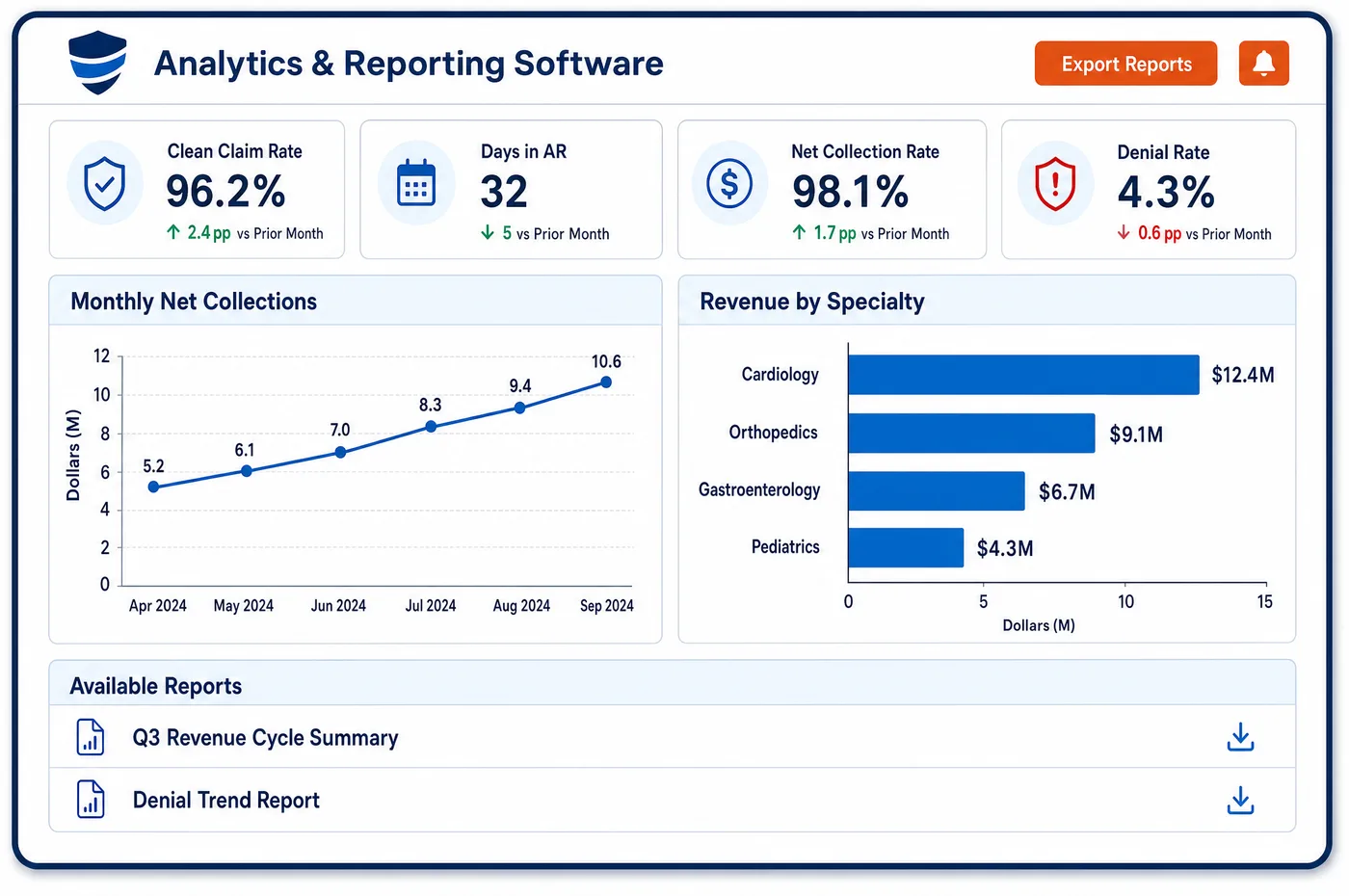
Automation in a Allergy & Immunology Practice
An allergy practice repeats the same billing steps more often than most. A shot patient may visit many times between plan changes, and each visit creates a claim with an injection code and often antigen doses. Doing every step by hand for each visit is where errors creep in. Unlimited Systems automates the steps that follow clear rules. Eligibility runs in batches before scheduled shot and testing visits. Rule-based edits hold a claim that bills more 95165 doses than the vial can support, an office visit with a shot and no modifier 25, or a Medicare biologic line with neither JW nor JZ. Clean claims go out on their own. Status requests go to payers in bulk, ERAs post without keying, and secondary claims follow the primary payment. Code tables and payer rules are updated centrally, so a new LCD or quarterly drug rate reaches the edits without staff typing it in. What needs judgment lands in staff work queues.
Why Is Automation Different in Allergy & Immunology?
Volume is the reason automation pays off in allergy care. A busy shot clinic creates many small claims, each with the same few codes. If each one is checked, sent, followed and posted by hand, staff spend the day on routine work. Most of these claims are clean, and they do not need a person to touch them.
The rules that matter are clear enough to automate. Medicare caps billed 95165 doses at the 1 cc aliquots a vial can hold. Any office visit sharing a date with a 95115 to 95199 service needs modifier 25. Medicare single-dose drug lines need JW or JZ, or the claim can be returned. Rules like these can be checked on every claim, every time, without a person reading each one.
Rules also change, and allergy has seen recent change. In WPS jurisdictions J5 and J8, LCD L40341 replaced the earlier allergy testing LCD for services on or after September 27, 2026. Drug payment rates move each quarter with the ASP file. Automation in an allergy practice has to take those updates in centrally, so the edits stay current without staff rewriting them.
What Allergy & Immunology Automation Software Handles
- Batch eligibility with 270/271
- Batch eligibility requests go out before scheduled shot and testing visits. Plans that changed or ended come back as exceptions for the front desk. (X12 transaction sets: 270/271 eligibility, 276/277 claim status, 835 and 837)
- 95165 dose edit
- Medicare allows no more than one billed dose per 1 cc a multidose vial holds. A rule holds any claim that bills more 95165 doses than the recorded vial size supports. (Medicare Claims Processing Manual, Chapter 12, Section 200: Allergy Testing and Immunotherapy)
- Modifier 25 edit with shot codes
- For Medicare, modifier 25 is the only route to payment for a visit billed with a 95115 to 95199 service. A rule holds claims that pair a visit with a shot and no modifier, for a coder to review. (Medicare Claims Processing Manual, Chapter 12, Section 200: Allergy Testing and Immunotherapy)
- Same-day testing and immunotherapy
- NCCI expects allergy testing and immunotherapy to fall on different dates, unless the testing covers additional allergens. A rule flags those claims so the record can be checked first. (CMS NCCI Policy Manual for Medicare Services 2026, Chapter XI (allergy testing and immunotherapy))
- JW and JZ check on Medicare drug lines
- Medicare claims for single-dose container drugs can be returned without JW or JZ. A rule holds any Medicare biologic line that has neither. (CMS JW and JZ Modifier Policy FAQs)
- LCD L40341 rule updates
- For Medicare in WPS jurisdictions J5 and J8, L40341 governs allergy diagnostic testing from September 27, 2026. Coverage edits are updated centrally when an LCD like this takes effect. (CMS Medicare Coverage Database, WPS LCD L40341: Allergy Diagnostic Testing)
How Does Allergy & Immunology Automation Software Work?
1. Check coverage ahead
Eligibility runs in batches before scheduled visits. Clean results attach to the visit, and changes go to the front desk as exceptions.
2. Edit every claim
Rule-based edits check dose counts, visit modifiers and drug-line modifiers on each claim. A passing claim goes out at once, while a failing one waits with the broken rule named.
3. Follow claims without calls
Status requests go out in bulk for open claims. Replies update each claim, and only those that need a person reach a collector.
4. Post and bill on
ERA files post as they arrive, and the secondary claim goes out after the primary payment posts. Patient balances move on to statements.
5. Hand off the exceptions
Anything a rule cannot settle goes to the right queue with its reason attached. Allergy workflow queues decide who works it and in what order.
Allergy & Immunology Automation Software vs. Generic Software
| Area | Generic approach | Unlimited Systems |
|---|---|---|
| Eligibility | Checked by phone or portal at each visit. | Batch 270/271 checks before the visit, exceptions only. |
| Dose and modifier edits | Caught after the payer denies. | Held before submission with the rule that failed. |
| Claim status | Collectors call or log in to portals. | Bulk 276 requests with replies posted to each claim. |
| Rule updates | Staff retype fee and policy changes. | Code and payer tables updated centrally. |
| Staff time | Every claim touched the same way. | Only exceptions reach a person. |
Who Uses It in a Allergy & Immunology Practice
- Front desk: Coverage already checked for the day's shot and testing patients, with only changed plans to follow up.
- Billing team: Clean claims that send themselves, and a short list of held claims, each with the rule that held it, worked through exception-based work.
- Revenue cycle director: Fewer touches per claim, with fixes for repeat holds sent back to charge validation.
Allergy & Immunology Automation Software FAQs
Automation can run batch eligibility checks before shot and testing visits, apply edits for 95165 doses, modifier 25 and Medicare JW or JZ lines, send clean claims, request claim status in bulk, post ERA files and bill secondary payers. Staff then work only the claims and visits that a rule could not settle on its own.
A rule compares the 95165 doses on a claim with the recorded vial size. For Medicare, a practice may bill no more than one dose per 1 cc the multidose vial holds, so a full 10 cc vial supports ten doses. A claim that bills more is held with that reason for a coder to check.
Automation does not add modifier 25 on its own, because the modifier depends on whether the visit was significant and separately identifiable. Instead, a rule holds any claim that pairs an office visit with a shot code and no modifier. A coder checks the note and decides whether the modifier belongs or the visit should come off.
Code tables, drug rates and payer rules are updated centrally rather than typed in by staff. When a new LCD takes effect, such as WPS L40341 for allergy diagnostic testing, or the quarterly ASP file changes Medicare drug rates, the edits use the new rules. Staff no longer rewrite edits by hand each quarter.
Each Medicare line for a single-dose container drug is checked for JW or JZ before the claim goes out. CMS can return claims that lack the modifier as unprocessable. A line missing both is held, so staff can add the right modifier from the administration record before the claim is sent.
Anything that calls for judgment still goes to a person: a held claim, a plan change found in eligibility, a denial that needs an appeal or a patient question. Those items land in work queues with the reason attached. The aim is fewer touches on routine claims, not removing staff from the decisions that matter.
Related Allergy & Immunology Software
Platform & AI
In the revenue cycle
Automation for related specialties
Sources
- X12 transaction sets: 270/271 eligibility, 276/277 claim status, 835 and 837
- Medicare Claims Processing Manual, Chapter 12, Section 200: Allergy Testing and Immunotherapy
- CMS NCCI Policy Manual for Medicare Services 2026, Chapter XI (allergy testing and immunotherapy)
- CMS JW and JZ Modifier Policy FAQs
- CMS Medicare Coverage Database, WPS LCD L40341: Allergy Diagnostic Testing
GET STARTED
See Unlimited Systems in Action
Whether you're actively evaluating new technology or simply preparing for your next vendor renewal, Unlimited Systems can help you understand where your current workflows may be creating avoidable revenue risk.