

Payments & AR
Oncology Patient Billing Software
Statements that show what an oncology patient really owes after Medicare, the supplement, copay cards and foundation grants have paid.
Oncology Patient Billing Software turns the patient's share of chemotherapy, immunotherapy and office care into clear statements. It waits for the secondary payer. It shows copay card and foundation credits on the bill. It checks each balance against the estimate given before treatment, so patients see a net amount they know.



 6,500+ specialty providers

Patient Billing in a Oncology Practice
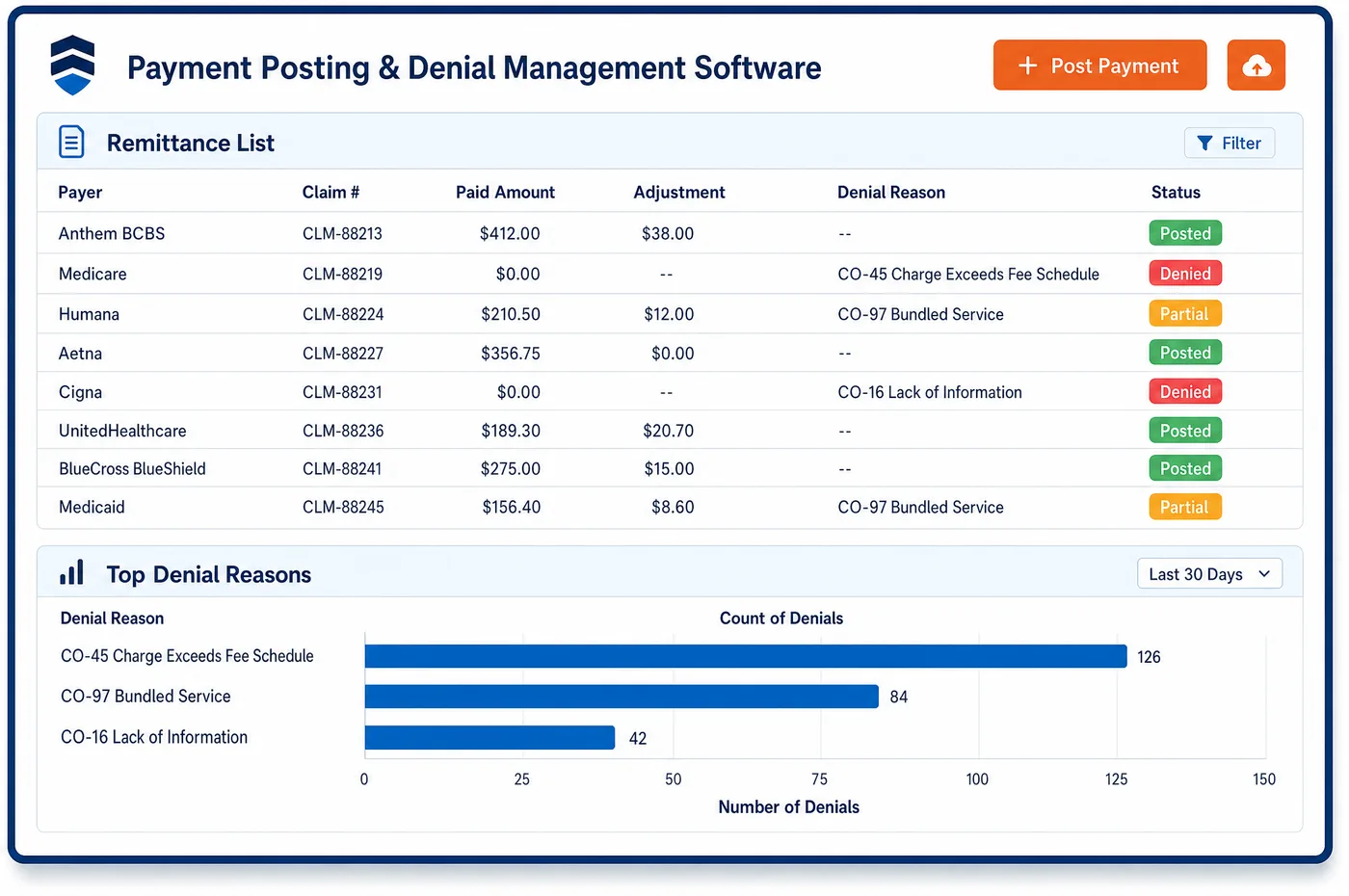
Patient balances in medical oncology build up cycle by cycle. A patient on an infusion regimen may have drug, infusion and visit charges every few weeks. Each claim may pass through Medicare, a Medigap plan, a drug maker's copay program or a charity fund before the balance is final. Oncology patient billing software holds the statement until those payers have acted. It then lists the services by date, shows what each payer and fund paid, and states the net amount due. The balance is checked against the estimate the financial counselor gave before treatment. Large gaps are flagged for review before the statement goes out. Statements go by secure text or email, with paper for those who want it. Each one links to integrated patient payments so the patient can pay by card or set up a plan. Each payment then posts back to the same ledger.
Why Is Patient Billing Different in Oncology?
The amounts are larger than in most specialties. Under Medicare Part B the patient owes a share of the drug's allowed amount. For a costly drug, that share adds up fast across a regimen. A statement that lists gross charges, and leaves out what the supplement and the funds paid, sends patients to the phone. They worry about a number they will never owe.
Help with costs has rules the bill must respect. Under OIG guidance on the anti-kickback statute, drug makers' copay coupons are generally not used for drugs Medicare pays for. Medicare patients lean on supplements and charity funds instead. Commercial patients may use a maker's program, but some plans use copay accumulator designs that keep that money from counting toward the deductible. The statement has to show the right credits for the right patient.
Some costs are not the patient's at all. The Enhancing Oncology Model's monthly M0010 payment has no patient share, so it should never land on a statement. For some Part B drugs whose prices rose faster than inflation, Medicare also lowers the coinsurance for the quarter. Oncology patient statements that miss these details overbill the people least able to pay.
What Oncology Patient Billing Software Handles
- EOM monthly payment (M0010)
- CMS says patients are not responsible for any part of the EOM monthly payment. M0010 lines are kept off patient statements, so an EOM patient never sees a balance for enhanced services. (CMS: Enhancing Oncology Model Frequently Asked Questions)
- Reduced coinsurance on Part B rebatable drugs
- Since April 2023, Medicare has lowered coinsurance for certain Part B drugs whose prices rose faster than inflation, and the drugs affected can change each quarter. Patient balances follow the coinsurance Medicare applied on the remittance, not an assumed share. (CMS: Medicare Prescription Drug Inflation Rebate Program (Part B coinsurance adjustment))
- Manufacturer copay coupons
- OIG has warned that manufacturer copay coupons can implicate the anti-kickback statute when used for drugs paid by federal programs. Copay card credits are shown on statements for commercial patients, while Medicare balances look to supplements and charity foundations. (HHS-OIG Special Advisory Bulletin: Pharmaceutical Manufacturer Copayment Coupons)
- Independent charity foundation grants
- OIG guidance describes how independent charities can help federal program patients with cost sharing when the charity is truly independent of its donors. Foundation payments show on the statement as credits, so the patient sees the net balance after the grant. (HHS-OIG Supplemental Special Advisory Bulletin: Independent Charity Patient Assistance Programs)
- Good faith estimates for self-pay patients
- Under the No Surprises Act, uninsured and self-pay patients get a good faith estimate, and one estimate can cover a recurring course of treatment for up to a year. The final bill can be compared with that estimate line by line. (CMS/CCIIO: FAQs on Good Faith Estimates for Uninsured (or Self-Pay) Individuals, Part 2)
- No routine waivers of coinsurance
- OIG has long warned that routinely waiving Medicare coinsurance can violate the anti-kickback statute, while waivers for real financial hardship are treated differently. Hardship adjustments are recorded with a reason, so the practice can show each one was decided case by case. (HHS-OIG Special Fraud Alert: Routine Waiver of Copayments or Deductibles under Medicare Part B)
How Does Oncology Patient Billing Software Work?
1. Wait for every payer
A statement is held until Medicare, the supplement and any assistance program have acted on the claim. Crossover claims are tracked so the patient isn't billed for coinsurance a Medigap plan will pay.
2. Apply credits and adjustments
Copay card payments, foundation grants and hardship adjustments post to the lines they cover. What remains is the patient's true balance.
3. Check against the estimate
The final balance is compared with the estimate given at clearance. Large gaps are reviewed before the statement goes out, and the reason is noted on the account.
4. Send a clear statement
Statements list services by treatment date and show each payer's payment and each credit. They go out by secure text, email or mail, with a link to pay or set up a plan.
5. Answer questions and follow up
Balance questions are logged on the account. Payments and plan drafts post back to the patient ledger, and unpaid balances follow the practice's statement cycle.
Oncology Patient Billing Software vs. Generic Software
| Area | Generic approach | Unlimited Systems |
|---|---|---|
| Statement timing | Sent as soon as Medicare pays. | Held until the supplement and assistance programs have paid. |
| Assistance credits | Copay card and foundation money hidden in a lump adjustment. | Each credit shown on the face of the statement. |
| Estimate match | No link between the estimate and the bill. | Final balance compared with the estimate before it is sent. |
| EOM payments | Monthly model payments treated like any other charge. | M0010 kept off patient statements. |
| Delivery | Paper statements by mail only. | Secure text and email links, with paper on request. |
Who Uses It in a Oncology Practice
- Patient account rep: Statements that already show supplement, copay card and foundation payments, so fewer calls start with confusion.
- Financial counselor: A view of each patient's balance against the estimate they were given, so follow-up talks start from real numbers.
- Billing director: Patient balances that reflect Medicare's actual coinsurance and assistance credits, with hardship adjustments documented one by one.
Oncology Patient Billing Software FAQs
Oncology patient billing waits because many Medicare patients have a Medigap or other plan that pays most or all of their Part B coinsurance. If a statement goes out when Medicare pays, the patient sees a large balance the supplement will cover. Holding the statement until the crossover payment posts means the first bill the patient sees is the right one.
Copay card payments and foundation grants are shown as credits on the face of the statement, line by line. The patient sees the charge, what insurance paid, what the assistance program paid and the net amount left. That makes the bill match what the financial counselor explained before treatment, and it cuts down on calls.
Patients do not pay any part of the Enhancing Oncology Model's monthly payment, which practices bill as M0010. The software keeps those lines off patient statements. Patients in the model still owe their normal cost sharing for the drugs, infusions and visits they receive, and those are billed in the usual way.
Each patient's final balance is compared with the estimate given before treatment started. When the balance is far above the estimate, the account is reviewed before a statement goes out, for example to check for a missed secondary or a new drug. For uninsured and self-pay patients, the bill is compared with the good faith estimate.
OIG has warned that routinely waiving Medicare coinsurance can break the anti-kickback statute. A waiver or reduction based on a patient's documented financial hardship, decided case by case, is treated differently. The software records each hardship adjustment with its reason and who approved it, so the practice can show how each decision was made.
For some Part B drugs whose prices rose faster than inflation, Medicare lowers the patient's coinsurance for that quarter, and the drugs on the list can change. Patient balances follow the coinsurance shown on Medicare's remittance rather than a fixed share, so the patient is billed the amount Medicare actually set.
Related Oncology Software
Payments & AR
In the revenue cycle
Patient Billing for related specialties
Sources
- CMS: Enhancing Oncology Model Frequently Asked Questions
- CMS: Medicare Prescription Drug Inflation Rebate Program (Part B coinsurance adjustment)
- HHS-OIG Special Advisory Bulletin: Pharmaceutical Manufacturer Copayment Coupons
- HHS-OIG Supplemental Special Advisory Bulletin: Independent Charity Patient Assistance Programs
- CMS/CCIIO: FAQs on Good Faith Estimates for Uninsured (or Self-Pay) Individuals, Part 2
- HHS-OIG Special Fraud Alert: Routine Waiver of Copayments or Deductibles under Medicare Part B
GET STARTED
See Unlimited Systems in Action
Whether you're actively evaluating new technology or simply preparing for your next vendor renewal, Unlimited Systems can help you understand where your current workflows may be creating avoidable revenue risk.