

Front office
Cardiology Patient Intake Software
Collect cardiac history, medication lists, test prep answers, consents and decision-aid steps before the patient arrives.
Cardiology Patient Intake Software collects what the care team needs before a heart patient arrives. Patients complete history, symptom and medication forms on their phone, answer test prep questions and sign consents. Answers land on the chart, so a stress test, echo or cath visit starts with the right information in hand.



 6,500+ specialty providers

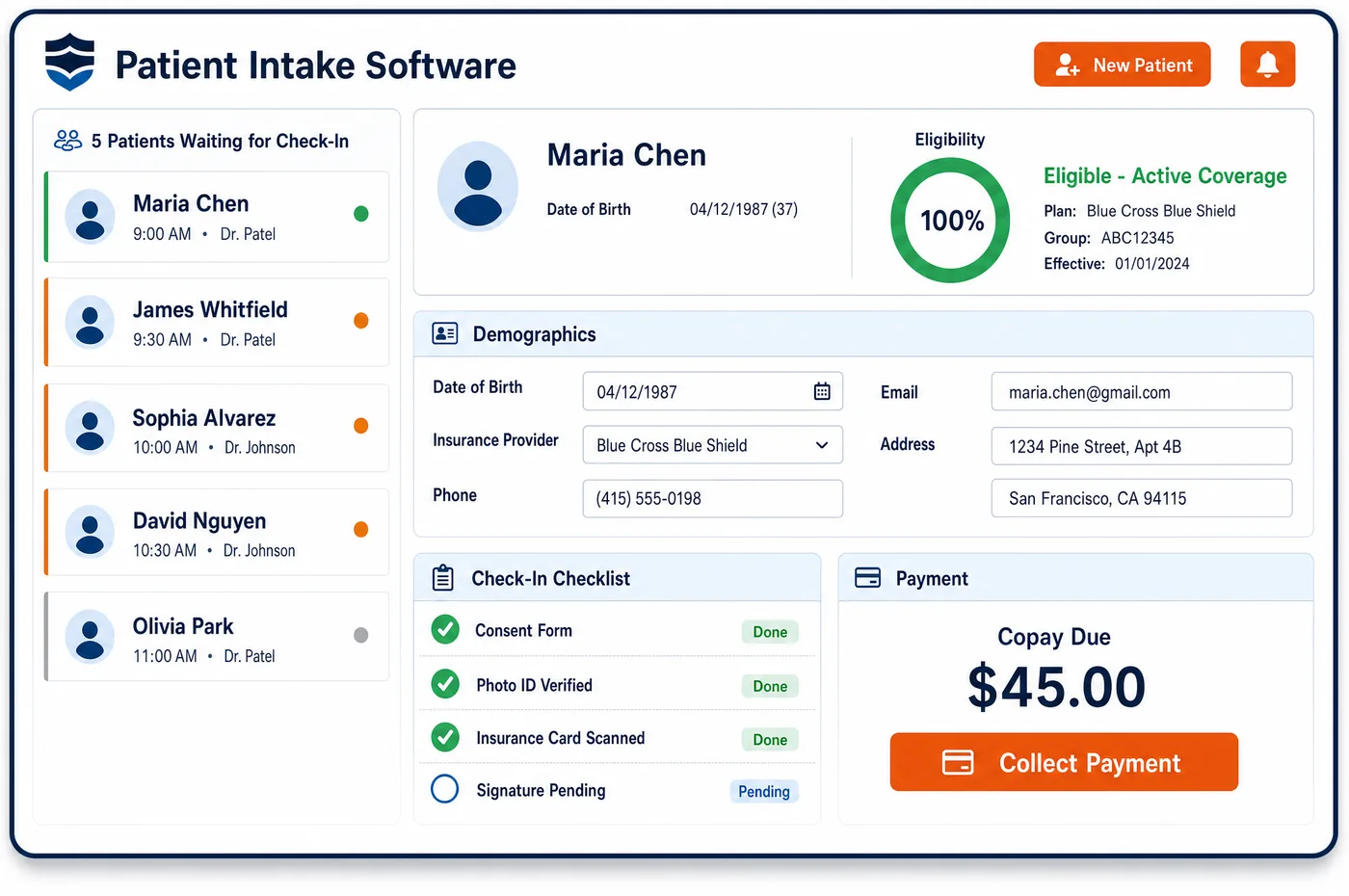
Patient Intake in a Cardiology Practice
Intake in cardiology changes with the visit. A new consult needs cardiac history, risk factors, family history and a full medication list, including blood thinners. A stress test needs to know whether the patient can walk on a treadmill, because a patient who can't is booked for a drug-based test, and the reason must be noted. A cath visit needs allergy history, kidney concerns and signed consent. A device clinic visit needs the patient's device type and any recent shocks or symptoms. Cardiology patient intake software sends the right form set for each visit type. Patients fill it out at home, upload their insurance card and sign consent forms. At check-in, staff confirm what came in and catch what didn't. Answers post to the chart as structured fields, not scanned pages. For procedures with coverage steps, such as a shared decision-making visit before an ICD, intake shows whether that step is on file before the procedure day.
Why Is Patient Intake Different in Cardiology?
Cardiac tests depend on what the patient did before they arrived. Caffeine can spoil a drug-based nuclear stress test. A blood thinner that wasn't held can delay a cath. When those questions go unasked until the patient is in the lab, the slot is lost and the patient goes home. Intake that runs before the visit moves those checks to a time when they can still be fixed.
The choice between an exercise test and a drug-based stress test also matters for medical necessity review. Payers expect the chart to show why a patient couldn't exercise when a drug-based test was done. A simple intake question about walking ability gives the cardiologist that answer and puts it on the record before the test is booked.
Some cardiac procedures need more than a signature on a consent form. Medicare asks for a documented shared decision-making visit before many first ICD implants and before left atrial appendage closure, and cardiac rehab needs psychosocial and outcomes assessments. Patient intake for a heart practice gathers these pieces early, so the procedure date isn't the first time anyone checks.
What Cardiology Patient Intake Software Handles
- Exercise vs. drug-based stress testing
- Novitas policy for outpatient stress testing asks the chart to document why a drug-based test was chosen over an exercise test. Intake asks about walking ability and limits, and the answer goes to the ordering cardiologist. (CMS Medicare Coverage Database, Novitas Billing and Coding Article A56423: Cardiology Non-emergent Outpatient Stress Testing)
- History taken for a stress test (93015–93018)
- Under NCCI policy, a history and limited exam tied to a stress test are part of the test. A separate E/M is reported with modifier 25 only when a significant, separate service is done. Intake forms for the test don't make it a separate visit. (CMS NCCI Policy Manual for Medicare Services, Chapter XI, section I: Cardiovascular Services)
- ICD decision tool (NCD 20.4)
- Medicare requires an evidence-based decision tool on ICDs in the shared decision-making visit for many first implants. That visit can happen at a separate encounter, so intake sends the decision aid ahead and records when it was reviewed. (CMS National Coverage Determination 20.4: Implantable Cardioverter Defibrillators (ICDs))
- LAAC shared decision-making (NCD 20.34)
- Before LAAC, the patient needs a formal shared decision-making visit with an independent non-interventional physician, using an evidence-based tool. Intake confirms that visit is documented in the record. (CMS National Coverage Determination 20.34: Percutaneous Left Atrial Appendage Closure (LAAC))
- Cardiac rehab assessments
- Medicare cardiac rehab must include a psychosocial assessment, an outcomes assessment and an individualized treatment plan signed by a physician. Intake forms collect the patient's answers for those assessments at the start of the program. (CMS Medicare Claims Processing Manual, Chapter 32, section 140: Cardiac Rehabilitation Programs)
- CAMZYOS REMS echocardiograms
- Under CGS policy for Kentucky and Ohio, echoes done under the CAMZYOS REMS program for obstructive hypertrophic cardiomyopathy (I42.1) are billed with modifier KX. Intake flags patients in the REMS program, so the echo visit is labeled correctly. (CMS Medicare Coverage Database, CGS Billing and Coding Article A57306: Transthoracic Echocardiography (TTE))
How Does Cardiology Patient Intake Software Work?
1. Send forms by visit type
Each visit type has its own form set. A new consult gets history and medication forms, a stress test gets prep questions, and a cath gets allergy questions and consent.
2. Collect prep answers early
Patients answer prep questions, such as caffeine use or blood thinners, on their phone. Answers that need a nurse's call are flagged for follow-up before the visit.
3. Capture consents and decision aids
Procedure consents are signed digitally and stored with the visit. For ICD or LAAC patients, the decision aid and the shared decision-making visit are tracked as intake items.
4. Confirm at check-in
At arrival, staff confirm the forms are complete, check ID and the card captured in cardiology patient registration, and fill any gaps. The patient goes to the lab or exam room with nothing missing.
5. Post answers to the record
Answers post to the chart as structured fields and appear on the patient management record. The cardiologist sees medications, symptoms and prep answers before the visit starts.
Cardiology Patient Intake Software vs. Generic Software
| Area | Generic approach | Unlimited Systems |
|---|---|---|
| Forms | One general packet for every visit. | Form sets matched to consult, test, cath or device visit. |
| Stress test prep | Prep checked at arrival, if at all. | Prep questions answered and reviewed before the visit. |
| Exercise ability | Not asked until the test is booked. | Asked at intake and noted for the ordering cardiologist. |
| Consents | Paper forms scanned after the visit. | Signed digitally and stored with the visit. |
| Decision aids | Handed out on the day of the procedure. | Sent ahead and tracked as an intake item. |
Who Uses It in a Cardiology Practice
- Front desk: Fewer clipboards and a short check-in, since forms and card images come in ahead of the visit.
- Nurse or tech: Prep answers to review before a stress test or cath, so problems are caught by phone instead of in the lab.
- Cardiologist: Medications, symptoms and walking ability in the chart before the visit, plus the decision-aid steps a national coverage determination requires already logged.
Cardiology Patient Intake Software FAQs
Patient intake for a cardiology visit depends on the visit type. A new consult gathers history, risk factors and medications. A stress test adds prep questions and asks whether the patient can exercise. A cath adds allergy questions and consent. Patients complete the forms on their phone, and answers post to the chart before they arrive.
Whether a patient can exercise decides between a treadmill test and a drug-based test. Some payer policies ask the chart to show why a drug-based test was chosen. Asking at intake gives the cardiologist that answer early, helps book the right protocol, and puts the reason on the record before the test is done.
Stress test prep instructions go out with the intake forms, and patients confirm they have read them. Questions about caffeine, meals and medicines are part of the form. When an answer points to a problem, such as recent caffeine before a drug-based nuclear test, the visit is flagged for a nurse to call the patient.
For patients being considered for an ICD or left atrial appendage closure, the decision aid is sent ahead of the shared decision-making visit. Intake tracks when that visit happened and who led it. The procedure team can see the step is documented before the implant date, which Medicare coverage depends on.
Intake forms and a brief history tied to a stress test are part of the test itself under NCCI policy. A separate office visit can be billed only when the cardiologist provides a significant, separately identifiable service, reported with modifier 25. Intake data supports the test and does not create a separate visit by itself.
Cardiac rehab starts with assessments, including psychosocial and outcomes measures. Intake forms collect the patient's answers at the start of the program and again when the plan is reviewed. The individualized treatment plan is then set and signed by a physician, with the patient's answers already on the record.
Related Cardiology Software
Front office
In the revenue cycle
Patient Intake for related specialties
Sources
- CMS Medicare Coverage Database, Novitas Billing and Coding Article A56423: Cardiology Non-emergent Outpatient Stress Testing
- CMS NCCI Policy Manual for Medicare Services, Chapter XI, section I: Cardiovascular Services
- CMS National Coverage Determination 20.4: Implantable Cardioverter Defibrillators (ICDs)
- CMS National Coverage Determination 20.34: Percutaneous Left Atrial Appendage Closure (LAAC)
- CMS Medicare Claims Processing Manual, Chapter 32, section 140: Cardiac Rehabilitation Programs
- CMS Medicare Coverage Database, CGS Billing and Coding Article A57306: Transthoracic Echocardiography (TTE)
GET STARTED
See Unlimited Systems in Action
Whether you're actively evaluating new technology or simply preparing for your next vendor renewal, Unlimited Systems can help you understand where your current workflows may be creating avoidable revenue risk.