

Front office
Cardiology Patient Management Software
Keep each heart patient's tests, devices, procedures and coverage steps on one record, from the first consult through long-term follow-up.
Cardiology Patient Management Software keeps one record for each heart patient across every visit, test and procedure. It shows the referral, the testing history, device follow-up, cath lab episodes and cardiac rehab progress in one place. Staff can see where a patient stands in their care and what the next step needs.



 6,500+ specialty providers

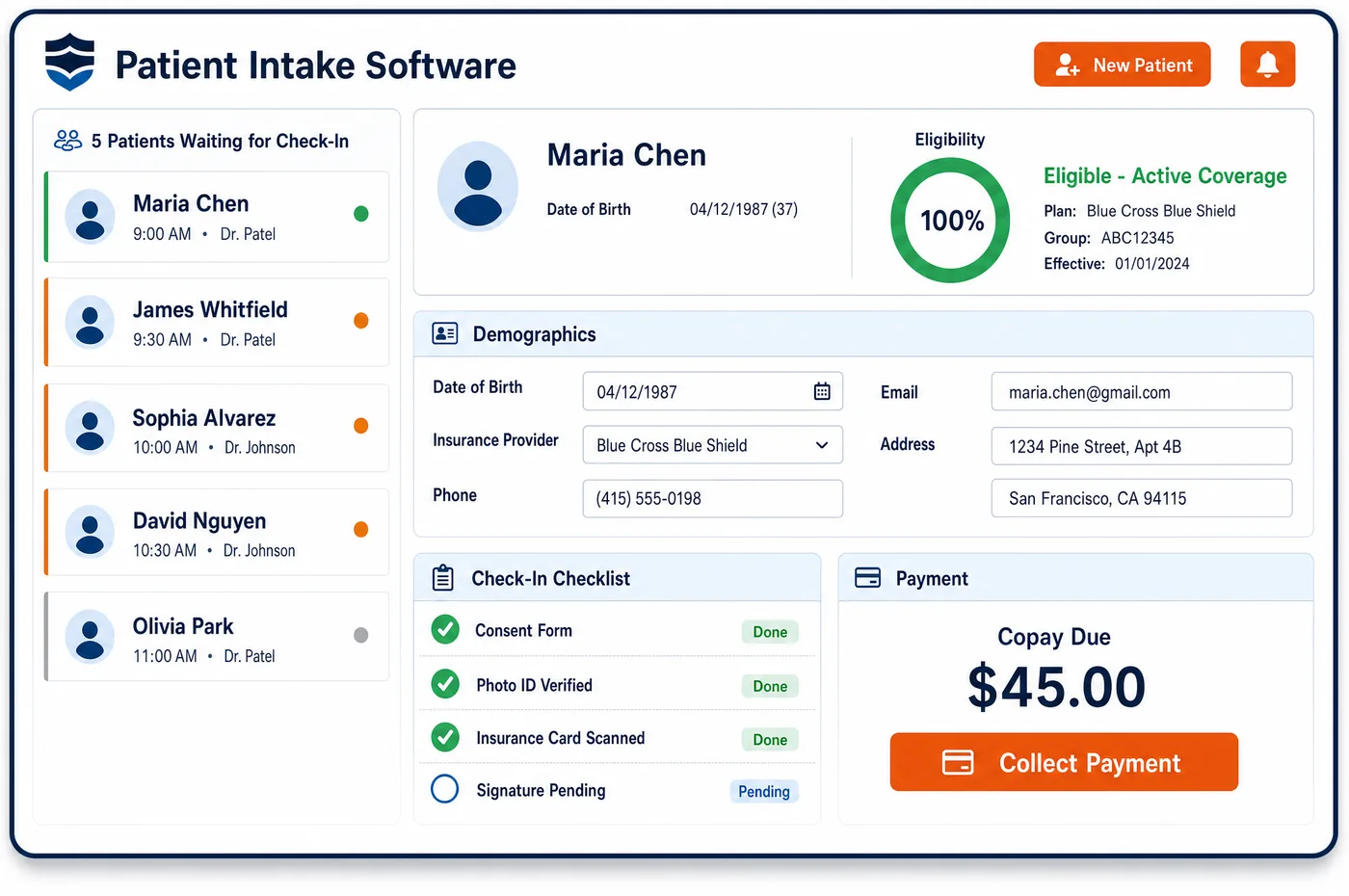
Patient Management in a Cardiology Practice
A cardiology patient rarely has one visit and done. A primary care referral for chest pain can lead to a stress test, then a heart cath, then a stent and a course of cardiac rehab. A patient with a pacemaker or ICD is followed for as long as the device is in place, with office checks and remote transmissions in between. Cardiology patient management software ties all of this to one patient record. Each episode of care, such as a PCI or a device implant, opens with its own dates, providers and site of service. The record shows open orders, prior authorization status and any global period still running after a procedure. It also holds the coverage steps some procedures need, such as a documented shared decision-making visit before an ICD. Front desk staff, nurses and billers read the same history, so nobody rebuilds a patient's story from scattered notes.
Why Is Patient Management Different in Cardiology?
Cardiology care runs on long timelines. A heart failure patient may cycle through clinic visits, echoes and hospital stays. A device patient has planned in-person and remote checks for the life of the device. When each of those lives in a separate system, a missed transmission or an overdue echo goes unnoticed until the patient calls with symptoms.
Care also moves between sites. The same cardiologist may see a patient in the office, read the echo for the hospital, and do the cath in a hospital lab. Each site changes who bills which part of the service. A record that knows where each service happened keeps the professional and technical split straight when the claim is built.
Some heart procedures have coverage steps that start well before the procedure date. Medicare's national rules for ICDs, left atrial appendage closure and TAVR say who must see the patient and what must be in the chart first. Patient management in cardiology tracks those steps as part of the patient's path, rather than leaving them to memory or a sticky note.
What Cardiology Patient Management Software Handles
- Remote device monitoring cycles (93294–93296)
- The record shows each patient's device type and remote monitoring status. Novitas policy says codes 93293 through 93296 are reported no more than once every ninety days, so the next billable remote period shows on the patient's timeline. (CMS Medicare Coverage Database, Novitas Billing and Coding Article A56602: Cardiac Rhythm Device Evaluation)
- ICD shared decision-making (NCD 20.4)
- Some ICD cases, such as cardiomyopathy or an old heart attack with a weak heart muscle, need a shared decision-making visit first. Medicare wants it done with an evidence-based decision tool before the first implant. The record shows if that visit is on file. (CMS National Coverage Determination 20.4: Implantable Cardioverter Defibrillators (ICDs))
- Left atrial appendage closure (NCD 20.34)
- Medicare covers LAAC under coverage with evidence development. The record tracks the formal shared decision-making visit with an independent non-interventional physician and the patient's place in the required national registry. (CMS National Coverage Determination 20.34: Percutaneous Left Atrial Appendage Closure (LAAC))
- TAVR heart team evaluation (NCD 20.32)
- Under NCD 20.32, a heart team that includes a cardiac surgeon and an interventional cardiologist evaluates the patient before TAVR. CMS is reconsidering this rule in 2026, so the record holds each evaluation while staff confirm which version applies. (CMS National Coverage Determination 20.32: Transcatheter Aortic Valve Replacement (TAVR))
- Cardiac rehab session count (93797, 93798)
- Medicare covers up to 36 cardiac rehab sessions, with up to 36 more at MAC discretion. The record counts completed sessions, so staff see when the KX modifier and its supporting notes are needed. (CMS Medicare Claims Processing Manual, Chapter 32 (Billing Requirements for Special Services), section 140: Cardiac Rehabilitation)
- Post-procedure global periods
- Medicare gives each procedure code a global indicator, such as 000, 010 or 090. When a procedure carries a global period, the record shows it, and follow-up visits inside it are flagged as part of the package. (CMS MLN Booklet: Global Surgery (MLN907166))
How Does Cardiology Patient Management Software Work?
1. Open the record from the referral
A new patient record starts from the referral, with the reason for the visit and the referring provider. Demographics and insurance come in through cardiology patient registration, so the record and the account match from day one.
2. Gather history before the first visit
Forms, medication lists and prior test results arrive through pre-visit intake. The cardiologist sees past echoes, stress tests and procedures in the record before walking into the room.
3. Track each episode of care
A stress test, a cath, a PCI or a device implant opens its own episode with dates, providers and site of service. Orders, authorizations and results attach to that episode, not just to the patient.
4. Follow devices and rehab over time
Device patients have a running list of in-person and remote checks. Cardiac rehab patients have a session count, so the care team sees progress and the billing team sees when more sessions need support.
5. Close the loop with the referring doctor
Results and plans go back to the referring provider. The record logs what was sent and when the patient is due back, so long-term follow-up doesn't slip.
Cardiology Patient Management Software vs. Generic Software
| Area | Generic approach | Unlimited Systems |
|---|---|---|
| Patient history | Tests, procedures and device checks spread across separate systems. | One record with every episode, test and device check. |
| Device follow-up | A paper list of who is due for a check. | Remote and in-person checks on the patient's timeline. |
| Coverage steps | Shared decision-making visits tracked from memory. | Documented coverage steps shown before the procedure is booked. |
| Site of service | Staff guess where a service happened when billing. | Each service carries its site, so the split is clear. |
| Cardiac rehab | Session counts kept by hand. | Completed sessions counted on the record. |
Who Uses It in a Cardiology Practice
- Front desk: A full picture of the patient at check-in, including open orders and what the visit is for.
- Cardiologist or nurse: Past tests, device checks and procedures in one place, plus the shared decision-making steps still open before a planned implant.
- Practice manager: A view of which patients are overdue for device checks or follow-up, with open authorizations handed to financial clearance for cardiology.
Cardiology Patient Management Software FAQs
Cardiology patient management software keeps one record across every visit, test and procedure. Each stress test, cath, PCI or device implant opens an episode with its own dates, providers and site. Device checks and rehab sessions run on the same timeline, so staff always see the patient's next step and what it needs.
Pacemaker and ICD patients have a running list of in-person and remote checks on their record. The next billable remote period shows on the timeline, based on the payer's frequency rules. Staff can see who is overdue for a check and reach out before a missed transmission turns into a missed problem.
Shared decision-making visits are tracked as steps on the patient's path to the procedure. For many ICD indications and for left atrial appendage closure, Medicare requires that visit before the implant. The record shows whether the visit is documented, so the procedure is not booked while a coverage step is still open.
Each service on the record carries its site, such as the office, the hospital outpatient department or an inpatient stay. That matters in cardiology because the site often decides whether the practice bills the whole service or only the professional part. Billing reads the same site data the clinical team entered.
When a procedure carries a global period, the patient record shows the package dates. Follow-up visits inside that window are flagged as part of the package. Visits for an unrelated problem can still be billed with the right modifier, and staff can see the difference before the visit is coded.
Results and care plans go back to the referring provider, and the record logs what was sent. When the patient is due back for a test or a device check, that date stays on the record. Referring practices hear back, and patients don't fall through the gap between primary care and cardiology.
Related Cardiology Software
Front office
Patient Management for related specialties
Sources
- CMS Medicare Coverage Database, Novitas Billing and Coding Article A56602: Cardiac Rhythm Device Evaluation
- CMS National Coverage Determination 20.4: Implantable Cardioverter Defibrillators (ICDs)
- CMS National Coverage Determination 20.34: Percutaneous Left Atrial Appendage Closure (LAAC)
- CMS National Coverage Determination 20.32: Transcatheter Aortic Valve Replacement (TAVR)
- CMS National Coverage Analysis CAG-00430R2: Transcatheter Aortic Valve Replacement (reconsideration)
- CMS Medicare Claims Processing Manual, Chapter 32 (Billing Requirements for Special Services), section 140: Cardiac Rehabilitation
- CMS MLN Booklet: Global Surgery (MLN907166)
GET STARTED
See Unlimited Systems in Action
Whether you're actively evaluating new technology or simply preparing for your next vendor renewal, Unlimited Systems can help you understand where your current workflows may be creating avoidable revenue risk.