

Payments & AR
Chiropractic Patient Billing Software
Statements that explain copays, maintenance visits Medicare won't pay, visit-limit balances and injury cases on hold.
Chiropractic Patient Billing Software turns what is left after insurance into clear patient statements. It shows each visit's copay, any maintenance care the patient agreed to pay under an ABN, and visits past a plan's limit. It keeps injury-case visits off routine statements while a claim or settlement is pending.



 6,500+ specialty providers

Patient Billing in a Chiropractic Practice
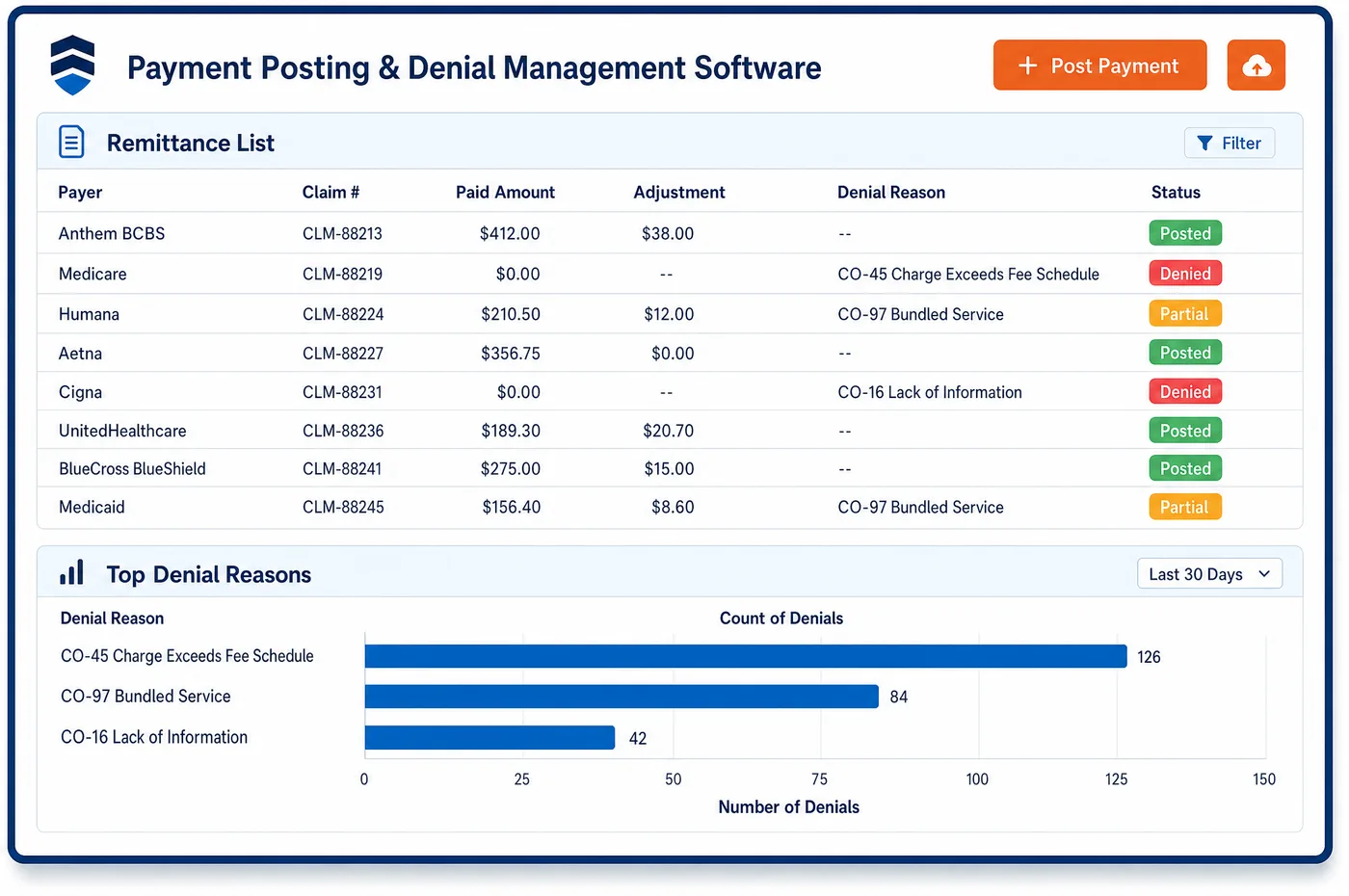
Chiropractic patients often owe a little at each of many visits. Early in a plan year, a deductible can make every visit a patient expense until it is met. Unlimited Systems builds statements from the posted ledger, so each line shows the visit date, what insurance paid and why the rest is the patient's. A Medicare maintenance visit billed with GA reads as care the patient chose after signing an ABN. An exam or x-ray that Medicare excludes from a chiropractor reads as non-covered. Visits past a plan's yearly limit say so plainly. Statements go out by text and email with a secure payment link, and paper is still there for patients who want it. Patients can pay the balance, use a card on file or set up a payment plan. Visits tied to an open auto or work-injury case stay off routine statements until that case is resolved.
Why Is Patient Billing Different in Chiropractic?
Chiropractic balances are small and frequent. A patient in active care may visit many times in a short stretch, and each visit leaves a copay or a slice of coinsurance. One statement per visit floods the patient with paper. One monthly statement with dozens of lines confuses them. Good patient billing here groups visits in a way the patient can follow, with the reason for each charge in plain words.
Medicare makes the reasons matter. When care turns from corrective to maintenance, Medicare stops paying. A patient who wants to keep coming can sign an ABN that lists the expected cost, and then they owe for those visits. Medicare also excludes exams, x-rays and therapy when a chiropractor provides them. The statement has to show which visits fall into which group, or the patient will think the office made a mistake.
Injury cases add a third kind of balance. When an auto or work injury is in play, the carrier or a settlement is expected to pay, and the practice may agree to wait. Sending those visits to the patient as routine balances breaks that agreement and starts disputes. They need to stay visible on the account but off the patient's statement until the case is done.
What Chiropractic Patient Billing Software Handles
- One ABN for a series of maintenance visits
- Medicare lets one ABN describe an extended or repeated course of non-covered care, as long as it lists the services and the care, health status and coverage rules stay the same. Statements show those GA visits as patient-owed under that notice. (CMS Medicare Claims Processing Manual, Chapter 30, Section 50 (Advance Beneficiary Notice))
- Cost estimate on the ABN
- The ABN carries a cost estimate for the care Medicare may not pay. Staff use the practice's maintenance visit price, so the statement later matches what the patient was told. (CMS Medicare Claims Processing Manual, Chapter 30, Section 50 (Advance Beneficiary Notice))
- GY lines for excluded services
- Exams, x-rays and therapy that a chiropractor bills to Medicare with GY are excluded by statute. They appear on the statement as non-covered services, not as a Medicare error. (Noridian JE Part B: Chiropractic Claim Submission Requirements (AT, GA, GZ, GY))
- Good faith estimates for self-pay patients
- Patients not using insurance are entitled to a good faith estimate when they ask or schedule ahead. Staff prepare it for the planned course of care, and the statement can be checked against it. (CMS: Understanding costs in advance (good faith estimates))
- CARC 119 benefit maximum
- When a plan's visit limit is reached, the denied visits post with CARC 119. After staff confirm the count, those visits show on the statement as past the plan limit. (X12 Claim Adjustment Reason Codes)
- Maintenance versus active care
- Medicare treats care as maintenance once further improvement isn't expected and treatment becomes supportive rather than corrective. The statement uses the same plain terms, so patients see why coverage stopped. (CMS Medicare Benefit Policy Manual, Chapter 15, Section 240.1.3 (Maintenance Therapy))
How Does Chiropractic Patient Billing Software Work?
1. Start from the posted ledger
Statements are built from posted payments and adjustments, not from raw charges. Each line shows the visit date, the insurance payment and the patient's share.
2. Group visits by reason
Copays, deductible visits, ABN maintenance visits and non-covered services are grouped. The patient sees why each group is theirs to pay.
3. Hold injury-case visits
Visits tied to an open auto, liability or work-injury case are kept off routine statements. They stay on the account and on the injury case worklist.
4. Send by text, email or mail
Statements go out by text and email with a secure payment link. Patients who prefer paper still get a mailed copy.
5. Offer ways to pay
The statement links to online payment, stored cards and payment plans. Payments post back to the same visits the statement listed.
6. Answer questions from one view
Front desk and billing staff see the statement the patient saw, with each line tied to its remittance. A question about a GA or visit-limit charge gets answered in one call.
Chiropractic Patient Billing Software vs. Generic Software
| Area | Generic approach | Unlimited Systems |
|---|---|---|
| Statement lines | Gross charges listed with no reasons. | Each visit shows what insurance paid and why the rest is owed. |
| Maintenance care | Medicare denials billed to patients with no explanation. | GA visits labeled as care chosen under a signed ABN. |
| Injury cases | Accident visits sent to the patient by mistake. | Held off routine statements until the case resolves. |
| Delivery | Paper only, mailed in batches. | Text and email with a payment link, plus paper on request. |
| Self-pay estimates | Quoted out loud and never recorded. | Good faith estimate on file to compare with the statement. |
Who Uses It in a Chiropractic Practice
- Front desk: A balance per visit that matches the statement, so copay questions at check-in get a straight answer.
- Billing manager: Statements grouped by reason, with ABN-backed maintenance visits and visit-limit balances clearly marked.
- Patient: A statement that reads like the care they had: which visits insurance paid, which they agreed to pay, and how to pay online.
Chiropractic Patient Billing Software FAQs
Patient billing labels each Medicare maintenance visit as care the patient chose after signing an ABN. The ABN listed the service and a cost estimate before care began, so the statement amount should match. Visits Medicare paid as active treatment are shown apart. The patient can see that coverage changed because the care became maintenance, not because of a billing error.
Medicare covers only spinal manipulation from a chiropractor. Exams, x-rays and therapy a chiropractor provides are excluded by statute, so they are billed with GY and denied. The statement lists them as non-covered services with that reason in plain words. Many practices also give a voluntary notice ahead of time, which CMS encourages for care Medicare never covers.
Visits tied to an open auto, liability or work-injury case are kept off routine statements while the carrier or a settlement is expected to pay. They stay on the account and on the injury case worklist. If the case closes without full payment, practice policy decides what moves to the patient, and the next statement explains which injury visits are now theirs.
Patients who are not using insurance can get a good faith estimate when they ask or when they schedule care in advance. Staff prepare it for the planned course of visits and keep it on the account. When statements go out, the amounts can be checked against the estimate, which helps the practice catch a gap before the patient raises it.
When a health plan's visit limit is reached, the denied visits come back with a benefit-maximum reason code. After staff confirm the payer counted correctly, those visits appear on the statement as past the plan limit. The patient sees when the limit was reached and which visits came after it, which makes the balance easier to accept and pay.
Statements go out by text and email with a secure link, and paper is mailed to patients who want it. From the link, a patient can see the visits on the statement, pay in full, use a stored card or set up a payment plan. Payments post back to the same visits, so the next statement starts from the right balance.
Related Chiropractic Software
Payments & AR
In the revenue cycle
Patient Billing for related specialties
Sources
- CMS Medicare Claims Processing Manual, Chapter 30, Section 50 (Advance Beneficiary Notice)
- Noridian JE Part B: Chiropractic Claim Submission Requirements (AT, GA, GZ, GY)
- CMS: Understanding costs in advance (good faith estimates)
- X12 Claim Adjustment Reason Codes
- CMS Medicare Benefit Policy Manual, Chapter 15, Section 240.1.3 (Maintenance Therapy)
GET STARTED
See Unlimited Systems in Action
Whether you're actively evaluating new technology or simply preparing for your next vendor renewal, Unlimited Systems can help you understand where your current workflows may be creating avoidable revenue risk.