
Platform & AI
Multi-Specialty Platform System Design
One cloud platform that holds many departments, locations and Tax IDs, keeps every change on record and scales with volume.
Multi-Specialty Platform System Design Software describes the cloud architecture under a group's billing. One database holds many departments, locations and Tax IDs. Security follows the organization chart. Every data change is recorded, and capacity grows with transaction volume. Workflows are configured for each specialty and not rebuilt for each one.



 6,500+ specialty providers

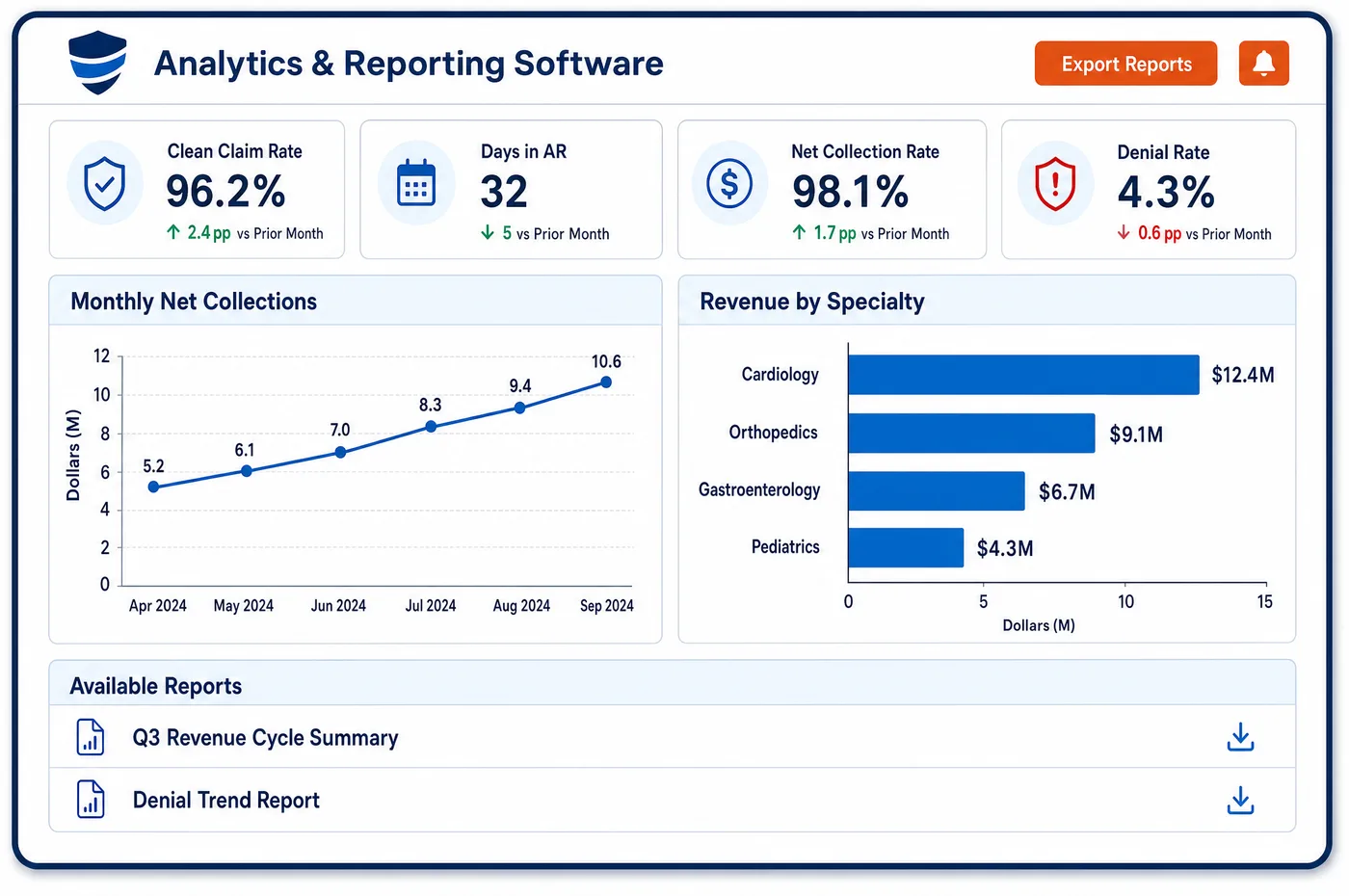
Platform System Design in a Multi-Specialty Practice
Platform system design matters more in a group with many departments. Departments post charges at once. Volume spikes at month-end. Several Tax IDs and divisions must stay distinct while leaders still see the whole. A tiered company hierarchy inside one database handles this. Reporting, workflow and security follow it. A manager sees their own department. A controller sees their own entity. The architecture records every data change, so an account's history is complete for audit. It responds automatically as transaction volume and storage needs rise. Workflows are configurable, so each department's steps can differ without separate software. Roles limit who sees patient information. Nothing here replaces the group's own policies, such as who may approve a write-off. It gives those policies a system that can enforce them. It also proves what happened.
Why Is Platform System Design Different in Multi-Specialty?
Scale is uneven in a multi-specialty group. Primary care posts many small charges every day. A surgical department posts fewer, larger ones. Month-end brings a burst of posting, status checks and reports from every department at once. A system sized for an average day slows at the worst moment. That moment is the close.
Structure is just as important. Groups often hold several Tax IDs, each with its own payer contracts, plus divisions and locations beneath them. A separate system for each entity forces leaders to stitch reports together by hand. Access rules become workarounds. One database with a hierarchy lets reports and permissions follow the organization as it is, which is the goal of platform system design here.
Audit and security duties grow with size. The HIPAA Security Rule requires unique user identification, audit controls and transmission security for electronic protected health information. It also requires a contingency plan with backups and disaster recovery. A large group has more people and more roles. These controls must be part of the platform system design from the start.
What Multi-Specialty Platform System Design Handles
- Company hierarchy and legal entities
- The tiered company hierarchy supports multiple Tax IDs and divisions in one database, with reporting, workflow and security following it. Under 42 CFR 411.352, a physician group practice must be a single legal entity, so a group with several Tax IDs should ask counsel which entities count as the group. The hierarchy keeps each entity's accounts distinct either way. (eCFR: 42 CFR 411.352, Group practice)
- Access control and unique users
- The Security Rule at 45 CFR 164.312(a) requires unique user identification and an emergency access procedure, with automatic logoff and encryption as addressable items. Every user has their own login, and roles decide which departments and entities they see. The HIPAA rules define the minimum, and the group adds its own. (eCFR via Cornell LII: 45 CFR 164.312, Technical safeguards)
- Audit controls
- 45 CFR 164.312(b) requires mechanisms that record and examine activity in systems holding electronic protected health information. The platform keeps every data change on record, which supports the group's own audit reviews of who changed what and when. (eCFR via Cornell LII: 45 CFR 164.312, Technical safeguards)
- Contingency planning
- 45 CFR 164.308(a)(7) requires a data backup plan, a disaster recovery plan and an emergency mode operation plan. Staff should ask what the platform provides for each and write down the group's own part, such as downtime procedures at the front desk. (eCFR via Cornell LII: 45 CFR 164.308, Administrative safeguards)
- Group practice structure
- Under 42 CFR 411.352, a physician group practice must have centralized decision-making and consolidated billing, accounting and financial reporting. One platform with one structure makes that consolidation easier to show. The books that rest on this structure are covered under healthcare accounting. (eCFR: 42 CFR 411.352, Group practice)
How Does Multi-Specialty Platform System Design Work?
1. Model the organization
Administrators set up the company hierarchy: Tax IDs, divisions, departments and locations. Each claim and payment will carry these attributes from the start.
2. Assign roles and access
Each user receives a unique login and a role. Roles decide which entities, departments and patient details that person can see.
3. Configure workflows by specialty
Each department's steps, edits and queues are configured on the same platform. Differences are settings, not separate systems.
4. Let volume scale
As posting, status checks and reports rise at month-end, the platform responds in real time to transaction volume and storage needs.
5. Keep the history
Every data change is recorded. Auditors and managers can review an account's full history instead of asking staff to recall it.
6. Review and test
Administrators review roles on a schedule and when staff move. The platform system design is reviewed at the same time. The group tests its downtime and recovery procedures with the platform's plans in hand. Workflow settings are reviewed with them.
Multi-Specialty Platform System Design vs. Generic Software
| Area | Generic approach | Unlimited Systems |
|---|---|---|
| Entities | A separate database for each Tax ID, stitched together by hand. | Multiple Tax IDs and divisions in one database under a hierarchy. |
| Capacity | Sized for an average day and slow at month-end. | Responds in real time to rising volume and storage needs. |
| History | Records overwritten, so audits rely on memory. | Every data change is recorded for audit. |
| Security | Access rules managed as exceptions. | Security follows the organization hierarchy. |
| Workflows | Staff adapt to the software. | Configurable workflows fit each department. |
Who Uses It in a Multi-Specialty Practice
- Group controller: One database with Tax IDs and divisions kept distinct, and a complete history of changes to answer an auditor's questions.
- IT and security lead: Unique logins, roles that follow the hierarchy and an activity record, as a base for the group's Security Rule safeguards. See interoperability for how outside connections fit.
- Practice administrator: Department workflows configured on one platform, so a new service line is added by setting it up, not by buying another system.
Multi-Specialty Platform System Design FAQs
Platform system design is the architecture under the group's billing: one cloud database holding many departments, locations and Tax IDs, security that follows the hierarchy, a record of every change and capacity that grows with volume. It decides whether the group can add a department without adding a new system.
No. A single database can hold several Tax IDs and divisions under a company hierarchy. Reports, queues and permissions follow that structure, so each entity stays distinct while leaders see the whole group. Finance policies still decide how each entity is run, and counsel advises on legal structure.
The platform responds automatically to rising transaction volume and storage needs, so posting, status checks and reports from every department can run together without a slowdown. The group should still schedule heavy reports with care, and ask the vendor how capacity is handled during its own implementation review.
Technical safeguards at 45 CFR 164.312 include unique user identification, audit controls, integrity and transmission security. The administrative rule at 164.308(a)(7) requires backup, disaster recovery and emergency mode plans. A group should confirm which of these the platform supplies and document its own procedures for the rest.
A complete history shows who changed an account and when. This supports audit, helps explain a balance and lets managers review a disputed adjustment without relying on memory. It also makes it harder for an error to hide. Systems that overwrite records lose that trail.
Yes. Workflows are configurable, so each specialty's steps, edits and queues can differ while sharing one database and one set of security rules. This avoids running a separate system for each department and keeps leaders looking at figures that share the same definitions.
Related Multi-Specialty Software
Platform & AI
In the revenue cycle
Platform System Design for related specialties
Sources
GET STARTED
See Unlimited Systems in Action
Whether you're actively evaluating new technology or simply preparing for your next vendor renewal, Unlimited Systems can help you understand where your current workflows may be creating avoidable revenue risk.