

Platform & AI
Orthopedics Automation Software
Let the system run the repeat work of an orthopedic billing office overnight: eligibility, edits, status checks and posting.
Orthopedics Automation Software runs the routine tasks of orthopedic billing without a person at the keyboard. It checks eligibility for upcoming surgeries and clinic visits, applies global-period, NCCI and unit edits before claims go out, checks claim status in bulk, and posts clean 835 remits. Staff see only the exceptions it cannot settle.



 6,500+ specialty providers

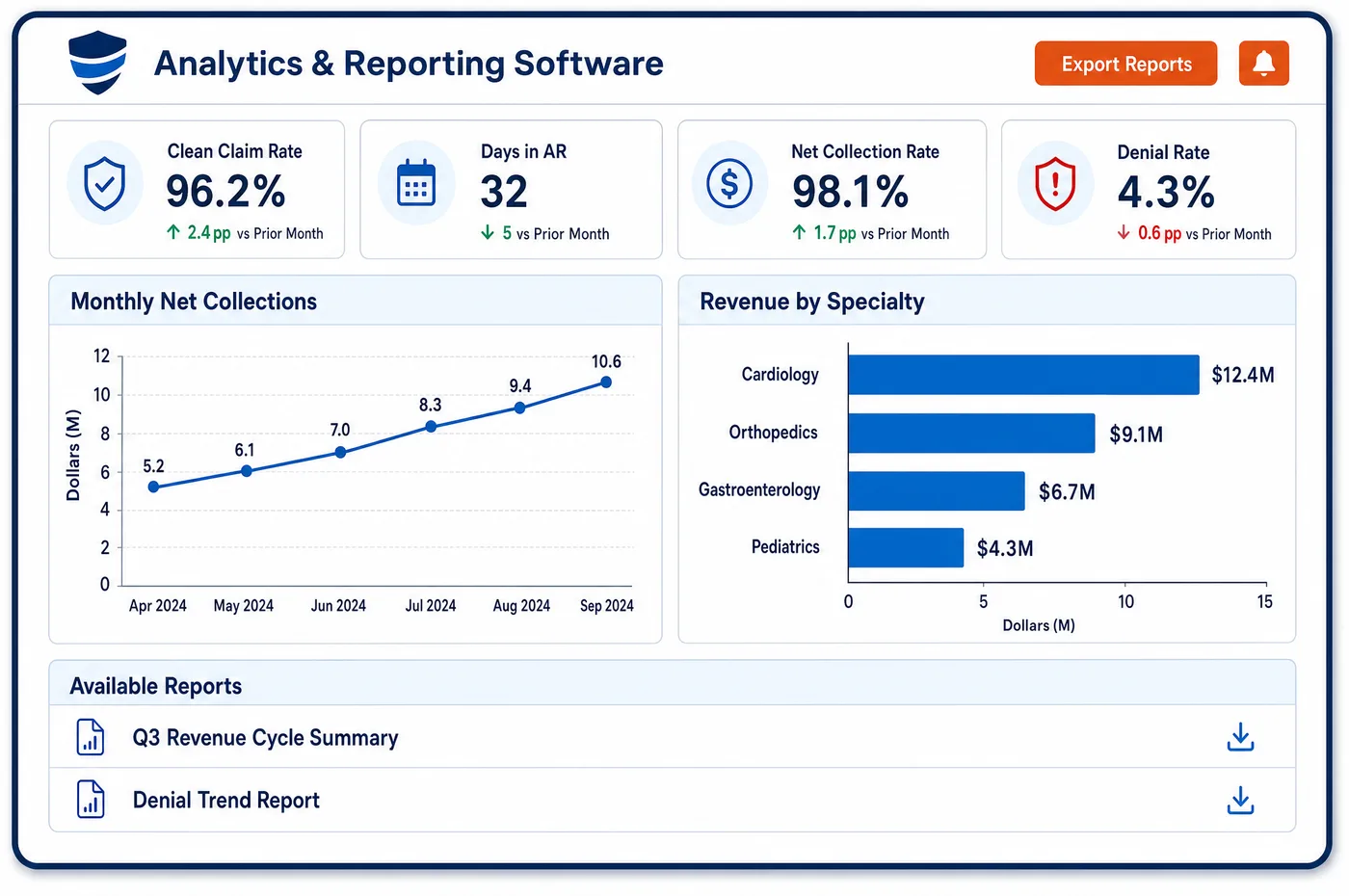
Automation in a Orthopedics Practice
Each night the system looks at the next day's schedule. It sends batch eligibility requests for every patient and flags plans that changed or ended. Surgical cases are checked for an authorization on file that matches the planned CPT codes. As charges arrive, rule edits run. A visit inside a surgical global period is held unless the note supports modifier 24, 25 or 79. A knee arthroscopy line is checked against NCCI pair edits, and injection units are checked against Medicare unit limits. Single-dose drug lines on Medicare claims get JW or JZ from the drug log. Clean claims are sent. Overnight, bulk 276 requests check open claims, and the 277 answers update each one. When 835 files arrive, auto-posting applies clean lines and balances the batch. Anything that fails a rule or does not match goes to a staff queue with the reason attached.
Why Is Automation Different in Orthopedics?
Orthopedic billing has many rules that can be checked by machine. Global periods are fixed by CPT code. NCCI edits list which arthroscopy codes bundle together. Medically unlikely edits cap units for injections and imaging. Those rules are known before the claim is built, yet many offices still check them by hand, one claim at a time. Automation applies them to every claim, every time.
Volume makes automation worth it. A busy orthopedic clinic can see dozens of patients per surgeon on a clinic day, many with new injuries and new coverage. Eligibility checks, status checks and posting for that volume take hours of staff time when done by hand. Done by the system overnight, they are finished before the office opens, and staff start the day on the accounts that need a person.
Automation does not replace staff judgment. Some cases always need a person, such as a work injury claim with a disputed date of injury, or a global-period visit where the note is unclear. Good automation knows its limits and sends those cases to the right orthopedic workflow queue with the facts attached, so the person who picks them up can act at once.
What Orthopedics Automation Software Handles
- X12 270/271 batch eligibility
- Eligibility requests run in bulk for the next day's patients. The 271 responses are read for plan changes, deductibles and surgery benefits, and gaps are flagged. (X12 transaction sets, including 270/271 eligibility and 276/277 claim status)
- Global-period edits by CPT code
- Each surgery's global days come from the Medicare fee schedule. Visits inside the window are held unless the note supports modifier 24, 25, 57 or 79. (CMS MLN Global Surgery Booklet)
- NCCI pair edits for knee arthroscopy
- Arthroscopy codes such as 29880 and 29881 are checked against NCCI pair edits, so bundled lines are removed or modified before the claim goes out. (CMS National Correct Coding Initiative (NCCI) Edits)
- Medically unlikely edits for injections
- Units for CPT 20610 and drug codes are checked against Medicare unit limits. Bilateral injections are checked for the right modifiers. (CMS Medicare NCCI Medically Unlikely Edits)
- Prior authorization status checks
- Authorization status is checked for each scheduled surgery. CMS-0057-F requires many payers to offer a prior authorization API, which will let more of these checks run without a portal login. (CMS Interoperability and Prior Authorization Final Rule (CMS-0057-F))
- JW and JZ on single-dose drugs
- On Medicare claims, single-dose injectables get JW for discarded units or JZ when none were discarded, based on the drug log for that visit. (CMS: Discarded Drugs and Biologicals (JW and JZ modifiers))
How Does Orthopedics Automation Software Work?
1. Check the schedule
Overnight, the system reads the next day's appointments and surgeries. Eligibility and authorization checks run for each one.
2. Edit the charges
Global-period, NCCI, unit and modifier rules run as charges arrive. Clean claims move on, and the rest are held with a reason.
3. Send and track
Clean claims go to the clearinghouse. Bulk 276 requests check open claims, and 277 answers update each one.
4. Post the remits
835 files are read, balanced and posted line by line. Lines that do not match are held back for review.
5. Bill the secondary
When a primary remit posts, the secondary claim is built and sent. The patient share moves on to billing.
6. Hand off the exceptions
Anything the rules cannot settle goes to a staff queue. The reason and the data behind it travel with the item.
Orthopedics Automation Software vs. Generic Software
| Area | Generic approach | Unlimited Systems |
|---|---|---|
| Eligibility | Checked by phone or portal the morning of the visit. | Batch checks run overnight for the next day. |
| Global-period visits | Caught after the payer denies them. | Held before the claim goes out unless the note supports a modifier. |
| Arthroscopy bundling | Coders recall the pair edits from memory. | NCCI pair edits checked on every claim. |
| Claim status | One call per claim. | Bulk 276/277 checks every night. |
| Posting | Remit lines keyed by hand. | Clean lines auto-posted, exceptions held. |
Who Uses It in a Orthopedics Practice
- Billing manager: A morning list of only the items the rules could not settle, each with its reason, instead of a stack of routine checks.
- Front desk: Patients whose coverage changed are flagged before they arrive, so the desk can fix it at check-in.
- Coding lead: Global-period, NCCI and unit rules applied the same way on every claim, with a log of each edit that fired.
Orthopedics Automation Software FAQs
Automation in an orthopedic billing office runs eligibility checks for upcoming visits and surgeries, applies global-period, NCCI and unit edits to charges, sends clean claims, checks claim status in bulk and posts clean remits. These tasks run without staff at the keyboard. People then work only the exceptions the rules cannot settle.
Each surgery's global days come from the Medicare fee schedule. When a visit falls inside that window, the charge is held unless the note supports a modifier such as 24 for an unrelated visit or 79 for an unrelated procedure. Held visits go to a coder with the surgery date and the note attached.
Arthroscopy lines are checked against NCCI pair edits before the claim goes out. When two codes on the same knee bundle together, the bundled line is removed, or held for a modifier if the documentation supports a separate service. This catches bundling problems before the payer denies them.
Batch eligibility requests run overnight for every patient on the next day's schedule, including surgical cases. The 271 responses are read for plan changes and benefits. Patients whose coverage changed are flagged for the front desk. Surgical cases are also checked for an authorization that matches the planned codes.
Clean 835 lines that match their charges and balance are posted without review. Lines that do not match, pay short or carry a denial code are held for a person. The batch is balanced to the payment total before anything posts. That way automation saves time on routine lines without hiding problems.
Automation covers the tasks the system does on its own, such as eligibility runs, edits, status checks and posting. Workflow covers the work people do, such as queues, routing and handoffs between staff. In orthopedics the two meet at the exception: when a rule cannot settle an item, automation hands it to the right person.
Related Orthopedics Software
Platform & AI
In the revenue cycle
Automation for related specialties
Sources
- X12 transaction sets, including 270/271 eligibility and 276/277 claim status
- CMS MLN Global Surgery Booklet
- CMS National Correct Coding Initiative (NCCI) Edits
- CMS Medicare NCCI Medically Unlikely Edits
- CMS Interoperability and Prior Authorization Final Rule (CMS-0057-F)
- CMS: Discarded Drugs and Biologicals (JW and JZ modifiers)
GET STARTED
See Unlimited Systems in Action
Whether you're actively evaluating new technology or simply preparing for your next vendor renewal, Unlimited Systems can help you understand where your current workflows may be creating avoidable revenue risk.