

Platform & AI
Cardiology EHR Integration Software
Connect the cardiology EHR to billing so visits, office tests, hospital reads and device checks become charges without re-keying.
Cardiology EHR Integration Software connects the EHR a cardiology group uses to Unlimited Systems billing. Demographics, insurance, appointments and test orders flow in from the EHR. Signed visits, office test reports, hospital reads and device clinic interpretations arrive as charge data, so billing works from what was documented instead of from paper or re-typed lists.



 6,500+ specialty providers

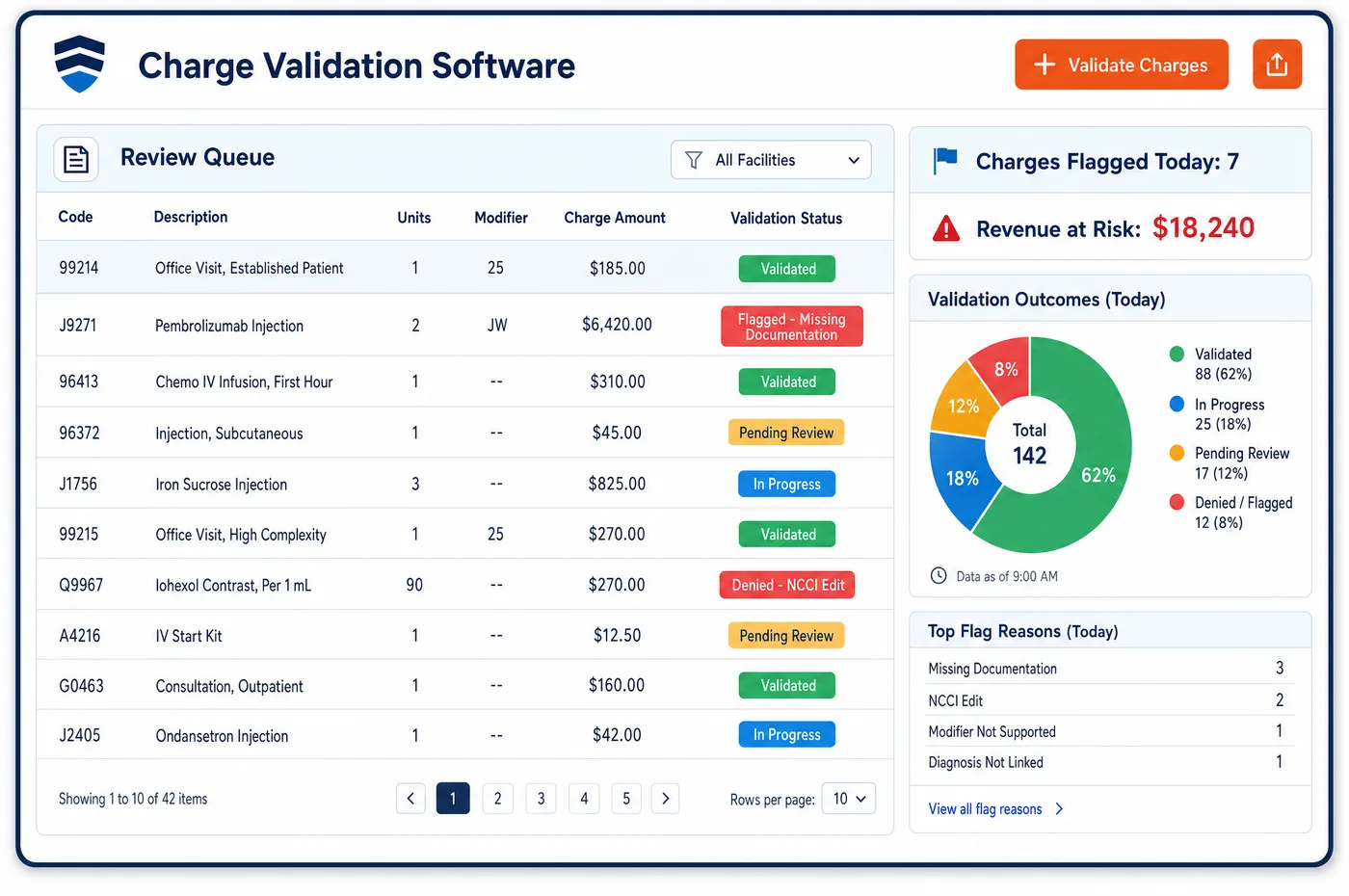
EHR Integration in a Cardiology Practice
In a cardiology group, the EHR is where the work is recorded, but not all of it starts there. Office visits and in-office ECGs are documented in the EHR. Echo, nuclear and cath reports are often written in a cardiology reporting system and then filed to the EHR. Hospital reads may be documented in the hospital's own record. EHR integration links billing to these sources through the channels each one supports. Patient and insurance updates arrive as HL7 ADT messages or FHIR calls, and appointments as SIU messages. When a visit or report is signed, the charge data arrives with its codes, diagnoses, rendering and reading physician, site and component. Billing then applies charge edits and builds the claim. Updates also flow back, so the front desk sees the same insurance and balance billing does. Interface traffic is watched in real time, so a stalled feed from one source is caught before charges go missing.
Why Is EHR Integration Different in Cardiology?
Cardiology charges come from more places than most. A group may document visits in its own EHR, write echo and cath reports in a separate cardiology system, and read studies inside each hospital's record. Each source holds part of the bill. If billing connects only to the office EHR, hospital reads and some test reports must be keyed by hand, and some are missed.
The component on each charge has to be right at the source. An echo done in the office lab is billed globally. The same echo done at the hospital is billed with modifier 26, and the hospital bills its own part. If the EHR sends the charge without the site or the reading physician, billing cannot tell which applies. Integration has to carry the place of service and the role of each physician on every test.
Signing matters too. Most cardiology test charges should wait for the final, signed report. Preliminary reads, addenda and corrected reports need to update the charge rather than create a second one. That means the interface has to send report status, not just a code. The standards that carry this data, HL7 v2 and FHIR, are covered on our cardiology interoperability page.
What Cardiology EHR Integration Software Handles
- HL7 v2 patient, scheduling and charge messages
- Patient updates arrive as ADT messages, appointments as SIU messages and charges as DFT messages. Each is checked for required fields before it reaches the billing record. (HL7 Version 2 Product Suite (HL7 International))
- FHIR DiagnosticReport status
- Where the EHR offers FHIR, a DiagnosticReport carries the report's status, such as preliminary or final. Charges can be held until the status is final, and an amended report is flagged so staff update the charge. (HL7 FHIR R4: DiagnosticReport resource)
- Component and site on each test (modifiers 26 and TC)
- Charge messages must include the site of service and the reading physician. That lets billing apply the global, 26 or TC rule the code's PC/TC status requires. (Medicare Claims Processing Manual, Chapter 12: Physicians/Nonphysician Practitioners (PC/TC indicators))
- Hospital echo codes (C8921 to C8930)
- Under the OPPS, hospitals bill contrast echo with C8921 to C8930, while the reading physician bills the CPT code. Charges that arrive from a hospital record are checked so hospital-only codes never reach a professional claim. (CMS NCCI Policy Manual for Medicare Services, Chapter XI (Medicine), Cardiovascular Services)
- Device clinic interpretations (93294 to 93296)
- Signed device check interpretations arrive as charges tied to the device and period. A Novitas article for Medicare limits these codes to once every ninety days, so a second charge for the same period is flagged for review. (CMS Medicare Coverage Database, Billing and Coding Article A56602: Cardiac Rhythm Device Evaluation (Novitas))
How Does Cardiology EHR Integration Software Work?
1. Connect each source
The office EHR, any cardiology reporting system and hospital feeds are connected through the channel each supports. Each connection is tested before go-live.
2. Sync patients and appointments
Demographics, insurance and appointments flow in from the EHR. Changes made at the front desk flow back, so both systems match.
3. Wait for the signed report
Test charges can be held until the report is final. When a report is amended, staff are flagged to update the existing charge instead of adding a new one.
4. Check the charge data
Each charge is checked for site, component, rendering and reading physician, and diagnoses. Gaps go to cardiology charge assembly staff before the claim is built.
5. Watch the interfaces
Traffic on every feed is monitored. If a source stops sending, staff are alerted before charges go missing.
Cardiology EHR Integration Software vs. Generic Software
| Area | Generic approach | Unlimited Systems |
|---|---|---|
| Charge sources | Office EHR only, other charges keyed by hand. | Office EHR, reporting systems and hospital feeds connected. |
| Report status | Charges sent on the preliminary read. | Charges held until the final, signed report. |
| Component | Guessed by billing from the code alone. | Site and reading physician sent with every test. |
| Data timing | Overnight batch files. | Charge and patient data move as they are signed or saved. |
| Interface health | Problems found when charges are missing. | Feeds monitored in real time. |
Who Uses It in a Cardiology Practice
- Charge entry team: No more keying hospital reads from printed lists. Charges arrive with site, component and physician already set.
- Cardiologist: Documentation in the EHR they already use, with no second system to enter charges in.
- IT lead: Pre-built connectors to common EHRs, tested before go-live and monitored once live, with a HIPAA-compliant data path.
Cardiology EHR Integration Software FAQs
Cardiology EHR integration uses pre-built connectors to common EHRs, including Epic, Cerner, MEDITECH, athenahealth, eClinicalWorks, NextGen and others. A group keeps the EHR its physicians already use. Data moves through HL7, FHIR or API channels, whichever each system supports, and every connection is tested before it goes live.
When a physician reads a study in a hospital's record, the read can reach billing through an interface with that hospital's system, where one is set up. The charge arrives with the site, the reading physician and the professional component. Reads are compared with charges received, so missing ones are found and chased.
An amended or corrected report is flagged so staff update the existing charge instead of adding a second one. If the change affects the code or diagnosis, the charge goes back through charge edits before the claim is sent. If the claim was already paid, the change is flagged so staff can decide whether a corrected claim is needed.
Many groups write echo, nuclear and cath reports in a cardiology reporting system that files them to the EHR. Billing usually takes the charge from the EHR once the report is final. Where the reporting system can send results or charges through HL7, FHIR or an API, that channel can be used too.
Demographic and insurance changes flow both ways. When the front desk updates a plan in billing, the EHR record updates too, and changes made in the EHR flow into billing. That keeps the two records from drifting, which avoids claims going to an old plan.
Each connection is tested in a sandbox with test patients and test charges before it touches live data. Staff confirm that site, component, physician and diagnosis fields map correctly. After go-live, traffic on every feed is monitored, so a stalled or broken interface is caught quickly.
Related Cardiology Software
Platform & AI
In the revenue cycle
EHR Integration for related specialties
Sources
- HL7 Version 2 Product Suite (HL7 International)
- HL7 FHIR R4: DiagnosticReport resource
- Medicare Claims Processing Manual, Chapter 12: Physicians/Nonphysician Practitioners (PC/TC indicators)
- CMS NCCI Policy Manual for Medicare Services, Chapter XI (Medicine), Cardiovascular Services
- CMS Medicare Coverage Database, Billing and Coding Article A56602: Cardiac Rhythm Device Evaluation (Novitas)
GET STARTED
See Unlimited Systems in Action
Whether you're actively evaluating new technology or simply preparing for your next vendor renewal, Unlimited Systems can help you understand where your current workflows may be creating avoidable revenue risk.