

Platform & AI
Chiropractic Platform System Design
One cloud platform for a growing chiropractic group: several clinics and tax IDs in one database, a full change history, and security built for health data.
Chiropractic Platform System Design describes the cloud architecture under a chiropractic group's billing and front office work. It holds several clinics and tax IDs in one database, limits each user to the sites they work in, and records every change to every account. It also scales with visit volume and protects patient data under HIPAA safeguards.



 6,500+ specialty providers

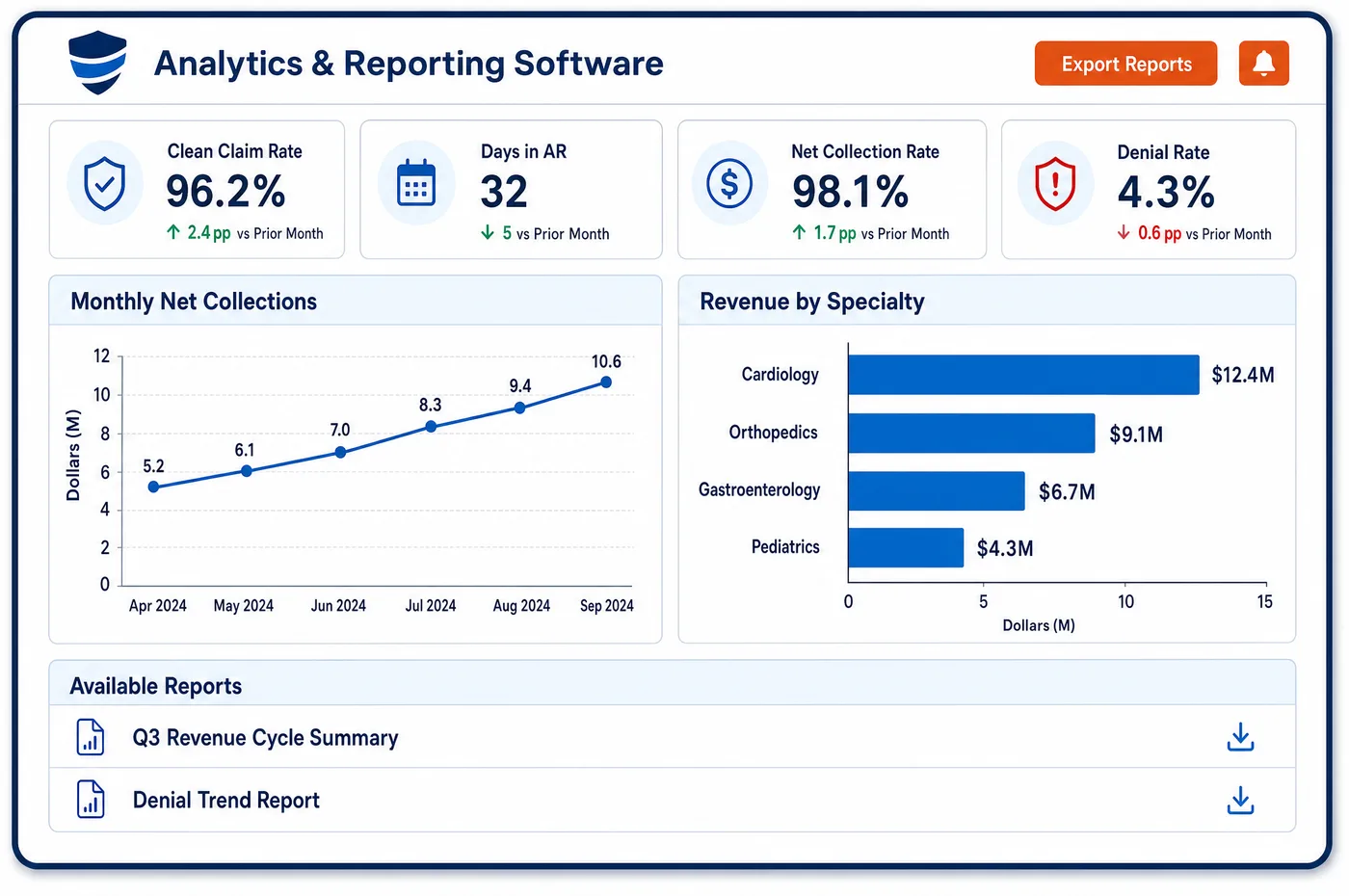
Platform System Design in a Chiropractic Practice
Chiropractic groups tend to grow in steps: a second clinic, then a third, then an associate doctor who splits time between them. Each step strains software built for one office. Unlimited Systems runs as one cloud platform that staff reach through a web browser from any clinic. A tiered company structure holds multiple tax IDs and locations in a single database, so reports, workflow and security follow the group's real shape. Location-based security narrows each user's patient search and data to their own sites. The core data store records every change instead of overwriting it, which gives a complete history for each account. That history matters when Medicare asks for records or when a personal injury case is reviewed long after the visits. The platform scales on its own as volume rises, runs on redundant hosting with offsite backups, and encrypts data in transit and at rest.
Why Is Platform System Design Different in Chiropractic?
Chiropractic platform system design starts with the group's shape. A single-office practice can live with one database per site, but a group with three clinics cannot. Owners need one view of every location, while each front desk needs only its own patients. Associate doctors who work at more than one site need their visits counted in the right place. That calls for one database with a clear company, clinic and user structure.
The data model also has to fit chiropractic work. A patient may have a health plan, Medicare, an auto claim and a work-injury case open at once, each tied to different visits. A care plan spans many short visits, and Medicare may treat the early ones as active care and the later ones as maintenance. Visits, coverages, cases, ABNs and claim lines all need to link to one another, or staff end up tracking the gaps on paper.
Security and history matter more than their size suggests. A chiropractic office holds health data, payment data and, for injury cases, legal correspondence. The HIPAA Security Rule asks for access controls, audit controls and backup plans. When an attorney asks what was billed, or a Medicare contractor asks why a modifier changed, the practice needs to show who did what and when. A design that keeps every data change answers those questions from the record itself. The same history feeds trend dashboards.
What Chiropractic Platform System Design Handles
- HIPAA audit controls
- The Security Rule requires ways to record and examine activity in systems that hold health data. Every change to a patient account is recorded with the user and time, and nothing is overwritten. (45 CFR 164.312: HIPAA Security Rule technical safeguards (audit controls, encryption))
- Encryption of health data
- Encryption is a technical safeguard under the Security Rule for data at rest and in transit. Data is encrypted in both states, so a lost laptop or an intercepted transfer does not expose patient records. (45 CFR 164.312: HIPAA Security Rule technical safeguards (audit controls, encryption))
- Backup and disaster recovery
- The Security Rule calls for a data backup plan and a disaster recovery plan. The platform runs on redundant hosting with offsite backup copies, so a clinic outage does not take the records with it. (45 CFR 164.308: HIPAA Security Rule administrative safeguards (contingency plan))
- Complete records for Medicare requests
- CMS expects a response to a records request to cover every date of service on the claim, plus any ABN. Because history is kept in full, staff can rebuild what was billed and when. (CMS MLN1232664: Medicare Documentation Checklist and Guidelines for Chiropractic Doctors (April 2025))
- Injury case history
- Medicare can recover conditional payments from a settlement long after care ends. Keeping every bill, payment and response on the case lets the practice show its part of the history when asked. (CMS MLN006903: Medicare Secondary Payer (July 2025))
How Does Chiropractic Platform System Design Work?
1. Model the group
Clinics, tax IDs and divisions are set up in one company structure. Reporting, task routing and security follow that structure from day one.
2. Set user access
Each user is tied to the clinics they work in. Location-based security narrows patient search and data to those sites.
3. Link the chiropractic record
Patients, coverages, injury cases, care plans, visits and claim lines are linked in one data model. Staff move from a claim to the case or visit behind it in one step.
4. Keep every change
Edits to accounts, charges and payments are added as new records rather than overwriting old ones. The history is there for audits and for chiropractic reporting.
5. Scale and protect
Capacity grows on its own as visit volume rises. Data is encrypted, backed up offsite and watched by automatic threat monitors.
Chiropractic Platform System Design vs. Generic Software
| Area | Generic approach | Unlimited Systems |
|---|---|---|
| Multiple clinics | A separate database or install per site. | One database with clinics and tax IDs in a company structure. |
| User access | Every user sees every patient. | Location-based security limits each user to their sites. |
| Account history | Old values replaced each time a record is edited. | Every change kept with user and time. |
| Busy periods | System slows when volume spikes. | Capacity scales automatically with volume. |
| Backups | A server in the back office. | Redundant cloud hosting with offsite backups. |
Who Uses It in a Chiropractic Practice
- Group owner: One platform across every clinic and tax ID, with a combined view and each site still visible on its own.
- Office manager: Staff who see only their own clinic's patients, and a full change history when a question comes up about an account.
- Compliance lead: Audit trails, encryption and backup safeguards that support HIPAA Security Rule duties, plus records that stand up to a Medicare request.
Chiropractic Platform System Design FAQs
Chiropractic Platform System Design covers the cloud architecture under a chiropractic group's front office and billing. It includes how clinics and tax IDs are structured in one database, how user access is limited by location, how every data change is kept, and how the platform scales, backs up and protects health data.
A group with several clinics and tax IDs can run in one database. A tiered company structure holds each entity and location, and reports, workflow and security follow it. Owners see the whole group or one clinic, and each front desk works only with its own patients, without separate installs for each site.
Each user is tied to the clinics they work in. Location-based security narrows patient search and the data they see to those sites. A doctor who covers two clinics can be given both. Access rules follow the company structure, so adding a new clinic or user does not require a custom setup.
Chiropractic records are often reviewed long after the visits, by Medicare contractors, attorneys or carriers. When every change is kept with its user and time, staff can show what was billed, what changed and why. Nothing is overwritten, so the account history stands on its own without relying on memory.
Patient data is encrypted in transit and at rest, kept on redundant cloud hosting with offsite backups, and watched by automatic threat monitors. Access is limited by role and location, and every change is logged. Those measures support the access, audit and backup safeguards the HIPAA Security Rule asks practices to have in place.
The platform responds on its own when transaction volume or storage needs rise, so busy mornings and seasonal peaks do not slow staff down. Groups that add clinics or doctors do not need new servers or a new install. The same platform simply carries more visits, claims and payments.
Related Chiropractic Software
Platform & AI
In the revenue cycle
Platform System Design for related specialties
Sources
- 45 CFR 164.312: HIPAA Security Rule technical safeguards (audit controls, encryption)
- 45 CFR 164.308: HIPAA Security Rule administrative safeguards (contingency plan)
- CMS MLN1232664: Medicare Documentation Checklist and Guidelines for Chiropractic Doctors (April 2025)
- CMS MLN006903: Medicare Secondary Payer (July 2025)
GET STARTED
See Unlimited Systems in Action
Whether you're actively evaluating new technology or simply preparing for your next vendor renewal, Unlimited Systems can help you understand where your current workflows may be creating avoidable revenue risk.