

Analytics & value-based care
Chiropractic Value-Based Care Software
Capture functional outcome scores and care plans at the visit, so MIPS reporting and proof of improvement come from the same record.
Chiropractic Value-Based Care Software captures the outcome data that quality programs and payers judge chiropractic care on. It records standardized functional outcome scores and the care plan built from them at each visit. It tracks MIPS quality measures such as Measure 182 during the year, and it shows whether patients are actually improving.



 6,500+ specialty providers

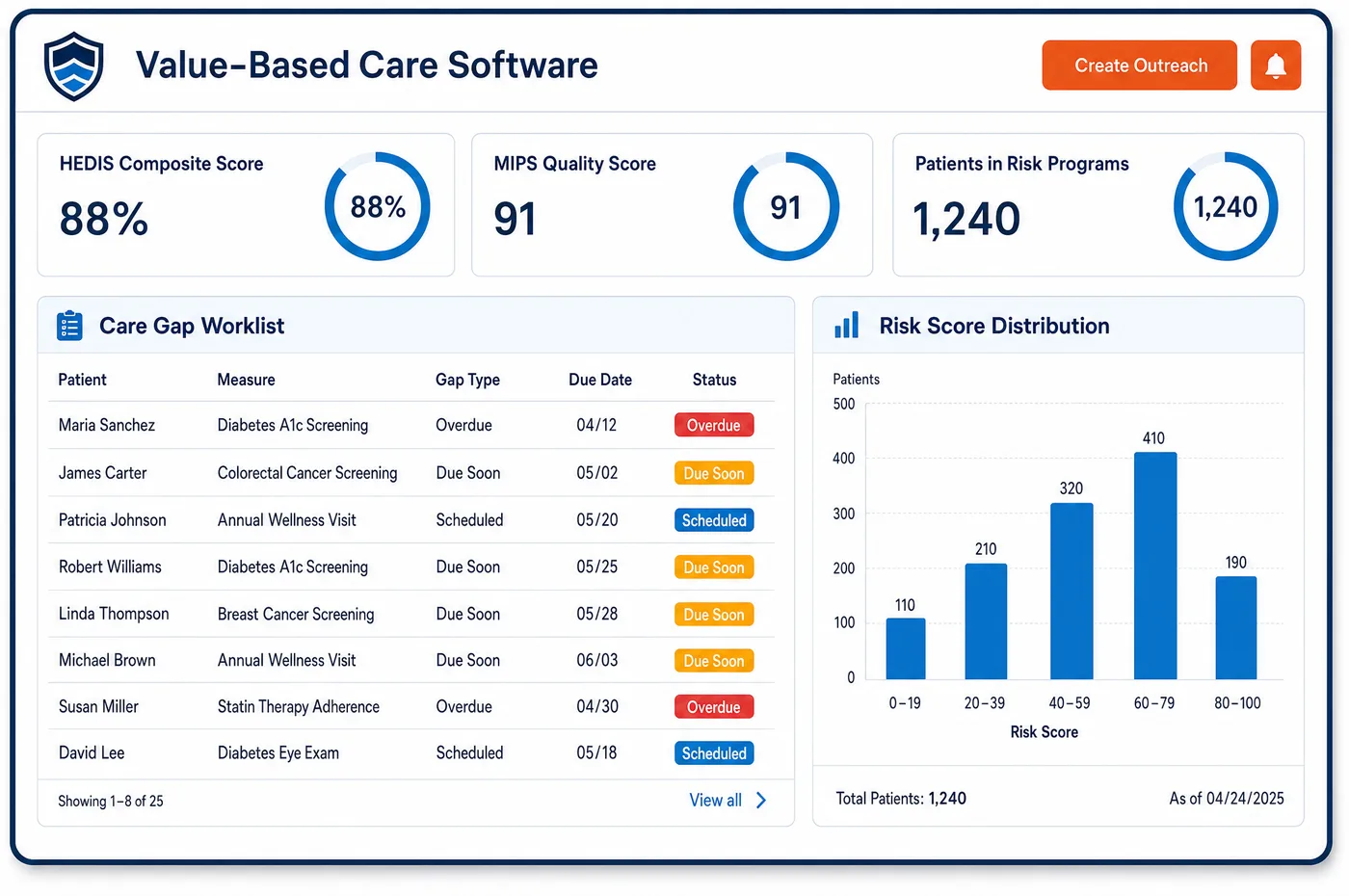
Value-Based Care in a Chiropractic Practice
Value-based care for a chiropractor mostly means MIPS today, plus payers who want proof that care is working. Chiropractors are MIPS eligible clinicians, and Measure 182, Functional Outcome Assessment, counts manipulation visits billed as 98940 through 98943. A visit meets the measure when a standardized tool, such as the Oswestry Disability Index or the Neck Disability Index, is used and a care plan based on the findings is documented. A pain scale alone does not count. Unlimited Systems builds the required quality fields into the visit, so a missing score is flagged while the encounter is still open, not months later. The same scores serve a second purpose. Medicare covers manipulation only while care is corrective and improvement is expected. A trend of falling disability scores supports active care, and a flat trend is a signal to review whether care has become maintenance.
Why Is Value-Based Care Different in Chiropractic?
Outcome measurement does double duty in chiropractic. It feeds MIPS quality reporting, and it is also the evidence that care is still corrective. Medicare's chiropractic rules ask for a treatment plan with goals and objective measures, and for each later visit to evaluate how well treatment is working. A practice that scores function at baseline and at re-exams has that evidence in one place.
The detail matters. Measure 182 needs a normed, validated functional tool, not a pain rating. It also needs a care plan tied to the deficits the tool found. Offices that record scores in free-text notes struggle to prove either one at year end. Structured fields at the visit make each score countable, and they make the trend easy to read for the doctor and for any reviewer.
Payers beyond Medicare increasingly look at results, too. A health plan or its review vendor may ask why a patient needs more visits. A record that shows the patient's functional scores improving over time answers that medical necessity question better than a visit count does. Value-based care in chiropractic is less about risk contracts and more about showing, visit by visit, that care is helping.
What Chiropractic Value-Based Care Software Handles
- MIPS eligibility for chiropractors
- Chiropractors fall within the physician definition that makes a clinician MIPS eligible. Whether a given chiropractor must report also depends on volume thresholds, so eligibility is checked each year. (42 CFR 414.1305: Definitions (MIPS eligible clinician))
- MIPS Measure 182 denominator
- The 2026 specification counts visits for patients 18 and older billed with codes that include 98940, 98941, 98942 and 98943. Each eligible visit is tracked for a current assessment and care plan. (CMS QPP: 2026 MIPS CQM Quality ID 182, Functional Outcome Assessment)
- Standardized tools, not pain scales
- Tools such as the Oswestry Disability Index, Neck Disability Index and Roland-Morris questionnaire qualify, while a pain-only scale such as the VAS does not. The visit form offers the qualifying tools by name. (CMS QPP: 2026 MIPS CQM Quality ID 182, Functional Outcome Assessment)
- Treatment plan with objective measures
- Medicare's chiropractic rules list goals and objective measures of treatment effectiveness in the plan. Functional scores captured at baseline become those measures. (CMS Medicare Benefit Policy Manual, Chapter 15, Section 240.1.2 (Treatment Plan))
- Re-checking at later visits
- CMS asks that later visits evaluate treatment effectiveness against the plan's objective measures. Scores repeated at re-exams show whether care is still corrective. (CMS MLN1232664: Medicare Documentation Checklist and Guidelines for Chiropractic Doctors (April 2025))
How Does Chiropractic Value-Based Care Software Work?
1. Score function at baseline
A standardized functional tool is recorded at the first visit in structured fields. The care plan is written from the deficits it finds.
2. Flag gaps during the visit
If an eligible visit has no current score or care plan, the gap is flagged while the encounter is open. The doctor can fix it before the patient leaves.
3. Re-score at re-exams
The same tool is repeated at planned re-exams. The trend shows whether function is improving, stable or worse.
4. Review care status
When scores level off, the doctor reviews whether care is still corrective. If it has become maintenance, Medicare billing changes and an ABN is offered.
5. Track and submit quality data
Measure performance is tracked by doctor during the year. Data is prepared for MIPS submission from the same structured fields, with the quality reports to match.
Chiropractic Value-Based Care Software vs. Generic Software
| Area | Generic approach | Unlimited Systems |
|---|---|---|
| Outcome scores | Written into narrative notes. | Captured as structured, countable fields. |
| Measure gaps | Found after the year ends. | Flagged while the visit is still open. |
| Tool choice | Pain scales that don't meet Measure 182. | Qualifying functional tools offered by name. |
| Proof of improvement | Visit counts shown to payers. | Score trends shown alongside the visits. |
| Care status | Maintenance noticed after denials. | Flat trends prompt a review of care status. |
Who Uses It in a Chiropractic Practice
- Chiropractor: A visit form that asks for the qualifying tool and care plan, and a trend chart of each patient's scores.
- Office manager: Measure 182 performance by doctor during the year, so gaps are closed long before submission.
- Clinic owner: Quality data and outcome trends that support MIPS results and payer conversations, drawn from the same records the clinic's analytics use.
Chiropractic Value-Based Care Software FAQs
For most chiropractic practices, value-based care means MIPS quality reporting plus proof for payers that care is working. Both rest on standardized functional outcome scores and care plans recorded at the visit. When those are captured as structured data, the practice can report quality measures and show each patient's progress from the same record.
Chiropractors are MIPS eligible clinicians because they fall within Medicare's physician definition. Whether a chiropractor must report in a given year depends on Medicare volume thresholds, which are checked each year. Those who report are scored on quality and other categories, and the score adjusts their later Medicare Part B payments.
Measure 182 needs a standardized, normed and validated functional outcome tool. Examples listed in the measure include the Oswestry Disability Index, the Neck Disability Index, the Roland-Morris questionnaire and PROMIS. A pain-only tool such as the visual analog scale does not qualify. A care plan based on the deficits found must also be documented.
Medicare covers manipulation while care is corrective and improvement is expected. Functional scores at baseline and re-exams show that improvement, which supports billing with the AT modifier. When scores level off, it may be time to review whether care has become maintenance. The scores are evidence for the doctor's judgment, not a substitute for it.
Missing quality data are flagged while the visit is still open. If an eligible visit has no current functional score or care plan, the doctor sees the gap before the patient leaves. Performance is also tracked by doctor during the year, so the office can fix patterns long before data is due.
When a health plan or its review vendor asks why more visits are needed, a trend of functional scores is strong support. It shows where the patient started, how function has changed and what the plan aims for next. That record often answers the question better than a list of visits, and it comes from data already captured.
Related Chiropractic Software
Analytics & value-based care
In the revenue cycle
Value-Based Care for related specialties
Sources
- 42 CFR 414.1305: Definitions (MIPS eligible clinician)
- CMS QPP: 2026 MIPS CQM Quality ID 182, Functional Outcome Assessment
- CMS Medicare Benefit Policy Manual, Chapter 15, Section 240.1.2 (Treatment Plan)
- CMS MLN1232664: Medicare Documentation Checklist and Guidelines for Chiropractic Doctors (April 2025)
GET STARTED
See Unlimited Systems in Action
Whether you're actively evaluating new technology or simply preparing for your next vendor renewal, Unlimited Systems can help you understand where your current workflows may be creating avoidable revenue risk.