

Payments & AR
Chronic Care Integrated Patient Payments Software
Collect monthly care management coinsurance by stored card, text-to-pay link or payment plan, posted straight to the patient ledger.
Chronic Care Integrated Patient Payments Software lets patients pay the small, repeating share of care management without a phone call. It supports card-on-file charges after each month adjudicates, text-to-pay links, portal payments and payment plans. Every payment posts straight to the patient ledger, so balances, statements and the portal agree.



 6,500+ specialty providers

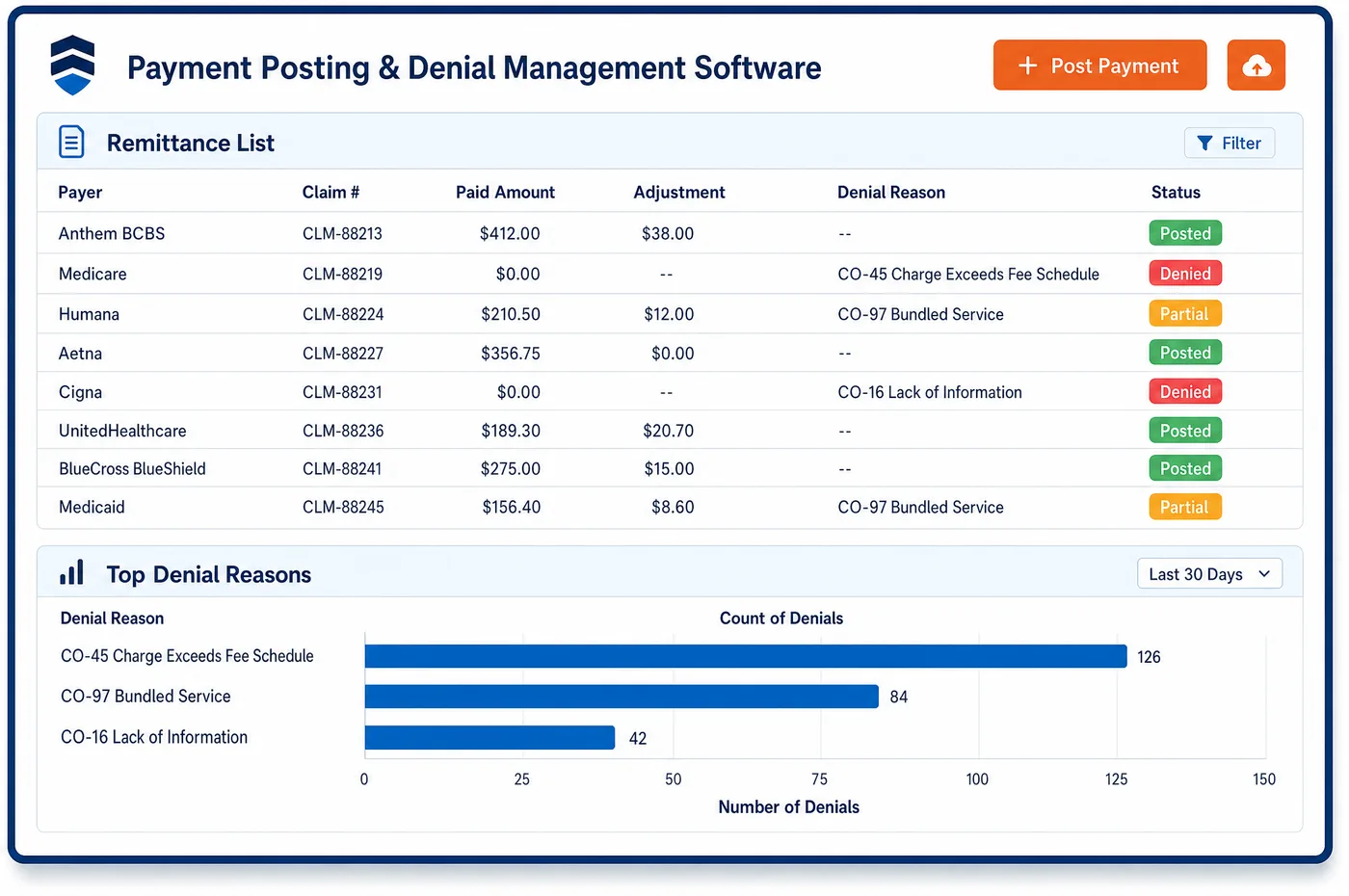
Integrated Patient Payments in a Chronic Care Practice
Payment in a chronic care program is a monthly habit, not a one-time event. A patient enrolled in CCM and remote monitoring may owe a small coinsurance amount every month for as long as they stay in the program. Asking that patient to call in or mail a check each month invites missed payments. Unlimited Systems keeps payment methods on the patient account. With the patient's written authorization, a stored card can be charged after each month's claim has been paid by Medicare and any supplemental payer, so the charge matches the real balance. Patients who prefer to pay on their own get a secure text or email link to pay by card or mobile wallet. A payment plan can spread a larger balance, such as a deductible month in January, across later installments. Card data is held as tokens through PCI-DSS Level 1 gateways, so card numbers are not stored in the practice system. Each payment posts to the ledger at once.
Why Is Integrated Patient Payments Different in Chronic Care?
The balances are small and constant. One month of CCM coinsurance is a modest amount, but it comes back every month. Paper checks and phone payments cost staff time that the balance can't justify. Patients also find it tiresome to pay a small bill again and again. A stored card or a one-tap link removes that friction for both sides.
Timing matters more than usual. A card charged when Medicare pays, before Medigap has answered, takes money the patient may not owe. The charge has to wait until every payer has finished, then match the true balance. Qualified Medicare Beneficiaries should never be charged for Medicare cost sharing at all. Integrated patient payments in chronic care must know the payer picture before money moves.
The patients themselves shape the tools. Many are older adults, and some have a family caregiver who handles the bills. Payment links need to be simple, and a caregiver may need to pay with the patient's permission. Some patients still want to pay by phone or in person at the annual wellness visit. Every method has to post to the same ledger, so nobody is asked to pay twice.
What Chronic Care Integrated Patient Payments Software Handles
- Medigap crossover before charging
- Medigap insurers accept Medicare's payment notice as the claim for the coinsurance they cover. A stored card is charged only after that second payment, for what is truly left. (CMS: Frequently Asked Questions About Practitioner Billing for Chronic Care Management Services (updated 2022-08-16))
- QMB protection
- Qualified Medicare Beneficiaries are not responsible for Medicare cost sharing on CCM. Their accounts block card-on-file charges and text-to-pay requests for those amounts. (CMS: Frequently Asked Questions About Practitioner Billing for Chronic Care Management Services (updated 2022-08-16))
- Cost-sharing consent for CCM
- CMS requires the practice to explain possible cost sharing before CCM starts. Staff can offer card-on-file authorization in the same conversation, so the patient agrees to the program and the payment method together. (CMS MLN Booklet: Chronic Care Management Services (MLN909188, June 2025))
- Part B deductible months (CARC 1)
- Early in the year, care management lines may be applied to the Part B deductible and show CARC 1 on the 835. Those larger balances can move into a payment plan instead of one charge. (X12 Claim Adjustment Reason Codes)
- PCI DSS card security
- Card data is held as tokens through PCI-DSS Level 1 payment gateways. The practice system stores the token, not the card number, which keeps card data out of staff hands. (PCI Security Standards Council: PCI Data Security Standard)
- APCM monthly charges (G0556 to G0558)
- Advanced primary care management is billed once per calendar month, and cost sharing may apply. Its coinsurance is collected the same way as CCM, with one stored-card charge per adjudicated month. (CMS: Advanced Primary Care Management Services)
How Does Chronic Care Integrated Patient Payments Software Work?
1. Capture the method at enrollment
When a patient agrees to CCM or remote monitoring, staff offer card-on-file with written authorization. Patients who decline get text or email payment links instead.
2. Wait for adjudication
No charge is made until Medicare and any supplemental payer have paid the month's claim. QMB accounts are skipped for cost-sharing charges.
3. Charge or send a link
The stored card is charged for the true remaining balance, and a receipt goes to the patient. Patients without a stored card get a text-to-pay link.
4. Spread larger balances
Deductible months, or several months combined, can move into a payment plan. Each installment posts to the ledger as it clears.
5. Post and update everywhere
Every payment posts straight back to the patient ledger. The statement in chronic care patient billing and the portal show the new balance at once.
Chronic Care Integrated Patient Payments Software vs. Generic Software
| Area | Generic approach | Unlimited Systems |
|---|---|---|
| Monthly payments | Patients mail a check or call in each month. | Stored card charged after each month adjudicates, with written authorization. |
| Charge timing | Card charged when Medicare pays, before Medigap answers. | Charge waits until every payer has finished. |
| QMB patients | Charged, then refunded when someone notices. | Cost-sharing charges blocked on QMB accounts. |
| Card security | Card numbers kept on paper forms or in shared files. | Tokens held through PCI-DSS Level 1 gateways. |
| Posting | Payments keyed into the ledger later by hand. | Every payment posts to the ledger the moment it clears. |
Who Uses It in a Chronic Care Practice
- Front desk: Card-on-file sign-up during the enrollment talk or the wellness visit, with no separate payment form to chase.
- Billing office: Fewer small checks and phone payments, no refunds caused by charging before Medigap paid, and a short list of declined cards to follow up.
- Patient or caregiver: One simple way to pay a small monthly bill, by stored card, text link or the portal.
Chronic Care Integrated Patient Payments Software FAQs
Integrated patient payments keep a payment method on the account and post every payment to the ledger. For care management, a patient can authorize a stored card to be charged after each month's claim is paid by Medicare and any supplemental plan. Patients who prefer not to store a card get a secure text or email link each time a balance is ready.
A stored card is charged only after the month's claim has been fully adjudicated. That means Medicare has paid, and any Medigap or Medicaid payer named on the remittance has answered. The charge is for the true remaining balance. This avoids charging the patient for an amount a supplemental plan would have paid, and the refund that would follow.
A family caregiver can pay through the statement link or the portal when the patient allows it. Many chronic care patients rely on a spouse or adult child to manage bills. The practice records who may receive billing messages, and the payment posts to the patient's own account like any other payment.
A Qualified Medicare Beneficiary owes nothing toward Medicare cost sharing, and that includes CCM coinsurance. These accounts are flagged so stored-card charges and payment links are not created for those amounts. Medicaid is responsible for that share, and anything it does not pay is adjusted under practice policy rather than charged to the patient.
Card numbers are not stored in the practice system. Payments run through PCI-DSS Level 1 payment gateways, which return a token that stands in for the card. The practice keeps the token, so staff can charge an authorized card without ever seeing the full number. Payment messages also travel over HIPAA-secure channels.
A declined charge leaves the balance open and puts the account on a short follow-up list. The patient gets a text or email link to update the card or pay another way. Nothing is charged again until the patient responds, and the statement and portal keep showing the correct open balance.
Related Chronic Care Software
Payments & AR
In the revenue cycle
Integrated Patient Payments for related specialties
Sources
- CMS: Frequently Asked Questions About Practitioner Billing for Chronic Care Management Services (updated 2022-08-16)
- CMS MLN Booklet: Chronic Care Management Services (MLN909188, June 2025)
- X12 Claim Adjustment Reason Codes
- PCI Security Standards Council: PCI Data Security Standard
- CMS: Advanced Primary Care Management Services
GET STARTED
See Unlimited Systems in Action
Whether you're actively evaluating new technology or simply preparing for your next vendor renewal, Unlimited Systems can help you understand where your current workflows may be creating avoidable revenue risk.