

Payments & AR
Chronic Care Accounting Software
Book care management revenue, staff time and remote monitoring device costs by program, so each monthly service line shows its real margin.
Chronic Care Accounting Software carries care management payments, adjustments and costs into the general ledger by program. It books CCM, PCM, APCM and remote monitoring revenue from remittance detail. It also splits care manager payroll across those programs, records device costs through accounts payable, and closes several clinics or Tax IDs in one ledger.



 6,500+ specialty providers
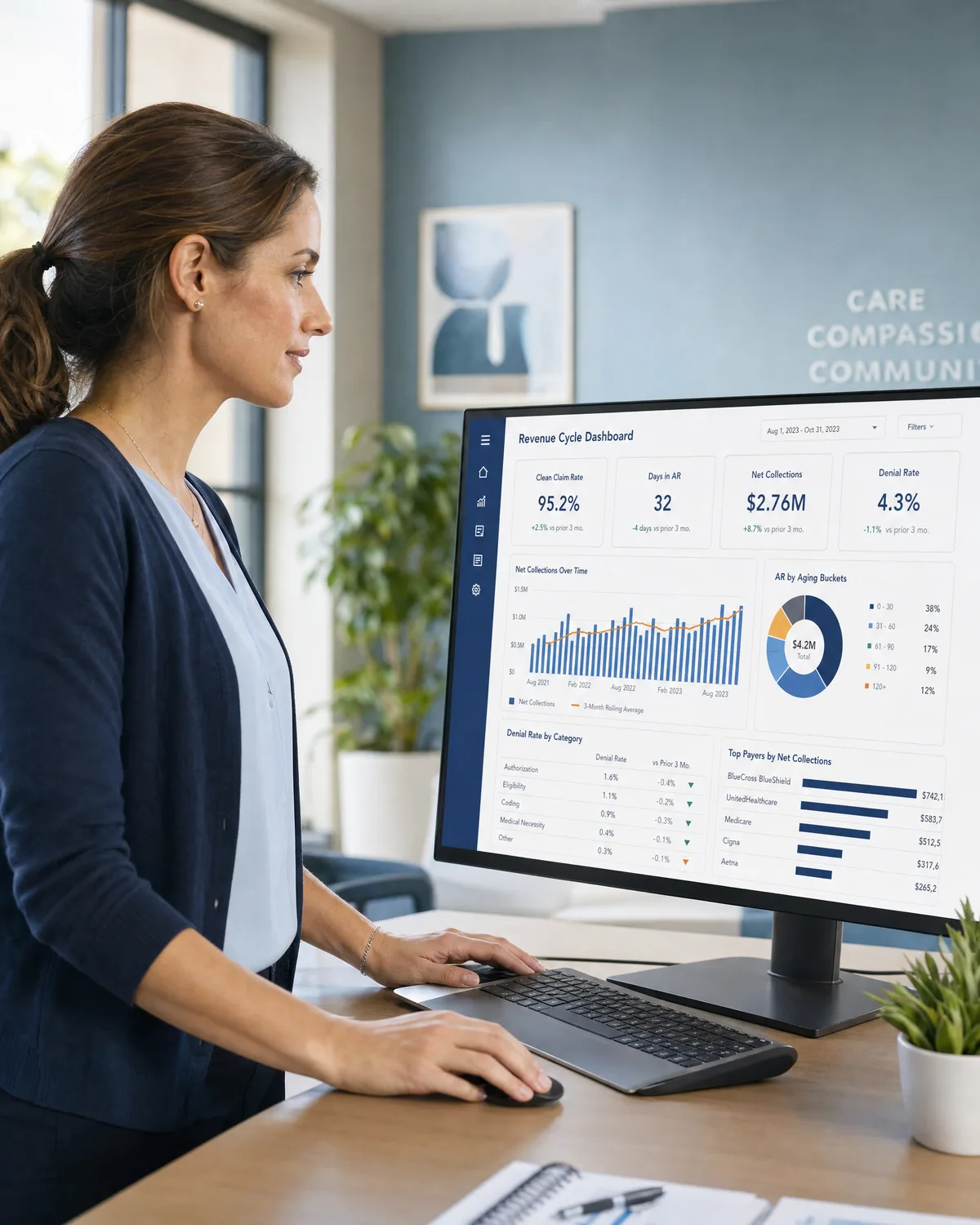
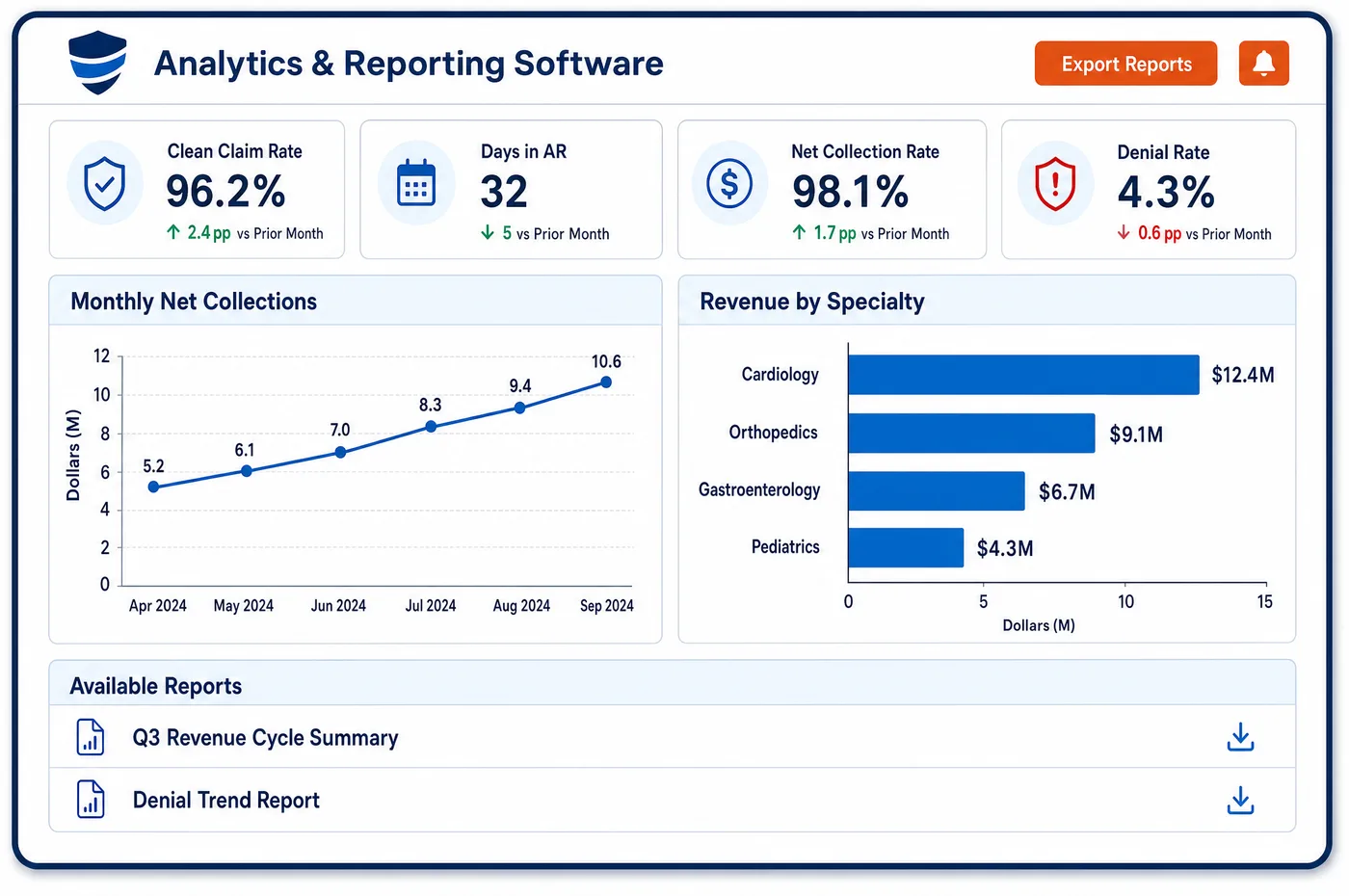
Accounting in a Chronic Care Practice
A chronic care program earns small fees on a large panel, and its main costs are people and devices. Accounting has to show both sides by program. Unlimited Systems posts payments, contractual adjustments and sequestration reductions from each 835 as double-entry lines, so revenue is booked from what payers actually paid. Each line carries its service line, such as CCM, PCM, APCM or remote monitoring, plus provider and location. Care manager and nurse payroll can be allocated to the same cost centers. Remote monitoring devices and vendor service fees come in through accounts payable and land on the remote monitoring line, next to the 99454 and 99445 revenue they support. Payments that are not claims, such as shared savings passed down from an ACO, are booked as their own revenue type. Journals export to QuickBooks, NetSuite or other ERP systems. Month-end close then shows margin by program and site from the same numbers billing uses.
Why Is Accounting Different in Chronic Care?
Care management margin is thin and easy to misread. Most of the cost is staff time: nurses, medical assistants and care coordinators making calls and updating care plans. If that payroll sits in a general clinic cost center, the program looks far more profitable than it is. When logged minutes fall short of a billing threshold, the cost is spent but no revenue arrives. Accounting has to put payroll and revenue on the same program line to show the truth.
Remote monitoring adds equipment. CMS requires the device to meet the FDA definition of a medical device and to send its data automatically. Practices either buy devices or pay a vendor for devices and data service. Either way, those costs should sit beside the device supply revenue they earn. A device that sends data on fewer than two days in a period earns no device supply payment for it, yet it still costs money.
Some revenue never comes on a claim. An ACO in the Shared Savings Program may share savings with participating practices under its own agreement. Organizations in the CMS ACCESS Model receive recurring outcome-aligned payments, with full payment tied to measured results. Payments like these, and any later reconciliation, need their own revenue accounts so they are not mixed with fee-for-service care management.
What Chronic Care Accounting Software Handles
- Sequestration reduction (CARC 253)
- Medicare's sequestration reduction shows as CARC 253 on each line. It is booked as a contractual reduction to program revenue, not as bad debt or patient balance. (X12 Claim Adjustment Reason Codes)
- Remote monitoring device rules
- CMS requires the device to meet the FDA definition of a medical device and to upload data automatically. Device purchases or vendor fees are coded to the remote monitoring cost center through accounts payable. (CMS MLN Booklet: Telehealth & Remote Monitoring (MLN901705, December 2025))
- Device supply codes 99445 and 99454
- Code 99445 covers two to fifteen days of readings in a period and 99454 covers sixteen to thirty, and only one is reported per period. Revenue from both codes books to the same device line, so margin reflects how often patients really transmit. (Noridian Medicare (Jurisdiction F Part B): Remote Physiologic Monitoring (RPM) 2026 Evaluation and Management Updates)
- Clinical staff time under general supervision
- CMS lets clinical staff provide CCM time under the billing practitioner's general supervision. Their payroll can be allocated to the CCM cost center, so staff cost and CCM revenue meet on one line. (CMS MLN Booklet: Chronic Care Management Services (MLN909188, June 2025))
- Shared Savings Program distributions
- ACOs in the Shared Savings Program can earn shared savings when they meet quality standards. Any share paid on to the practice is booked as non-claim revenue in its own account. (CMS: About the Medicare Shared Savings Program)
- ACCESS Model payments
- The CMS ACCESS Model, which began on July 5, 2026, pays participating organizations recurring outcome-aligned payments. Those payments get their own revenue account, apart from fee-for-service care management. (CMS Innovation Center: ACCESS (Advancing Chronic Care with Effective, Scalable Solutions) Model)
How Does Chronic Care Accounting Software Work?
1. Tag every charge with its program
Each monthly charge carries its service line: CCM, PCM, APCM or remote monitoring. Provider, location and Tax ID ride with it into the ledger.
2. Book revenue from the 835
Payments, contractual adjustments and sequestration post as double-entry lines from chronic care payment posting. Revenue reflects what payers paid, not what was billed.
3. Allocate staff cost
Care manager and nurse payroll is allocated to program cost centers on the practice's chosen basis. The program line then shows the people cost behind its revenue.
4. Record device and vendor costs
Device purchases and monitoring vendor invoices come in through accounts payable. They post to the remote monitoring cost center beside its device supply revenue.
5. Close and export
Each entity and site closes in one ledger, and journals export to the practice's ERP. Program margin is then ready for chronic care analytics and the finance team.
Chronic Care Accounting Software vs. Generic Software
| Area | Generic approach | Unlimited Systems |
|---|---|---|
| Revenue accounting | All care management revenue in one clinic income line. | Revenue booked by program: CCM, PCM, APCM and remote monitoring. |
| Staff cost accounting | Care manager payroll left in general overhead. | Payroll allocated to the programs it supports. |
| Device cost | Device invoices paid with no link to device revenue. | Device and vendor costs posted beside 99445 and 99454 revenue. |
| Sequestration | Booked as bad debt or left as an open balance. | Booked as a contractual reduction from CARC 253. |
| Non-claim payments | Shared savings and model payments mixed into visit revenue. | Each kind of non-claim payment has its own account. |
Who Uses It in a Chronic Care Practice
- Controller: A ledger that already matches remittances and deposits, with program cost centers ready at close. Finance packs can go out on a schedule through chronic care reporting.
- Practice owner: Margin by program and site, so decisions about adding care managers or devices rest on real cost and revenue.
- Program director: A clear view of whether staff time and devices are paying for themselves, by month and by payer.
Chronic Care Accounting Software FAQs
Chronic care accounting tags every charge and payment with its program, such as CCM, PCM, APCM or remote monitoring, along with provider and location. Payroll and device costs are allocated to the same programs. The ledger then shows each program's revenue and cost side by side, instead of one blended clinic total.
Device purchases and vendor service fees come in through accounts payable and post to the remote monitoring cost center. Revenue from device supply codes 99445 and 99454 books to the same line. Finance can then see whether devices earn back their cost, given how many patients actually send readings each period.
Medicare's sequestration reduction shows on the 835 as CARC 253. It is booked as a contractual reduction to program revenue, because neither the patient nor a second payer owes it. Treating it as bad debt or an open balance would overstate receivables and muddle the month-end close.
Some payments don't come from a claim. Shared savings passed to a practice by its ACO are one kind, and ACCESS Model outcome-aligned payments are another. Each is booked to its own revenue account. Keeping them apart from fee-for-service care management lets finance see how much of the program's income depends on value-based results.
Several sites and Tax IDs can close in one ledger, with each entity's revenue, payroll and device costs kept apart. Journals export as standard GL entries to QuickBooks, NetSuite or another ERP. Leadership sees program margin by entity and by site, without rebuilding the numbers in a spreadsheet.
Staff time is the main cost of care management. CMS lets clinical staff provide CCM under general supervision, so their hours are what earn 99490 and 99439. Allocating their payroll to the CCM cost center shows true program margin. Left in overhead, that cost hides, and a program can look profitable when it is not.
Related Chronic Care Software
Payments & AR
Accounting for related specialties
Sources
- X12 Claim Adjustment Reason Codes
- CMS MLN Booklet: Telehealth & Remote Monitoring (MLN901705, December 2025)
- Noridian Medicare (Jurisdiction F Part B): Remote Physiologic Monitoring (RPM) 2026 Evaluation and Management Updates
- CMS MLN Booklet: Chronic Care Management Services (MLN909188, June 2025)
- CMS: About the Medicare Shared Savings Program
- CMS Innovation Center: ACCESS (Advancing Chronic Care with Effective, Scalable Solutions) Model
GET STARTED
See Unlimited Systems in Action
Whether you're actively evaluating new technology or simply preparing for your next vendor renewal, Unlimited Systems can help you understand where your current workflows may be creating avoidable revenue risk.