

Payments & AR
Clinical Research Accounting Software
Study-level accounting for a research site: sponsor and insurance revenue split by trial, up-front fees held until earned, holdbacks tracked and every journal line traced back to a visit.
Clinical Research Accounting Software keeps the books for each study as its own unit. Sponsor revenue, insurance revenue for routine care, pass-through costs and refunds post by trial, and up-front fees wait until they are earned. The general ledger gets journal lines that trace back to the visit, invoice or remittance behind them.



 6,500+ specialty providers

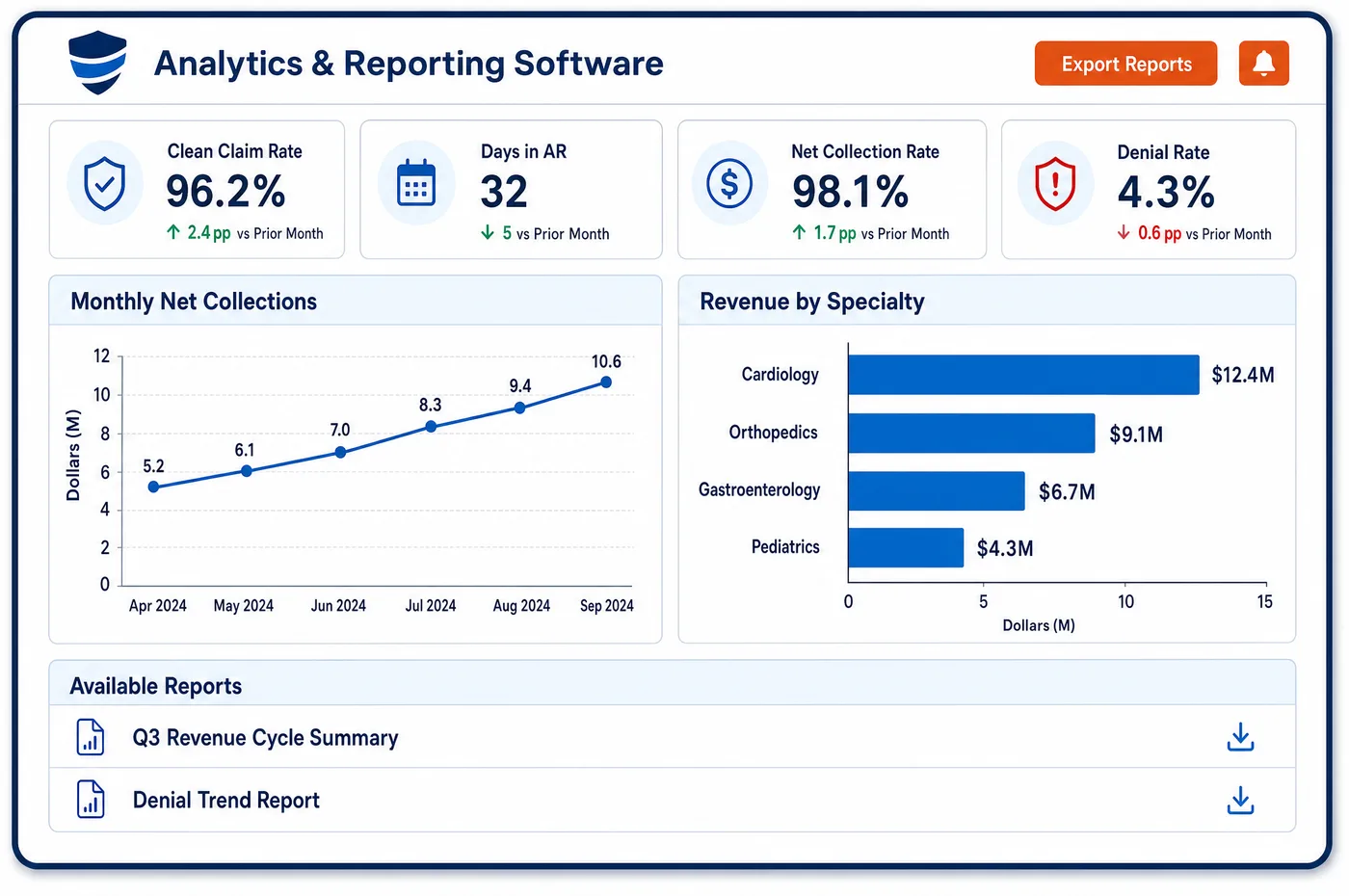
Accounting in a Clinical Research Practice
Research money doesn't follow the patient-care calendar. A sponsor may pay a start-up fee before the first participant is screened, pay visits in batches long after they happen, and hold back part of each payment until close-out. Insurance pays routine care on the same studies through ordinary remittances. Unlimited Systems posts all of it with double-entry lines tagged to the study, so each trial has its own view of revenue earned, cash received, money still owed and money that may need to go back. Up-front payments can sit in a deferred account and move to revenue as the work is done, under the policy the site's accountant sets. Holdbacks show as money still due, not as lost income. Pass-through costs such as IRB or pharmacy fees post against the sponsor reimbursement that pays for them. At month-end, the journal for each entity exports to the general ledger with the study tag kept on each line.
Why Is Accounting Different in Clinical Research?
Study-level accounting matters because each trial is its own contract. The budget, the payment terms and the holdback differ from one sponsor to the next. A site that books all research income to one line can't tell which studies make money and which ones lose it. Leaders then sign the next agreement with a similar budget, and the loss repeats.
Timing is the second problem. Sponsor cash often comes in long before or long after the work it pays for. Start-up fees arrive before the study enrolls, and per-visit money arrives in batches. Booking cash as revenue the day it lands makes some months look rich and others look empty. Accrual accounting that matches revenue to the visits, milestones and invoiceable items that earned it gives a truer picture of each study.
The third problem is the money that might not be the site's. When an insurer pays for a service the sponsor also covered, the site may owe a refund, and that is a liability from the day it is found. Research sites also see their sponsor payments reported publicly through Open Payments. Accounting that ties each dollar to a visit is what lets the site answer either question quickly.
What Clinical Research Accounting Software Handles
- Sponsor and insurance revenue per study
- Medicare's trial policy excludes items the sponsor customarily provides free to enrollees, so the same study earns from two sources. Each study carries separate revenue lines for sponsor payments and for routine-care remittances. (CMS National Coverage Determination 310.1: Routine Costs in Clinical Trials)
- Investigational product supplied by the sponsor
- A sponsor needs prior written FDA authorization to charge for an investigational drug and may recover only direct costs. Study drug supplied free is tracked in the study's own records, not booked as buy-and-bill inventory. (21 CFR 312.8: Charging for investigational drugs under an IND)
- Open Payments research records
- Sponsors report research payments in Open Payments, and physicians named as principal investigators can review those records and dispute them before they are published. Study-level books let the site check the reported figures against what it actually received. (CMS Open Payments: Review and Dispute for Covered Recipients)
- Refund liabilities
- Under 42 CFR 401.305, an identified Medicare overpayment must be reported and returned. When posting flags a service paid by both sponsor and insurer, the possible refund is recorded as a liability on that study. (42 CFR 401.305: Requirements for reporting and returning overpayments)
- Study identifiers on the record
- CMS requires the trial name, sponsor and sponsor-assigned protocol number in the patient's medical record. The same protocol number serves as the study key on every journal line, so the books match the chart. (CMS Medicare Claims Processing Manual, Chapter 32, Section 69.3: Medical Records Documentation Requirements)
How Does Clinical Research Accounting Software Work?
1. Set up each study as its own unit
Every study gets a cost center keyed to its protocol number, sponsor and budget. Research run under a separate Tax ID sits in its own entity in the same database.
2. Post cash to the study it pays
Sponsor wires and remittances are applied by research payment posting to the study and invoice lines they cover. Cash that can't be matched yet sits as unapplied cash until staff place it.
3. Hold up-front fees until earned
Start-up and other advance payments post to a deferred account. They move to revenue as the visits, milestones or tasks they cover are completed, under the site's own accounting policy.
4. Book pass-through costs and holdbacks
IRB, pharmacy and other pass-through fees post as costs against the sponsor money that pays them. Holdbacks stay open as amounts due until the close-out invoice is paid.
5. Close and export by entity
At month-end, the journal for each entity exports to the general ledger with study tags kept. Refund liabilities, deferred balances and holdbacks appear on the close as their own lines.
Clinical Research Accounting Software vs. Generic Software
| Area | Generic approach | Unlimited Systems |
|---|---|---|
| Research income | One revenue line for every study. | Sponsor and insurance revenue split by study and posted as double-entry lines. |
| Start-up fee accounting | Booked as revenue the day the cash arrives. | Held in a deferred account and released as the work is done. |
| Holdbacks | Missing from the books until the final check. | Tracked as money due on each study. |
| Possible refunds | Recorded only after the money goes back. | Booked as a liability when the overlap is found. |
| Separate research entity | Kept in a second system or spreadsheet. | Run as its own Tax ID in one database with the practice. |
Who Uses It in a Clinical Research Practice
- Controller: A month-end close with study-tagged journals, deferred balances and refund liabilities ready to export by entity.
- Research finance manager: Per-study books that show earned revenue, cash, holdbacks and pass-through costs against the trial budget.
- Physician owner: A clear answer on which studies pay their way, built from the same entries the accountant closes on.
Clinical Research Accounting Software FAQs
Accounting at a research site treats each trial as its own unit, keyed to the protocol number. Sponsor revenue, routine-care insurance revenue, pass-through costs, holdbacks and possible refunds all post with the study tag. Each trial then has its own view of what it earned and what it is still owed, and the general ledger receives journal lines that keep the same tag.
Start-up fees usually arrive before a study enrolls its first participant. They can be posted to a deferred account and moved to revenue as the work they pay for is done, following the policy the site's accountant sets. That keeps one large payment from making a single month look unusually strong and hides nothing about the cash received.
A possible refund shows as a liability because the money may not belong to the site. When an insurer pays for a service the sponsor also covered, and the insurer is Medicare, the rule at 42 CFR 401.305 requires an identified overpayment to be reported and returned. Booking it when the overlap is found keeps the study's results honest.
A research division with its own Tax ID can run as a separate entity in the same database as the clinical practice. Each entity has its own journals and month-end export, while shared patients and visits stay linked. Leaders can review research results alone or combine them with the practice, without stitching two systems together by hand.
Sponsors report research payments in Open Payments, and principal investigators can review those records and dispute errors before publication. Study-level books show what the site received from each sponsor and when. Staff can compare those totals with the reported records and raise a dispute with the sponsor if they don't match.
Study drug supplied free by a sponsor is not treated like buy-and-bill inventory. A sponsor needs prior written FDA authorization to charge for an investigational drug, and may recover only direct costs. The site tracks the drug in the study's own records. Only drugs the site buys and bills to a payer carry acquisition cost on the books.
Related Clinical Research Software
Payments & AR
Accounting for related specialties
Sources
- CMS National Coverage Determination 310.1: Routine Costs in Clinical Trials
- 21 CFR 312.8: Charging for investigational drugs under an IND
- CMS Open Payments: Review and Dispute for Covered Recipients
- 42 CFR 401.305: Requirements for reporting and returning overpayments
- CMS Medicare Claims Processing Manual, Chapter 32, Section 69.3: Medical Records Documentation Requirements
GET STARTED
See Unlimited Systems in Action
Whether you're actively evaluating new technology or simply preparing for your next vendor renewal, Unlimited Systems can help you understand where your current workflows may be creating avoidable revenue risk.