

Payments & AR
Clinical Research Patient Billing Software
Statements that bill participants only for routine care they owe, keep sponsor-paid study work off the page and hold the bill while coverage is still under review.
Clinical Research Patient Billing Software sends trial participants statements for only what they owe: deductibles, copays and coinsurance on routine care. Anything the sponsor pays for stays off the statement. Bills wait while the study team confirms coverage, and each statement shows plainly which visit it covers, so a participant can trust it.



 6,500+ specialty providers

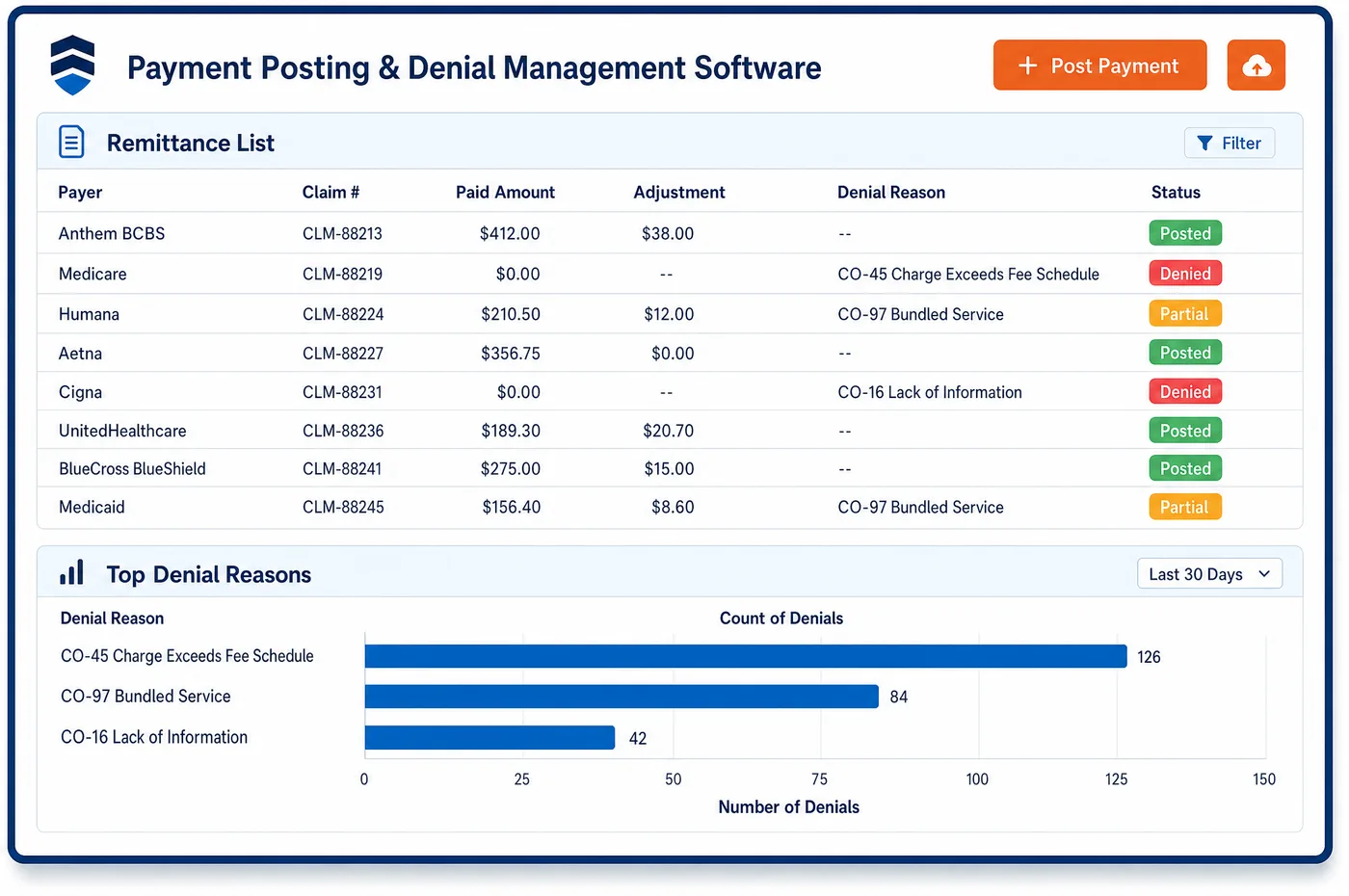
Patient Billing in a Clinical Research Practice
A participant's visit may hold a routine office visit, a study-only lab, a research ECG and a scan the coverage analysis splits between payers. Only the routine items that insurance actually paid, and the share the plan left to the patient, belong on a statement. Unlimited Systems builds the statement from the posted claim, not from the raw charges, so sponsor-paid lines never show up as a balance. While a visit's charges are still in research billing review, the statement for that visit is held, and the hold carries a reason. For Original Medicare patients, Q1 lines carry the usual deductible and coinsurance. Medicare Advantage patients in a qualifying trial are billed under Original Medicare, and the plan later pays the patient back the cost-sharing gap, so their statement is written to double as proof for that claim. Payment options on each statement come from the same ledger the billing team uses.
Why Is Patient Billing Different in Clinical Research?
Trust is the whole point of patient billing in research. A participant who gets a bill for a study-only blood draw may stop coming to visits, or tell the coordinator the trial costs money. That can cost the site the participant and the sponsor a data point. Statements at a research site have to be right the first time, because a wrong one does more harm than a late one.
The balance itself is harder to know. A routine scan at a study visit may be billed to insurance while the extra slice the protocol asks for is billed to the sponsor. Until both are settled, the patient's real share isn't known. Sending a statement from charges before the claim pays risks billing the patient for a line the sponsor will cover. Patient billing here has to wait for the remittance and read it.
Medicare Advantage adds a step most practices never see. For qualifying trials, routine costs for these patients are billed to Original Medicare, which means Original Medicare cost sharing. The plan must then pay the enrollee the difference between that and its own in-network cost sharing, and it may ask for proof such as a provider bill. A clear statement that names the trial service helps the patient get that money back.
What Clinical Research Patient Billing Software Handles
- Sponsor-provided items
- Medicare's trial policy does not cover items and services that sponsors customarily provide free to every enrollee. Those lines are routed to the sponsor budget and never reach a patient statement. (CMS National Coverage Determination 310.1: Routine Costs in Clinical Trials)
- Non-covered lines with no patient liability
- When a free sponsor item must appear on a Medicare claim, CMS says to bill it as non-covered while making sure the patient is not held liable. Those lines are blocked from the statement. (CMS Medicare Claims Processing Manual, Chapter 32, Section 69: Qualifying Clinical Trials)
- Q1 coinsurance for Original Medicare
- Routine trial services billed with Q1 follow normal deductible and coinsurance rules for Original Medicare patients. That share flows to a supplemental payer or the statement like any other balance. (CMS Medicare Claims Processing Manual, Chapter 32, Section 69: Qualifying Clinical Trials)
- Medicare Advantage cost-sharing gap
- The plan owes the enrollee the difference between Original Medicare cost sharing and its own in-network cost sharing. Enrollees may need to show a provider bill, so the statement names the trial service and its date. (CMS Medicare Managed Care Manual, Chapter 4, Section 10.7.1: Payment for Services in Clinical Trials)
- Investigational drug charges
- A sponsor needs prior written FDA authorization before it may charge for an investigational drug, and may recover only direct costs. A study-drug line headed for a participant's statement is stopped for review. (21 CFR 312.8: Charging for investigational drugs under an IND)
- Participant stipends
- FDA guidance treats payment to research subjects as a matter for the IRB, which reviews the amount, method and timing. Stipends are paid through the study's own process and are not netted against a patient balance. (FDA guidance: Payment and Reimbursement to Research Subjects)
How Does Clinical Research Patient Billing Software Work?
1. Hold statements during research review
A visit whose charges are still being checked against the coverage analysis gets a statement hold with a reason. The hold lifts when the review is done and the claim is out.
2. Build the balance from the remittance
The patient share comes from what insurance actually paid and assigned to the patient. Sponsor-paid and non-covered sponsor lines are excluded, so they never turn into a balance.
3. Write statements that name the visit
Each statement shows the visit date, the routine service and what insurance paid. Participants can match it to their study calendar, and Medicare Advantage patients can send it to their plan.
4. Check estimates against actuals
Estimates made during financial clearance leave sponsor-paid items out. When the claim pays, the real share is compared with the estimate, and big gaps go to staff before the statement is sent.
5. Offer the right way to pay
Statements link to the portal, card on file and payment plans described under integrated patient payments. Every payment posts to the same ledger the billing team works from.
Clinical Research Patient Billing Software vs. Generic Software
| Area | Generic approach | Unlimited Systems |
|---|---|---|
| Statement timing | Statements sent from charges before the claim pays. | Statements built from the posted remittance, after research review. |
| Sponsor-paid lines | Appear on the bill and get written off after a call. | Excluded before the statement is built. |
| Medicare Advantage patients | Billed with no note about the plan's cost-sharing refund. | Statement names the trial service so the patient can claim the gap. |
| Study drug | Billed if it came through on the charge feed. | Held for review, since charging needs FDA authorization. |
| Stipends | Sometimes offset against balances. | Kept separate, paid through the study's own process. |
Who Uses It in a Clinical Research Practice
- Billing specialist: Statements built from paid claims, with sponsor lines already split off during research charge review and held visits listed with their reason.
- Research coordinator: Fewer upset calls from participants, and a statement they can walk through with a patient line by line.
- Practice manager: Confidence that participants are billed only for routine care they owe, with holds and estimates tracked by study.
Clinical Research Patient Billing Software FAQs
Patient billing builds each statement from the posted claim rather than from raw charges. Lines the coverage analysis assigns to the sponsor never go to insurance and never become a patient balance. Sponsor items that must appear on a Medicare claim are billed as non-covered with no patient liability. What is left on the statement is the deductible, copay or coinsurance on routine care.
Trial participants in Original Medicare generally pay the usual deductible and coinsurance on routine services billed with modifier Q1. Commercial plan members pay their normal cost sharing for covered routine care. The investigational item and services done only for study data are not routine costs, so they are not billed to the patient's insurance or to the patient.
A statement is held while the visit's charges are still in research billing review. The team is checking each service against the coverage analysis to confirm who pays for it. Sending a bill before that review risks charging the participant for a service the sponsor covers. The hold shows its reason, and it lifts once the claim has gone out and paid.
Medicare Advantage participants in a qualifying trial are billed under Original Medicare for routine costs. Their plan must pay them the difference between Original Medicare cost sharing and the plan's own in-network cost sharing. The plan may ask for a provider bill as proof. The statement names the trial service and date, so the patient can send it to the plan.
A participant should not normally see a charge for an investigational drug on a site statement. Under FDA rules, a sponsor needs prior written authorization from FDA to charge for an investigational drug, and it may recover only direct costs. Any study-drug line that reaches the patient side is stopped for review before a statement goes out.
Study stipends are not netted against what a participant owes. FDA guidance asks the IRB to review the amount, method and timing of payments to research subjects, and they are paid through the study's own process. Keeping them apart from the patient ledger avoids mixing research payments with care balances and keeps both easy to audit.
Related Clinical Research Software
Payments & AR
In the revenue cycle
Patient Billing for related specialties
Sources
- CMS National Coverage Determination 310.1: Routine Costs in Clinical Trials
- CMS Medicare Claims Processing Manual, Chapter 32, Section 69: Qualifying Clinical Trials
- CMS Medicare Managed Care Manual, Chapter 4, Section 10.7.1: Payment for Services in Clinical Trials
- 21 CFR 312.8: Charging for investigational drugs under an IND
- FDA guidance: Payment and Reimbursement to Research Subjects
GET STARTED
See Unlimited Systems in Action
Whether you're actively evaluating new technology or simply preparing for your next vendor renewal, Unlimited Systems can help you understand where your current workflows may be creating avoidable revenue risk.