

Platform & AI
Addiction Medicine EHR Integration Software
Connect the addiction EHR to billing so doses, counseling, drug-test orders, telehealth flags and consent status reach the claim intact.
Addiction Medicine EHR Integration Software connects the clinical record to billing so the services a program documents become correct claims. Dosing and counseling activity feeds OTP weekly bundles, drug-test orders and results reach the lab charge, telehealth flags set the right modifier, and consent status travels with the record so billing staff see only what they should.



 6,500+ specialty providers

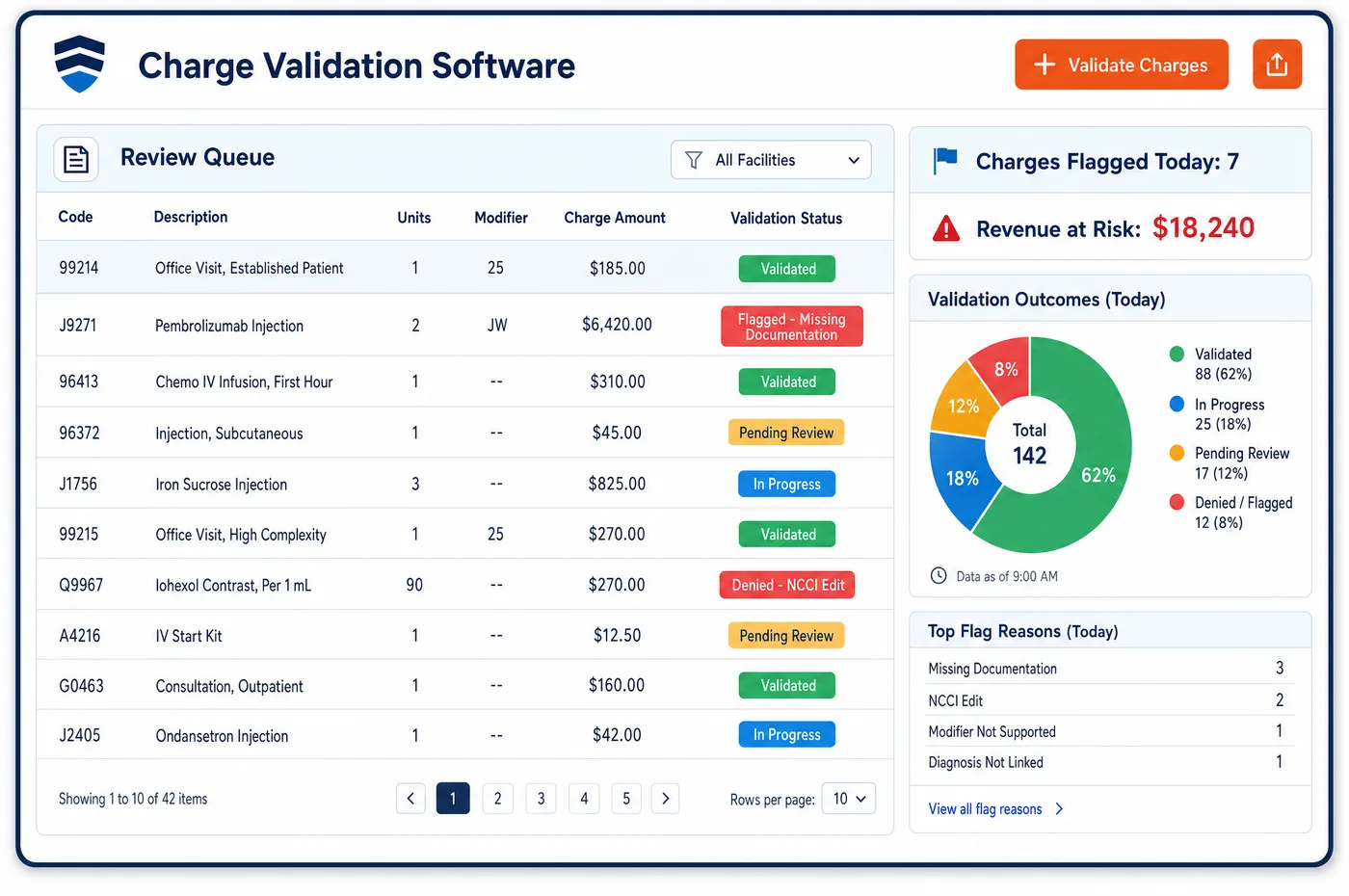
EHR Integration in a Addiction Medicine Practice
In an addiction program, much of what billing needs starts in the EHR. An OTP weekly bundle depends on which drug the patient got for most of the week and which services were given. A periodic assessment or extra counseling add-on depends on a clinical note. A drug-test claim depends on an order that names each drug class and states why. A counseling session by video or phone needs the right modifier. EHR integration for addiction medicine moves those facts into billing over HL7 and FHIR feeds, so staff do not rekey them. Demographics and insurance move both ways, so the front desk and the clinic share one patient record. Charges arrive with the service date, diagnosis, clinician and place of service. Part 2 status moves with the record, and SUD counseling notes stay in the EHR, since billing does not need them. When the feed sends something billing cannot use, the item stops in a queue instead of becoming a bad claim.
Why Is EHR Integration Different in Addiction Medicine?
OTP billing turns daily clinical activity into a weekly claim. The drug, the dosing days, take-home supply, counseling and assessments all shape what can be billed for the week. If the EHR and billing do not agree on those facts, the OTP either bills the wrong bundle or misses add-ons. A feed that carries the activity, not just a total, lets billing build the week correctly.
Drug testing also depends on the record. Medicare contractor policy calls for a written order from the treating clinician that lists each drug or class, plus the reason for definitive testing. If the order lives only in a lab portal, the claim goes out without the support it needs. Integration that brings the order and the result into billing gives staff what they need for a clean claim or an appeal.
Consent has to move with the data. Part 2 records carry rules about who can see and share them, and the 2024 rule defines SUD counseling notes as their own category. Billing needs diagnosis, service and date, not therapy content. An integration that sends only what billing needs, and carries the patient's consent status, keeps billing useful without widening who sees the record. Wider data exchange builds on the same rules.
What Addiction Medicine EHR Integration Software Handles
- Bundle code from the drug given most of the week
- When a patient switches drugs during a week, CMS directs OTPs to bill one bundle for the drug given for most of that week. Dosing activity from the EHR shows which drug that was, so the bundle code matches the record. (CMS: Opioid Treatment Program (OTP) Billing and Payment)
- Telehealth modifiers 95 and 93 on OTP services
- CMS directs OTPs to add modifier 95 for audio-video and modifier 93 for audio-only counseling or therapy. The EHR's visit type sets the modifier, so a phone session is not billed as video. (CMS: Opioid Treatment Program (OTP) Billing and Payment)
- Audio-only periodic assessments (G2077)
- CMS allows G2077 periodic assessments by audio-only when audio-video is not available. The note's modality flag flows to billing so the add-on carries the right modifier. (CMS: Opioid Treatment Program (OTP) Billing and Payment)
- Drug-test orders that list each class (LCD L35006)
- The Novitas LCD for Medicare calls for written orders from the treating clinician that list each drug or drug class. The order comes into billing with the lab charge, so the claim and any appeal have it on hand. (CMS Medicare Coverage Database: LCD L35006, Controlled Substance Monitoring and Drugs of Abuse Testing (Novitas))
- SUD counseling notes under Part 2
- The 2024 Part 2 rule defines SUD counseling notes as their own category of record. Those notes stay in the EHR, and only the service, date, time and diagnosis flow to billing. (Federal Register: Confidentiality of Substance Use Disorder Patient Records, final rule (February 16, 2024))
- Place of service 57 and 58
- POS 57 marks a non-residential substance use treatment facility, and POS 58 marks a non-residential opioid treatment facility. The site in the EHR sets the POS on each charge. (CMS Place of Service Code Set)
How Does Addiction Medicine EHR Integration Software Work?
1. Connect the systems
The EHR connects to billing over HL7 feeds or FHIR. Interfaces are tested in a sandbox before they touch live patient data.
2. Share demographics and coverage
Registration and insurance updates move both ways. A coverage change entered at the front desk shows up in the clinical record, and the reverse.
3. Send activity and charges
Dosing days, counseling, assessments, injections and drug tests arrive with the date, clinician, diagnosis and site. OTP activity is grouped into the week it belongs to before charge validation runs.
4. Carry consent and privacy flags
Each record arrives with its Part 2 status. Billing receives what it needs for the claim, and counseling note content stays in the EHR.
5. Catch what does not fit
Charges with a missing order, diagnosis or modality stop in an exception queue. Staff fix them with the clinic before they become claims.
Addiction Medicine EHR Integration Software vs. Generic Software
| Area | Generic approach | Unlimited Systems |
|---|---|---|
| OTP week | Billing staff rebuild the week from paper logs. | Dosing and service activity grouped into the week from the EHR. |
| Drug-test orders | Orders left in the lab portal. | Orders and results come into billing with the charge. |
| Telehealth | Modifier guessed from the schedule. | Modifier set by the visit's recorded modality. |
| Counseling notes | Full notes copied into billing. | Only service, date, time and diagnosis flow to billing. |
| Bad data | Errors found when claims deny. | Exceptions held in a queue before claims are built. |
Who Uses It in a Addiction Medicine Practice
- OTP billing lead: Weekly bundles built from the record, with the right drug, add-ons and modifiers, so the week is billed once and billed right.
- Clinician: No double entry for billing. Notes and orders written once in the EHR reach the claim when they are needed.
- Privacy officer: An integration that sends billing only what it needs and carries Part 2 status with each record, backed by the program's HIPAA safeguards.
Addiction Medicine EHR Integration Software FAQs
EHR integration sends demographics, coverage, dosing days, counseling, assessments, injections and drug-test orders and results to billing. Each charge arrives with its date, clinician, diagnosis, site and modality. For OTPs, activity is grouped into the week it belongs to. Counseling note content stays in the EHR.
The bundle code depends on the drug the patient received. When a patient switches drugs mid-week, CMS directs OTPs to bill the code for the drug given for most of that week. Dosing activity from the EHR shows which drug that was, and the bundle is built from it.
SUD counseling notes stay in the EHR. The 2024 Part 2 rule treats them as their own category of record. Billing needs the service, date, time and diagnosis to build a claim, not the content of the session. Keeping the notes out of billing limits who can see them.
The EHR records whether a session was by video or by phone. That flag sets the modifier on the charge. For OTP services, CMS directs modifier 95 for audio-video and modifier 93 for audio-only counseling or therapy. Staff do not have to guess from the schedule.
Drug-test orders and results can come into billing with the lab charge. For Medicare, the Novitas LCD calls for written orders that list each drug or class, and a documented reason for definitive testing. Having the order on hand makes clean claims and appeals much easier.
Charges with missing data, such as no diagnosis, no order or no modality, stop in an exception queue. Staff work with the clinic to fix the record, and the corrected charge flows back through. That keeps incomplete data from turning into denied claims.
Related Addiction Medicine Software
Platform & AI
In the revenue cycle
EHR Integration for related specialties
Sources
- CMS: Opioid Treatment Program (OTP) Billing and Payment
- CMS Medicare Coverage Database: LCD L35006, Controlled Substance Monitoring and Drugs of Abuse Testing (Novitas)
- Federal Register: Confidentiality of Substance Use Disorder Patient Records, final rule (February 16, 2024)
- CMS Place of Service Code Set
GET STARTED
See Unlimited Systems in Action
Whether you're actively evaluating new technology or simply preparing for your next vendor renewal, Unlimited Systems can help you understand where your current workflows may be creating avoidable revenue risk.