

Platform & AI
Addiction Medicine Platform System Design
A cloud platform built for addiction programs: many sites and entities, both claim forms, funding sources in the data model, and Part 2-grade security.
Addiction Medicine Platform System Design describes how Unlimited Systems is built to run an addiction program's billing and operations. It is a cloud platform that serves many sites and entities, produces professional and institutional claims, stores consent and funding source in its data model, and protects SUD records with role-based access, audit trails and encryption.



 6,500+ specialty providers

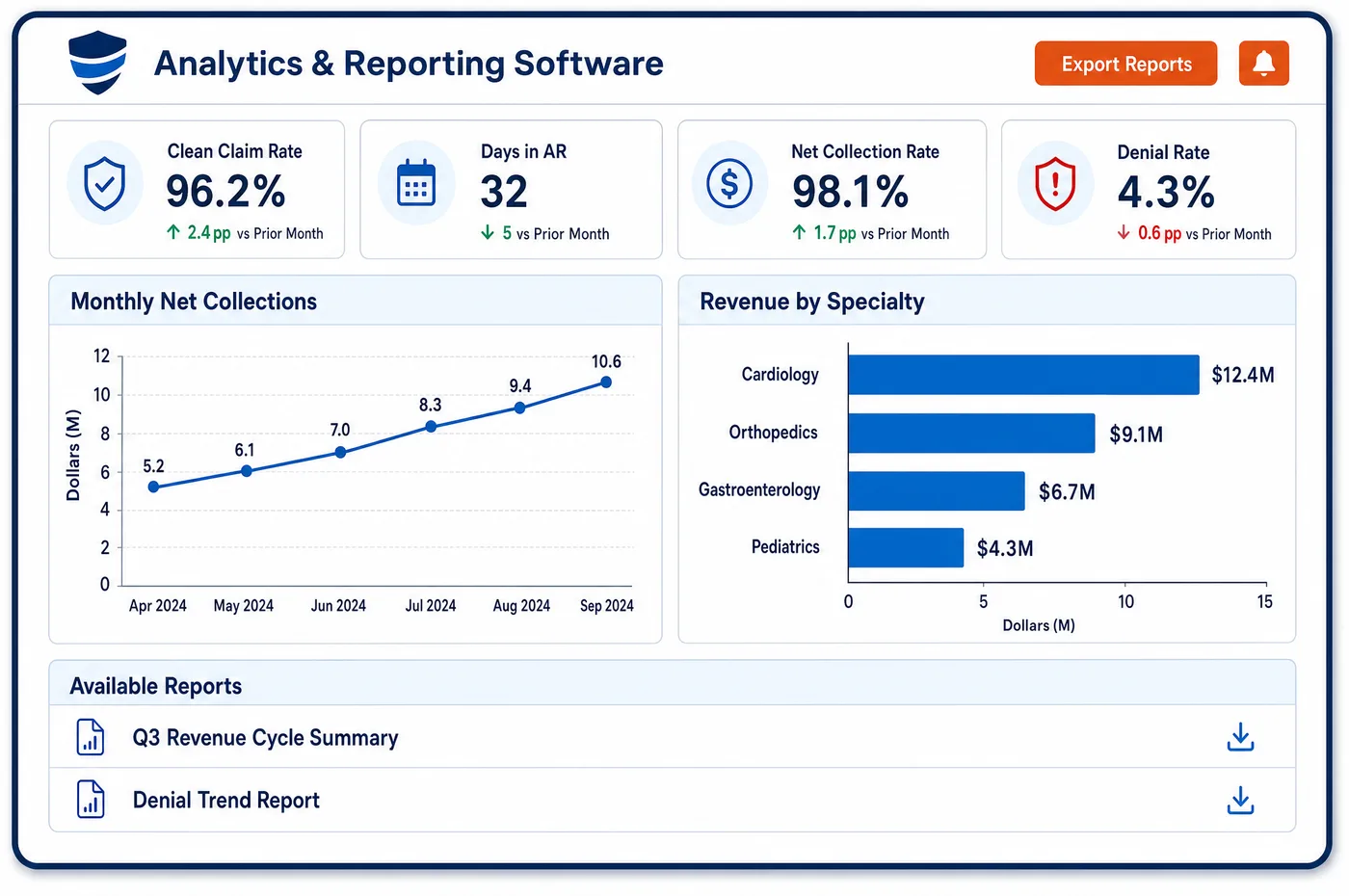
Platform System Design in a Addiction Medicine Practice
An addiction organization can look like several businesses in one. An opioid treatment program, an outpatient clinic, an intensive outpatient program and an office-based practice may share patients but differ in enrollment, place of service, claim form and funding. The platform system design treats each as its own entity or site, with its own NPI, payer setup and rules, while keeping one patient record across them. The data model holds the things addiction billing turns on: the treatment episode, the weekly OTP cycle, the payer that holds each benefit, the funding source behind each service, and the patient's consent. Security is built in, not added later. Access is set by role, every change is logged, and data is encrypted in transit and at rest. The platform runs in a HIPAA-compliant cloud with redundant backups, and staff reach it through a web browser from any approved site.
Why Is Platform System Design Different in Addiction Medicine?
Structure is the first design problem. A certified OTP may bill Medicare on a professional or an institutional claim, and the type of bill on an institutional claim shows whether it is freestanding or hospital-based. The outpatient clinic and the residential program use their own places of service. Grant funding may cover one entity and not another. A system built for one clinic with one tax ID forces workarounds for all of this. A platform built for many entities handles it as setup.
Security is the second. SUD treatment records are among the most sensitive in health care. Part 2 requires programs and other lawful holders to keep policies and procedures that secure records, and the HIPAA Security Rule requires administrative, physical and technical safeguards. Role-based access, audit trails and encryption are the base. On top of that, the system has to let a privacy officer see who looked at what.
Scale and uptime are the third. An OTP doses patients every day it is open, and billing runs every week. Staff at several sites need the same data at the same time. A cloud platform with redundant backups and browser access avoids local servers at each site and keeps every site on one version. Good platform system design lets an addiction organization add a site or a program without rebuilding its systems, and it connects to the clinical side through standard interfaces.
What Addiction Medicine Platform System Design Handles
- OTP claim forms and types of bill
- CMS lets OTPs bill on the CMS-1500, or on the CMS-1450 with type of bill 087x for a freestanding OTP and 013x for a hospital-based one. The platform produces both professional and institutional claims from one setup. (CMS: Opioid Treatment Program (OTP) Billing and Payment)
- Places of service by program
- POS 55 marks a residential substance use treatment facility, POS 57 a non-residential one, and POS 58 a non-residential opioid treatment facility. Each site and program in the platform carries its own place of service. (CMS Place of Service Code Set)
- Entity and NPI structure
- Organizations can hold separate type 2 NPIs for different entities or programs. Each entity in the platform has its own NPI, tax ID and payer setup, and the patient record is shared across them. (CMS NPPES: National Plan and Provider Enumeration System)
- Part 2 security policies
- Part 2 requires programs and lawful holders to keep policies and procedures to secure records, and the 2024 rule aligned breach notification with HIPAA. Role-based access and audit trails help the program apply its policies. (Federal Register: Confidentiality of Substance Use Disorder Patient Records, final rule (February 16, 2024))
- HIPAA Security Rule safeguards
- The Security Rule calls for administrative, physical and technical safeguards for electronic health data. The platform supports these with encryption, access controls, audit logs and redundant backups. (HHS: The HIPAA Security Rule)
How Does Addiction Medicine Platform System Design Work?
1. Set up entities and sites
Each entity, site and program is set up with its NPI, tax ID, place of service and payers. Shared patients keep one record across all of them.
2. Model the addiction data
Treatment episodes, weekly OTP cycles, benefit owners, funding sources and consents are stored as their own fields. Rules and reports read from them directly.
3. Set roles and access
Each user gets a role that sets what they can see and do. Patient detail from Part 2 programs is limited to roles that need it, and every view and change is logged in the audit trail.
4. Run in a secure cloud
The platform runs in a HIPAA-compliant cloud with encryption, threat monitoring and redundant backups. Staff sign in through a web browser from approved locations.
5. Grow without rebuilding
New sites, programs or payers are added as setup, not as new systems. Interfaces to the EHR and outside partners use the integration layer already in place.
Addiction Medicine Platform System Design vs. Generic Software
| Area | Generic approach | Unlimited Systems |
|---|---|---|
| Entities | One tax ID and NPI with workarounds for each program. | Each entity and program set up with its own identifiers. |
| Claim forms | Separate tools for professional and institutional claims. | Both claim forms produced from one platform. |
| Data model | Funding source and consent kept in notes. | Funding source, episode and consent stored as fields. |
| Security | Shared logins and no access history. | Role-based access with a full audit trail. |
| Hosting | Local servers at each site. | HIPAA-compliant cloud with redundant backups. |
Who Uses It in a Addiction Medicine Practice
- Chief executive: One platform for every site and program, so growth means setup rather than a new system.
- Privacy officer: Role-based access, audit trails and encryption that support the program's Part 2 and HIPAA policies, with a record of who saw what.
- IT lead: A browser-based cloud platform with no local servers to patch, backed by redundant backups and standard interfaces.
Addiction Medicine Platform System Design FAQs
Platform system design covers how the system handles many entities and sites, both claim forms, the data addiction billing depends on, security and hosting. For an addiction organization, that means OTPs, clinics and IOPs set up as their own entities, funding source and consent stored as data, and SUD records protected by role-based access and audit trails.
One platform can bill for both. Each is set up as its own entity or site with its own NPI, place of service and payers. The OTP can bill weekly bundles on the claim form its Medicare enrollment calls for, while the office-based practice bills its visits and injections. Shared patients keep one record.
Part 2 data is protected by role-based access, encryption and audit trails. Users see only what their role allows, and every view and change is logged. Part 2 requires programs to keep policies and procedures that secure records, and these controls help the program put its policies into practice.
The system runs in a HIPAA-compliant cloud with encryption, threat monitoring and redundant backups. Staff sign in through a web browser, so there are no local servers to maintain at each site. Every site works on the same version of the system and the same data.
Funding source decides who pays, how payments post, and which funder reports a service belongs in. Storing it as a field on each service lets rules, the ledger and reports read it directly. Keeping it in notes forces staff to look it up by hand each time a question comes up.
A new site or program is added as setup. Staff add the entity, its identifiers, place of service, payers and rules. Patients who move between programs keep one record. Interfaces already in place carry over, so the new site works with the EHR and outside partners from the start.
Related Addiction Medicine Software
Platform & AI
In the revenue cycle
Platform System Design for related specialties
Sources
GET STARTED
See Unlimited Systems in Action
Whether you're actively evaluating new technology or simply preparing for your next vendor renewal, Unlimited Systems can help you understand where your current workflows may be creating avoidable revenue risk.