

Platform & AI
Addiction Medicine Workflow Software
Work queues with clear owners for addiction billing: consent checks, drug-test documentation, carve-out rebills, IOP rules and grant eligibility.
Addiction Medicine Workflow Software routes each billing task in an addiction program to a named queue and owner. Drug-test claims missing an order go to the clinician, wrong-payer denials go to rebilling, record requests wait for a Part 2 consent check, and IOP and grant eligibility items go to the staff who can clear them.



 6,500+ specialty providers

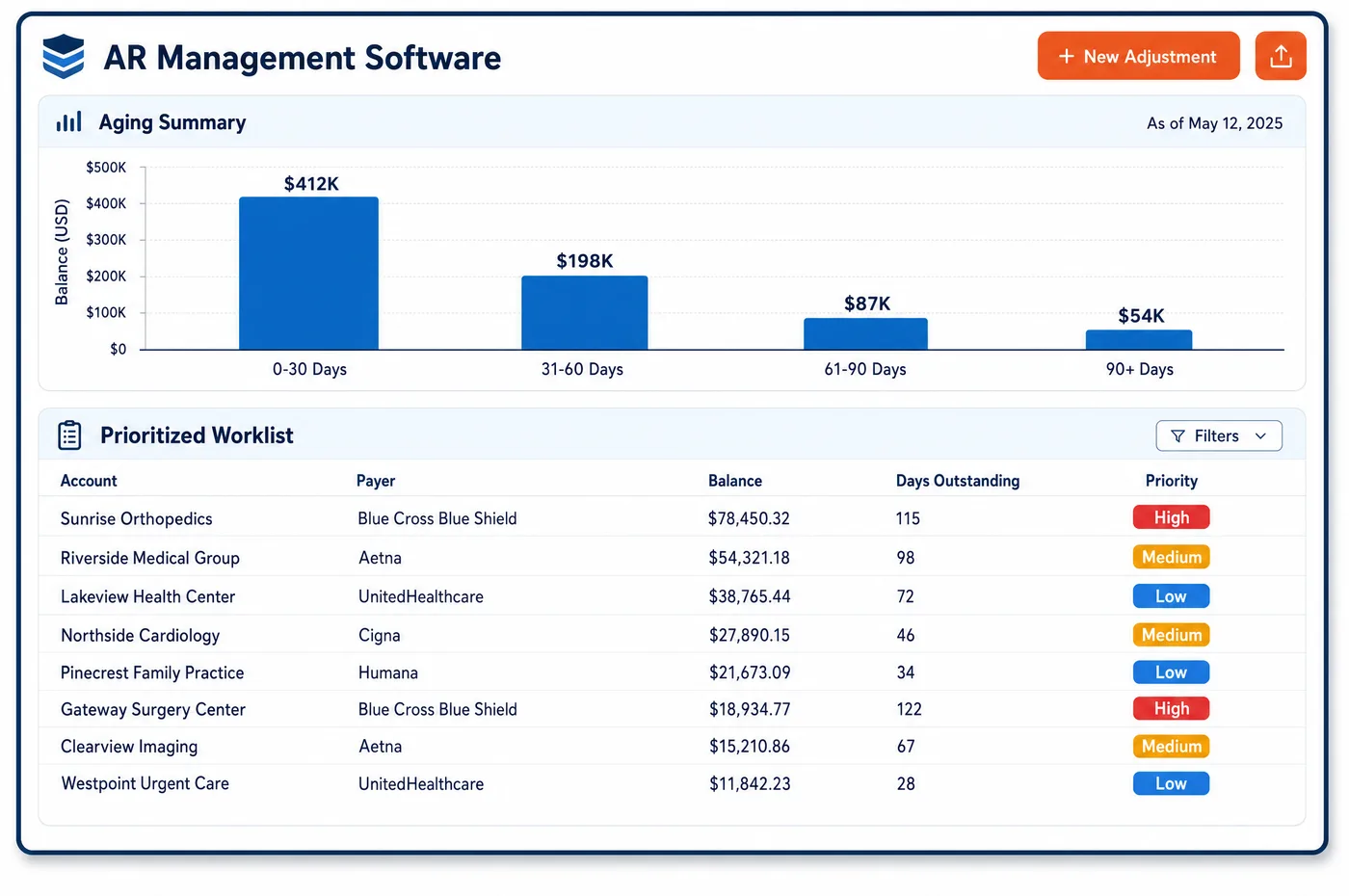
Workflow in a Addiction Medicine Practice
Work in an addiction billing office crosses more roles than in most practices. A drug-test denial may need a clinician to document why the test was ordered. A records request from a payer may need someone to confirm the patient's consent covers it. A second OTP bundle in one week may need a counselor's note on why. A patient on a grant-funded slot may need income checked again. Workflow for addiction medicine gives each of these a queue, an owner and a due date. Items arrive from claim edits, remits, status replies and staff requests. Each one shows the claim, the patient, the reason and the next step. When an item sits too long, it moves up to a supervisor. Managers see how many items each queue holds and how old they are, so they can move staff where the backlog is. Nothing depends on someone remembering to check a spreadsheet or an email thread.
Why Is Workflow Different in Addiction Medicine?
Many billing fixes here need a clinician, not a biller. Medicare contractor policy for drug testing calls for an individualized order and a documented reason for definitive tests. Extra OTP counseling billed with G2080 has to go well beyond the treatment plan. A biller cannot create those facts; only the clinician can document them. Workflow that routes these items to the right clinician, with the claim attached, gets them done.
Privacy rules add steps that billing offices in other fields skip. Under Part 2, each disclosure made with patient consent must come with a copy of the consent or a clear explanation of its scope. Before records go to a payer for an appeal or an audit, someone has to check what the consent allows. A records queue with a consent check built in keeps those steps from being skipped when the office is busy.
Programs also carry tasks no claim edit can see. Intensive outpatient weeks have service and hour minimums. Grant and sliding fee eligibility may need to be checked again. A patient's carve-out vendor may change. Automated checks can raise many of these items, but people still have to work them, and each needs an owner.
What Addiction Medicine Workflow Software Handles
- Definitive drug-test documentation (LCD L35006)
- Under the Novitas LCD for Medicare, definitive tests need an individualized written order listing each drug or class and a documented reason. Denied or held tests missing either go to the ordering clinician's queue. (CMS Medicare Coverage Database: LCD L35006, Controlled Substance Monitoring and Drugs of Abuse Testing (Novitas))
- Part 2 consent check before disclosure
- The 2024 Part 2 rule requires each consent-based disclosure to include a copy of the consent or a clear explanation of its scope. Record requests wait in a queue until staff confirm the consent covers the request and attach the notice. (Federal Register: Confidentiality of Substance Use Disorder Patient Records, final rule (February 16, 2024))
- G2080 extra counseling
- CMS directs OTPs to bill G2080 for counseling that substantially exceeds the amount in the treatment plan. Weeks with G2080 go to a counselor review queue to confirm the note supports it. (CMS: Opioid Treatment Program (OTP) Billing and Payment)
- G0137 intensive outpatient weeks
- CMS lists G0137 as an OTP add-on for weeks with at least nine IOP services and a need for at least nine hours of IOP care. Weeks that fall short go to the program lead before the add-on is billed. (CMS: Opioid Treatment Program (OTP) Billing and Payment)
- CARC 109 rebilling
- Wrong-payer denials go to a rebilling queue with the payer named on the remit. The owner sends the claim to the right carve-out vendor or plan and records the date. (X12 Claim Adjustment Reason Codes)
- Modifier 59 on a second weekly bundle
- A second OTP bundle in a run of seven days needs modifier 59 and a documented reason. Those claims go to a supervisor queue to confirm the reason before release. (CMS: Opioid Treatment Program (OTP) Billing and Payment)
How Does Addiction Medicine Workflow Software Work?
1. Create items from every source
Claim edits, remits, status replies and staff requests each create work items. Each item carries the claim, the patient, the reason and the suggested next step.
2. Route to a queue and owner
Rules send each item to the right work queue, such as coding, rebilling, records, clinician review or grants. Each item has one owner and a due date.
3. Work the item
The owner opens the item, sees the claim and the reason, and does the fix. Clinician items show the note or order that is missing, and records items show the consent on file.
4. Escalate when it stalls
Items past their due date move up to a supervisor. Items close to a filing deadline jump ahead in the queue.
5. Watch the backlog
Managers see item counts and age for each queue and owner. They can move staff to the queue that is falling behind, or change a rule that keeps creating the same item, using AR aging by queue.
Addiction Medicine Workflow Software vs. Generic Software
| Area | Generic approach | Unlimited Systems |
|---|---|---|
| Clinician fixes | Billers email clinicians and wait. | Items routed to the clinician's queue with the claim attached. |
| Records requests | Records sent without checking consent scope. | Consent checked and notice attached before release. |
| Ownership | Shared inbox with no clear owner. | One owner and a due date for each item. |
| Escalation | Old items found during month-end review. | Overdue items move up to a supervisor. |
| Backlog | Unknown until claims age out. | Counts and age shown by queue and owner. |
Who Uses It in a Addiction Medicine Practice
- Billing team lead: Queues that show what each person owns and what is overdue, so work moves without daily check-in meetings.
- Clinician: A short list of claims that need their note or order, with the reason and the claim on one screen.
- Privacy officer: A records workflow that checks Part 2 consent and attaches the required notice before anything leaves the program, with a log of each release.
Addiction Medicine Workflow Software FAQs
Workflow sends drug-test items to the ordering clinician when the fix needs their input. The item shows the claim, the denial reason and what the record is missing, such as an individualized order or the reason for a definitive test. The clinician adds what is needed, and the item returns to billing for resubmission or appeal.
A records request goes to a queue where staff check the patient's Part 2 consent before anything is sent. If the consent covers the request, staff attach a copy of the consent or a clear explanation of its scope, as the 2024 rule requires. If not, the request waits until consent is obtained or another legal basis applies.
A wrong-payer denial goes to the rebilling queue, which has a named owner. The item shows the payer named on the remit and the original filing date. The owner sends the claim to the right carve-out vendor or Medicaid plan and records the new filing date, so the claim can be followed to payment.
Each item has a due date. When an item passes it, the item moves up to a supervisor. Items close to a payer's filing deadline move to the front of their queue. Managers also see how old the items in each queue are, so they can add staff before deadlines are missed.
Workflow can hold weeks where an OTP plans to bill the G0137 add-on until the program lead confirms the week met it. CMS lists at least nine IOP services and a need for at least nine hours of IOP care in the week. Weeks that fall short go back to the program lead instead of being billed.
Managers see the number and age of items in each queue and for each owner. A queue that keeps growing points to a staffing gap or a rule that creates too many items. Managers can move staff, change the rule, or fix the setup problem behind the items.
Related Addiction Medicine Software
Platform & AI
In the revenue cycle
Workflow for related specialties
Sources
- CMS Medicare Coverage Database: LCD L35006, Controlled Substance Monitoring and Drugs of Abuse Testing (Novitas)
- Federal Register: Confidentiality of Substance Use Disorder Patient Records, final rule (February 16, 2024)
- CMS: Opioid Treatment Program (OTP) Billing and Payment
- X12 Claim Adjustment Reason Codes
GET STARTED
See Unlimited Systems in Action
Whether you're actively evaluating new technology or simply preparing for your next vendor renewal, Unlimited Systems can help you understand where your current workflows may be creating avoidable revenue risk.