

Platform & AI
Psychiatry Workflow Software
Route psychiatric billing and front-office work to the right person, with an owner, a deadline and a clear handoff for every item.
Psychiatry Workflow Software routes the work a psychiatric practice cannot automate to the person who should do it. Authorization limits, missing therapy time, wrong-payer denials, records requests under HIPAA and 42 CFR Part 2, and collaborative care follow-ups each land in an owned queue with a deadline and an escalation path.



 6,500+ specialty providers

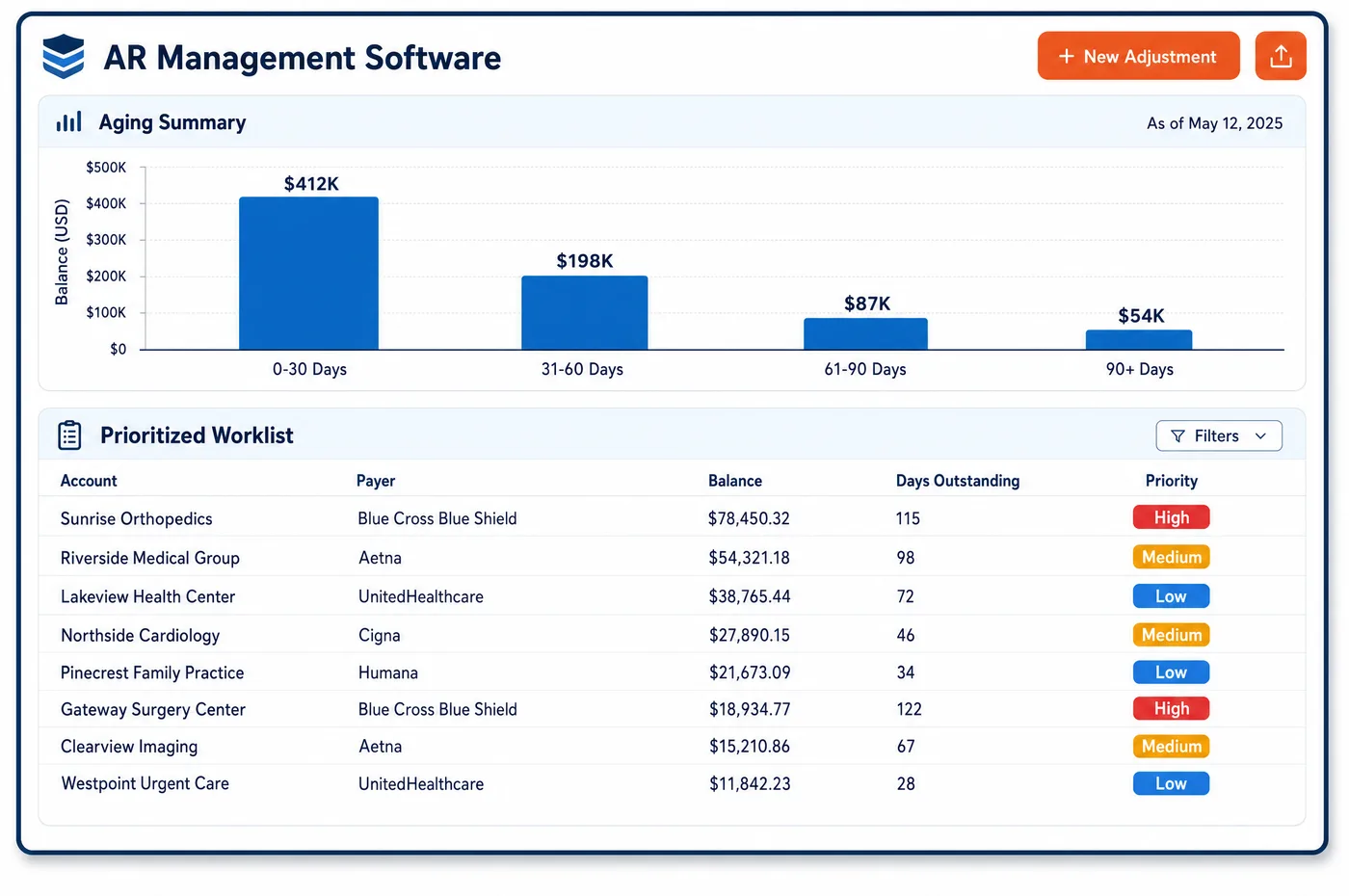
Workflow in a Psychiatry Practice
The hard work of psychiatric billing sits between roles. A missing start and stop time is a billing problem that only a clinician can fix. A TMS course nearing its authorized limit is a front-office task that affects the treatment plan. A request for records may touch psychotherapy notes or substance use disorder data, which need a privacy check before anything leaves the building. Unlimited Systems turns each of these into a task with an owner. Behavior-driven queues put each user's highest-priority items first. Tasks carry the patient, the claim, the deadline and the history, so the next person does not start from scratch. Items that sit too long escalate to a manager. Handoffs, such as checkout to a financial counselor, move the task and its notes together. Routine steps that need no judgment are left to psychiatric billing automation, so queues hold only real work.
Why Is Workflow Different in Psychiatry?
Psychiatric practices mix clinical and business work more than most. Therapists, psychiatrists, care managers, front desk staff and billers all touch the same claim. When a problem needs two of them, it tends to stall in email. Workflow in psychiatry has to name an owner for each step and move the item when that step is done.
Several psychiatric tasks carry legal weight. HIPAA treats psychotherapy notes differently from the rest of the record, and most disclosures of them need the patient's specific authorization. Substance use disorder records under 42 CFR Part 2 have their own consent rules. Requests for records cannot sit in a general inbox. They need a queue that routes them to someone trained to check consent first.
Deadlines in psychiatry are also spread across many small items. Each TMS or Spravato authorization has its own end date and session count. Each collaborative care patient needs enough minutes before the month closes. Each denial has a filing limit. A worklist that shows owners and due dates, and escalates what slips, keeps these from turning into write-offs.
What Psychiatry Workflow Software Handles
- Psychotherapy notes authorization
- Most uses and disclosures of psychotherapy notes need the patient's specific authorization under HIPAA. Requests that might include them route to a privacy owner before release. (45 CFR 164.508: Uses and disclosures for which an authorization is required)
- 42 CFR Part 2 consent check
- Requests that could include substance use disorder records go to staff who confirm the patient's Part 2 consent. Counseling notes under Part 2 need their own consent. (HHS: Confidentiality of Substance Use Disorder Patient Records (42 CFR Part 2))
- Time documentation queries
- CMS requires start and stop times or total time for 90832, 90834 and 90837. A claim missing that time goes to the treating clinician's queue, not the biller's. (CMS Billing and Coding Article A57520: Psychiatric Diagnostic Evaluation and Psychotherapy Services)
- Collaborative care minute gaps
- Patients short of the 99493 threshold late in the month appear in the care manager's queue. The task shows the minutes logged so far. (CMS MLN909432: Behavioral Health Integration Services)
- TMS authorization limits
- Courses billed under 90868 that near their authorized session count create a front-office task. The task goes out before the next session, not after a denial. (CMS Billing and Coding Article A57647: Transcranial Magnetic Stimulation)
- Follow-up after discharge
- A psychiatric discharge creates a scheduling task to book follow-up. The task escalates if no visit is on the books. (NCQA HEDIS: Follow-Up After Hospitalization for Mental Illness (FUH))
How Does Psychiatry Workflow Software Work?
1. Create the task
Events such as a denial, a missing time entry or a records request create a task. Each task carries the patient, claim and reason.
2. Route to an owner
Rules send each task to the role that can finish it: clinician, care manager, front desk, biller or privacy officer. Work is handled by exception, so clean items never enter a queue.
3. Order the queue
Behavior-driven queues put the highest-priority items first. Deadlines and dollar value set the order.
4. Hand off with context
When a task moves to another person, its notes and history move with it. Checkout can hand a balance question to a financial counselor in one step.
5. Escalate what stalls
Tasks past their due date rise to a manager. Managers see who owns what and where work is piling up.
6. Close and learn
Closed tasks keep their history for audit. Repeat causes are reported so the source can be fixed.
Psychiatry Workflow Software vs. Generic Software
| Area | Generic approach | Unlimited Systems |
|---|---|---|
| Ownership | Shared inboxes and sticky notes. | Every task has one named owner. |
| Clinician queries | Billers email clinicians and wait. | Time queries land in the clinician's own queue. |
| Records requests | Handled by whoever picks up the fax. | Routed to a privacy owner for consent checks. |
| Deadlines | Found when a payer denies a late claim. | Due dates set the queue order and trigger escalation. |
| Handoffs | Context lost between departments. | Notes and history move with the task. |
Who Uses It in a Psychiatry Practice
- Psychiatrist or therapist: A short queue of only the documentation items that need a clinician, each tied to the claim it holds up.
- Billing supervisor: Who owns each denial and query, what is overdue, and where to move staff, alongside open AR follow-up.
- Privacy officer: Every records request that may include psychotherapy notes or Part 2 data, routed to one place for consent review.
Psychiatry Workflow Software FAQs
Workflow software gives each piece of non-routine work an owner, a deadline and a path. In psychiatry that means time queries to clinicians, authorization limits to the front desk, wrong-payer denials to billers and records requests to a privacy officer. Items that stall escalate, and handoffs keep their history.
When a claim for a timed psychotherapy code lacks start and stop times or total time, the query goes to the treating clinician's queue. The task shows the visit, the code and what is missing. Once the note is updated, the task closes and the claim moves forward without the biller chasing anyone.
Records requests that could include psychotherapy notes or substance use disorder records are routed to a privacy owner. That person checks for the patient's specific authorization or Part 2 consent before anything is released. The request, the check and the release are kept in the task history for later review.
Tasks have due dates tied to the deadline that matters, such as a filing limit or an authorization end date. When a task passes its due date, it escalates to a manager. The manager sees the owner, the history and the reason, and can reassign it or step in.
Tasks can move between any roles, and their notes travel with them. A checkout clerk can hand a patient's balance question to a financial counselor, or a biller can send an authorization gap to the front desk. Nobody has to retell the story or search for the claim.
Workflow covers the work that needs a person: queries, judgment calls, approvals and handoffs. Automation covers the steps that follow fixed rules, such as eligibility checks and remittance posting. The two connect, because anything automation cannot resolve becomes a task in a workflow queue with its reason attached.
Related Psychiatry Software
Platform & AI
In the revenue cycle
Workflow for related specialties
Sources
- 45 CFR 164.508: Uses and disclosures for which an authorization is required
- HHS: Confidentiality of Substance Use Disorder Patient Records (42 CFR Part 2)
- CMS Billing and Coding Article A57520: Psychiatric Diagnostic Evaluation and Psychotherapy Services
- CMS MLN909432: Behavioral Health Integration Services
- CMS Billing and Coding Article A57647: Transcranial Magnetic Stimulation
- NCQA HEDIS: Follow-Up After Hospitalization for Mental Illness (FUH)
GET STARTED
See Unlimited Systems in Action
Whether you're actively evaluating new technology or simply preparing for your next vendor renewal, Unlimited Systems can help you understand where your current workflows may be creating avoidable revenue risk.