

Platform & AI
Psychiatry Automation Software
Let the platform run psychiatric eligibility checks, claim status, ERA posting and telehealth edits with no one in the loop.
Psychiatry Automation Software runs the repeat tasks of a psychiatric revenue cycle without staff touching them. It checks behavioral health benefits before each visit, applies telehealth and add-on code rules to every claim, sends claim status requests, posts 835 remittances, files secondary claims and keeps code and fee tables current.



 6,500+ specialty providers

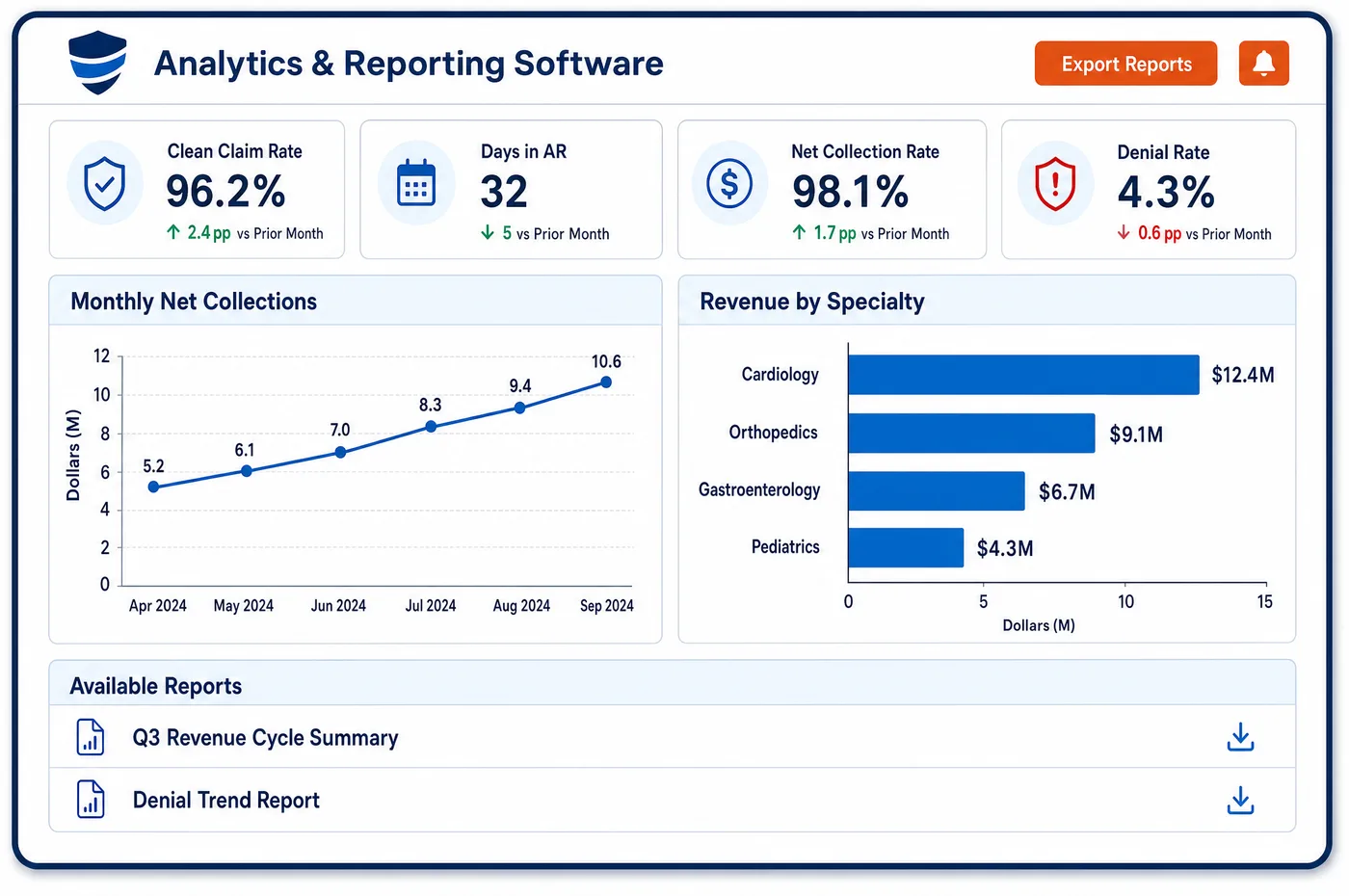
Automation in a Psychiatry Practice
The same small tasks repeat for every psychiatric session. A patient seen weekly needs benefits checked, a claim built, a status check and a payment posted, many times a year. Unlimited Systems runs those steps on its own. Before the visit, a 270 request asks the payer about mental health and psychotherapy benefits, and the 271 reply shows whether a carve-out holds them. When the claim is built, rules check that each add-on code sits with an E/M service and that telehealth lines carry the right POS and modifier for the payer. Claims that pass go out. Status requests follow for claims that have not paid, and the 835 posts when it arrives. Code sets and fee schedules update from source data, so a change such as J0013 replacing S0013 reaches the rules without a manual edit. Only exceptions reach a person, and they arrive in staff work queues with the reason attached.
Why Is Automation Different in Psychiatry?
Psychiatry runs on a high volume of small claims. A therapist or psychiatrist may bill many sessions a week, each worth modest money and each needing the same steps. If staff do those steps by hand, the cost of handling a claim eats into what it pays. Automation in psychiatry is less about speed on one claim and more about removing labor from thousands of routine ones.
Many routine checks in psychiatry are rules a machine can apply. An add-on psychotherapy code must ride with an E/M service. A telehealth line needs POS 02 or 10 with modifier 95 or 93, and payers differ on which they accept. Psychotherapy under sixteen minutes should not be billed at all. These checks follow fixed logic, so they belong in automated claim rules, not in a biller's memory.
Benefit checks are the other big target. Because carve-outs are common, the payer on the insurance card may not be the payer for mental health. A 270/271 eligibility check that asks for psychiatric and psychotherapy benefits by service type can reveal the right payer before the first claim. Running it on its own before every visit catches coverage changes that a once-a-year check would miss.
What Psychiatry Automation Software Handles
- Service type codes A4, A6 and MH
- Eligibility requests ask for psychiatric (A4), psychotherapy (A6) and mental health (MH) benefits. The 271 reply shows benefits, cost sharing and any other payer named for those services. (X12 Service Type Codes (A4, A6, MH))
- Telehealth POS and modifier rules
- Each payer's rule for POS 02 or 10 and modifier 95 or 93 is stored once. Every telehealth claim line is checked against it before submission. (CMS Medicare Claims Processing Manual, Chapter 26)
- Add-on code pairing
- Codes 90833, 90836 and 90838 are held if no E/M service is on the same claim. Psychotherapy time is checked against the band for the code billed. (CMS Billing and Coding Article A57520: Psychiatric Diagnostic Evaluation and Psychotherapy Services)
- 276/277 status runs
- Status requests go out on their own for claims past their expected pay date. Responses update the claim, and only problem claims reach a person. (X12 transaction sets: 270/271, 276/277 and 835)
- 835 auto-posting
- Remittances from medical plans and carve-outs post without keying. Lines that do not match the claim are set aside for review. (X12 transaction sets: 270/271, 276/277 and 835)
- Quarterly HCPCS code updates
- CMS publishes HCPCS Level II code files each quarter. Code sets update from those files, so a replaced or retired code reaches the rules and charge tables without a manual edit. (CMS HCPCS Quarterly Update)
How Does Psychiatry Automation Software Work?
1. Check benefits before the visit
A 270 request goes out for each scheduled patient. The 271 reply is read for mental health benefits and any carve-out.
2. Apply claim rules
Each claim is checked for add-on pairing, time bands and telehealth POS and modifiers. Clean claims are released to the clearinghouse.
3. Check status
Unpaid claims get 276 status requests on a set schedule. The 277 replies update each claim's status.
4. Post remittances
835 files auto-post to claim lines. Secondary claims are filed when the primary posts.
5. Update tables
Fee schedules, code sets and payer rules refresh from source data. Staff don't edit tables by hand.
6. Send exceptions to people
Anything a rule cannot resolve is routed to a person with the reason attached. The rest finishes with no touch.
Psychiatry Automation Software vs. Generic Software
| Area | Generic approach | Unlimited Systems |
|---|---|---|
| Eligibility | Checked by phone or portal once a year. | 270/271 run before every visit, by service type. |
| Telehealth edits | Billers remember each payer's rule. | Rules stored once and applied to every line. |
| Claim status | Collectors check payer portals by hand. | 276 requests run on their own for unpaid claims. |
| ERA posting | Remittance lines keyed by staff. | 835 files post to claim lines automatically. |
| Code tables | Updated by hand when someone hears of a change. | Updated from source data without user steps. |
Who Uses It in a Psychiatry Practice
- Billing manager: Staff time spent on exceptions only, with clean claims, status checks and posting handled by the system.
- Front desk: Benefits and the carve-out payer known before the patient arrives, with no phone calls to the plan.
- Coding lead: Payer rules written once and applied every time, alongside the checks on each charge before the claim goes out.
Psychiatry Automation Software FAQs
Automation in a psychiatry revenue cycle handles the steps that repeat for every session: eligibility checks, claim rules for add-on codes and telehealth, claim status requests, 835 posting, secondary claims and code table updates. Staff step in only when a rule cannot resolve something, and those cases arrive with the reason attached.
Automated eligibility checks send a 270 request that asks for psychiatric, psychotherapy and mental health benefits by service type. The 271 reply shows the benefits and can name another payer that manages them. Running the check before every visit catches carve-outs and coverage changes before a claim goes to the wrong plan.
Each payer's rule for place of service and telehealth modifier is stored once. Every video or audio-only line is checked against that rule before the claim is sent. A mismatch is held for correction, so the claim does not go out with a POS or modifier the payer will reject.
Automation takes over the routine steps, not the judgment. Benefit checks, status requests and remittance posting run on their own. Billers still handle appeals, payer calls, unusual denials and patient questions. In practice, the team spends its day on the claims that need a person rather than on keying and checking.
Code sets and fee schedules update from source data, including the CMS quarterly HCPCS files. When a code is replaced or retired, the change flows into the rules and charge tables. Staff do not have to edit tables by hand or wait for a denial to notice.
Automation finishes the tasks that follow fixed rules. Workflow takes over when a rule cannot decide, routing the item to the right person's queue with the reason, the deadline and the history. Together they let routine claims flow through untouched while exceptions reach someone who can act on them.
Related Psychiatry Software
Platform & AI
In the revenue cycle
Automation for related specialties
Sources
- X12 Service Type Codes (A4, A6, MH)
- CMS Medicare Claims Processing Manual, Chapter 26
- CMS Billing and Coding Article A57520: Psychiatric Diagnostic Evaluation and Psychotherapy Services
- X12 transaction sets: 270/271, 276/277 and 835
- CMS HCPCS Quarterly Update
- Janssen SPRAVATO Access, Coding and Reimbursement Guide (J0013 replaces S0013, 1 mg units)
GET STARTED
See Unlimited Systems in Action
Whether you're actively evaluating new technology or simply preparing for your next vendor renewal, Unlimited Systems can help you understand where your current workflows may be creating avoidable revenue risk.