

Platform & AI
Psychiatry Platform System Design
The cloud architecture under a psychiatric group: one record across sites and entities, tight access to sensitive data, and a full change history.
Psychiatry Platform System Design is the architecture under the Unlimited Systems platform as it runs a psychiatric group. One cloud database holds every site, Tax ID and service line. Role and location rules guard psychotherapy and substance use data, every change is recorded for audit, and capacity grows on its own as volume rises.



 6,500+ specialty providers

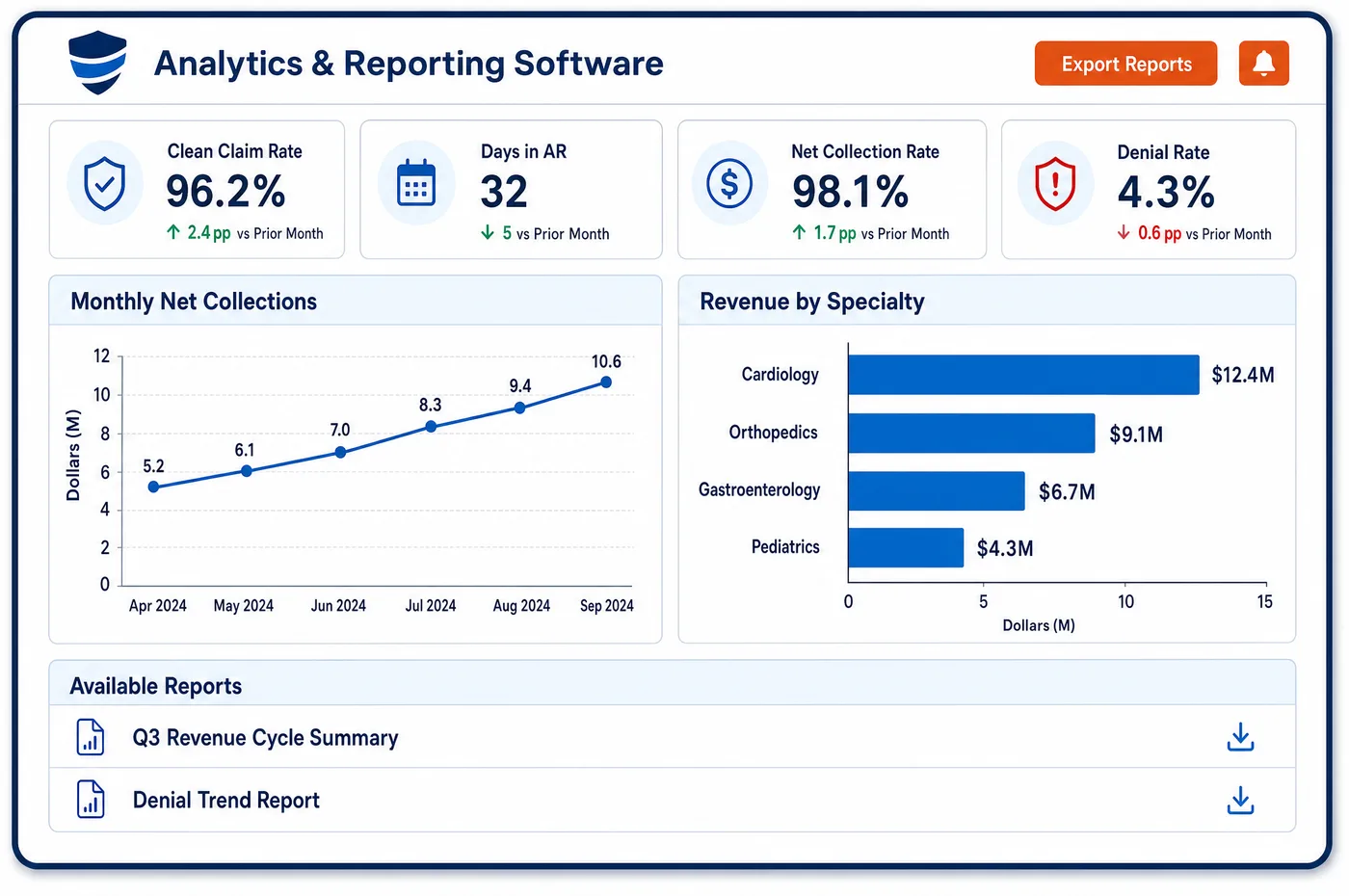
Platform System Design in a Psychiatry Practice
In psychiatry, the platform has to carry two loads at once. One is volume: many short, frequent visits, a steady flow of remittances, and telehealth sessions spread across the day. The other is sensitivity, because the platform holds some of the most protected data in health care. Unlimited Systems runs as one integrated cloud platform on Microsoft Azure. Compute and storage scale automatically as transactions rise, so a heavy posting day does not slow the front desk. The core record is an event store that keeps every data change, which supports financial audits and HIPAA audit controls. Transaction pipelines are encrypted with AES-256. Single sign-on runs through Azure Active Directory, and granular role-based permissions decide what each user and integration can reach. Several Tax IDs and divisions sit in one database, so a therapy group, a TMS center and an esketamine clinic can report together and close apart. Rules can be shared across those entities, and staff queues follow the same structure.
Why Is Platform System Design Different in Psychiatry?
Psychiatric data carries extra legal weight. HIPAA protects all health data, but it sets psychotherapy notes apart and requires specific authorization for most disclosures of them. Substance use disorder records under 42 CFR Part 2 have their own consent and breach rules. A system built for general medicine may treat all chart data the same. Platform system design for psychiatry has to support narrower access by role and by site.
Psychiatric groups are often built from several businesses. A practice may combine outpatient psychiatry, a therapy group, a TMS center and a Spravato clinic, each with its own NPI, Tax ID or location. Some add collaborative care contracts with primary care partners. The data model has to hold all of them in one place, keep their books apart, and still show the group as a whole.
Volume follows the rhythm of psychiatric care. Weekly therapy and regular medication checks create a steady stream of small claims, posts and payments. Telehealth spreads visits over long days and across time zones. The platform has to stay fast through peaks without a hardware upgrade, and keep a full history that auditors, payers and the finance team can trust.
What Psychiatry Platform System Design Handles
- HIPAA Security Rule safeguards
- The rule calls for access controls and audit controls on electronic health data. Role-based permissions limit access, and the event store records every change for review. (HHS: The HIPAA Security Rule)
- Psychotherapy notes access
- Most disclosures of psychotherapy notes need the patient's specific authorization. Granular permissions keep clinical detail away from roles that only need billing data. (45 CFR 164.508: Uses and disclosures for which an authorization is required)
- 42 CFR Part 2 records
- Part 2 records have their own consent rules, and breaches of them now follow HIPAA-style notification. Access to such records can be limited by role and by site. (42 CFR Part 2: Confidentiality of Substance Use Disorder Patient Records)
- Multiple Tax IDs and NPIs
- Each entity in a psychiatric group bills under its own Tax ID and organization NPI. A tiered hierarchy holds them in one database for reporting, workflow and security. (CMS NPPES: National Plan and Provider Enumeration System)
- Spravato REMS sites
- Spravato is available only through a REMS that certifies the healthcare settings where it is given. Location records can carry that status, so a Spravato visit is booked and billed at a certified site. (FDA prescribing information: Spravato (esketamine) nasal spray, REMS)
- Telehealth place of service
- POS 02 and 10 depend on where the patient is, not where the clinician sits. Each encounter carries its own place of service, separate from the billing location. (CMS Place of Service Code Set (POS 02 and POS 10))
How Does Psychiatry Platform System Design Work?
1. Model the organization
Entities, divisions and sites are set up in one tiered hierarchy. Each one bills under its own Tax ID and Type 2 NPI.
2. Set access by role and site
Permissions decide what each user and integration can reach. Location-based security narrows patient search to the sites a user works in.
3. Sign in once
Users sign in through Azure Active Directory single sign-on. Access ends in one place when someone leaves.
4. Record every change
The event store keeps each data change rather than overwriting it. That history supports HIPAA audit controls and financial audits.
5. Scale with volume
Compute and storage grow automatically as transactions rise. Performance holds steady through heavy posting and telehealth days.
6. Share rules across entities
Federated rules can be deployed once across affiliated entities. Each one still keeps its own books.
Psychiatry Platform System Design vs. Generic Software
| Area | Generic approach | Unlimited Systems |
|---|---|---|
| Entities | A separate system per Tax ID. | Multiple Tax IDs in one database. |
| Sensitive data | Everyone sees the whole chart. | Role and location rules limit access. |
| History | Records overwritten when edited. | Every change kept in an event store. |
| Capacity | Servers sized for an average day. | Cloud capacity that scales on its own. |
| Sign-in | Separate passwords per system. | Single sign-on through Azure Active Directory. |
Who Uses It in a Psychiatry Practice
- CIO or IT lead: A cloud platform with SSO, encrypted transaction pipelines, real-time scaling and a single integration layer for outside systems.
- Compliance officer: Role and site limits on sensitive data, and a full change history for audits and breach reviews.
- CEO of a multi-site group: One view across every entity and site, with books that still close separately by Tax ID.
Psychiatry Platform System Design FAQs
Platform system design for a psychiatry group is the architecture beneath its billing and practice work. It covers the cloud setup, how sites and entities are modeled, how access to sensitive data is limited, how changes are recorded, and how the system scales. A good design lets a group grow without new systems or new security gaps.
Granular role-based permissions and location-based security decide who can reach each kind of data. Clinical detail stays with the roles that need it, while billing users see billing data. Every change is recorded, which supports audit controls under the HIPAA Security Rule and reviews of how protected records were handled.
Several Tax IDs and divisions can live in one database under a tiered hierarchy. A therapy group, TMS center and Spravato clinic can each bill and close on their own while leadership reports on the whole group. Rules can be shared across entities, so each one does not maintain its own copy.
The platform runs in the cloud and scales compute and storage automatically as transaction volume rises. A group adding clinicians or telehealth hours does not need new servers. Performance stays steady during heavy posting days, so front-desk and billing work does not slow down when volume peaks.
Every data change is recorded in an event store rather than overwritten. Staff and auditors can see the full history of an account, including what changed and when. That history supports financial audits, payer reviews and the audit controls the HIPAA Security Rule expects.
The platform runs as one integrated cloud service on Microsoft Azure. Transaction pipelines are encrypted with AES-256, sign-in uses Azure Active Directory single sign-on, and the platform holds SOC 2 Type II certification. Users reach it through a web browser from any site the group operates.
Related Psychiatry Software
Platform & AI
In the revenue cycle
Platform System Design for related specialties
Sources
- HHS: The HIPAA Security Rule
- 45 CFR 164.508: Uses and disclosures for which an authorization is required
- 42 CFR Part 2: Confidentiality of Substance Use Disorder Patient Records
- CMS NPPES: National Plan and Provider Enumeration System
- FDA prescribing information: Spravato (esketamine) nasal spray, REMS
- CMS Place of Service Code Set (POS 02 and POS 10)
GET STARTED
See Unlimited Systems in Action
Whether you're actively evaluating new technology or simply preparing for your next vendor renewal, Unlimited Systems can help you understand where your current workflows may be creating avoidable revenue risk.