

Platform & AI
Behavioral Health Workflow Software
Route authorization renewals, unsigned notes, trainee co-signs, enrollment gaps and records requests to the right person in a multi-discipline team.
Behavioral Health Workflow Software routes the work a rule cannot finish to the right person in a mixed clinical and business team. Authorization renewals, missing session times, notes waiting for a supervisor's signature, clinician enrollment gaps and records requests each go to a queue with an owner, a due date and the history attached.



 6,500+ specialty providers

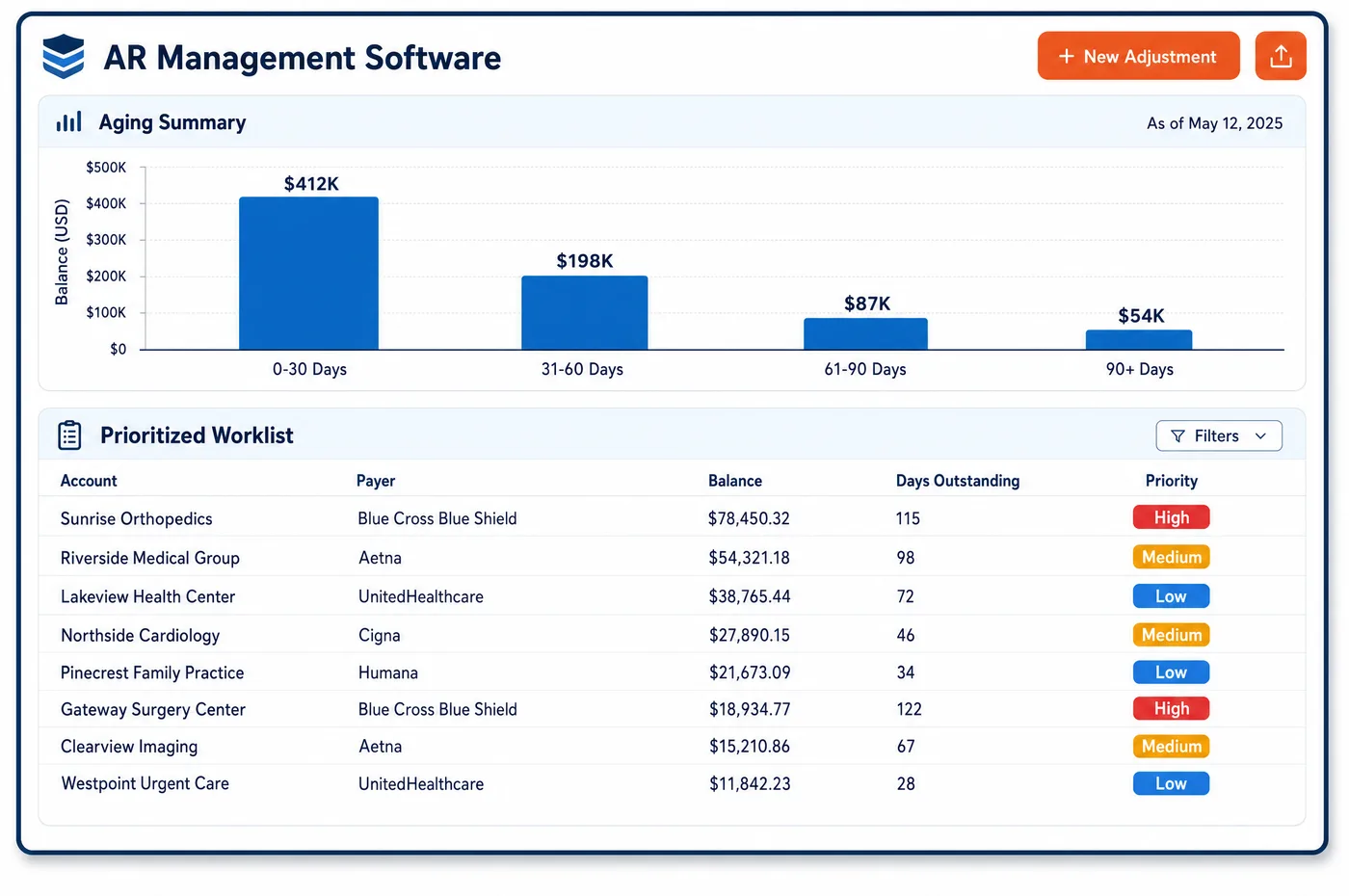
Workflow in a Behavioral Health Practice
Behavioral health billing problems often belong to someone outside billing. A note without start and stop times can only be fixed by the clinician. A trainee's note may need a licensed supervisor to sign. A case management authorization near its limit needs the utilization review staff and the treatment team. A records request may need a Part 2 consent check before anything is released. Unlimited Systems turns each of these into a task on the right role's worklist, with the account, the claim and the reason in one place. Queues are ordered so the work most at risk comes first. When a task sits too long, it moves to a supervisor. Checkout staff can send a ticket to a financial counselor when a client needs a sliding-fee review. Every handoff is logged, so managers can see where work stalls and fix the step that keeps causing it.
Why Is Workflow Different in Behavioral Health?
Behavioral health teams are wide. Psychiatrists, nurse practitioners, psychologists, social workers, counselors, family therapists, case managers and peer specialists all create billable work, and front desk, intake, utilization review and billing staff all touch it. A problem that needs two of them often stalls in someone's inbox. Workflow in behavioral health has to make each handoff explicit, using exception-based work queues that show who owns the next step.
Supervision adds steps. Many states let trainees and assistants provide services under a licensed supervisor, and they bill with their own modifiers. Ohio Medicaid, for example, lists separate practitioner modifiers for social worker assistants, social worker trainees and marriage and family therapist trainees. A note that is not co-signed, or a claim with the wrong modifier, holds payment until the right person acts.
Some tasks carry legal weight. Records from a substance use program fall under 42 CFR Part 2, whose updated rule took full effect on February 16, 2026. Psychotherapy notes have special protection under HIPAA. Records requests, consent checks and disclosures need a clear owner and a record of each step. A workflow that tracks who did what, and when, protects clients and the organization.
What Behavioral Health Workflow Software Handles
- Trainee and assistant modifiers (Ohio)
- Ohio Medicaid lists modifiers such as U8 for social worker assistants, U9 for social worker trainees and UA for family therapist trainees. Claims from trainees route to the supervising clinician when the note or modifier needs review. (Ohio Department of Medicaid: Behavioral Health State Plan Services Provider Requirements and Reimbursement Manual, version 1.28.1 (Table 1-3))
- Authorization renewals (CARC 198 prevention)
- Exceeded authorizations deny under CARC 198. Renewal tasks open while units remain and go to utilization review staff with the treatment plan attached. (X12 Claim Adjustment Reason Codes)
- Clinician enrollment (CARC 185)
- Rendering-provider denials go to an enrollment queue grouped by clinician and plan. Held claims return to billing once enrollment is complete. (X12 Claim Adjustment Reason Codes)
- Part 2 consent and records requests
- Under the updated Part 2 rule, a client can sign one consent for treatment, payment and health care operations. Records requests route to a privacy owner who confirms the right consent before release. (HHS: Fact Sheet, 42 CFR Part 2 Final Rule (compliance date February 16, 2026))
- Psychotherapy notes (45 CFR 164.501)
- HIPAA defines psychotherapy notes as separate from the rest of the record. Requests that touch them go to the privacy officer instead of the general records queue. (45 CFR 164.501: Definitions, including psychotherapy notes)
- Sliding-fee eligibility (CCBHC criteria 2.d.4)
- CCBHCs must follow written policies for sliding-fee eligibility, applied equally to everyone. Review tasks go to financial counselors so each decision follows the same policy. (SAMHSA: CCBHC Certification Criteria (criteria 2.d.4))
How Does Behavioral Health Workflow Software Work?
1. Create the task
When a rule finds a problem it cannot fix, such as a missing session time or an expiring authorization, a task opens. The task carries the account, claim and reason.
2. Route to the right role
Tasks go to role queues: clinician, supervisor, utilization review, intake, enrollment, billing or privacy. Each queue has an owner.
3. Order by risk
Queues are ordered by deadline and dollars at stake, such as filing limits and remaining units. Staff open their queue and start at the top.
4. Escalate when stuck
Tasks that sit too long move to a supervisor. Cross-department tickets let checkout staff reach financial counselors or AR staff without email.
5. Learn from the pattern
Managers see which tasks recur and where they stall. Steps that can be handled by rules move to automation.
Behavioral Health Workflow Software vs. Generic Software
| Area | Generic approach | Unlimited Systems |
|---|---|---|
| Clinician fixes | Billing emails clinicians and waits. | Tasks land in the clinician's own queue with the claim attached. |
| Supervision | Unsigned trainee notes found when claims hold. | Co-sign tasks routed to the supervising clinician. |
| Authorizations | Renewals started after units run out. | Renewal tasks open while units remain. |
| Records requests | Worked by whoever happens to see the request. | Routed to a privacy owner with consent checks logged. |
| Stalled work | Found when a claim misses its limit. | Escalated to a supervisor when a task sits too long. |
Who Uses It in a Behavioral Health Practice
- Clinician: A short list of notes and fixes that only they can make, with the claim shown, instead of scattered emails.
- Utilization review lead: Renewal tasks that open while units remain, with the authorization history and treatment plan attached.
- Operations director: A view of where work stalls across intake, clinical and billing teams, so the slowest handoff gets fixed first.
Behavioral Health Workflow Software FAQs
Workflow software sends each task to the role that can fix it: clinicians for missing session times, supervisors for co-signs, utilization review for authorizations, enrollment staff for credential gaps and privacy staff for records requests. Each queue is ordered by deadline and dollars at risk. Tasks that sit too long move to a supervisor.
When a trainee or assistant provides a service under supervision, the note and claim can need a licensed supervisor's review. Co-sign tasks go straight to the supervising clinician's queue. In states such as Ohio, the claim also needs the right practitioner modifier, and a mismatch routes back for review before the claim goes out.
Renewal tasks open while units remain on an authorization, not after they run out. Each task goes to utilization review staff with the treatment plan and unit history attached. The task stays open until the plan responds, and it moves to a supervisor if it waits too long.
Records requests for a substance use program route to a privacy owner. That person confirms the client's consent covers the disclosure, including the single consent for treatment, payment and operations allowed under the updated Part 2 rule. Each step is logged, so the organization can show how the request was handled.
Checkout or intake staff can send a ticket to a financial counselor when a client asks for a sliding-fee review or reports a change in income. The counselor applies the written eligibility policy and records the decision. The account then shows the discount level for future statements.
Automation finishes tasks that follow fixed rules, such as eligibility checks and claim edits. Workflow takes over when a rule cannot decide. The item goes to a person's queue with the reason and history, and recurring tasks that could follow a rule are moved back to automation.
Related Behavioral Health Software
Platform & AI
In the revenue cycle
Workflow for related specialties
Sources
- Ohio Department of Medicaid: Behavioral Health State Plan Services Provider Requirements and Reimbursement Manual, version 1.28.1 (Table 1-3)
- X12 Claim Adjustment Reason Codes
- HHS: Fact Sheet, 42 CFR Part 2 Final Rule (compliance date February 16, 2026)
- 45 CFR 164.501: Definitions, including psychotherapy notes
- SAMHSA: CCBHC Certification Criteria (criteria 2.d.4)
GET STARTED
See Unlimited Systems in Action
Whether you're actively evaluating new technology or simply preparing for your next vendor renewal, Unlimited Systems can help you understand where your current workflows may be creating avoidable revenue risk.