

Front office
Ambulatory Surgery Center Patient Intake Software
Pre-op questionnaires, consents, rights notices and day-of check-in, collected well before the morning of surgery.
Ambulatory Surgery Center Patient Intake Software gathers what the surgical team needs before the patient walks in. Patients complete a pre-op health questionnaire, medication and allergy lists, consents and the center's required notices from a phone or tablet. Nurses review the answers ahead of the date, and check-in on the day becomes a quick confirmation.



 6,500+ specialty providers

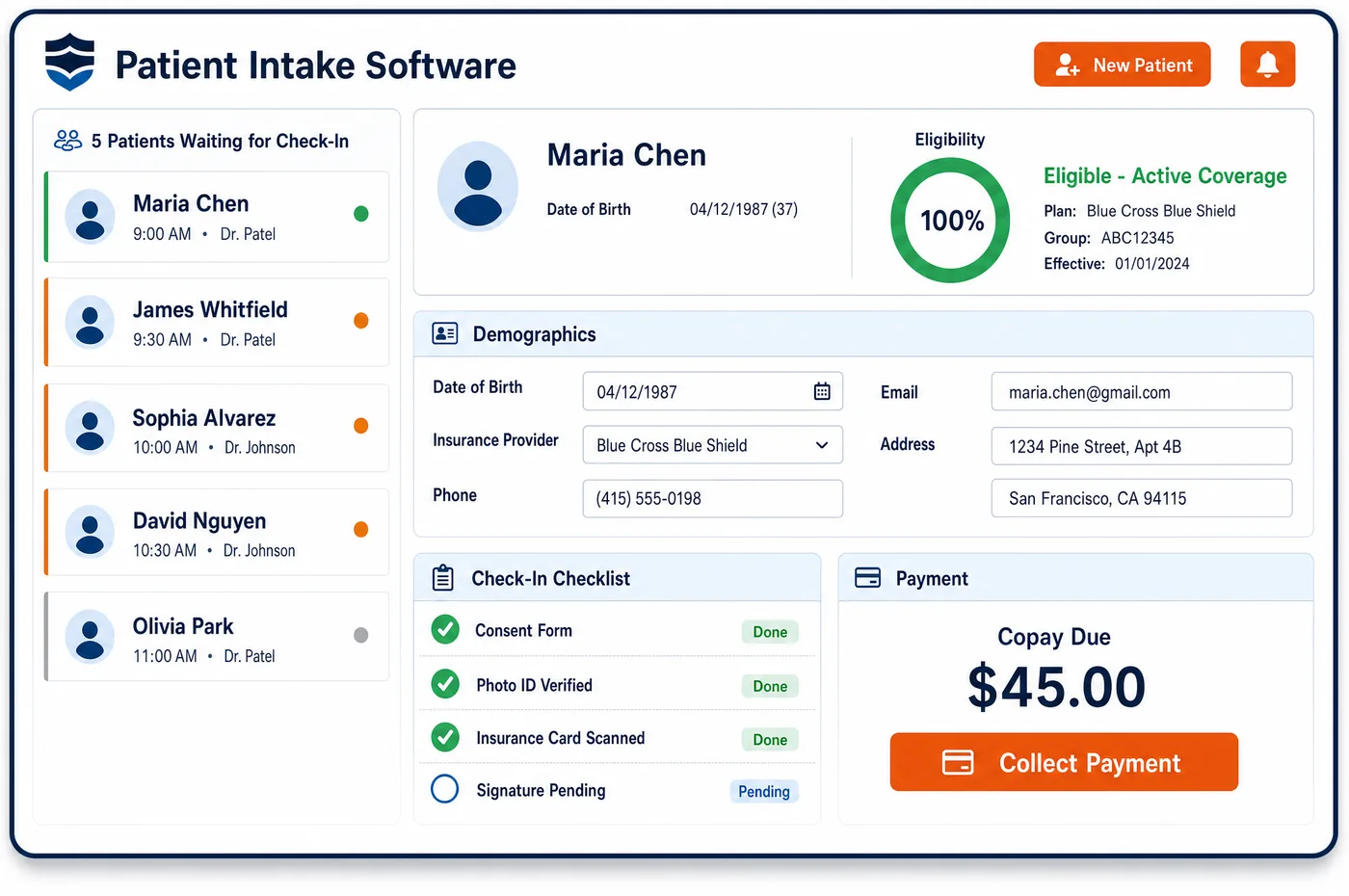
Patient Intake in a Ambulatory Surgery Center Practice
Intake for a surgery center runs on a deadline: the case time. Once the booking is set and the patient's registration is confirmed, a secure link goes out by text or email. The questionnaire depends on the procedure type, so a cataract patient and a shoulder patient see different questions. The patient lists medications, allergies, past anesthesia problems and who will drive them home. They sign the center's consents and receive the notice of patient rights and the list of physician owners. Pre-op nurses read the answers and call about anything that needs action, such as a blood thinner or a past reaction to anesthesia. Signed forms and history post to the EHR, so the surgeon and the anesthesia provider see them. On the day of surgery, the patient confirms details on a tablet, the pre-surgical assessment is done on admission, and ambulatory surgery center patient intake is finished before the patient is taken back.
Why Is Patient Intake Different in Ambulatory Surgery Center?
An ASC has one chance to get the pre-op picture right. If a patient forgets to stop a blood thinner, eats on the morning of surgery or has no ride home, the case is canceled at the door. Medicare does not pay the facility for a procedure stopped before the patient enters the operating room. Intake that is done well ahead gives nurses time to fix problems while the slot can still be used.
The rules for what must be on file are also specific. Medicare's conditions for coverage tell each ASC to set its own policy on which patients need a pre-op history and physical, and how recent it must be. The policy weighs age, diagnosis, procedure, other conditions and the planned anesthesia. When one is required, it must be in the record before surgery. Every patient also needs a pre-surgical assessment on admission that documents drug allergies.
Notices add a layer most clinics do not have. Before the procedure, the ASC must give its notice of rights in writing and out loud, share a written list of physicians who own part of the center, and explain its advance directive policy. Patient intake in an ASC sends the written items with the forms, stores what was given and when, and leaves the spoken part to staff at check-in. All of it stays on the surgical patient record for later cases.
What Ambulatory Surgery Center Patient Intake Software Handles
- Pre-op history and physical policy (42 CFR 416.52(a))
- Each ASC sets a policy on which patients need a history and physical and how recent it must be, weighing age, diagnosis, procedure, other conditions and anesthesia. Intake asks the surgeon's office for the H&P when the policy calls for one, so it is on file before surgery. (42 CFR 416.52: Patient admission, assessment and discharge (ASC conditions for coverage))
- Pre-surgical assessment with allergies
- On admission, the surgeon or another qualified practitioner completes a pre-surgical assessment that documents allergies to drugs and biologicals. The allergy list from the questionnaire is already on file for that step. (42 CFR 416.52: Patient admission, assessment and discharge (ASC conditions for coverage))
- Notice of patient rights (42 CFR 416.50(a))
- Before the procedure starts, the ASC must give verbal and written notice of the patient's rights in a language and manner the patient understands. The written notice goes out with the intake forms, and staff note the spoken notice at check-in. (42 CFR 416.50: Patient rights (ASC conditions for coverage))
- Physician ownership disclosure (42 CFR 416.50(b))
- Where it applies, the ASC must give the patient a written list of physicians with a financial interest or ownership in the center. The list rides with the intake packet, and its delivery is stored with the consents. (42 CFR 416.50: Patient rights (ASC conditions for coverage))
- Advance directive information (42 CFR 416.50(c))
- The center gives written information on its advance directive policy, with a description of state law and official state forms on request. The questionnaire asks whether the patient has a directive so the answer can be recorded. (42 CFR 416.50: Patient rights (ASC conditions for coverage))
- No Surprises Act notice and consent
- An out-of-network provider at an in-network ASC may ask a patient to waive surprise billing protections only with the standard notice and consent documents. That waiver is never allowed for ancillary services such as anesthesiology, so intake never sends it for those. (CMS No Surprises Act: Overview of Key Consumer Protections)
How Does Ambulatory Surgery Center Patient Intake Software Work?
1. Send the pre-op link
Once the case is booked, a secure link goes out by text or email. Patients complete forms on their own device, or on a tablet if they come in early.
2. Show the right questionnaire
Questions follow the procedure type. An eye case, a GI case and an orthopedic case each ask what that team needs to know.
3. Collect consents and notices
Patients sign consents and receive the rights notice, the ownership list and the advance directive policy. Each signed item is stored with a date.
4. Review before the date
Pre-op nurses read the answers and call the patient about anything that needs action, such as a held medication or a missing ride. Staff can see on the case schedule which patients still have open items.
5. Confirm at check-in
On arrival, the patient confirms details on a tablet and staff give the spoken rights notice. The record is complete before the pre-surgical assessment begins.
Ambulatory Surgery Center Patient Intake Software vs. Generic Software
| Area | Generic approach | Unlimited Systems |
|---|---|---|
| Pre-op forms | Clipboards filled out in the waiting room on the morning of surgery. | Forms completed from home and reviewed before the date. |
| Questionnaires | One long form for every procedure. | Questions that follow the procedure type. |
| Required notices | Rights and ownership notices handed over with no record kept. | Notices sent with the forms and stored with a date. |
| Problems found | A missing ride or held medication discovered at the door. | Nurses call about open items ahead of the case. |
| Getting forms to the chart | Paper scanned into the EHR after the case. | Signed forms and history posted to the EHR as structured data. |
Who Uses It in a Ambulatory Surgery Center Practice
- Pre-op nurse: Medication, allergy and anesthesia history in hand before the phone call, so the call is spent fixing problems instead of collecting facts.
- Front desk: Arrivals who have already signed everything, so check-in is a short confirmation instead of a stack of paper.
- Compliance lead: A dated record of each rights notice, ownership disclosure and consent, with open financial clearance items tracked beside them.
Ambulatory Surgery Center Patient Intake Software FAQs
Patient intake starts when the case is booked. The patient gets a secure link, fills out a questionnaire built for the procedure, lists medications and allergies, names a ride home and signs consents. Pre-op nurses review the answers ahead of the date and call about anything that needs action. On the day, the patient only confirms details at check-in.
Medicare's conditions for coverage require the ASC to give the notice of patient rights both verbally and in writing before the procedure starts. Where it applies, the center must also give a written list of physicians who have a financial interest in it, and written information on its advance directive policy. Intake sends the written items with the forms and records when each was given.
Not always. Each ASC sets its own policy on which patients need a pre-op history and physical and how recent it must be, based on factors such as age, diagnosis, procedure, other conditions and anesthesia. When the policy calls for one, it must be in the record before surgery. Intake requests it from the surgeon's office so it arrives in time.
Questionnaires can be set up by procedure type, so each patient sees only the questions that matter for their case. A cataract patient may be asked about eye drops and blood thinners, while a GI patient gets questions about the bowel prep. The answers come back to the same record, and the pre-op team reviews them before the date.
Signed consents, notices and history forms are stored on the patient record with the date each was completed. They also post to the EHR as structured fields or documents, so the surgeon, the anesthesia provider and the nurses work from the same papers. Nothing has to be scanned in after the case is over.
Day-of cancellations often trace back to things that could have been caught earlier, such as a held medication, no ride home or a missing history and physical. Intake collects these answers ahead of time, and nurses follow up while the slot can still be filled. That matters because Medicare does not pay the facility for a case stopped before the patient enters the operating room.
Related Ambulatory Surgery Center Software
Front office
In the revenue cycle
Patient Intake for related specialties
Sources
- 42 CFR 416.52: Patient admission, assessment and discharge (ASC conditions for coverage)
- 42 CFR 416.50: Patient rights (ASC conditions for coverage)
- CMS No Surprises Act: Overview of Key Consumer Protections
- Medicare Claims Processing Manual, Chapter 14: Ambulatory Surgical Centers (section 40.4, terminated procedures)
GET STARTED
See Unlimited Systems in Action
Whether you're actively evaluating new technology or simply preparing for your next vendor renewal, Unlimited Systems can help you understand where your current workflows may be creating avoidable revenue risk.