

Front office
Ambulatory Surgery Center Patient Management Software
One record for each surgical patient, from the surgeon's booking call to the post-op check, shared by the front desk, the pre-op nurses and the business office.
Ambulatory Surgery Center Patient Management Software keeps one record for each patient across every case at the center. It follows the patient from the surgeon's booking through pre-op, surgery, recovery and discharge, then into the facility claim and the post-op call. A return visit, such as a second cataract or a staged repair, opens on the same record.



 6,500+ specialty providers
Patient Management in a Ambulatory Surgery Center Practice
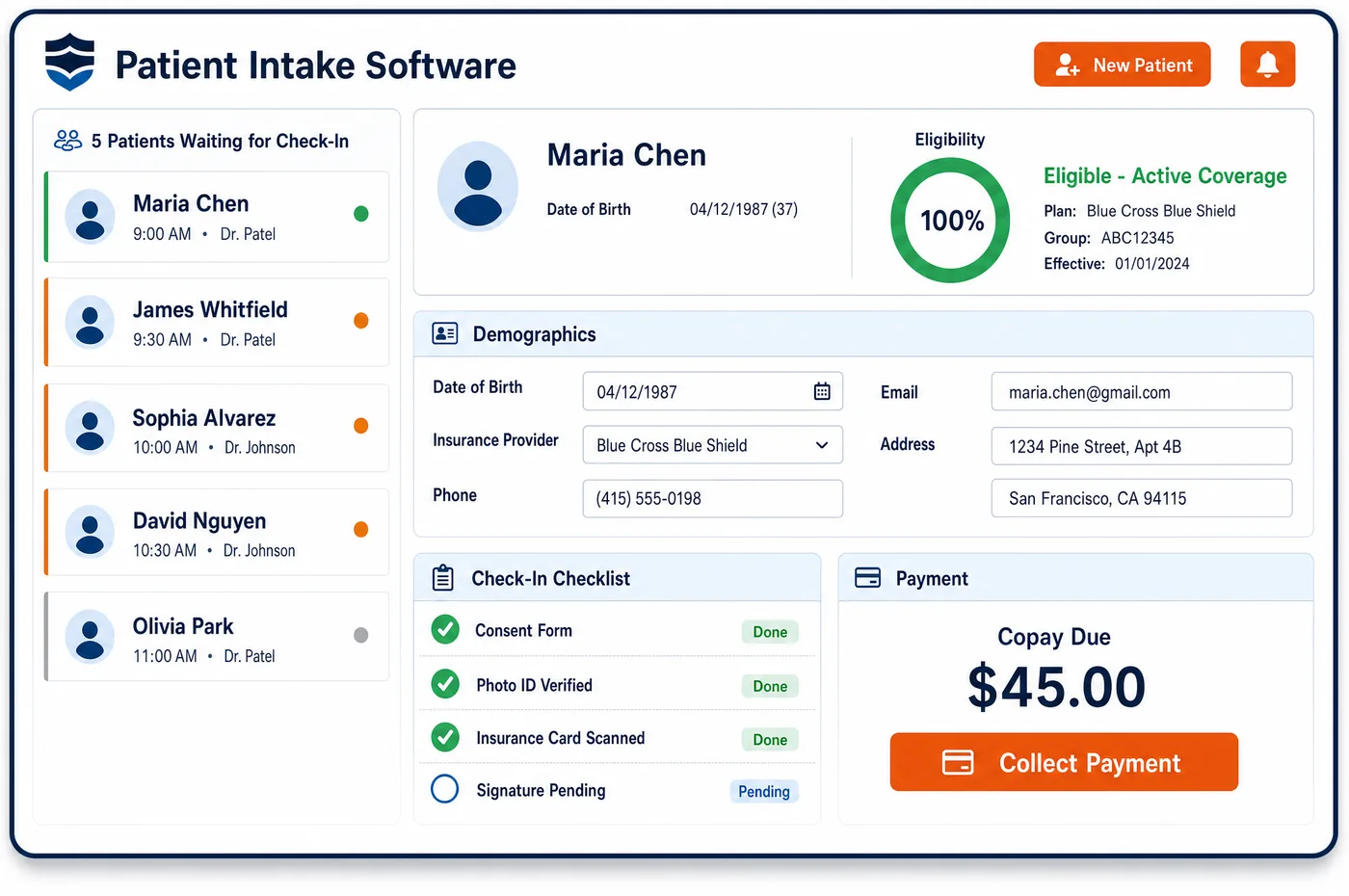
A surgery center sees most patients for only a few hours, but the record has to be built well before they arrive. The case starts when a surgeon's office sends the booking: the procedure, the side, the diagnosis and the patient's details. Patient registration for the ASC checks identity and coverage against any record already on file, so a returning patient is not entered twice. Forms, history and consents then come in through pre-op intake. On the day of surgery, staff see one timeline: arrival, pre-op, operating room, recovery, the discharge order and the adult who takes the patient home. After discharge, the post-op call, any brace sent home and the facility claim stay on the same record. The surgeon and the anesthesia group send their own claims, so ambulatory surgery center patient management software keeps the facility side clear and the case easy to find next time.
Why Is Patient Management Different in Ambulatory Surgery Center?
An ASC patient record is short in time but dense in detail. The patient may meet the center only twice: a pre-op call and the day of surgery. In that window the center must collect history, consents, allergies and coverage, and then document the assessment before and after surgery. If any piece lives in a separate binder or portal, the case can stall on the morning of surgery.
Ownership of one case is also split three ways. The surgeon's office owns the referral and bills the surgeon's work. An anesthesia group bills its own services. The center bills the facility fee under its own Type 2 NPI. Patients may get three bills for one procedure, and they often call the ASC about all of them. A record that shows which party billed what lets staff answer without guesswork.
Many ASC patients also come back. Cataract patients often have the second eye done soon after the first. Pain patients may return for a series of injections, and GI patients return on a surveillance schedule. Each case needs its own consent and assessment, but demographics, coverage history and past balances should carry forward. Patient management in an ASC means each new case starts from a clean record, not a blank one.
What Ambulatory Surgery Center Patient Management Software Handles
- Facility and professional claims for one case
- Medicare pays the ASC for facility costs and pays the surgeon and the anesthesia provider for their professional work. The case links the center's facility claim and notes which outside groups bill for the same date. (Medicare Claims Processing Manual, Chapter 14: Ambulatory Surgical Centers)
- Facility charges for procedures off the ASC list
- When Medicare covers a procedure that is not on the ASC list, the patient is liable for the facility charges. The case is flagged at booking so staff can talk with the patient before the date, not after the bill. (Medicare Claims Processing Manual, Chapter 14: Ambulatory Surgical Centers)
- Post-surgical assessment (42 CFR 416.52(b))
- A physician, another qualified practitioner or a registered nurse with post-op experience must assess and document the patient's condition after surgery. Recovery and discharge times sit on the case timeline beside that step. (42 CFR 416.52: Patient admission, assessment and discharge (ASC conditions for coverage))
- Discharge order and responsible adult (42 CFR 416.52(c))
- Each patient needs a discharge order signed by the surgeon, and most must leave with a responsible adult unless the attending physician exempts them. The escort's name and phone are stored on the case. (42 CFR 416.52: Patient admission, assessment and discharge (ASC conditions for coverage))
- Advance directive status (42 CFR 416.50(c))
- The ASC must note in a prominent part of the medical record whether the patient has an advance directive. A custom field on the patient record can carry that status into each new case, next to the clinical chart. (42 CFR 416.50: Patient rights (ASC conditions for coverage))
- Non-implantable DME sent home
- A brace or sling sent home is not part of the ASC facility payment. The center bills it as a DME supplier with its own supplier number, so the record keeps that bill apart from the facility claim. (Medicare Claims Processing Manual, Chapter 14: Ambulatory Surgical Centers)
How Does Ambulatory Surgery Center Patient Management Software Work?
1. Open the case from the surgeon's booking
The surgeon's office sends the procedure, side, diagnosis and patient details. Staff search for an existing record first, and duplicate detection flags a likely match before a second record is made.
2. Gather registration, intake and clearance
Coverage, forms and approvals are collected on the same record before the date. Open items, such as an unsigned consent or a pending approval, show on the case so nothing waits for the morning of surgery.
3. Track the day of surgery
Arrival, pre-op, operating room, recovery and discharge are logged as the patient moves through them. Status updates come over the EHR connection, so the front desk and the business office see the same timeline.
4. Close the case after discharge
The post-op call is logged, and the case moves to coding and the facility claim. Any item billed outside the facility fee, such as a brace, is noted so it goes out on the right bill.
5. Carry the record to the next case
When the patient returns for a second eye or the next injection, the new case starts from the same record. Demographics and coverage are confirmed rather than retyped, and past balances show at once.
Ambulatory Surgery Center Patient Management Software vs. Generic Software
| Area | Generic approach | Unlimited Systems |
|---|---|---|
| Patient record | A new chart for each case, built from the booking fax. | One record per patient, with each case added to it. |
| Duplicate records | Returning patients registered again under a new spelling. | Likely matches flagged before a second record is created. |
| Day-of status | Staff walk to the pre-op bay to find where a patient is. | Status from the clinical system shows on a shared timeline. |
| Who billed what | Staff cannot tell the facility bill from the surgeon's or anesthesia bill. | The case shows the facility claim and notes the outside groups billing the same date. |
| Repeat cases | Second-eye and staged cases start from scratch. | New cases carry forward demographics, coverage and history. |
Who Uses It in a Ambulatory Surgery Center Practice
- Front desk and schedulers: One record to open when a surgeon's office calls, with past cases, coverage and open items in view, and ASC case scheduling tied to it.
- Pre-op and recovery nurses: Consents, history forms and the escort's contact on the case before the patient arrives, so the morning goes to care rather than phone calls.
- Business office manager: A case record that links facility charges, the claim and the patient balance, so calls about the surgeon's or anesthesia bill are routed quickly.
- Administrator: A clean patient index across surgeons and rooms, so reports and quality data count each patient once.
Ambulatory Surgery Center Patient Management Software FAQs
Patient management for a surgery center means one record that follows each patient across every case. It holds demographics, coverage, consents, the day-of-surgery timeline, the facility claim and the balance. Staff at the front desk, in pre-op and in the business office all work from that record. When the patient comes back for another procedure, the new case joins the same record instead of starting over.
Returning patients are found by search before anything is entered. If staff start a new record anyway, duplicate detection compares the details with existing records and flags a likely match. The new case is then added to the existing record. Demographics and coverage are confirmed with the patient, past balances show at once, and history from earlier cases is ready for the pre-op team.
The center bills only its facility fee, while the surgeon and the anesthesia group send their own claims. The case record shows the facility claim in full and notes which outside groups treated the patient that day. When a patient calls about a bill, staff can tell at once whether it came from the center and, if not, who to contact.
Medicare does not pay the facility fee for a covered procedure that is missing from the ASC list, and the patient is liable for those facility charges. The case is flagged when it is booked. Staff can then talk with the surgeon's office about the site of care, or explain the patient's cost well before the date of surgery.
The case keeps the name and phone of the responsible adult who will take the patient home, and the timeline shows when the discharge order was signed. Medicare's conditions for coverage require both for most ASC patients. Having them on the case lets the front desk confirm the ride ahead of time and lets recovery staff release the patient without delay.
The patient record connects to the clinical system through HL7 and FHIR interfaces. Demographics and case status flow between the two, so staff do not type the same details twice. The surgical chart stays in the clinical system, while the business office works the claim and the balance from the shared patient record.
Related Ambulatory Surgery Center Software
Front office
Patient Management for related specialties
Sources
GET STARTED
See Unlimited Systems in Action
Whether you're actively evaluating new technology or simply preparing for your next vendor renewal, Unlimited Systems can help you understand where your current workflows may be creating avoidable revenue risk.