

Front office
Clinical Research Patient Management Software
One record per participant that keeps study enrollment, protocol details and coverage beside the patient's normal care.
Clinical Research Patient Management Software keeps one record for each person who is both a patient and a study participant. It shows which protocols they are enrolled in, the trial name, sponsor and protocol number, the NCT number, and their coverage, so every visit can be sorted into study care or normal care.



 6,500+ specialty providers

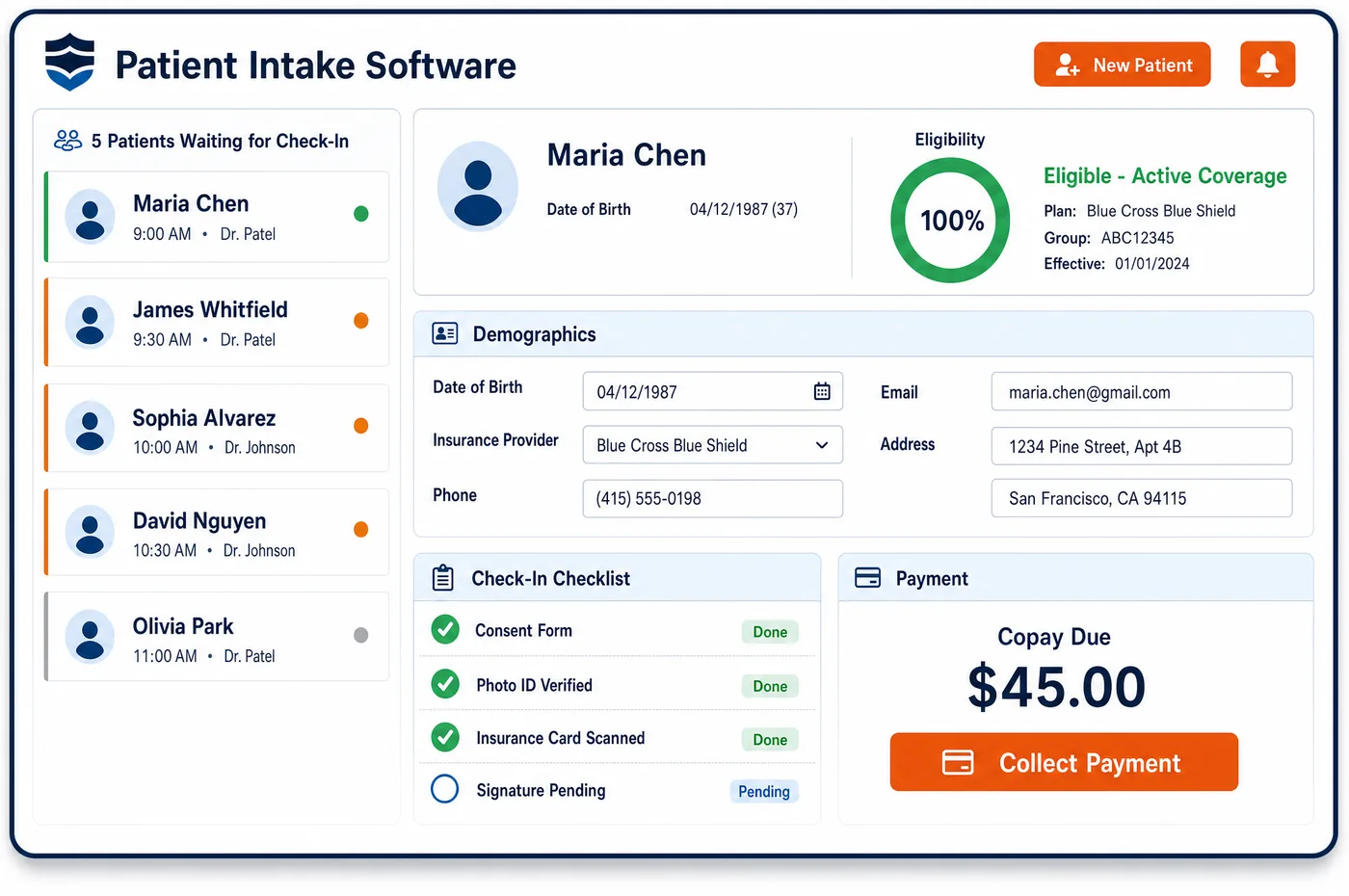
Patient Management in a Clinical Research Practice
A research site rarely sees a participant only for the study. The same person may come in for a routine follow-up, a sick visit and a protocol visit in one stretch, and each one bills a different way. Patient management in clinical research starts with the enrollment itself. Staff link the participant to the protocol, record the consent date and the version signed, and store the trial name, sponsor and sponsor-assigned protocol number, which Medicare expects to find in the medical record. The 8-digit NCT number sits on the same enrollment so it can reach the claim. Coverage sits beside it: Original Medicare, Medicare Advantage, Medicaid or a commercial plan, since each treats trial care in its own way. When a participant joins a second study, it gets its own enrollment rather than an edit to the first. When they come off study, the record shows the end date, and later visits bill as normal care again.
Why Is Patient Management Different in Clinical Research?
A study participant is still a patient. Most research sites run trials next to a working practice, so one person can have a protocol visit in the morning and a routine visit for something else that afternoon. The record has to show which visit is which. If it does not, study services land on an insurance claim and normal care lands on a sponsor invoice.
Coverage rules also change with the person's plan. Under the national coverage determination for clinical trials, Original Medicare pays routine costs in qualifying trials, including for people in Medicare Advantage. Medicaid has covered routine costs in qualifying trials since January 2022, and commercial plans follow federal rules for trials in cancer and other life-threatening conditions. One participant's plan decides where the bill goes.
Protocols change while people are on them. A sponsor amends the protocol, the consent is updated, and participants sign again. Some people join more than one study, and some come off study early. Patient management for a research site has to keep each of those dates straight. The billing rule depends on where the person was in the study on the day of service.
What Clinical Research Patient Management Software Handles
- Trial name, sponsor and protocol number
- Medicare's claims manual says the billing provider's medical record must hold the trial name, sponsor and sponsor-assigned protocol number. Staff enter them once on the participant's enrollment, so they are on file if a reviewer asks. (CMS Medicare Claims Processing Manual, Chapter 32, Sections 68 and 69 (IDE studies and qualifying clinical trials))
- 8-digit NCT number
- Every Medicare claim for trial items and services must carry the ClinicalTrials.gov number. It is stored on the enrollment and carried forward to each claim, rather than typed again at billing. (CMS Medicare Claims Processing Manual, Chapter 32, Sections 68 and 69 (IDE studies and qualifying clinical trials))
- Qualifying trial status (NCD 310.1)
- Routine costs are covered only in qualifying trials, such as those funded by NIH, CDC, AHRQ, CMS, DOD or VA, or run under an FDA-reviewed IND. The protocol's status is recorded once and shown on every participant enrolled in it. (CMS National Coverage Determination 310.1: Routine Costs in Clinical Trials)
- Medicare Advantage enrollees
- Original Medicare pays routine costs in qualifying trials for Medicare Advantage members, and the plan pays the member any cost-sharing difference. The record flags these people so staff know two payers are involved. (CMS Medicare Managed Care Manual, Chapter 4, Section 10.7 (Clinical Trials))
- Consent and research authorization
- A HIPAA research authorization may be combined with the consent to join the study. The signed document and its version date are stored on the enrollment, so staff can see which version a participant is on. (eCFR: 45 CFR 164.508, Uses and disclosures for which an authorization is required)
- Medicaid routine costs
- State Medicaid programs must cover routine patient costs in qualifying trials for serious or life-threatening conditions, to the extent the service is covered outside the trial. Rules for managed care plans vary by state, so the plan is noted on the record. (CMS State Medicaid Director Letter SMD #21-005: Mandatory Medicaid Coverage of Routine Patient Costs in Qualifying Clinical Trials)
How Does Clinical Research Patient Management Software Work?
1. Link the participant to the protocol
When a patient consents, staff add a study enrollment to their existing record. The protocol, the NCT number and the consent date sit on that enrollment, not in a free-text note.
2. Record coverage beside the study
Staff confirm the participant's plan and note whether it is Original Medicare, Medicare Advantage, Medicaid or commercial. That choice shapes how routine care in the trial will bill, and it comes from patient registration for research participants.
3. Mark each visit as study or normal care
Visits booked from the protocol calendar carry the enrollment. Visits for other problems do not, so the billing team can tell them apart at a glance.
4. Track amendments and re-consent
When a protocol is amended and a new consent goes out, staff log the new version and date. Forms for the next study visit can go out through clinical research patient intake.
5. Close the enrollment
When a participant completes the study or withdraws, staff enter the end date. Later visits then bill as normal care, and the record keeps the study history for audits.
Clinical Research Patient Management Software vs. Generic Software
| Area | Generic approach | Unlimited Systems |
|---|---|---|
| Study enrollment | A spreadsheet in the research office lists who is on which study. | The enrollment sits on the patient record that every team uses. |
| Protocol details | Trial name and protocol number live in a binder. | Trial name, sponsor, protocol number and NCT number are stored on the enrollment. |
| Coverage | Plan type is checked only when a claim is denied. | Plan type is recorded at enrollment so trial billing rules are known up front. |
| Multiple studies | A second study overwrites notes about the first. | Each study is its own enrollment with its own dates. |
| Coming off study | Billing keeps treating the person as a participant. | An end date returns later visits to normal billing. |
Who Uses It in a Clinical Research Practice
- Research coordinator: One place to see each participant's studies, consent version and visit calendar, without keeping a separate list.
- Billing staff: A clear flag on each visit showing whether it belongs to a study, plus the NCT number and coverage needed for clinical trial claims.
- Site director: A view of active participants across studies, with an audit trail of enrollment, consent and coverage changes.
Clinical Research Patient Management Software FAQs
Patient management for a clinical research site means keeping one record per person that shows both their normal care and every study they are in. The record holds the protocol, the trial name, sponsor and protocol number, the NCT number, consent dates and coverage. Billing staff use it to tell study visits from normal visits.
The NCT number belongs on the participant's study enrollment, not in a note. Medicare requires the 8-digit ClinicalTrials.gov number on claims for items and services in clinical trials, so storing it once on the enrollment means each claim picks up the same number. It also keeps the number tied to the right study when a person is in more than one.
Original Medicare pays the routine costs of a qualifying trial for Medicare Advantage members. The plan then owes the member the difference between Original Medicare cost-sharing and the plan's own in-network cost-sharing. The record flags these participants so staff know that trial services go to the Medicare contractor while unrelated care still goes to the plan.
A participant can be enrolled in more than one study when both protocols allow it. Each study is set up as its own enrollment with its own protocol, NCT number, consent and dates. Visits are linked to the study they belong to, so the billing rules of one trial are not applied to services from the other.
Once staff enter an end date for the study, later visits are no longer linked to it and bill as normal care to the participant's plan. The study history stays on the record. That matters for complications that show up later, which staff review against the protocol and the coverage rules before deciding how to bill.
The record stores the signed consent and its version date on the study enrollment. When a sponsor amends the protocol and participants sign an updated form, staff log the new version. Coordinators and monitors can then see who has signed which version, which helps before the next study visit is held.
Related Clinical Research Software
Front office
Patient Management for related specialties
Sources
- CMS National Coverage Determination 310.1: Routine Costs in Clinical Trials
- CMS Medicare Claims Processing Manual, Chapter 32, Sections 68 and 69 (IDE studies and qualifying clinical trials)
- CMS Medicare Managed Care Manual, Chapter 4, Section 10.7 (Clinical Trials)
- CMS State Medicaid Director Letter SMD #21-005: Mandatory Medicaid Coverage of Routine Patient Costs in Qualifying Clinical Trials
- eCFR: 45 CFR 164.508, Uses and disclosures for which an authorization is required
GET STARTED
See Unlimited Systems in Action
Whether you're actively evaluating new technology or simply preparing for your next vendor renewal, Unlimited Systems can help you understand where your current workflows may be creating avoidable revenue risk.