

Platform & AI
Clinical Research Workflow Software
Queues that hand research work between the study team and the billing office, with an owner, a reason and a deadline on every held charge, attestation and refund review.
Clinical Research Workflow Software routes research billing work to the people who own it. Held study charges go to the research biller or coordinator, Medicaid attestations to the study team, double payments to compliance and sponsor queries to research finance. Each item carries its reason, owner and deadline, so nothing waits between the research office and billing.



 6,500+ specialty providers

Workflow in a Clinical Research Practice
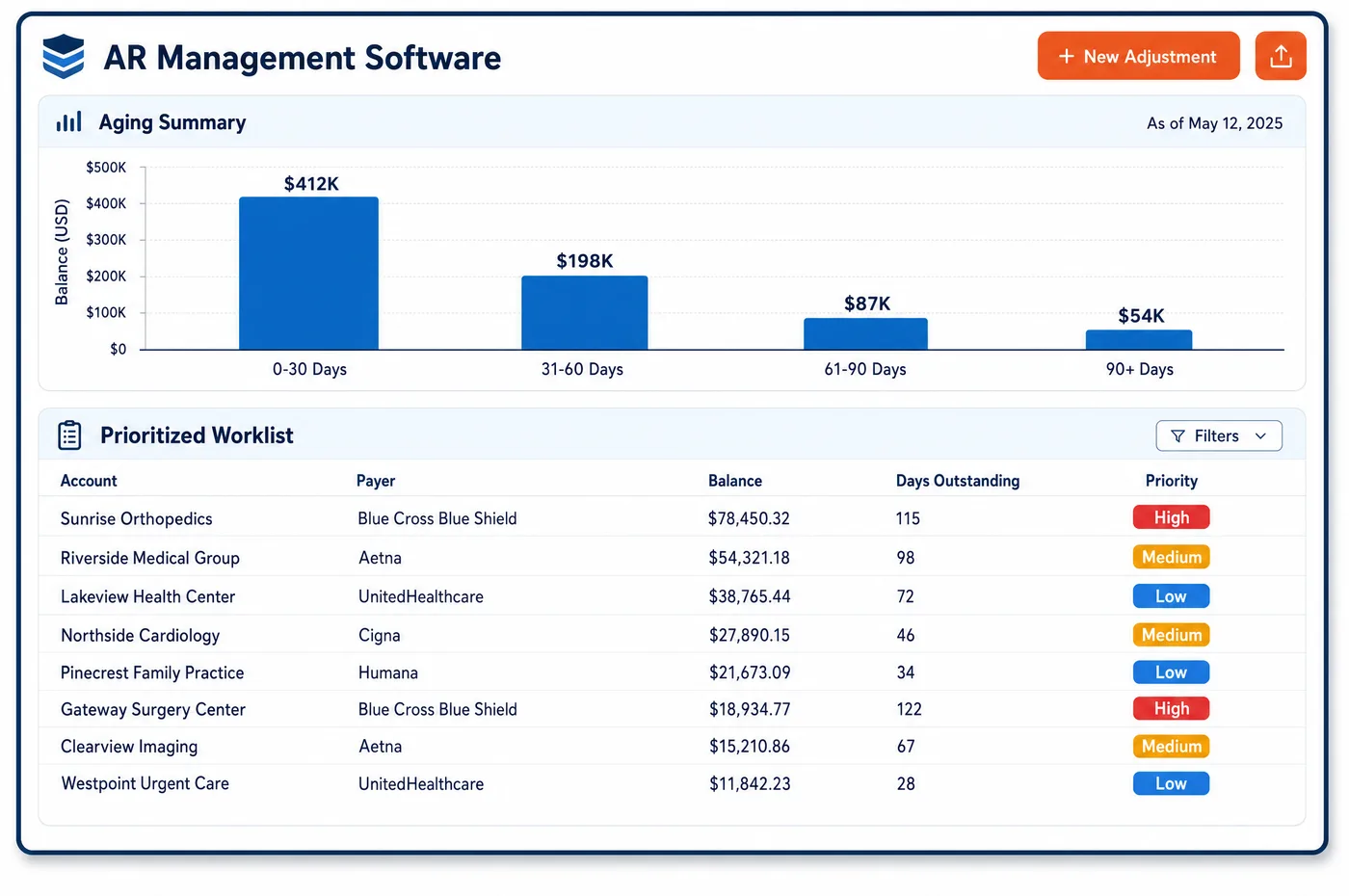
Research billing spans two teams that rarely share a system. The study team knows the protocol, the visit calendar and what the sponsor pays for. The billing office knows payers, claims and filing limits. Unlimited Systems connects them through work queues. When a charge for an enrolled participant can't be settled by the study's rules, it lands in a research billing review queue with the visit, the service and the open question. A new study starts a setup checklist: qualifying status, coverage analysis, and the trial name, sponsor and protocol number in the record. A protocol amendment opens a task to update the grid and recheck held charges. Medicaid participants get a task for the provider and investigator attestation. Services paid by both sponsor and insurer go to compliance with the date review began. Items near a filing limit or past a sponsor's payment terms move up the queue and escalate to a supervisor if they sit.
Why Is Workflow Different in Clinical Research?
The hardest part of research billing is the handoff. A coordinator may know that a scan was done only for the study, but the biller sees a scan with an insurance on file. A biller may see a returned claim but not know the study's trial number. When the two teams pass questions by email, charges sit, and filing deadlines get close. A shared workflow with named owners turns those emails into tracked work.
Research work also comes in bursts tied to the study, not the calendar. A new study needs its coverage analysis approved and its billing set up before the first participant is seen. An amendment can change what dozens of visits should cost. A sponsor audit asks for proof on visits from long ago. Queues that know the study, the version of the grid and the visit date let a site handle each burst without losing routine work.
Some items need a clock. When a site finds that Medicare may have paid for a service the sponsor covered, the time to report and return starts, and a good-faith investigation can pause it only while it is timely. Held charges age toward the payer's filing limit. A research workflow has to show those clocks, move the work up as they run, and record who acted and when.
What Clinical Research Workflow Software Handles
- Study setup checklist
- CMS requires the trial name, sponsor and sponsor-assigned protocol number in each participant's record. The setup checklist asks for all three before the first study visit, so the record and the claim agree. (CMS Medicare Claims Processing Manual, Chapter 32, Section 69.3: Medical Records Documentation Requirements)
- Qualifying trial status
- Trials funded by NIH, CDC, AHRQ, CMS, DOD or VA, and trials under an FDA-reviewed IND, are deemed to qualify under Medicare's trial policy. Setup records which basis applies, and the reviewer confirms it before Q1 billing starts. (CMS National Coverage Determination 310.1: Routine Costs in Clinical Trials)
- Medicaid attestation task
- Medicaid coverage of routine trial costs rests on an attestation from the treating provider and the principal investigator, and states may not require the protocol itself. The task goes to both, with the trial's public listing attached. (CMS State Medicaid Director Letter 21-005: Mandatory Medicaid Coverage of Routine Patient Costs in Qualifying Clinical Trials)
- Research authorization on file
- A HIPAA research authorization may be combined with the study consent and may run to the end of the research study. A task confirms it is on file before any report with patient details goes to the sponsor. (45 CFR 164.508: Uses and disclosures for which an authorization is required)
- Overpayment review clock
- Under 42 CFR 401.305, a timely, good-faith investigation into related overpayments can pause the return deadline, but only for a limited period. Compliance tasks show when the review started and escalate as that limit nears. (42 CFR 401.305: Requirements for reporting and returning overpayments)
How Does Clinical Research Workflow Software Work?
1. Open a setup checklist for each study
A new study opens tasks for qualifying status, coverage analysis approval and record identifiers. Billing for the study stays on hold until each task is signed off.
2. Send unsettled charges to review
Charges the rules can't settle become a held research charge in a review queue. Each shows the participant, visit, service and question, and goes to the coordinator or research biller who owns that study.
3. Route by owner and reason
Returned trial claims go to the research biller, attestations to the study team, double payments to compliance and sponsor queries to research finance. Each team works from its own worklist.
4. Escalate by deadline
Items move up the queue as a filing limit, sponsor payment term or review clock gets close. Anything that sits too long goes to a supervisor, and open insurance balances flow on to research claim follow-up.
5. Let rules handle the rest
Work that follows a fixed rule never enters a queue. Research billing automation settles routine charges and claim fields, so the queues hold only real exceptions.
Clinical Research Workflow Software vs. Generic Software
| Area | Generic approach | Unlimited Systems |
|---|---|---|
| Research-billing handoffs | Questions passed by email between the study team and billing. | Shared queues with an owner, a reason and a due date on each item. |
| New-study workflow | Billing set up after the first claims come back. | A setup checklist signed off before the first study visit. |
| Protocol amendments | Old grid keeps running until someone notices. | An amendment opens tasks to update the grid and recheck held charges. |
| Double payments | Handled when an auditor asks. | Sent to compliance with the review start date and an escalation clock. |
| Held-charge workflow | Age quietly toward the filing limit. | Move up the queue as the limit nears, then escalate. |
Who Uses It in a Clinical Research Practice
- Study coordinator: A workflow queue of only the charges and tasks for their studies, each with the question that needs their protocol knowledge.
- Research billing specialist: Returned claims and held charges routed to them with the context to act, not a forwarded email chain.
- Compliance officer: Double-payment reviews with start dates, owners and escalation, so the overpayment clock is never a surprise.
Clinical Research Workflow Software FAQs
Workflow connects the two teams through shared queues. A charge the study rules can't settle goes to a review queue with the visit, the service and the question, and it is assigned to the coordinator or research biller who owns that study. Returned claims, attestations, sponsor queries and double payments each have their own queue and owner, so every handoff is tracked.
Before the first study visit, the site should confirm the trial's qualifying status, approve the coverage analysis, and record the trial name, sponsor and sponsor-assigned protocol number for the participant's chart. A setup checklist opens these tasks when the study is created. Billing for the study stays on hold until they are signed off, so early claims go out right.
A protocol amendment opens a task to update the study's coverage analysis. Once the new version is approved, held charges for that study are checked again against it, and any that the new grid settles are released. The old version is kept, so visits billed before the amendment can still be explained later if a sponsor or auditor asks.
The Medicaid attestation is handled by the treating provider and the principal investigator, who confirm the trial is appropriate for the participant. A task goes to both when a Medicaid participant enrolls, with the study's public trial listing attached. States may not require the full protocol, so the task asks only for what the attestation needs.
Double-payment reviews go to a compliance queue with the date the overlap was found. For Medicare, a timely, good-faith investigation can pause the deadline to report and return an overpayment, but only for a limited period. The task shows how long the review has run and escalates as the limit nears, and the outcome is recorded on the line.
Routine research charges don't need a queue. When the study's coverage analysis settles a charge, rules route it and add the trial claim fields without anyone touching it. Queues hold only the exceptions: unscheduled visits, services the grid doesn't cover, returned claims and payment questions. That keeps each person's list short and focused on work that needs judgment.
Related Clinical Research Software
Platform & AI
In the revenue cycle
Workflow for related specialties
Sources
- CMS Medicare Claims Processing Manual, Chapter 32, Section 69.3: Medical Records Documentation Requirements
- CMS National Coverage Determination 310.1: Routine Costs in Clinical Trials
- CMS State Medicaid Director Letter 21-005: Mandatory Medicaid Coverage of Routine Patient Costs in Qualifying Clinical Trials
- 45 CFR 164.508: Uses and disclosures for which an authorization is required
- 42 CFR 401.305: Requirements for reporting and returning overpayments
GET STARTED
See Unlimited Systems in Action
Whether you're actively evaluating new technology or simply preparing for your next vendor renewal, Unlimited Systems can help you understand where your current workflows may be creating avoidable revenue risk.