

Billing & claims
Dermatology Denial Management Software
Sort, work and appeal skin claim denials by cause, and use each pattern to stop the same denial from coming back.
Dermatology Denial Management Software collects denied and underpaid skin claims, sorts them by reason, and routes each to the staff member who can fix it. It tracks appeals, shows which payers and procedures deny most, and sends the root cause back to the front of the cycle, so the same denial does not repeat.



 6,500+ specialty providers

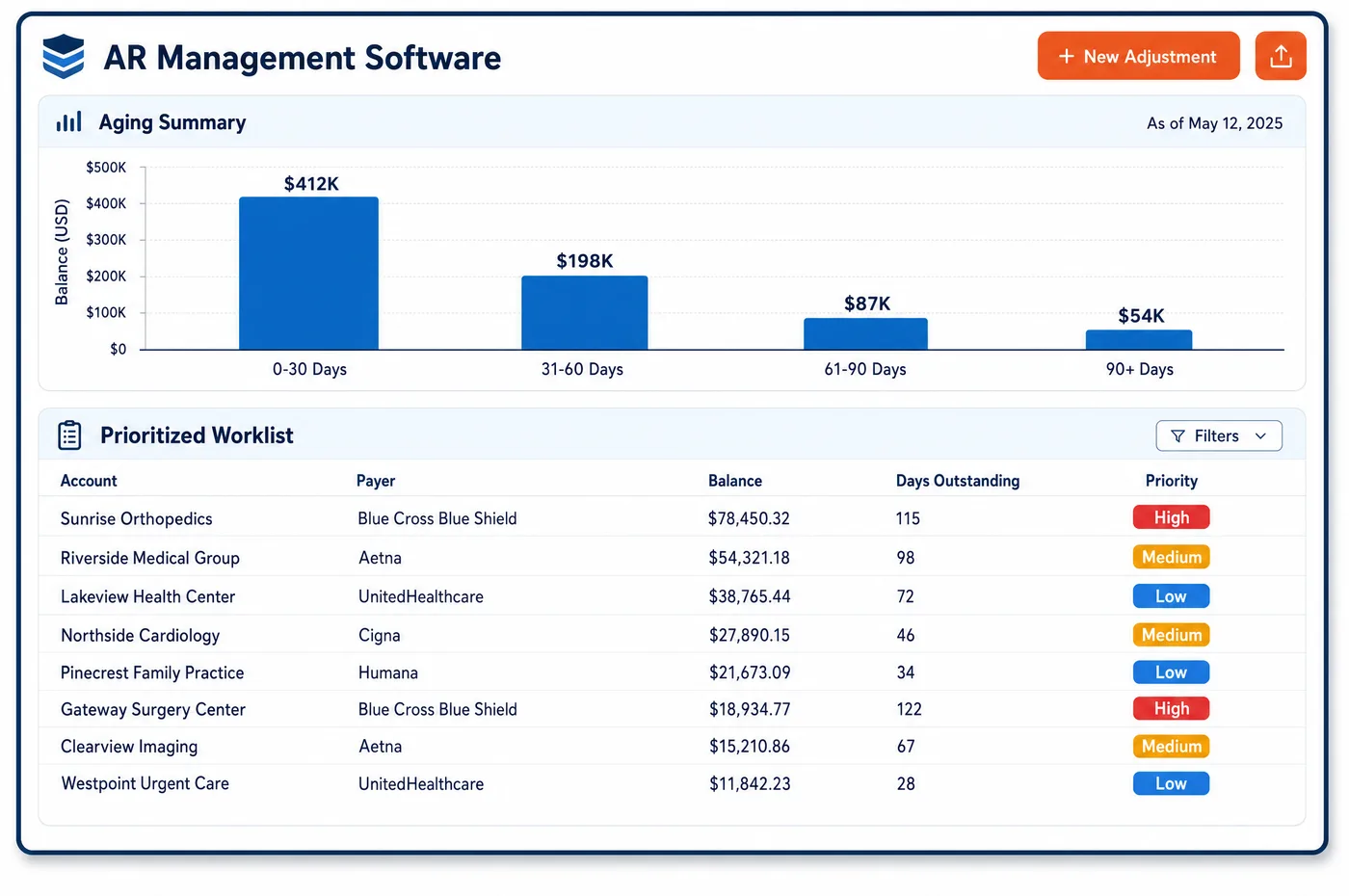
Denial Management in a Dermatology Practice
Most skin denials come from a short list of causes. A visit billed on the day of a procedure was denied as included. A wound check was denied as part of a global period. A benign lesion removal was denied as cosmetic. A biologic was denied for no approval, or an expired one. A biopsy was denied because the diagnosis did not match the pathology. Dermatology denial management software reads the denial code on each remittance, groups denials into these causes and puts them on worklists. Each item shows the claim, the note, the payer's reason and the deadline to act. Staff can correct and resubmit, appeal with the right records, or write off a denial that was valid. A manager sees counts and amounts by payer, provider, procedure and cause. The practice then changes a rule, a template or a front desk step, and watches whether that denial falls. Tracking appeals to the end shows which arguments win, which payers overturn and which fixes were worth the effort.
Why Is Denial Management Different in Dermatology?
Many dermatology claims are small, so a denial costs a large share of the payment and the effort to appeal can exceed it. Denial management in this field cannot be a case-by-case rescue. It has to find the repeat causes and shut them off, and to appeal only where the amount and the odds make it worth the staff time.
Most causes are known in advance. Global period conflicts, same-day visit pairs, lesion removal criteria, biologic approvals and pathology mismatches show up again and again. Because they repeat, they can be grouped, counted and prevented. A practice that reviews each appeal and denial by cause can point to the specific rule or step that failed.
Appeals in skin care depend on records. A removal of a benign lesion is overturned with a note that documents bleeding, pain or a change in appearance. A Mohs denial is answered with the surgeon's stage notes and pathology. A biologic denial is answered with the prior therapy list. Denial work goes faster when the right record is attached on the first try.
What Dermatology Denial Management Software Handles
- Included-visit denials
- Under Medicare, an evaluation and management visit on the day of a minor procedure is included unless it is significant and separately identifiable, which is reported with modifier 25. Staff appeal with the note when the visit truly stood apart. (CMS MLN Booklet MLN907166: Global Surgery)
- Global period denials
- Medicare gives each procedure a 000, 010 or 090 global indicator and includes related follow-up in the payment. A denied wound check is usually valid, so it is written off and the booking step is fixed. (CMS MLN Booklet MLN907166: Global Surgery)
- Cosmetic denials of lesion removal
- WPS covers benign lesion removal when signs such as bleeding, itching, pain or a change in appearance are documented. A denial is appealed with the note when the sign is there, and billed to the patient when it is not. (CMS Medicare Coverage Database, LCD L35498: Removal of Benign Skin Lesions (WPS))
- Mohs denials
- The CGS article on Mohs surgery sets the billing and coding rules for the procedure. Appeals attach the surgeon's stage notes and the pathology for each stage. (CMS Medicare Coverage Database, Billing and Coding Article A56836: Mohs Micrographic Surgery (CGS))
- Biologic denials
- UnitedHealthcare approves dupilumab for atopic dermatitis after listed prior treatments and asks for proof of response at renewal. Denials are answered with the therapy list and response notes, or traced to a lapsed approval. (UnitedHealthcare Pharmacy Clinical Program 2026 P 2116-24: Dupixent (dupilumab) Prior Authorization/Medical Necessity)
- Biopsy diagnosis mismatches
- Biopsy codes 11102 to 11107 are billed with a diagnosis that should match the lab report. Denials for medical necessity are corrected with the final pathology result. (Federal Register: CY 2019 Physician Fee Schedule final rule, skin biopsy codes 11102–11107 (83 FR 59452, at 59522))
- Remittance reason codes
- HIPAA adopts the ASC X12N 835 remittance advice, which carries claim adjustment reason codes for each denial. Denials are grouped by these codes to find the cause. (CMS: Adopted Standards and Operating Rules (HIPAA transactions))
How Does Dermatology Denial Management Software Work?
1. Capture the denial
Each denial arrives with the remittance. The reason code and the payer's remark are read and the claim is placed on a worklist.
2. Sort by cause
Denials are grouped into causes such as global period, same-day visit, coverage, approval, documentation or diagnosis. Each group goes to the person best placed to fix it.
3. Fix, appeal or write off
Staff correct and resubmit a claim with a simple error, appeal one with strong records, or write off a valid denial. Deadlines are shown on each item.
4. Track the outcome
Appeals are followed until the payer decides. The result is logged, so the team can see which arguments work and which payers overturn.
5. Feed the root cause back
Managers review causes with the front office and charge review teams. A rule, a template or a booking step is changed to stop the denial at its source.
Dermatology Denial Management Software vs. Generic Software
| Area | Generic approach | Unlimited Systems |
|---|---|---|
| Denial queue | A pile of unpaid claims worked oldest first. | Worklists sorted by cause and deadline. |
| Reason codes | Read one claim at a time. | Grouped to show repeat causes. |
| Appeals | Written from scratch each time. | Built with the records that win for that cause. |
| Write-offs | Done to clear the report. | Done after review and logged with a reason. |
| Prevention | Left to chance. | Root causes fed back to scheduling and charge review. |
Who Uses It in a Dermatology Practice
- Denial specialist: Worklists by cause and deadline, with the note and the payer's reason on one screen.
- Billing manager: Counts and amounts by payer, provider and procedure, with the causes tied back to claim building steps.
- Physician owner: A clear picture of which denials are worth appealing and which rules to change, with the evidence to support each choice.
Dermatology Denial Management Software FAQs
The most common denials in dermatology come from same-day visits billed with procedures, wound checks inside global periods, benign lesion removals judged cosmetic, biologics with no approval and biopsy diagnoses that differ from pathology. Because these causes repeat, they can be counted and prevented, which is the main aim of denial management.
A denied wound check is usually valid, because Medicare includes related recovery visits in the procedure payment. The best response is to write it off with a reason and fix the booking step, so that follow-up visits inside a global period are scheduled as post-operative care instead of new visits.
A cosmetic denial on lesion removal is appealed with the provider's note when it documents a covered sign. The WPS policy names signs such as bleeding, pain, inflammation or suspected cancer. If no sign is recorded, the denial stands and the patient is billed for a noncovered service.
Denial management reduces repeat denials by grouping denials by cause and sending the pattern back to the front of the cycle. If one payer keeps denying biologic claims after approval ends, staff add an approval check. The next batch of charges is then tested before the claim is built.
A Mohs appeal is supported by the surgeon's stage notes, the body site, the pathology for each stage and the repair record. The CGS article on Mohs surgery sets the billing and coding rules. Attaching these records at the first appeal avoids a second round of requests.
Not every denied dermatology claim is worth appealing, because many are small and some denials are correct. Denial management puts the amount, the cause and the deadline on each item. Staff appeal where the record supports payment, and write off valid denials after review with a reason logged.
Related Dermatology Software
Billing & claims
In the revenue cycle
Denial Management for related specialties
Sources
- CMS MLN Booklet MLN907166: Global Surgery
- CMS Medicare Coverage Database, LCD L35498: Removal of Benign Skin Lesions (WPS)
- CMS Medicare Coverage Database, Billing and Coding Article A56836: Mohs Micrographic Surgery (CGS)
- UnitedHealthcare Pharmacy Clinical Program 2026 P 2116-24: Dupixent (dupilumab) Prior Authorization/Medical Necessity
- Federal Register: CY 2019 Physician Fee Schedule final rule, skin biopsy codes 11102–11107 (83 FR 59452, at 59522)
- CMS: Adopted Standards and Operating Rules (HIPAA transactions)
GET STARTED
See Unlimited Systems in Action
Whether you're actively evaluating new technology or simply preparing for your next vendor renewal, Unlimited Systems can help you understand where your current workflows may be creating avoidable revenue risk.